
Written by Sara Varghese. Edited by Tanya Shrivastava.
On Tuesday, the UN Committee on the Elimination of Racial Discrimination said that there had been an “increase in law enforcement operations targeting Rohingya, Bengali-speaking Muslims, migrants and asylum-seekers”.
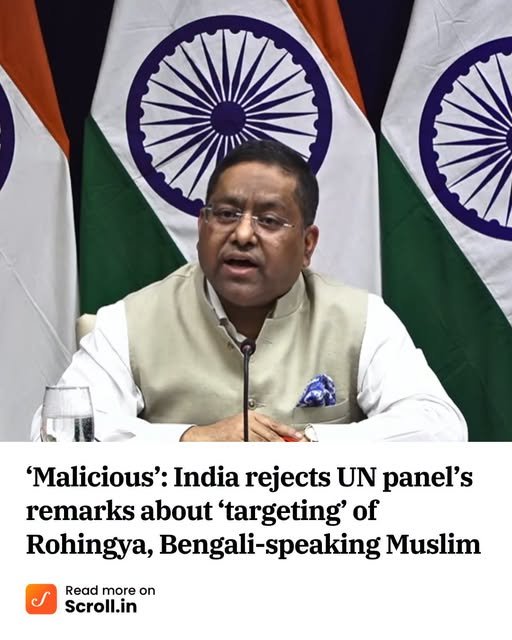
New Delhi on Wednesday rejected as “politically motivated” and “highly malicious” the United Nations’ racial discrimination watchdog’s observations about the alleged targeting of Rohingya refugees and Bengali-speaking Muslims by Indian law enforcement agencies.
On Tuesday, the UN Committee on the Elimination of Racial Discrimination said that there had been an “increase in law enforcement operations targeting Rohingya, Bengali-speaking Muslims, migrants and asylum-seekers”, particularly following an order by the Union Ministry of Home Affairs in 2017 and the 2025 Pahalgam terror attack.
The 2017 order was an apparent reference to a directive issued by New Delhi that year detailing instructions for the deportation of undocumented migrants, including Rohingyas.
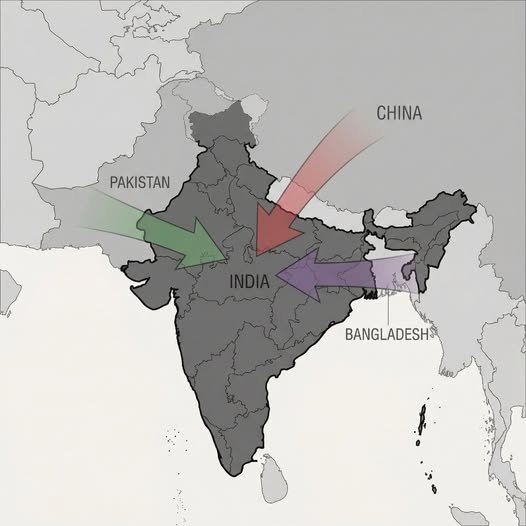
Weeks after the terror attack in Jammu and Kashmir’s Pahalgam in April 2025, the Union home ministry had directed the states and Union Territories to verify the credentials of persons suspected to be undocumented migrants from Bangladesh and Myanmar.
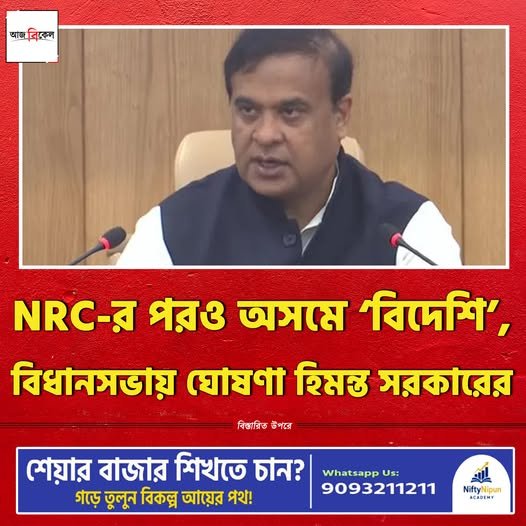
Following the May 2025 directive, the police in several states, most of them ruled by the Bharatiya Janata Party, have been detaining Bengali-speaking persons – mostly Muslims – and asking them to prove that they are Indian citizens.
Several persons have been forced into Bangladesh after they allegedly could not prove their Indian citizenship. In some cases, persons who were mistakenly sent to Bangladesh returned to the country after the state authorities in India proved that they were Indians.
On Wednesday, Ministry of External Affairs spokesperson Randhir Jaiswal said the UN committee’s review was a routine treaty-body process and that India had participated in it in a “spirit of constructive engagement”.
He added that India had highlighted its constitutional safeguards, legal framework, pluralism and efforts to protect disadvantaged communities during the review.
“While we will respond to the committee’s observations through the established procedure, the inter-ministerial delegation, which was led by the Solicitor General…Tushar Mehta, had already rejected the sweeping generalisations, unsubstantiated allegations, or tendency to exceed the convention’s mandate during the review meeting,” Jaiswal said.
The UN panel had also said that it was concerned about violations allegedly perpetrated by the law enforcement authorities against the Scheduled Tribes, the Scheduled Castes and other groups, and urged New Delhi to act in the matter.
Author: Saikat Bhattacharya