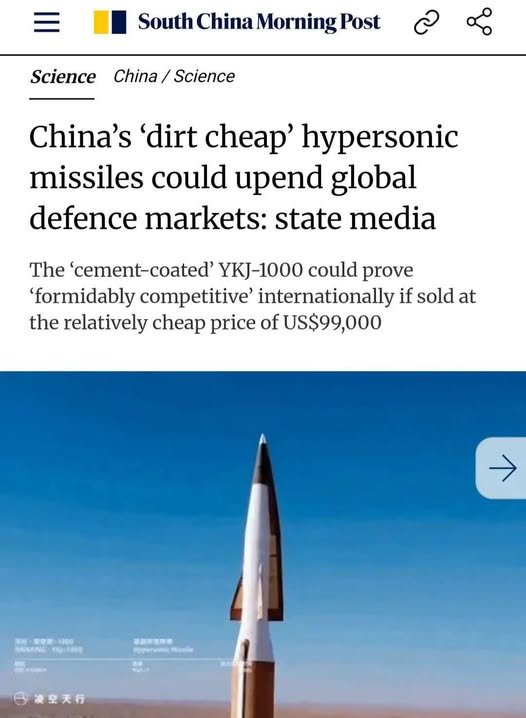

It’s honestly hilarious watching Western defence analysts panic because China just did to the missile market what it already did to solar panels, EVs, and shipbuilding:
Turned the luxury boutique of global militarism into a Chinese discount aisle.
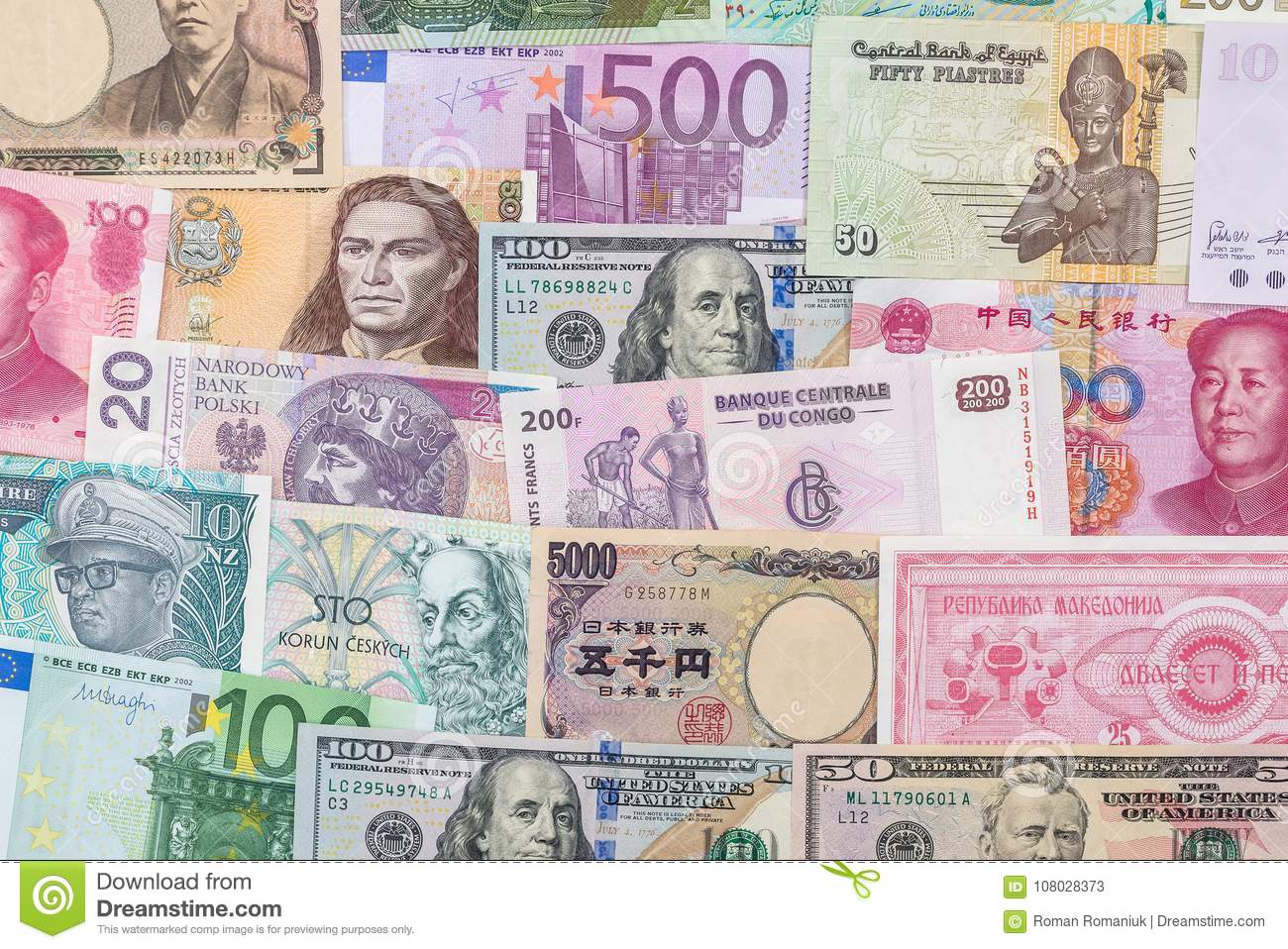
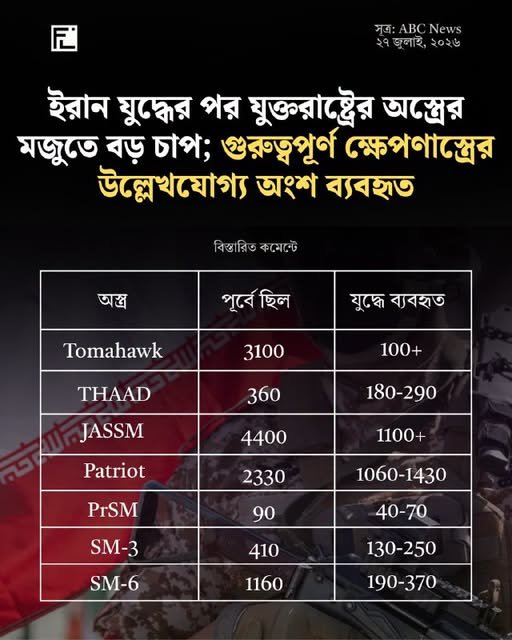
The Pentagon has been selling US$4–15 million interceptors like they’re hand-crafted artisanal goods, and now China shows up with a hypersonic missile priced at US$99,000… basically the cost of a mid-range BMW in California.
Washington spent decades telling the world that China “can’t innovate.”
Turns out the real problem is China innovated too well, especially at the part where America makes its money.
If this pricing holds, every US defence contractor should start updating their résumés.
Hard to justify $4 million per missile when Beijing is out here selling Mach-7 hardware at “two-bedroom apartment in Ohio” prices.
The global arms market wasn’t ready for Temu-style geopolitics.
But here we are.
The cement coated YKJ-1000 could now shut down US Military Industrial Complex as it is hypersonic missile @ USD 99,000.
Many nations have yet to develop their own hypersonic missiles, and this one – with its long range, high destructive power, and strong penetration capability – would likely become a hot commodity due to its dirt cheap price.
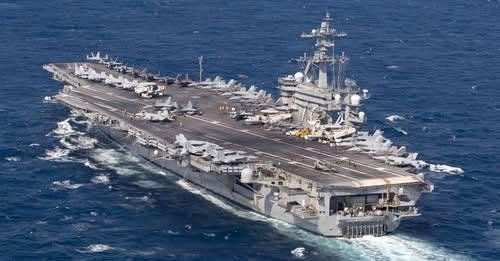
If sold abroad, such a weapon could empower smaller nations to challenge major military powers – potentially altering the strategic balance around the world and posing a threat to advanced warships such as aircraft carriers.
For example, if Venezuela were to acquire enough missiles to threaten US carrier strike groups off its coast, it could potentially alter Washington’s strategic thinking because the effective combat range of a Ford-class nuclear carrier is 1,100km.
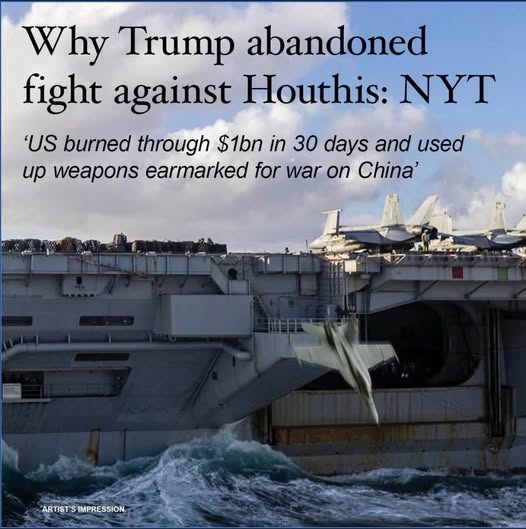
This year, Yemen’s Houthi rebels have repeatedly claimed attacks on US aircraft carriers and the proliferation of cheaper missiles could make such attacks harder to counter.
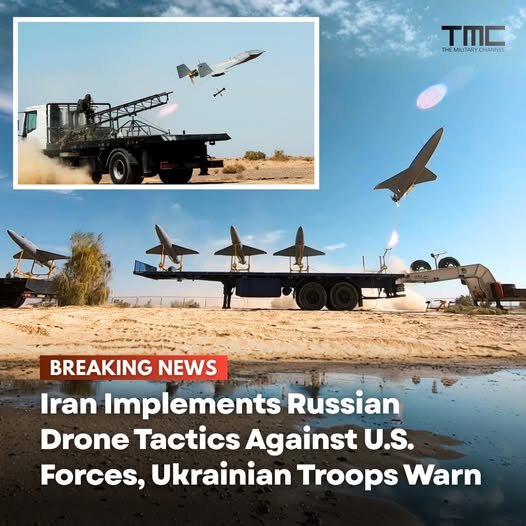
The battlefield in Ukraine has already offered a similar lesson: when drones costing a few hundred dollars force the other side to use missiles worth hundreds of thousands of dollars.
Even if a defender chooses to expend vast resources on a comprehensive shield, an attacker could saturate their defences with volleys of low-cost missiles while mixing in more potent variants, such as the DF-17 produced by China’s state-owned contractors.
Author: Saikat Bhattacharya