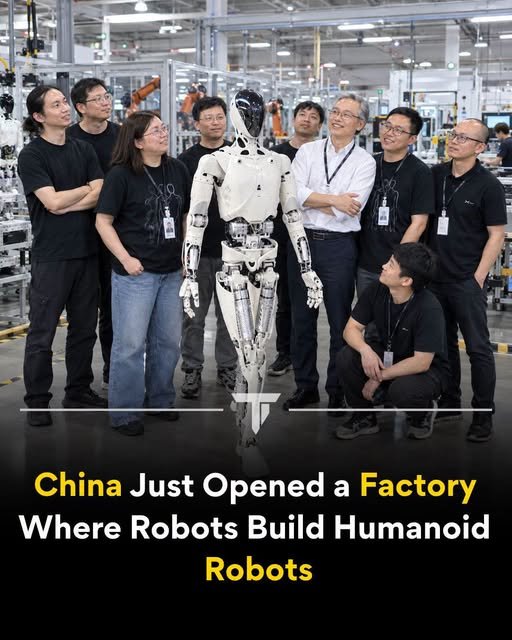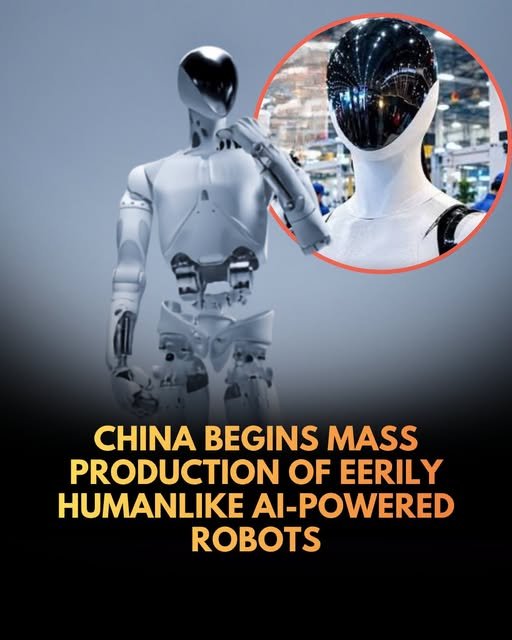

The 2026 World Humanoid Robot Games in Beijing highlighted both how far AI/robotics has come and how firmly Moravec’s paradox still holds.
Moravec’s paradox states that tasks requiring complex reasoning (like chess or math) are computationally easy for machines, while basic sensory-motor skills that humans do without thinking (like fine manipulation or adapting to unscripted physical environments) are extraordinarily difficult.
Analyzing the results of the 2026 Games shows how robots are chipping away at this paradox without fully overcoming it:
1. Physical Brawn vs. Sensory-Motor Subtlety
The Breakthroughs (Pure Brawn & Speed): Robots demonstrated incredible raw power and speed. Machines like Tiangong Ultra ran the 100-meter dash in 8.64 seconds, comfortably outpacing Usain Bolt's human world record. They also performed high-impact tasks like autonomous soccer matches and backflips.
The Paradox Persists: In Moravec's paradox, explosive linear running or predefined athletic moves are actually the easier engineering problems because they rely heavily on high-speed control loops, localized balance algorithms, and rigid environments.
2. Moravec’s Paradox in Fine Manipulation
Scenario-Based Events: The organizers specifically designed scenario-based challenges to test the exact dynamic Moravec described—tasks like plugging cables into wall sockets, picking up beans with tweezers, and sorting trash.
The Struggle: While machines like Galbot showed promising autonomous progress in complex environments, dexterity remains a massive bottleneck. Robots struggle with dynamic feedback—such as knowing how hard to grip a soft object without crushing it or feeling when a key aligns with a lock—skills human toddlers perform effortlessly.
3. Controlled Conditions vs. Real-World Chaos
Predictability: Sprinting on a smooth track allows an algorithm to maximize performance efficiently.
Lack of Resilience: After crossing the finish line, many top-performing sprinters lost control, crashed into barriers, or burst into sparks and had to be carried off on stretchers. Human brains seamlessly handle stopping, avoiding obstacles, and adapting to unscripted physical consequences—a core aspect of physical intelligence that robots still lack.
Verdict
The 2026 Robot Games do not signal that robots have moved beyond Moravec’s paradox. Instead, they showcase that robotics has finally developed the hardware and AI foundation needed to actively target the paradox. High-speed running and athletic stunts prove hardware execution is reaching superhuman levels, but tactile manipulation and sensory adaptability in chaotic environments remain the true frontier.
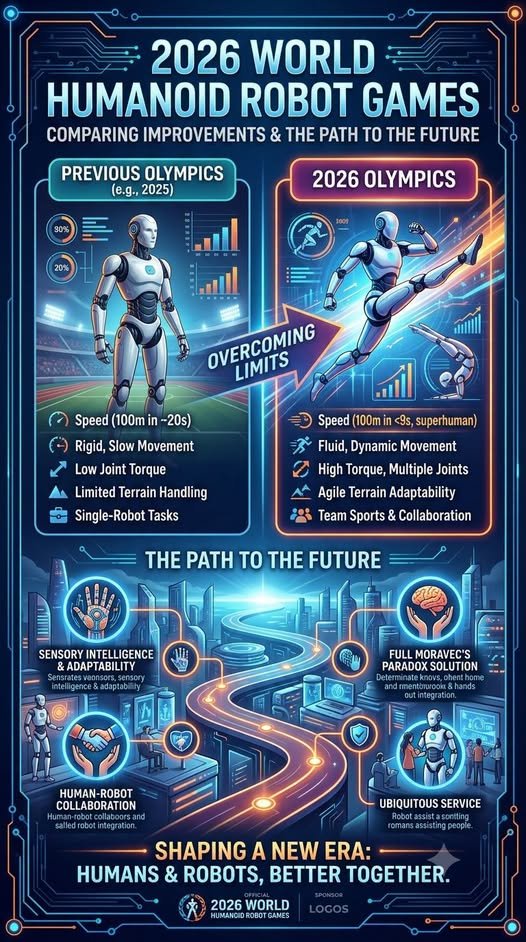
Comparing the 2026 World Humanoid Robot Games in Beijing to the inaugural 2025 event highlights a dramatic leap across scale, hardware capabilities, and autonomous execution.
1. Speed and Dynamic Mobility
Previous Games (2025): The fastest humanoid robots clocked times of over 20 seconds in the 100-meter dash. Movement was rigid, slow, and relied heavily on short, cautious steps to maintain center-of-mass stability.
2026 Edition: The speed more than doubled. Models like Lightning (9.47s) and Tiangong Ultra (8.64s) broke human sprinting limits, showcasing leaps in joint torque, lightweight material design, and high-frequency balance feedback loops.
2. Scale and Global Participation
Previous Games (2025): Functioned largely as a regional trial showcase, featuring mostly domestic Chinese research institutes and early prototypes.
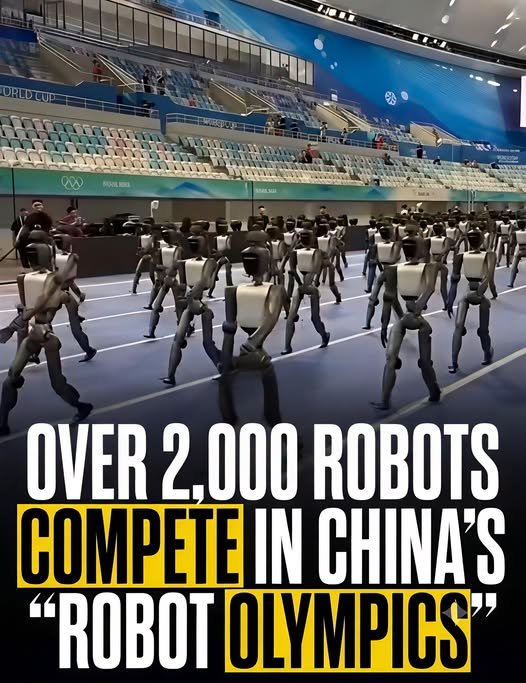
2026 Edition: Expanded into a massive international multi-sport event featuring 2,056 robots from 666 teams across 16 countries (including teams from the US, Germany, and Japan).
3. Complex Physical Acrobatics
Previous Games (2025): Basic bipedal walking, standing, and straight-line running were the standard. Any attempt at multi-joint coordination (like kicking) resulted in immediate balance loss.
2026 Edition: Combat and field sports saw advanced maneuvers, including martial arts roundhouse kicks, tennis swings, and dynamic recovery routines where robots could stand up unassisted after takedowns or falls.
4. Scenario-Based & Collaborative Tasks
Previous Games (2025): Event focus was mostly restricted to isolated athletic demonstrations.
2026 Edition: Introduced broader practical tasks to evaluate real-world utility, such as industrial assembly, cable plugging, EV charging setups, and emergency response simulations. Teams also demonstrated multi-robot coordination on the soccer pitch, with winning teams passing fluidly to score goals.
Where Gaps Still Remain
While peak performance exploded, reliability and deceleration control saw less progress. Sprinting robots still frequently crashed into barriers post-finish line, and complex spatial maneuvers caused sudden algorithmic freezes, showing that high-speed physical execution has outpaced dynamic spatial stopping and real-time error recovery.
Author: Saikat Bhattacharya