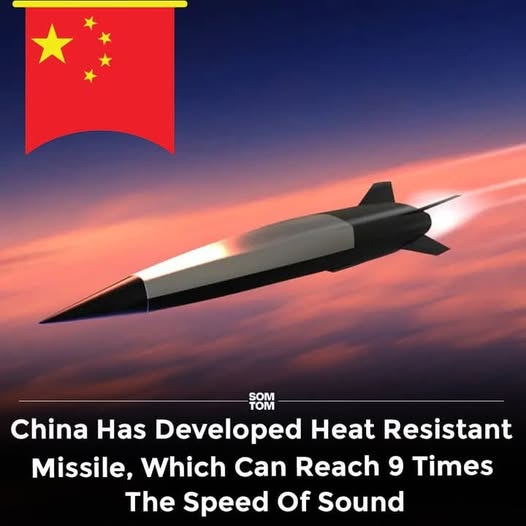





China has shocked global defense experts after unveiling a cannon capable of firing projectiles at seven times the speed of sound, a breakthrough that pushes the limits of physics and weapons engineering. At hypersonic speeds, the cannon’s rounds travel so fast they can cross entire battle zones in seconds, making interception nearly impossible. Engineers say the system uses advanced electromagnetic propulsion and cutting-edge materials designed to withstand extreme heat and pressure that would melt traditional weaponry instantly.
The technology marks a major leap forward in China’s growing focus on hypersonic research. Unlike conventional artillery, which relies on explosive force, this weapon accelerates projectiles using magnetic fields and ultra-high-power energy bursts. The result is near-instant launch velocity, extraordinary range, and impact force strong enough to overwhelm most existing defense systems. Analysts believe the cannon could reshape modern warfare by combining the range of missiles with the rapid-fire capability of artillery.
Despite the breakthrough, the project raises major questions. Hypersonic weapons generate heat levels measured in thousands of degrees, requiring materials and engineering precision that few countries have mastered. Military experts warn that new technologies of this scale could escalate global arms races, especially as nations rush to respond. Supporters in China view it as a symbol of technological dominance and a glimpse into next-generation defense power.
For now, the hypersonic cannon stands as one of the most radical weapons ever developed. If perfected, it could redefine speed, power, and what’s physically possible on the battlefield.
Author: Saikat Bhattacharya