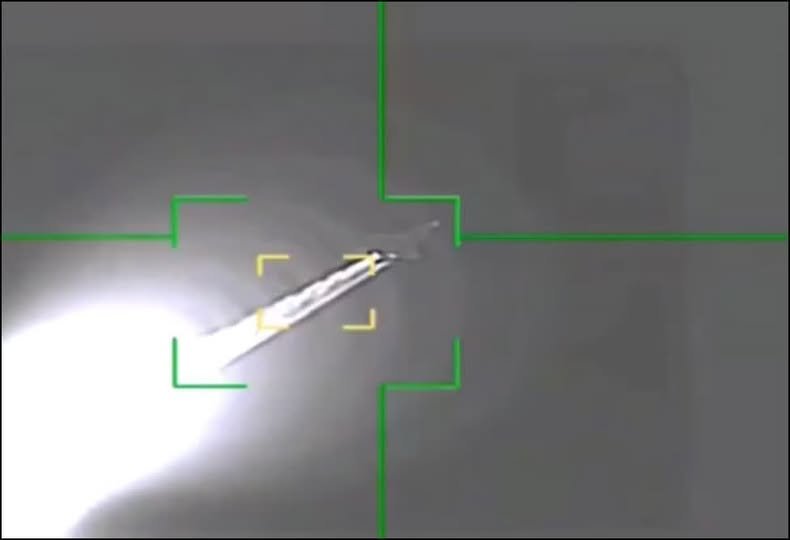
China has just sent a shockwave through the future of aviation — unveiling a hypersonic jet so fast it rewrites the rules of flight. The Qianshou project has officially broken the Mach 6 barrier, reaching an astonishing 8,100 km/h, a speed that could cut a Beijing–New York journey to less than two hours.
This aircraft isn’t merely quick — it’s designed to withstand extremes that would obliterate conventional jets. Constructed from next-generation heat-resistant alloys and driven by an advanced scramjet engine, Qianshou stayed stable even as its exterior endured temperatures soaring past 3,000°C.
How does it survive the impossible?
1. A graphene-based thermal shield that prevents the airframe from melting under hypersonic heat.
2. A high-efficiency scramjet system that uses incoming air for combustion, removing the need for heavy oxidizers and dramatically enhancing performance.
The result is an aircraft that flies not just faster, but farther and more efficiently than anything humanity has built before.
Aviation analysts are calling Qianshou a defining moment — a technological leap that may transform global travel, turning journeys once measured in days into trips counted in hours.
Qianshou isn’t simply a hypersonic jet.
It’s a preview of a future where technology doesn’t just progress — it outpaces our imagination.
Author: Saikat Bhattacharya