




TechTimes
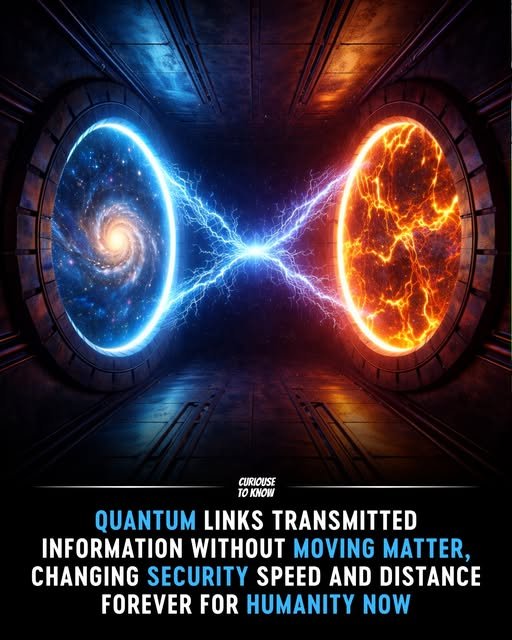
Quantum field theory explains that particles are not solid, isolated objects but temporary excitations within underlying fields that exist everywhere in the universe. Each type of particle corresponds to its own field permeating all of space.
In this framework, electrons, photons, and quarks emerge only when their respective fields vibrate, meaning what we call “matter” is a dynamic process rather than a fixed thing. When the vibration stops, the particle effectively ceases to exist.
This view helps explain why empty space is never truly empty, as quantum fields remain active even in apparent vacuum. Experiments show measurable energy fluctuations even where no particles are present.
The theory also accounts for strange quantum behavior, such as particles appearing or vanishing, by describing them as energy shifting within continuous fields. What looks like randomness is governed by precise mathematical rules.
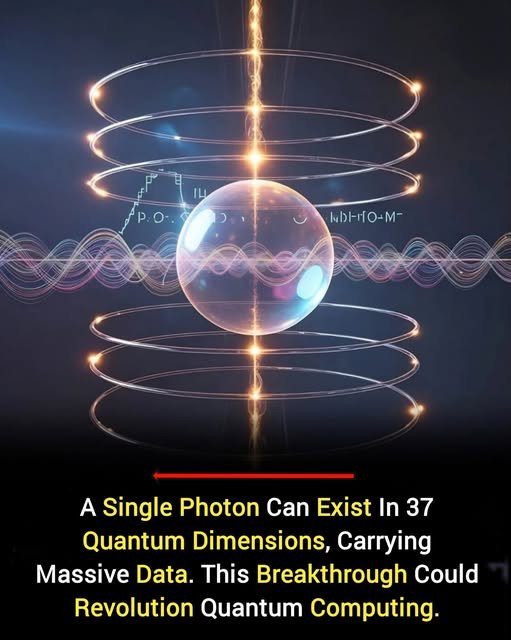
Modern physics relies heavily on this model, as it underpins particle accelerators, semiconductors, medical imaging, and the foundations of quantum computing. Its predictions have been confirmed with extraordinary accuracy over decades of experiments.
Author: Saikat Bhattacharya