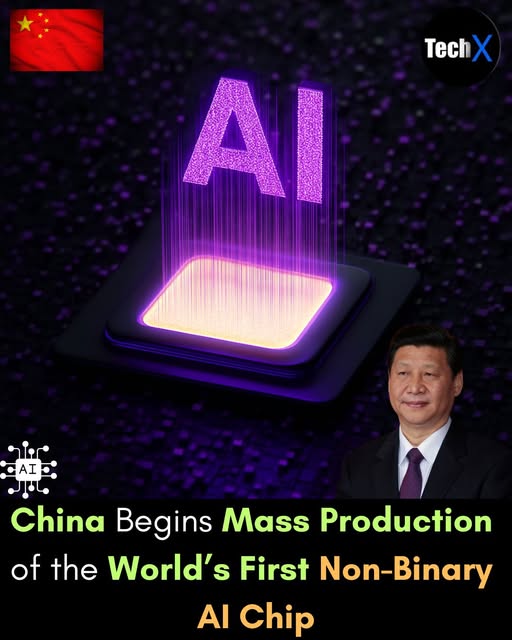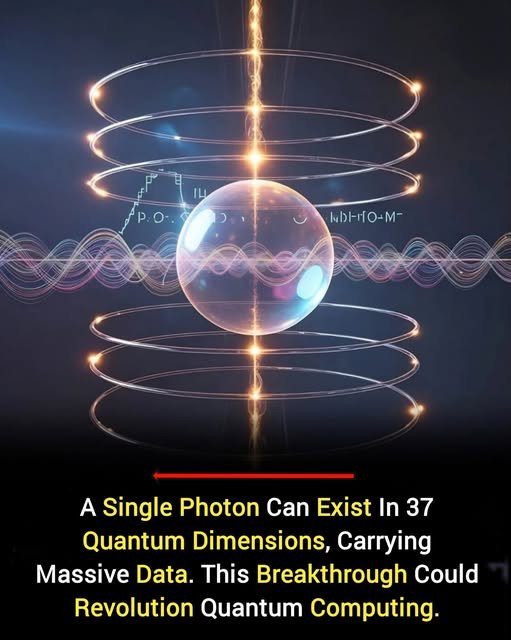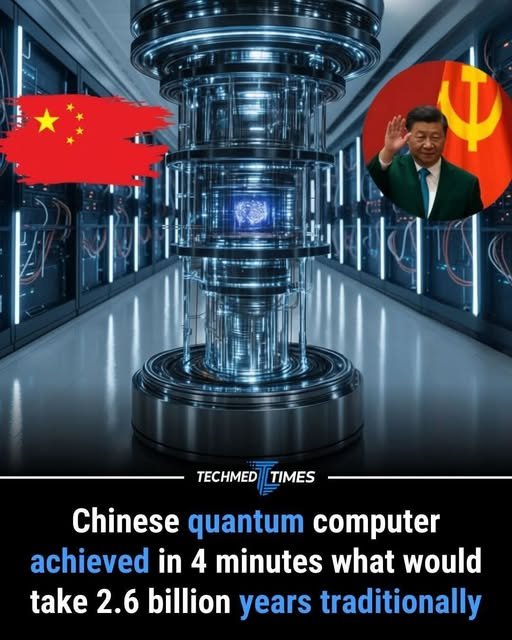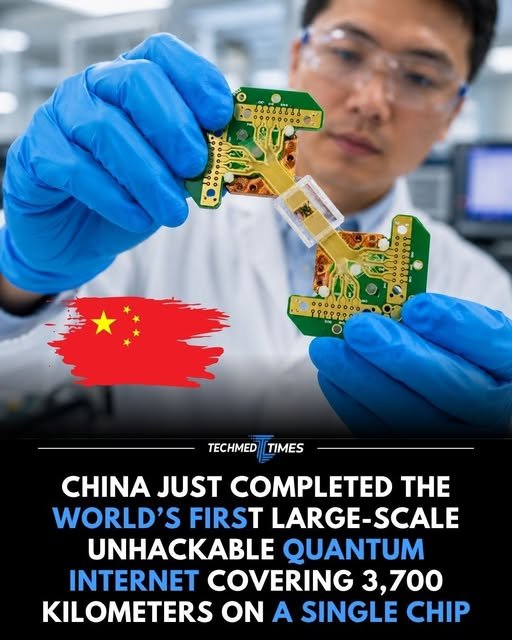





China has just pushed humanity into a new era of computation. In a breakthrough that stunned global scientists, a Chinese quantum computer completed a task that would take today’s fastest classical supercomputers 2.6 billion years — and it did it in mere minutes. This machine doesn’t think in bits, but in qubits: particles that exist in multiple states at once, allowing trillions of calculations to unfold simultaneously instead of one-by-one like traditional processors. The result is processing power so extreme that it effectively breaks every speed limit we’ve ever known in computing.
This achievement marks a historic turning point. With quantum capability at this scale, we could simulate new drugs atom-by-atom, design unbreakable materials, optimize global power grids, unravel the physics of the early universe, or crack encryption that protects the entire internet.
What China demonstrated isn’t just faster computing — it’s a new computational dimension. Scientists are calling it the moment quantum computing stepped out of the theoretical world and into reality, reshaping the future of science, security, and technology in one leap.
Author: Saikat Bhattacharya