





By Hashem Al-Ghaili
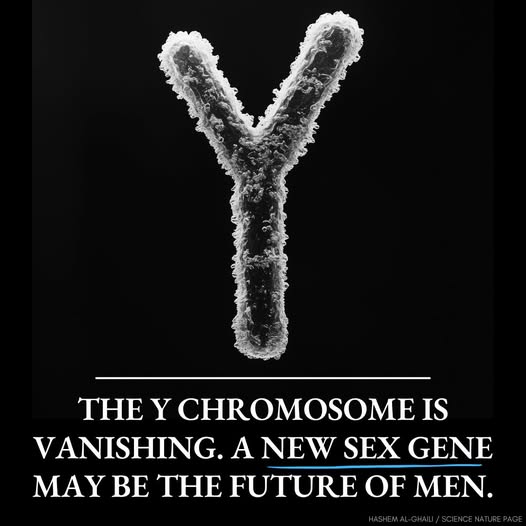
The human Y chromosome, which determines male sex, is slowly disappearing, potentially spelling extinction for humans unless a new sex-determining gene evolves.
But there's hope, as some rodents have already lost their Y chromosomes and found alternative ways to survive.
The Y chromosome contains the SRY gene, which initiates male development in human embryos. However, over millions of years, the Y has been shedding genes. If this trend continues, the last of its remaining 55 genes could vanish in 11 million years.
Rodents like mole voles in Eastern Europe and spiny rats in Japan have lost their Y chromosomes entirely, yet they continue to reproduce. In spiny rats, researchers identified a new sex-determining gene near SOX9 on chromosome 3, which appears to have replaced SRY.
This discovery provides optimism that humans could also evolve a new sex-determining gene. However, this evolutionary process comes with risks. If different sex-determining systems evolve in separate populations, it could lead to reproductive isolation and the emergence of new human species.
In 11 million years, visitors to Earth might find no humans at all — or a world inhabited by multiple human species, each with its own unique way of determining sex.
Author: Saikat Bhattacharya