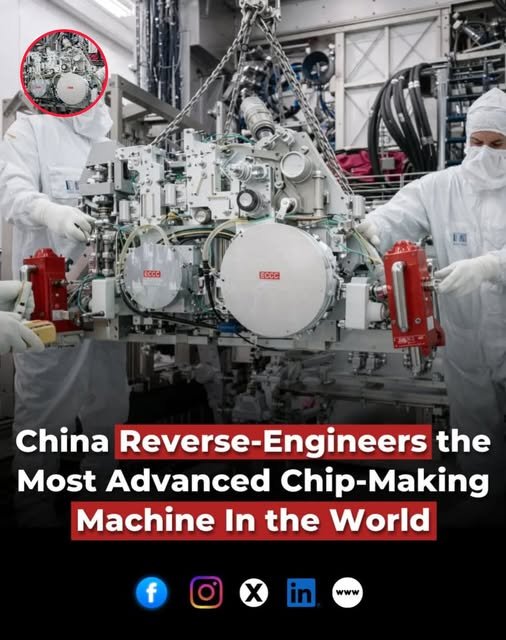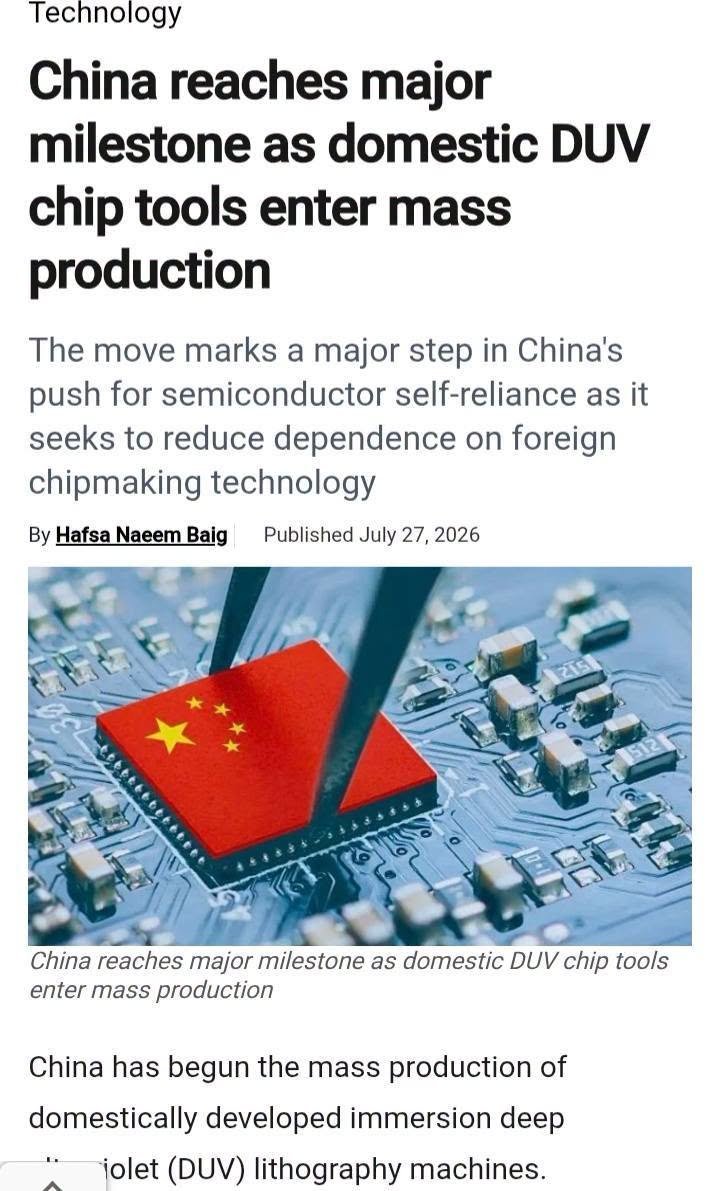

চীনের সেমিকন্ডাক্টর শিল্পে এ যাবতকালের সবচেয়ে বড় অগ্রগতিগুলোর একটি ঘটলো। বিদেশি নির্ভরতা কাটাতে চীন অবশেষে নিজেদের তৈরি উন্নত চিপ তৈরির যন্ত্র উৎপাদনে ঢুকে পড়েছে।
মূল খবর কি?
The Information এর রিপোর্ট অনুযায়ী, Reuters আজ ২৭ জুলাই নিশ্চিত করেছে, চীনের একটি রাষ্ট্র-সমর্থিত প্রতিষ্ঠান দেশীয় প্রযুক্তিতে Immersion DUV লিথোগ্রাফি মেশিন তৈরি শুরু করেছে। এই বাজার এতদিন ১০০% ডাচ কোম্পানি ASML এর দখলে ছিল। এই খবরে ASML এর শেয়ার একদিনেই ৪.৬% পড়ে যায়।
কে বানাচ্ছে?
নাম নিরাপত্তার কারণে প্রকাশ করা হয়নি, তবে সব রিপোর্ট বলছে প্রস্তুতকারক হলো Shanghai Yuliangsheng Technology, যেটি Huawei এর চিপ ইকুইপমেন্ট কোম্পানি SiCarrier এর সাথে যুক্ত।
এর পেছনে আছে চীনের প্রধান লিথোগ্রাফি কোম্পানি SMEE। SMEE তাদের 600 সিরিজ 90nm মেশিন ইতিমধ্যে mass production করছে এবং এখন 28nm immersion মডেল ডেভেলপ করছে। তারাই ফ্রন্ট-এন্ড ব্যবসা Yuliangsheng এ ট্রান্সফার করেছে।
এই যন্ত্র কেন এত গুরুত্বপূর্ণ?
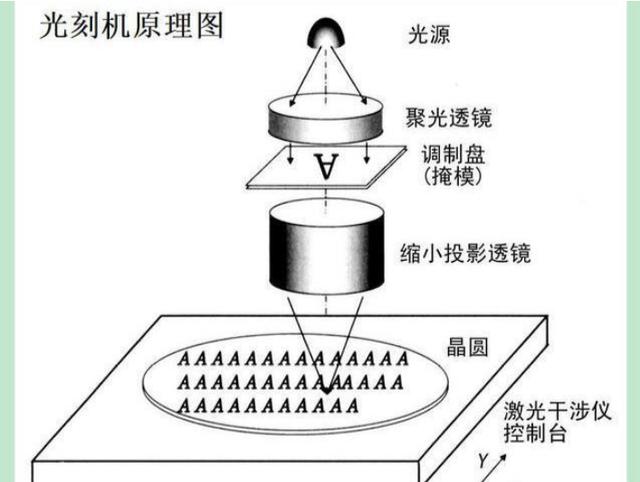
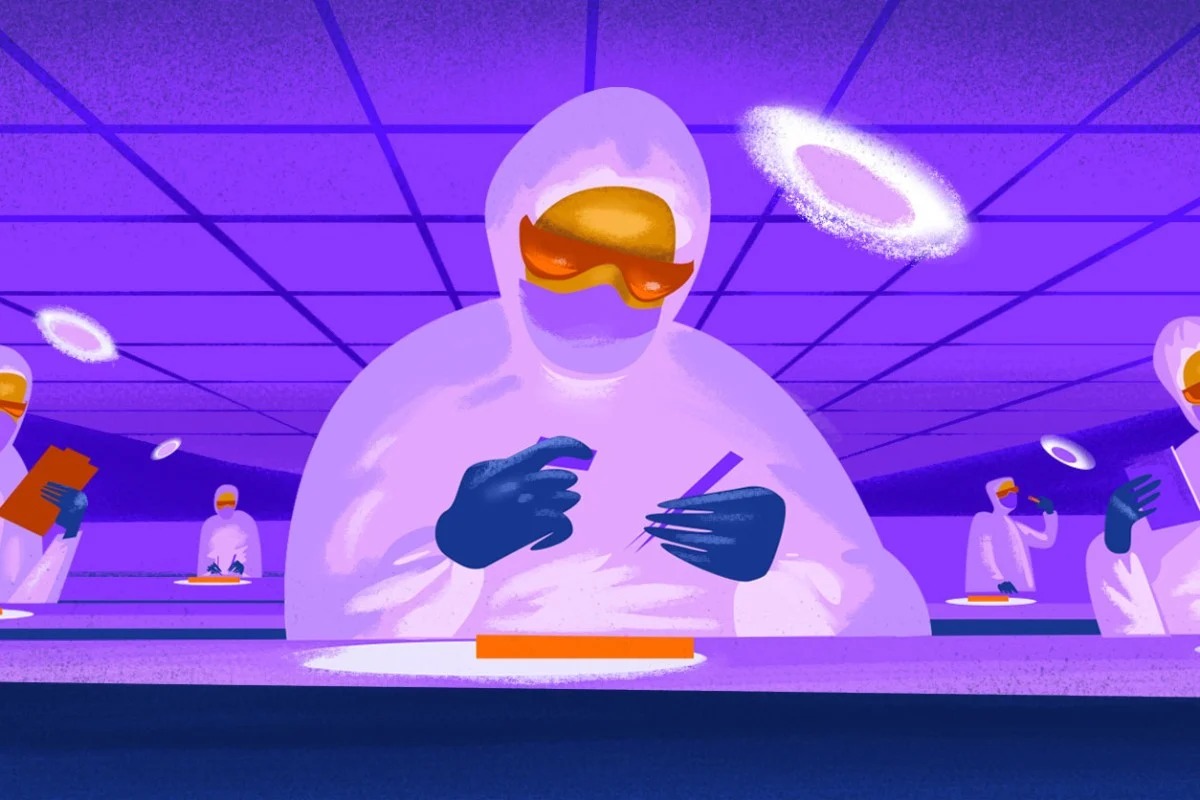
লিথোগ্রাফি মেশিন হলো চিপ তৈরির হৃদপিণ্ড। এটি সিলিকন ওয়েফারের উপর লেজার দিয়ে সার্কিটের নকশা প্রিন্ট করে।
EUV: 5nm, 3nm এর মতো সবচেয়ে উন্নত চিপের জন্য। চীনের কাছে এটি বিক্রি সম্পূর্ণ নিষিদ্ধ।
Immersion DUV: নিষেধাজ্ঞার পরে চীনের হাতে থাকা সবচেয়ে উন্নত বিকল্প। এতদিন এটার জন্যও চীনকে ASML এর উপর নির্ভর করতে হতো।
নতুন মেশিনের ক্ষমতা কতটুকু?
সরাসরি ক্ষমতা: 28nm ক্লাস চিপ তৈরি করতে পারবে।
বিশেষ পদ্ধতিতে: Multi-patterning প্রযুক্তি ব্যবহার করে 7nm এমনকি 5nm পর্যন্ত যাওয়া সম্ভব বলে দাবি। SMIC ইতিমধ্যে এই মেশিন SMIC এ টেস্ট করছে।
যন্ত্রাংশ: বেশিরভাগই দেশীয়, তবে এখনো কিছু অংশ আমদানি করতে হচ্ছে। লক্ষ্য পুরো সাপ্লাই চেইন দেশীয় করা।
টেক বিশেষজ্ঞদের মতে, মেশিনটি দেখতে ASML এর 2008 সালের Twinscan NXT:1950i মডেলের মতো, যেটি 32nm এর জন্য তৈরি ছিল।
সরবরাহ পরিকল্পনা:
1) ২০২৬ সালে: ৫টি মেশিন সরবরাহ করা হবে।
2) ২০২৭ সালে: ২০টি মেশিন সরবরাহের লক্ষ্য.
3) পাবে কারা: SMIC, Hua Hong এবং CXMT (ChangXin Memory Technologies)।
ASML এর সাথে পার্থক্য কোথায়?
এখনো সমকক্ষ নয়। রিপোর্ট অনুযায়ী performance এবং reliability তে এখনো পিছিয়ে আছে এবং mass production এর আগে আরও টেস্টিং বাকি।
1. গতি: ASML ঘণ্টায় ২০০+ ওয়েফার করে, চীনেরটি এখনো অনেক কম।
2. নির্ভুলতা: ন্যানোমিটার লেভেলে Overlay accuracy তে পার্থক্য।
3. স্থায়িত্ব: 24/7 ফ্যাব চালানোর মতো uptime এখনো প্রমাণিত নয়।
এর প্রভাব কি?
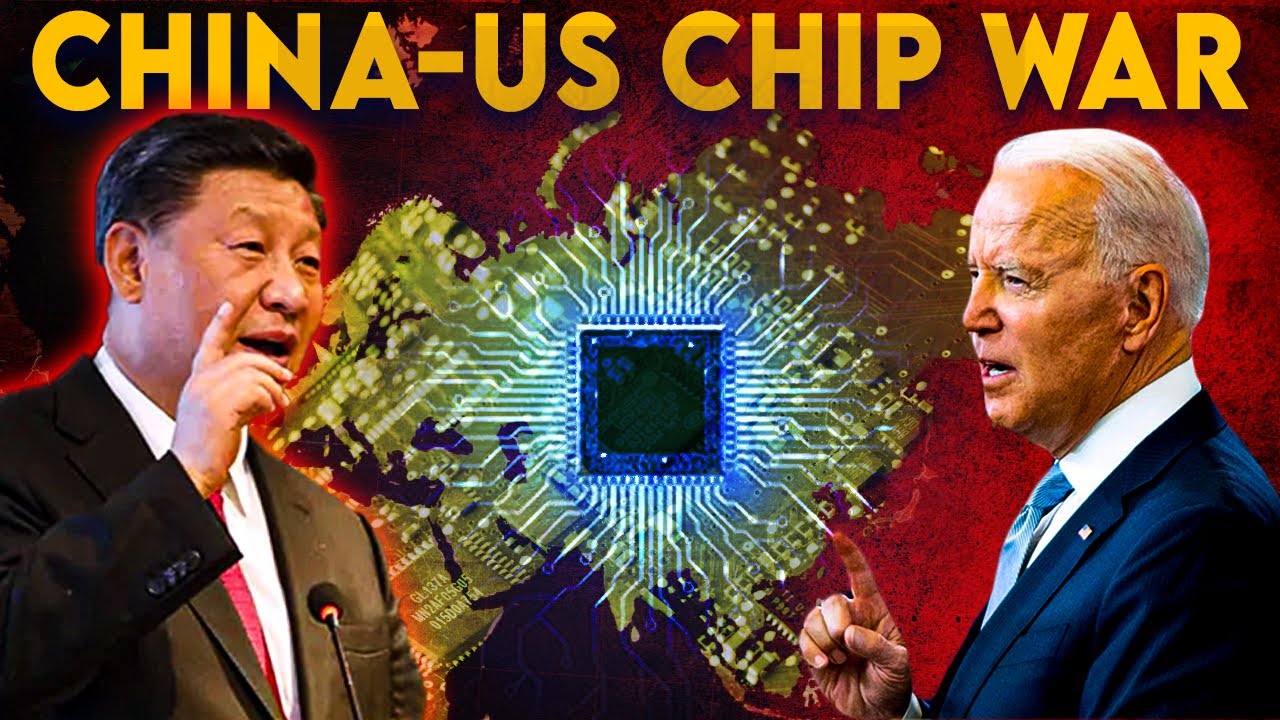
এটা ASML কে হারিয়ে দেওয়া নয়, কিন্তু আমেরিকার কঠোর নিষেধাজ্ঞার মধ্যেও চীন যে 28nm মেশিন বানিয়ে ফেলেছে, এটাই প্রমাণ করে চিপ যুদ্ধ এখন নতুন পর্যায়ে ঢুকেছে। চীন ইতিমধ্যে EUV এর প্রোটোটাইপ নিয়েও কাজ করছে, যদিও সেটা এখনো প্রাথমিক পর্যায়ে আছে।
Md Hossain
China Has Successfully Built a Prototype EUV Machine While Home-grown DUV Machine Has Entered Mass Production | Anastasi in Tech
China’s goal is not necessarily to beat ASML immediately, but to replace the inefficient quadruple-patterning DUV process with a domestic EUV solution it can control. While current performance metrics (like power output) lag behind commercial standards, the video concludes that establishing a functional prototype is a significant strategic win for China’s semiconductor autonomy.
Chinese scientists have solved some of the secrets of making advanced chip machines, a US publication reported yesterday.
Shares of ASML, the Netherlands-based monopolist in that sector, fell 7%.
The Chinese intend to finish five deep ultraviolet lithography (DUV) machines in the next five months, and 20 in the following year, said The Information, a tech media firm in San Francisco.
The first units will be delivered in the coming months to SMIC, Hua Hong Semiconductor, and ChangXin Memory Technologies, the media outlet said, quoting two people familiar with the program.
.STILL A WAY TO GO
This does NOT mean that China has caught up with ASML. There are two processes at the high end—immersion DUV, and extreme ultraviolet lithography, or EUV.
Chinese scientists are evidently on the way towards achieving the first of these, but are still working on the second, a tougher challenge.
Still, it’s an impressive advance. As recently as 2024, Christophe Fouquet, chief executive of ASML, said Chinese companies were “10 to 15 years behind industry giants” like Intel, TSMC, and Samsung.
But China is also researching and developing alternative systems for high end semiconductors, and has reported some success.
Even more importantly, analysts say China is set to become global leader in manufacturing classic, “standard” chips, which are still the most in-demand products in the sector, used in most products, including cars.
.CLEARLY AFRAID
The new breakthrough came from a Shanghai-based project using development teams from companies such as Shanghai Yuliangsheng Technology, the report said.
That same firm was reported to be working on China's first domestic immersion DUV lithography tools by the Financial Times in September last year.
The U.S. is clearly afraid of these particular clusters of Chinese scientists, and recently filed U.S. House Resolution 8170, which designated SMIC, Hua Hong, CXMT, Huawei, and YMTC as “restricted entities in law”.
In a bizarre reversal of the fundamental rules of capitalism, the US has made the entrepreneurial creation of better functioning, better value products, as acts of wrongdoing to be harshly punished by laws, sanctions, and export bans.
.BRUTAL STEP
The Chinese were forced to work on the project after the US’s anti-competitive attack on Chinese technology in 2022. Washington ordered all countries around the world to stop selling high-end chips and/ or chip-making machines to China.
That brutal step—which would be classified as illegal economic coercion if made by a non-western country—caused significant financial damage to firms in the Netherlands, Japan and elsewhere.
At the time, the US implied that the high-level chips were used by the Chinese military, but American specialists at an MIT security conference pointed out that 99.9% of them were actually used in civilian devices, from medical scanners to commercial tech products.
Author: Saikat Bhattacharya