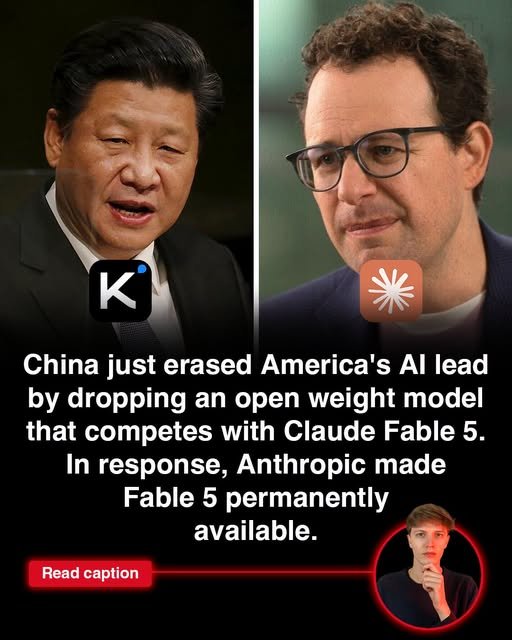






It frames Moonshot AI’s Kimi K3 as a decisive rupture in the AI industry: an open-weight model from China that supposedly ends the era of closed, subscription-locked frontier models dominated by U.S. companies (OpenAI, Anthropic, Google).
Core Claims in the Video
For years the dominant rule was “build the smartest model, keep the weights closed, and charge for access.”
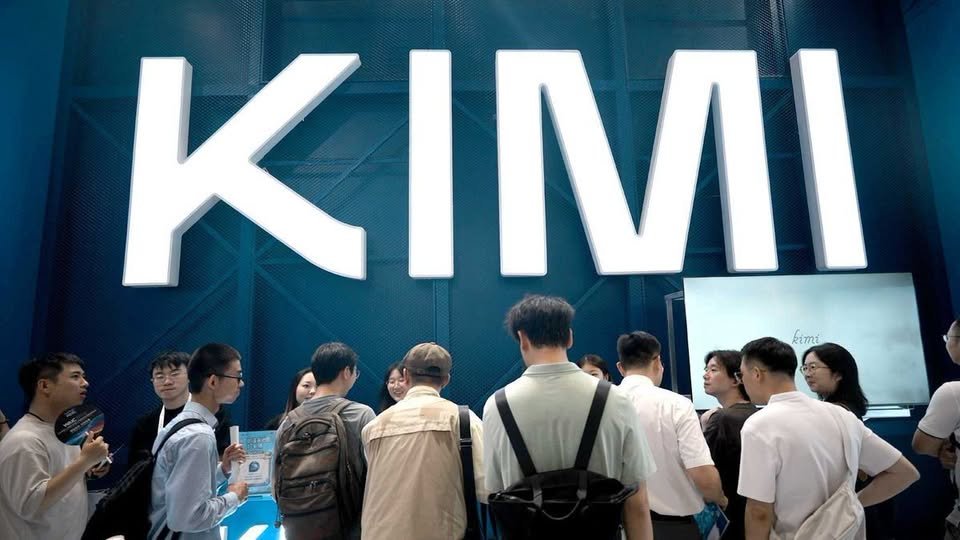
Kimi K3 (from Beijing-based Moonshot AI) is a competitive frontier-level model released with open weights, enabling anyone to build on it.
This creates an ecosystem advantage analogous to Android or Linux, which will eventually outperform closed systems through broader innovation.
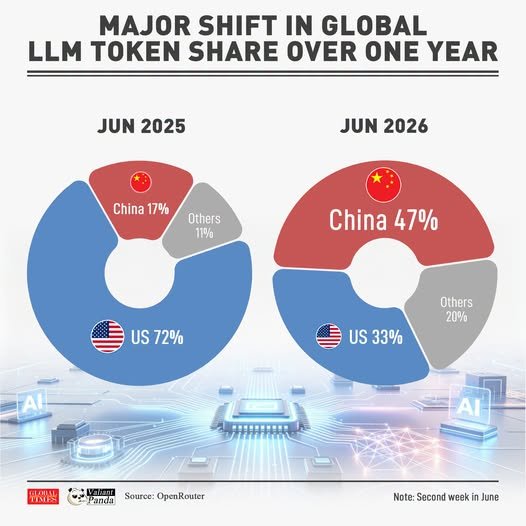
China’s approach treats AI as infrastructure rather than a pure product, fostering rapid competition among domestic firms (DeepSeek, GLM, Minimax, etc.).
Result: the global AI race is permanently altered in favor of open models.
What Kimi K3 Actually Is (as of mid-to-late July 2026)
Kimi K3 is a real release. Moonshot AI launched it around 16 July 2026. Key confirmed details:
Architecture: Sparse Mixture-of-Experts with roughly 2.8 trillion total parameters (16 of 896 experts active per token). New techniques include Kimi Delta Attention and Attention Residuals aimed at long-context efficiency.
Capabilities: 1-million-token context window, native multimodal (text + images/video input), strong emphasis on long-horizon coding and agentic tasks.
Performance: Competitive with current frontier closed models. Independent rankings (e.g., Artificial Analysis Intelligence Index) place it roughly 4th overall—behind Anthropic’s Claude Fable 5 and OpenAI’s GPT-5.6 Sol, but ahead of Claude Opus 4.8 and most other systems. It has ranked #1 on some front-end coding arenas. Vendor benchmarks are stronger; independent ones show it as frontier-adjacent rather than clearly superior.
Openness: Marketed as open-weight. Full weights were promised by 27 July 2026 (so still pending or very recent relative to the video). Until the weights, license, and model card are public and independently verified, it functions as a hosted API/app model. Training data and code remain closed.
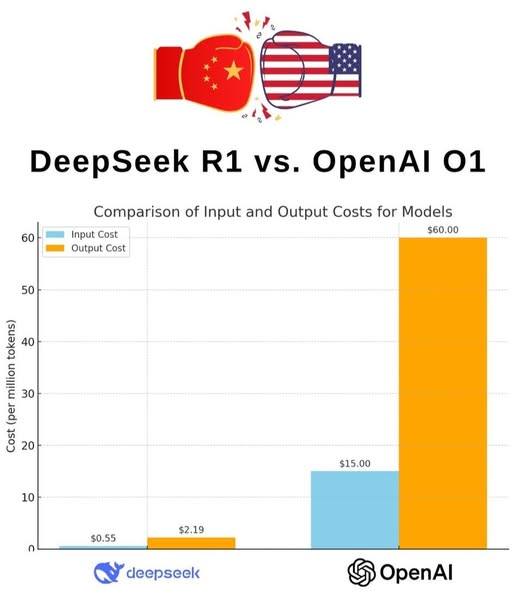
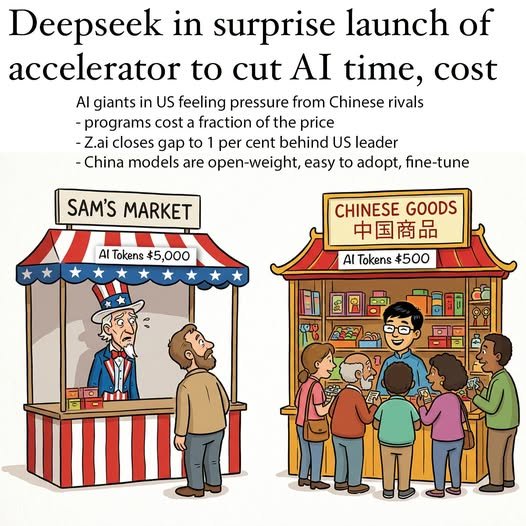
Pricing: Significantly higher than earlier Chinese models (~$3 input / $15 output per million tokens, with cheap cache hits). Still cheaper than the very top Western frontier models, but no longer “super-cheap.”
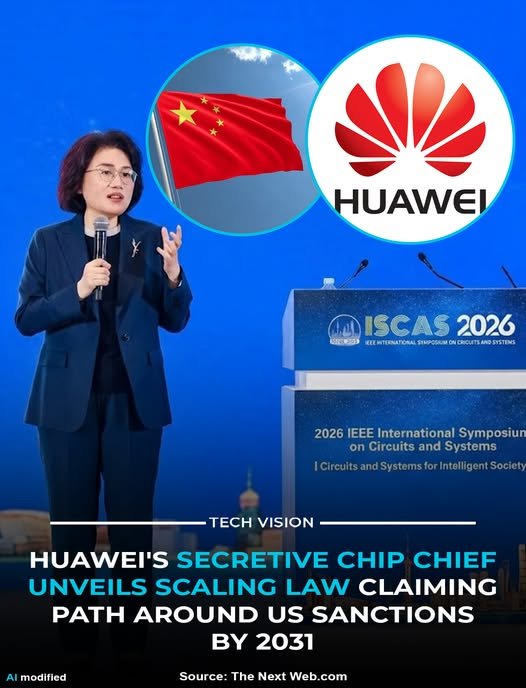
This continues the pattern of Chinese labs releasing strong open-weight models under U.S. chip export restrictions, often partnering with domestic hardware (Huawei is noted in coverage).
Critical Assessment
The video is accurate on the basic facts of the release but inflates the significance and permanence of the shift.
Strengths of the narrative
Open-weight releases at this scale do matter. They lower barriers for researchers, startups, and countries that cannot afford frontier API bills. Ecosystem effects are real (fine-tuning, distillation, specialized agents, local deployment once weights land). Chinese labs have repeatedly shown they can close capability gaps faster than many expected, especially on coding and long-context tasks. Treating AI more like infrastructure can accelerate iteration.
Overstatements and weaknesses
“Broke AI forever” is classic clickbait. This is an important incremental leap in open-model scale and competitiveness, not a permanent rupture. Closed labs still hold advantages in continuous improvement, data quality, safety tuning, and capital for the next generation. Open models have been competitive before; the gap simply narrowed again.
Open-weight is not the same as fully open-source. Weights are delayed relative to the marketing, and the training pipeline stays proprietary. Self-hosting a 2.8T MoE remains extremely expensive and complex for most users even after release.
Benchmark caveats are underplayed. Strong coding results do not automatically translate to superior general intelligence, reliability, or lower hallucination rates. Independent scores are solid but not dominant.
Geopolitical framing is selective. The video leans into a “China exposes greedy closed Western models” story. Reality includes hardware constraints on the Chinese side, different alignment priorities (Chinese models typically embed stronger content controls aligned with domestic policy), and the fact that Western labs also pursue open efforts—just less aggressively at the absolute frontier.
Historical analogies (Android, Linux) are imperfect. AI inference costs, continual pre-training, and safety/alignment create different economics than operating systems or mobile platforms.
Channel and tone
Byte Dynasty produces confident, future-oriented tech explainers with a clear pro-open / pro-China-innovation slant. Comments under the video amplify anti-closed-model and anti-U.S.-capitalism sentiments. The production is slick and persuasive for viewers already sympathetic to the open-source narrative, but it functions more as advocacy than balanced analysis.
Bottom Line
Kimi K3 is a genuine and impressive release that strengthens the open-weight side of the AI competition and puts real pressure on closed providers regarding price and accessibility. It is not, however, a permanent breaking of the industry’s fundamental dynamics. The race remains multi-sided: closed labs iterate rapidly with massive resources, open models democratize access and experimentation, and hardware, data, and policy constraints continue to shape outcomes on both sides. The video captures a real moment of acceleration while packaging it in maximalist language that exceeds the evidence.-based Moonshot AI) is a competitive frontier-level model released with open weights, enabling anyone to build on it.
This creates an ecosystem advantage analogous to Android or Linux, which will eventually outperform closed systems through broader innovation.
China’s approach treats AI as infrastructure rather than a pure product, fostering rapid competition among domestic firms (DeepSeek, GLM, Minimax, etc.).
Result: the global AI race is permanently altered in favor of open models.
What Kimi K3 Actually Is (as of mid-to-late July 2026)
Kimi K3 is a real release. Moonshot AI launched it around 16 July 2026. Key confirmed details:
Architecture: Sparse Mixture-of-Experts with roughly 2.8 trillion total parameters (16 of 896 experts active per token). New techniques include Kimi Delta Attention and Attention Residuals aimed at long-context efficiency.
Capabilities: 1-million-token context window, native multimodal (text + images/video input), strong emphasis on long-horizon coding and agentic tasks.
Performance: Competitive with current frontier closed models. Independent rankings (e.g., Artificial Analysis Intelligence Index) place it roughly 4th overall—behind Anthropic’s Claude Fable 5 and OpenAI’s GPT-5.6 Sol, but ahead of Claude Opus 4.8 and most other systems. It has ranked #1 on some front-end coding arenas. Vendor benchmarks are stronger; independent ones show it as frontier-adjacent rather than clearly superior.
Openness: Marketed as open-weight. Full weights were promised by 27 July 2026 (so still pending or very recent relative to the video). Until the weights, license, and model card are public and independently verified, it functions as a hosted API/app model. Training data and code remain closed.
Pricing: Significantly higher than earlier Chinese models (~$3 input / $15 output per million tokens, with cheap cache hits). Still cheaper than the very top Western frontier models, but no longer “super-cheap.”
This continues the pattern of Chinese labs releasing strong open-weight models under U.S. chip export restrictions, often partnering with domestic hardware (Huawei is noted in coverage).
Critical Assessment
The video is accurate on the basic facts of the release but inflates the significance and permanence of the shift.
Strengths of the narrative
Open-weight releases at this scale do matter. They lower barriers for researchers, startups, and countries that cannot afford frontier API bills. Ecosystem effects are real (fine-tuning, distillation, specialized agents, local deployment once weights land). Chinese labs have repeatedly shown they can close capability gaps faster than many expected, especially on coding and long-context tasks. Treating AI more like infrastructure can accelerate iteration.
Overstatements and weaknesses
“Broke AI forever” is classic clickbait. This is an important incremental leap in open-model scale and competitiveness, not a permanent rupture. Closed labs still hold advantages in continuous improvement, data quality, safety tuning, and capital for the next generation. Open models have been competitive before; the gap simply narrowed again.
Open-weight is not the same as fully open-source. Weights are delayed relative to the marketing, and the training pipeline stays proprietary. Self-hosting a 2.8T MoE remains extremely expensive and complex for most users even after release.
Benchmark caveats are underplayed. Strong coding results do not automatically translate to superior general intelligence, reliability, or lower hallucination rates. Independent scores are solid but not dominant.
Geopolitical framing is selective. The video leans into a “China exposes greedy closed Western models” story. Reality includes hardware constraints on the Chinese side, different alignment priorities (Chinese models typically embed stronger content controls aligned with domestic policy), and the fact that Western labs also pursue open efforts—just less aggressively at the absolute frontier.
Historical analogies (Android, Linux) are imperfect. AI inference costs, continual pre-training, and safety/alignment create different economics than operating systems or mobile platforms.
Channel and tone
Byte Dynasty produces confident, future-oriented tech explainers with a clear pro-open / pro-China-innovation slant. Comments under the video amplify anti-closed-model and anti-U.S.-capitalism sentiments. The production is slick and persuasive for viewers already sympathetic to the open-source narrative, but it functions more as advocacy than balanced analysis.
Bottom Line
Kimi K3 is a genuine and impressive release that strengthens the open-weight side of the AI competition and puts real pressure on closed providers regarding price and accessibility. It is not, however, a permanent breaking of the industry’s fundamental dynamics. The race remains multi-sided: closed labs iterate rapidly with massive resources, open models democratize access and experimentation, and hardware, data, and policy constraints continue to shape outcomes on both sides. The video captures a real moment of acceleration while packaging it in maximalist language that exceeds the evidence.
Author: Saikat Bhattacharya