
How do you create a good student?
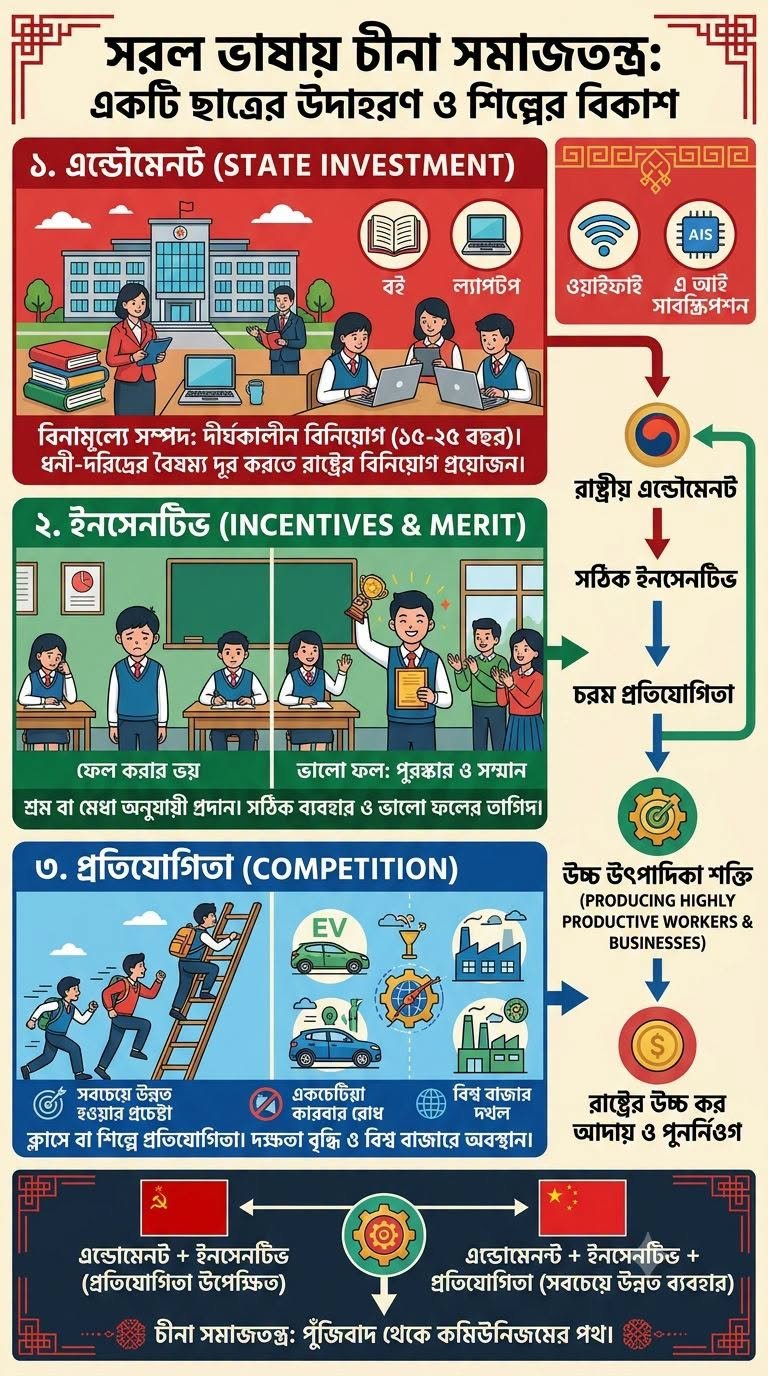
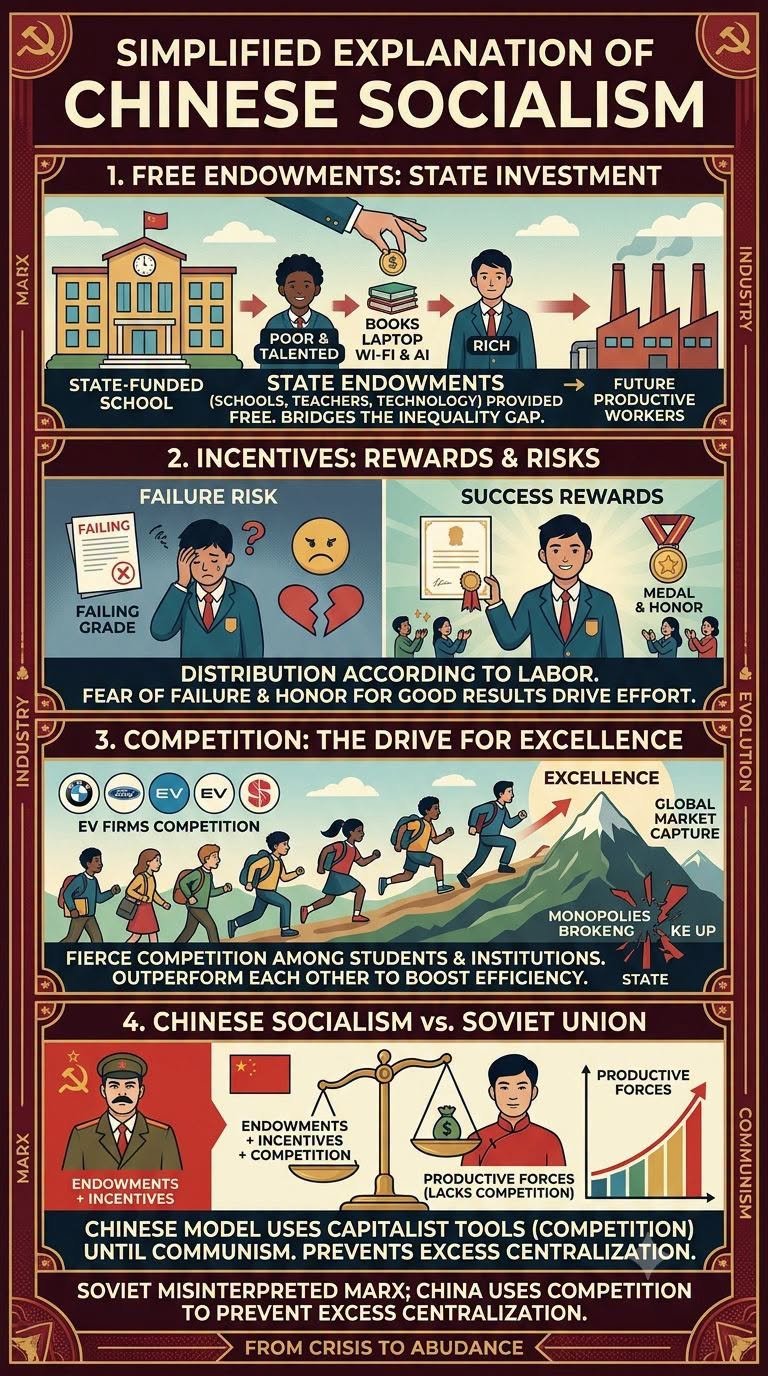
First, you need free endowments: schools, teachers, books, notebooks, pens, pencils. In the modern era, it's even better if you can provide laptops, Wi-Fi, and AI subscriptions.
Second, you need incentives: fear of failing if you don't study, awards for good results, and social honor. (In Marxist literature, this is also known as "distribution according to labor or merit.")
Third, you need competition: the mentality of competing among classmates and schoolmates to outperform each other.
The first part, free endowments, is the most crucial. These are long-term investments, and the results will only appear much later. Even if a student is less gifted, at least a minimum of education up to Class 12 is necessary—a 15-year investment. For a student with average intelligence to graduate, an 18-year investment is required. For highly gifted students pursuing higher education, a 20-25 year investment is needed.
If this investment must come from families, then only rich and middle-class families will invest in their children. Children from poor and lower-middle-class families, even if highly talented, will be left behind. Therefore, the state must make this endowment investment. Only then will society get highly productive workers 15-25 years later, and the state can easily recover the cost of investment by collecting higher taxes from these productive workers.
However, it is not enough for the state to just provide free endowments. If students get books but don't read, skip school to watch movies, or use the internet to watch reels and movies on laptops, it won't work. Hence, you need incentives. If there is a fear of failing, they will be forced to study. The greed for awards and honor for good results will deter them from watching movies. Only then will the endowments provided by the state be used correctly.
It gets even better when the student gets a competitive environment in the classroom and school. If the desire to outperform each other becomes intense, the student's urge to study will increase even more.
Now, if you think of industry, agriculture, and services instead of students, the situation is the same. To establish any special industry, you need long-term unprofitable investment, which mainly the state can make. However, to ensure that this investment is being used correctly, funds must be allocated to industrial institutions according to market share. Highly productive workers and management must be paid more. And you need extreme competition among various institutions within that industry. The state's job here is not to tolerate any monopoly.
For example, electric vehicles need electric charging stations. An adequate number of charging stations must be built first. Then people will buy electric cars, and making electric cars will be profitable. Therefore, the state must build charging stations without expecting any short-term profit. Investment must continue in electric vehicle institutions for a long time without profit. And there must be fierce competition among many institutions. Only then can the global market be captured.
Around the world, many think that socialism only means free endowments, and capitalism means incentives and competition. This ধারণা conception/idea is wrong. According to Marx, socialism is the path to go from capitalism to communism. Along this path, many elements of old capitalism will remain. And many elements of communism will keep being added. So, just as communist elements like free endowments will be added during the era of socialism, capitalist elements like incentives and competition will remain for a long time. Only then is the development of productive forces possible. And at that stage, productive forces will reach a level where incentives and competition will gradually lose their effectiveness.
Both the Soviet Union and China adhered to state-provided free endowments and incentives (distribution according to labor). China has added competition to it. The Soviet Union believed that capital becomes centralized in a capitalist economy because a large production system is more productive than a small production system. Therefore, competition as an element is losing its effectiveness in a capitalist society. But China thinks this was a misinterpretation by the Soviet Union.
Marx said that capital tends to centralize in a capitalist economy. But the reason for this centralization is not just economic. Because the cost per unit of production is lower in large production, some centralization occurs. Similarly, using loan networks and political connections, some centralization also takes place. That is, capital centralizes much more in capitalism than economic logic should allow. Again, competition itself decides how much centralization will take place. That is, competition exists as an element in capitalism. And socialism should not allow more centralization than economy and cost allow. That is, socialism will use competition much more than capitalism.
Author: Saikat Bhattacharya