
Pre-World War II Era: Supply Creates Its Own Demand
In Pre-World War II era Say's law ruled Western mind. Say's law said supply creates its own demand. Jean-Baptiste Say's original formulation (1803) was that the act of producing creates the income to purchase that output. If quantity supplied is above what demanded, price falls forcing suppliers to reduce quantity to the level which consumers demanded. If quantity supplied is less than what demanded, price rises signalling suppliers to raise supply to the level demanded. Hence, there can be no excess supply or lack of demand in the market.
This way of thinking led Western countries to industrialize and supply products as much as possible in the market and compete with each other. And for that they ended up competing for sources of raw materials, cheap workers and markets for finished products.
Things became more complicated when British industrial might was challenged by Germany and surpassed by USA. But British Pound remained dominating currency. Hence high value of British Pound made British industries uncompetitive vis-a-vis Germany and USA but British Pound assets continued to attract foreign investments.
Thus income by selling products got accumulated in Germany and USA while debt got accumulated in Britain. The three competed for raw materials, market for finished products. USA carved out its controlled sphere by defeating Spain in Cuba & Philippines.
But when Germany tried to do that in Europe, World War I started.
British emerged victorious in World War I against Germany but had to concede British Pound domination. USA, Britain, France each created their own zone of influence ensuring use of their own respective currencies.
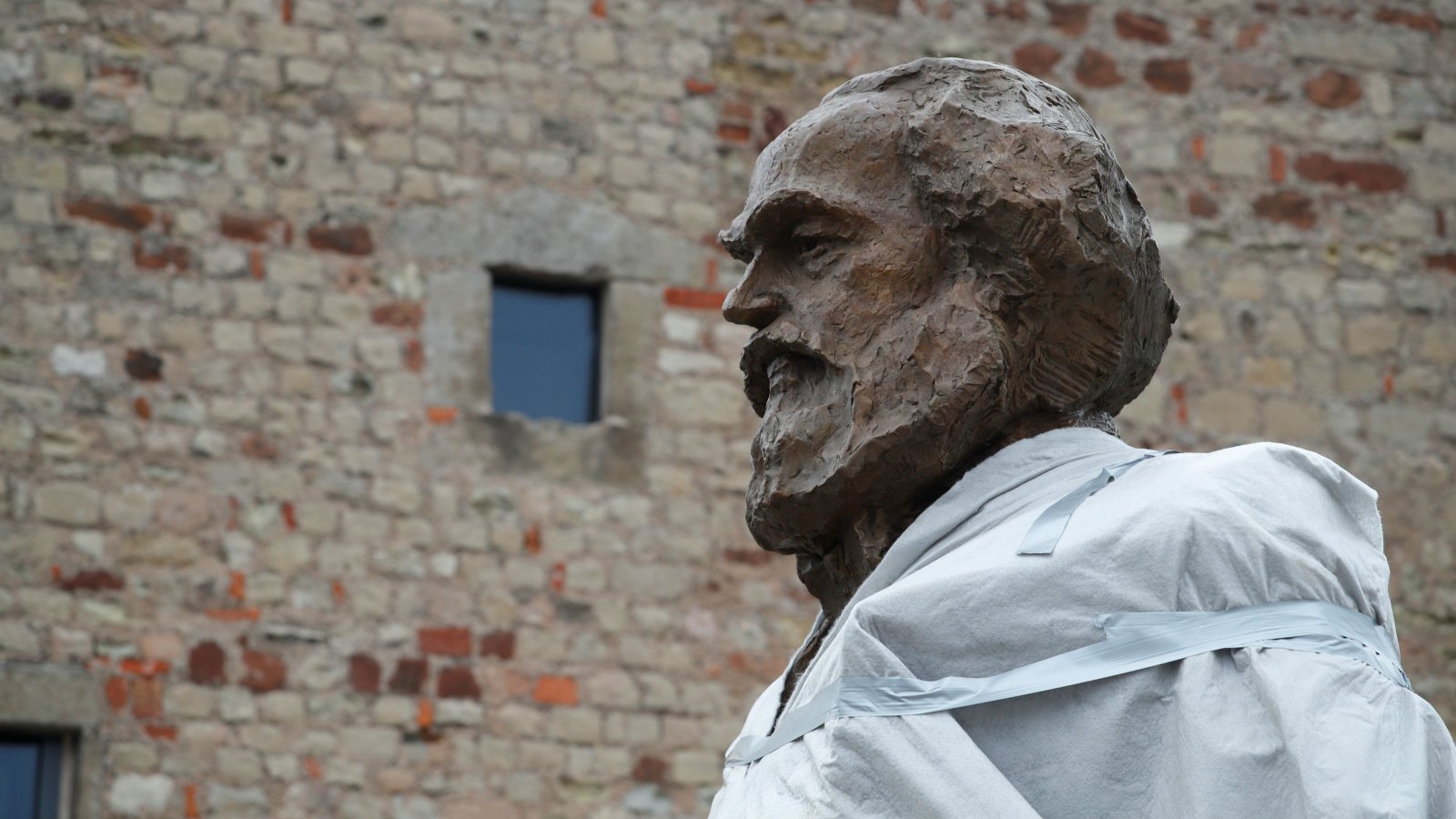
In the midst of World War I, Russian Revolution happened. Russian revolutionaries were influenced by Marxian theory. Marx opposed Say's law and said that capitalist class automates production process to keep its profit income rising and so working class' wage income growth falls. Since capitalist class invests in production most of its income and working class consumes most of its wage income, production potential grows more than consumption potential. Thus supply potential grows more than demand in the market. This is Marx's famous theory of over-production crisis.
Marx also said that big capitalists will gradually compete out small and middle capitalists. So production process will be monopolized and centralized by few big producers.
Russian revolution's leader Lenin said that big capitalists & landlords have joined hands to exploit workers & peasants. So workers and peasants must join hands to overthrow big capitalists and landlords. Then must take their productive assets and curtail their luxury consumption as much as possible and invest in education, health, heavy industries, infrastructures, energy etc. This would be the fastest way to industrialize.
If a non-Western country fails to industrialize then it will be occupied & colonized by a Western industrialized country for its resource and labor. The colonized country won't be able to bargain and set prices for its own resource and labor. Moreover, two or more industrialized countries might fight for the colony making it battle field.
After revolution of Russia, Soviet Union soon industrialized itself after confiscating property of big capitalists and landlords. To counter Soviet rise, Britain allowed re-industrialization of Germany, defeated in World War I.
USA by 1920s was producing so much vis-à-vis global demand that over production crisis could no longer be denied. Roosevelt started demand creating government projects. These projects are intended to create demand and not focus on profit making market supply. Thus they are mostly non profitable investments. It is then John Maynard Keynes came up with Lack of Demand theory which says Lack of Demand results in demand for production below potential production supply and hence results in unemployment of labor and capital. This is also associated with deflation.
The Depression was also driven by a debt-deflation spiral, a collapsed banking system, and the gold-standard straitjacket. Roosevelt's New Deal (1933) was indeed demand-creating, but it was the 1933 devaluation of the dollar and 1930s rearmament (fiscal stimulus) that did more for recovery than the early AAA/NRA programs.
Acceptance of over-production crisis or lack of demand crisis in the Western world and rise of Soviet Union resulted in acceptance of demand creating non-profitable investments by govt., acceptance of strong Trade Unions, acceptance of more imports and global division of industries and labor.
Inter-War Period to World War II & Bretton Woods
To counter USA, British funded Japanese and soon Japan emerged as an industrial power too.
Then Germany-Japan united against British-USA-Soviet alliance in World War II. The former got defeated. British also got weakened and USA emerged as main economic centre of the world with 45% of global GDP. Soviet was distant second with 10% of global GDP. British, Germany & Japan were all ~8% of global GDP each. French, Dutch and other European countries when taken together were 6% of global GDP.
Soon in 1944 Bretton Woods Agreement US Dollar became only international currency and that means for West Europe & Japan to accept geopolitical, military & currency domination of USA. Together with USA, West Europe and Japan made up 75% of Global GDP.
Only Soviet Union with East European satellite countries formed a counter Socialist block with 11% of global GDP.
Remaining colonized and semi-colonized Africa, Asia & Latin America were preparing for breaking free colonial yoke as colonial West Europe was already weakened by two World Wars. They together made up just 14% of global GDP. These are called Third World countries.
1945–1970: State Led Economy & Class Struggle
As US Dollar became only major global currency, value of US Dollar rose and this made many US industries un-competitive vis-a-vis W. Europe & Japan.
W. Europe & Japan started building their industries and could also sell them in US market. Thus US market acted as external market for W. Europe and Japan. Internal market was expanded by state led non-profitable demand creating investments. Thus demand for labor remained high and so workers had high bargaining power and so Trade Unions were strong in USA, W. Europe & Japan.
High growth was driven not only by state investment but by reconstruction (after capital assets were destroyed in WW II) catch-up growth, technology diffusion, and the suppression of finance (financial repression i.e. checking growth of asset trading) under regulated capital controls.
Soviet led Socialist Block showed rapid industrialization and development by seizing property of capitalists and landlords, curtailing luxury consumption and investing maximum in education, health, heavy industries, infrastructures and energy. Many Third World countries soon joined them fully like China and partially like India.
Third World countries by then were fighting colonialism and semi-colonialism and for political and economic liberation. Socialists & communists became popular as they were supporting fight against colonialism. State led non-profitable long gestation investments in education, health, infrastructures became popular too in the Third World. They had to squeeze big capitalists and landlords by various degrees and also needed to curtail luxury consumption to different extent too.
Now Soviet led Socialist Block was economically mere one-fifth of the size of US led capitalist block. So former especially Soviet could compete USA militarily only by allocating more and more share of GDP to its military.
Thus even after forming excellent education, health, heavy industries and infrastructures Socialist Block failed to build a consumer goods sector. Instead most resources went to develop military industry and some associated sectors like space industry, sports industry etc.
So though Third World people fighting colonialism and seeking economic & political liberation, looked at heavy industries and military industries of Soviet led Socialist Block as model, people inside the block were frustrated by lack of daily necessary consumer goods.
Still despite having a much smaller GDP compared to West, Socialist Block scored tremendous political successes in Third World.
Socialist Block also had the advantage of pioneering women into workforce which helped its economy grow tremendously.
Initially US led the West tried to counter liberation struggles of 3rd World countries and also women liberation movement inside the West. But soon it was clear that Western women and 3rd World countries were winning their cherished freedom. West could not stop them.
Soviet led Socialist Block was perceived to be winning by many but reality was that their economy was not delivering. China questioned Soviet Model & its lack of consumer goods and separated itself from the Soviet block.
1971–1973: Collapse of Bretton Woods Agreement
After 25 years of Bretton Woods Arrangement and the role of US Dollar as Global currency, things finally started to fall apart.
Firstly, US GDP as share of Global GDP became 32% from 45% in 1940s. West Europe & Japan raised their share from 28% to 35%. US market could help West Europe and Japan by giving market sacrificing its own industries as long as US economy was way bigger. But as US economy became smaller vis-a-vis W. Europe & Japan (taken together), the later could no longer grow depending on US market. This is because of Triffin’s Dilemma which says that the reserve currency country’s production becomes uncompetitive and so it starts to have current account deficits which can only be financed by external debt. Thus sooner or later the reserve currency country defaults.
Secondly, in 25 years since World War II ended many Third World nations which got liberated started to be confident enough to set their own prices of their raw materials. Especially oil selling nations raised oil price so high that supply potential of USA, Japan & W. Europe fell. Thus inflation was back there. Keyenesian lack of demand with deflation crisis vanished. The Bandung Conference (1955) and the Non-Aligned Movement already formalized Third World political assertion.
Thirdly, high inflation destroyed the culture of demand creation through state led non-profitable investments or subsidized employments. This is because such policies can be taken only when there are deflationary tendencies and demand is falling short of supply potential. But oil price shock reduced supply potential itself reducing growth and bringing inflation back. Economists often call the situation stagflation.
The oil shock (1973) was a supply shock, but inflation had already accelerated in the late 1960s due to Vietnam War deficit spending and loose monetary policy under the Martin and Burns Federal Reserve. Keynesian demand-management was discredited, but the intellectual pivot to monetarism (Friedman) and later New Classical economics was equally important.
As growth fell, demand for workers fell, workers' bargaining power faded and Trade Union became weak.
In this context, when Germany asked USA to pay for German imports in gold as per ratio stated in Bretton Woods Agreement, USA failed to do so. Hence the Bretton Woods Agreement collapsed between 1971 and 1973. In August 1971, Nixon closed the gold window (the 'Nixon Shock'), imposing a 10% import surcharge. The Smithsonian Agreement (December 1971) tried to re-establish fixed rates with a devalued dollar, but markets kept selling dollars. By March 1973, the major currencies were floating.
1973-1979: Post-Bretton Woods Detente
After Bretton Woods Agreement collapsed, USA made a detente with Socialist Block through three meetings between 1971 and 1974. Détente was institutionalized not only via Kissinger's triangular diplomacy but through the Helsinki Accords (1975) and SALT I (1972). The Soviet invasion of Afghanistan (December 1979) ended détente, not the other way around.
Under the leadership of Kissinger USA left Vietnam allowing communists to take its control (1973), and recognized Socialist countries East Germany (1974) and China (1979).
USA accepted that Third World countries have the right to political & economic freedom. Thus USA signed petro dollar deal with Saudi Arabia in 1974. USA allowed oil price high but made agreement with Saudi Arabia so that its oil would be sold in US Dollar only.
At the same time women liberation inside West was complete too. More & more women were joining labor market and this is raising workers' supply and eroding the bargaining power of working class even more.
Between 1974 & 1979 detente between Soviet and USA was characterized by Soviet installing communist governments in Afghanistan, South Yemen, Angola while USA had withdrawn itself to Latin America by then.
In the meantime it was clear that many Third World countries have created in 25-35 years a good educated healthy yet cheap working class with some degree of physical and institutional infrastructures.
Soviet thought it was winning in 1970s as West Block was fighting economic turmoil. Soviet massively over extended itself militarily during this time. Soviet Block also started getting western loans and investments during the detente period. They used these loans for buying Western consumer products creating a market and political love for West among its people. It also got many Soviet Block countries externally indebted to the West. Things were manageable as Soviet Union was an oil seller in the global market and oil price was high in 1970s.
Soviet Union was then Number One in Patent filings too. Other Socialist Block countries like East Germany, Hungary were top notch Patent filers as well.
In the detente period, West used to buy patents of Socialist Block while the later mainly bought consumer goods and high tech goods from West.
After 25-35 years of the end of World War II, a new generation of the Third World were coming in who were educated, healthy and wanted to possess the best consumer products from West. New Third World generation started talking more about aspiration for western luxury. They were less interested about sacrificing luxury goods for investment in heavy industries and infrastructures as some were already created after 25-35 years of investment.
1979–1991: Globalization Starts
Immediate problem for USA was lack of faith in US Dollar after it failed to maintain Gold-US Dollar ratio agreed in the Bretton Woods Agreement.
The Volcker Shock (1979–82): Paul Volcker's Federal Reserve raised interest rates to approximately 20% to crush inflation. High interest rate reduced investment and hence growth. This induced the 1980–82 recession, broke US unions (PATCO strike, 1981), and triggered the Latin American debt crisis. It was the monetary foundation of the 'low inflation' regime that later enabled the petrodollar-asset-market cycle.
USA knew its exports could not compete with Japan & Germany. So demand for US Dollar could not come from demand for US products in Global market.
But demand for US assets can raise demand for US Dollar too.
USA allowed oil price high but made agreement with Saudi Arabia so that its oil would be sold in US Dollar only. Saudi controlled oil price and entire world needed oil and so whole world would need US Dollar. Every country now needed to store some US Dollars i.e. invest in US Treasuries or US assets as each of them needed oil.
Thus US assets would have a regular source of demand. This would keep demand and value of US Dollar high. These foreign investments in US asset market needed to be invested in some highly profitable projects inside USA. To keep projects inside USA profitable interest rate needed to be low. To keep interest rate low, inflation needed to be low.
But high oil price would make inflation high and it is high oil price commitment to Saudi and other oil sellers that would keep petro dollar deal going.
So to keep inflation low, USA sought new young educated healthy yet cheap workers of the Third World.
USA started exporting its manufacturing base to Third World countries where cheap productive laborers could produce those products at a lower cost and hence more products could be imported back to USA at lower price. Thus the problem of inflation was solved.
China under Communist party leadership invested as much as they could in education, health, heavy industries, infrastructures and energy between 1949 and 1979. Thus China had a huge pool of productive yet cheap laborers. It had low logistics, transport and energy cost due to huge investment in infrastructure sacrificing rich class and luxury goods. Thus Chinese workers and to some extent entire Third World workers could keep US inflation low.
Hence US interest rate remained low and investments in many projects became profitable. Thus US asset market could get regular foreign investments.
1974 Petro-dollar deal with Saudi and 1981 opening up of Chinese economy ended the economic woes of USA that started with stagflation in 1970s.
But low interest rate made speculation in US asset market easier. This led to unproductive asset trading on one hand and rise of innovation on the other.
This also made US companies more competitive as they could use Chinese labor and infrastructure on one hand and US innovative financial market on the other. Thus Japan & West European companies began to export its low end manufacturing to China & Third World too to stay competitive.
In 1980s, Chinese communist leadership created a new form of Socialism where infrastructure and heavy industries remained in the hands of the state while private entrepreneurship was allowed in consumer goods industry. Communist Party's political monopoly was justified in the name of controlling the newly formed capitalist class and continuation of state led investments required in new infrastructures and strategic industries and to create new areas of comparative advantage.
Hence came Reaganomics and Thatcherism i.e., the shift to privatization, deregulation, and union-busting in the Anglo-American world
In 1985, Soviet Communists understood that entire global economy has changed and it had to reform itself. Soviet Union under the leadership of Gorbachev ended Communist Party political monopoly and went for rampant privatisation of all industries including heavy ones. Fall in oil price in 1985-86 and Afghan war drain forced Soviet leadership to go for rapid reforms too. Soon reforms destroyed Soviet industrial base and Soviet Union returned to Western type capitalism.
Soviet was thought to be winning in 1974 but by 1991 it was dissolved. Stephen Kotkin argues the USSR collapsed because it could no longer afford its empire at prevailing oil prices.
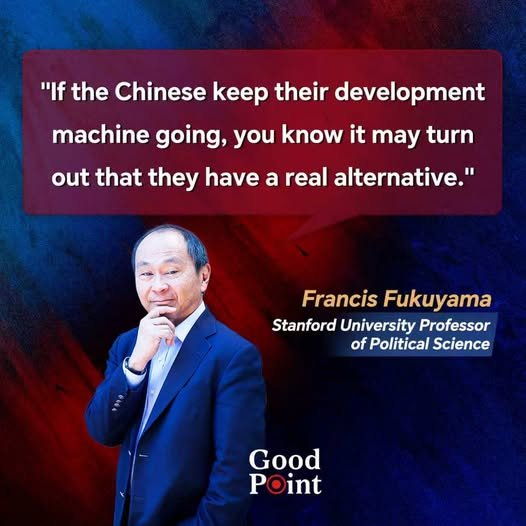
Now it seemed USA had won & it would be sole super power forever. Fuji Fukiyama claimed Western Multi-Party Democracy is the ultimate form of human political set up which would not evolve any further.
1992–2008: It's China
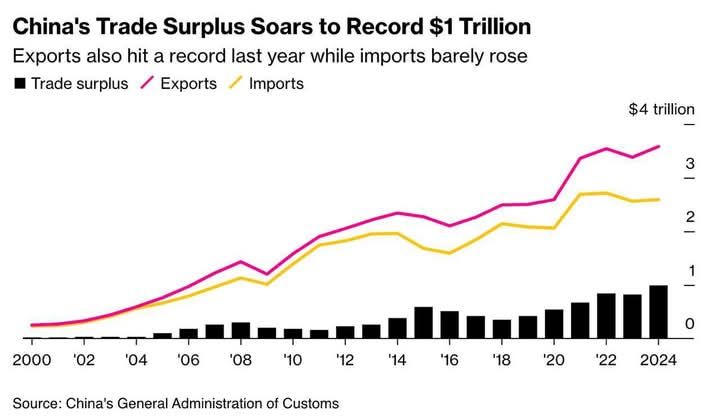
Soon China became factory of low end manufacturing for the whole World. After 2001, China entered WTO and started becoming World factory of middle end manufacturing too.
Deal was simple: China would give its cheap productive labor, low logistics, transport and energy costs to the West and Japan. In return China would get richer Western market, higher wages and superior technologies from the Western Companies.
China in this way raised its share of global GDP (in PPP) from 2% in 1980 to 16% in 2008. US GDP share fell from 32% to 24%, EU from 27% to 17% and Japan from 9% to 4% during the same period.
USA exported all its low end & middle end manufacturing to China & itself concentrated in high end products, innovation and asset trading speculation (often called finance).
Japan & EU had weaker currencies (when compared to US Dollar) and hence had weaker financial market which entailed weaker innovation and asset trading speculation. They excelled in high end manufacturing only.
US asset trading speculation first based itself on Insurance, Real Estate, etc. This bubble burst in 1987. Then US asset market created bubble in newly rising digital innovation called Dot Com Infotech Bubble. It burst in 2001 and its burst was a major reason USA allowed China to enter WTO.
Next bubble was Sub-prime mortgage housing bubble which burst in 2008 and ended the phase of relentless globalization. After the burst of this bubble it was clear that China has become too big vis-a-vis USA to depend on US market for growth.
It was also clear that US asset market has outgrown US production base. So Third World leaders became sceptical about giving credits to US asset market.
USA realized too that China has become economically too powerful and it could be costly if USA continued to depend on Chinese credit to inflate its asset market.
Since 1970s, state led non profitable demand creating investment ended. Instead assets were used as collateral to distribute debt among workers & consumers to create demand for products made in China, or Third World. This way of demand creation through asset price inflation was rampant as offshoring manufacturing to China resulted in deindustrialization of US industries entailing low demand for US workers and hence low wage growth. USA had stagnant wages while profits soared.
So state led demand creation given away to credit based demand creation.
And by 2008 the system was showing cracks.
2009–2021: Backlash against Globalization
China understood it can no longer depend on US market and on credit based demand creation.
So China began to create demand by old Socialist way. Demand creation through non-profitable productive investments by State-owned enterprises. Some investment projects focused on subsidized employment, some projects are long gestation infrastructures like bridges, ports, cities. This produced excellent results. China gradually reduced dependence on the US market.
By 2013 China epitomized its state led demand creation model on a global scale. China introduced Belt & Road Initiative (BRI). China began to build ports, roads, railways, infrastructures throughout the world and increased trade with Global South / Third World countries in a big way.
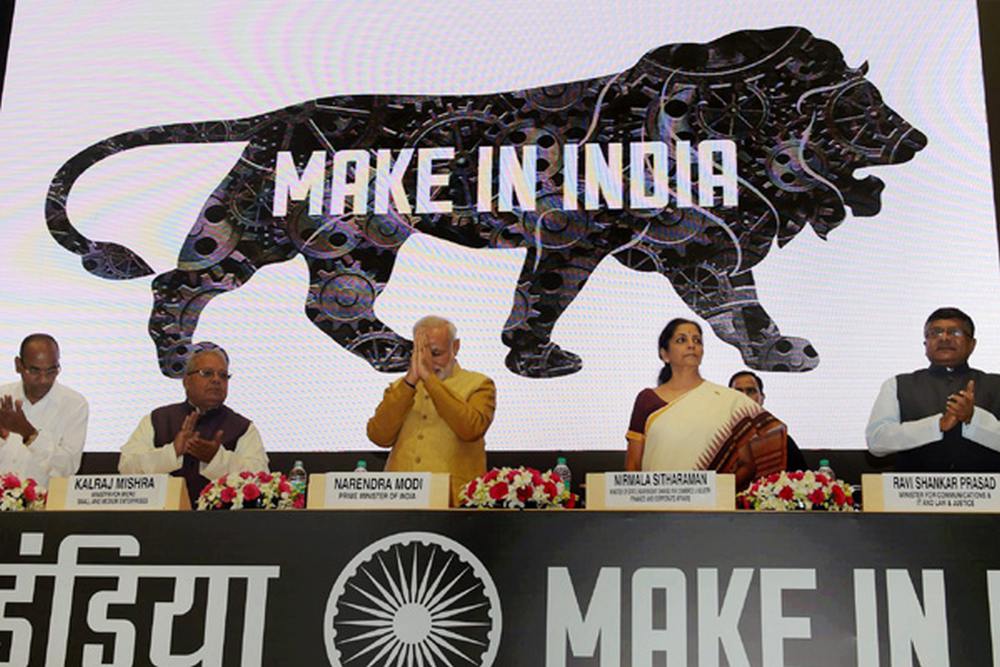
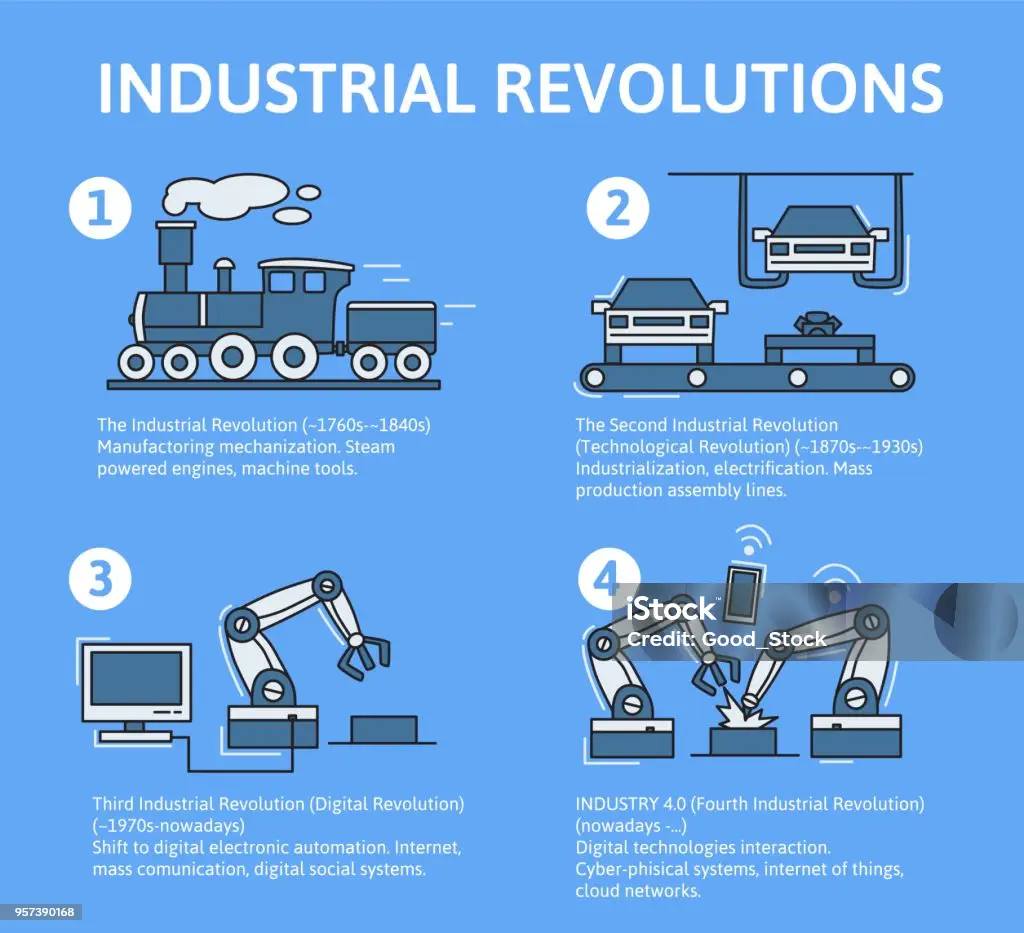
By 2015 China introduced "Made in China 2025". It was all about adapting Chinese industries to Fourth Industrial Revolution. Also from this it was clear that China wants to move up the global supply chain ladder and make high value products. For this China ordered state directed investment as opposed to market directed investment to create comparative advantage in high end products. This was a wake up call for West and Japan. On the one hand BRI was designed by China to reduce dependence on US market and on the other hand Made in China 2025 was designed to make China a competitor of West and Japan in the high value products. So China will not just keep inflation of low end and middle end products in check but will also reduce price of and hence income from high end products.
The US Fed, ECB, and Bank of Japan engaged in unprecedented asset purchases. This inflated asset prices (stocks, real estate) while wages stagnated, deepening the inequality that fueled Trump moment in USA, Brexit in UK, and the Yellow Vests in France.
USA elected China hawk Donald Trump to power in 2016. He immediately took anti Globalisation steps. He put tariffs on Chinese products, denied China of high tech US products like semi-conductors and demanded from China an end to State directed resource allocation. US tariffs began in 2018 (Section 301), but the technology war (Huawei sanctions 2019, CHIPS Act 2022) became the sharper edge of decoupling.
In this way USA wanted to reduce China's export earnings and prevent China from moving up to high end products.
China refused to submit to US demands and started to intensify its state directed stimulus to high end goods. Then Covid Crisis came and China emerged stronger than ever. Trump got defeated in 2020 US Presidential election. But new president Biden continued US's anti-China policies. Biden finally withdrew from Afghanistan & anti US Talibans returned to power there. This incident was considered to be a death blow to US ruled world order.
2022 – Onward: Attack on US Led Global Order Begins
Russia demanded from Ukraine not to join NATO and allow secession of Donetsk and Luhansk — two Russian speaking provinces of Ukraine.
When Ukraine refused, Russia started war on Ukraine. China is supporting Russia & US and Europe are supporting Ukraine. This has increased economic power of China vis-a-vis Europe. Europe could not get cheaper Russian oil and this increased energy cost of manufacturing in Europe.
China started getting oil from Russia and Iran at less than market price. So energy cost for Chinese production fell. This helped Chinese high end production further. Soon China began to surpass Germany in many high tech products. China now dominates Electric Vehicles, manufacturing lithium batteries, Solar panels, robots, AI LLMs, innovative drugs. China is also producing aircrafts too. China is also reducing the gap with USA in semiconductor production. China's AI companies DeepSeek and Kimi AI are challenging the high profit based closed AI models of US companies.
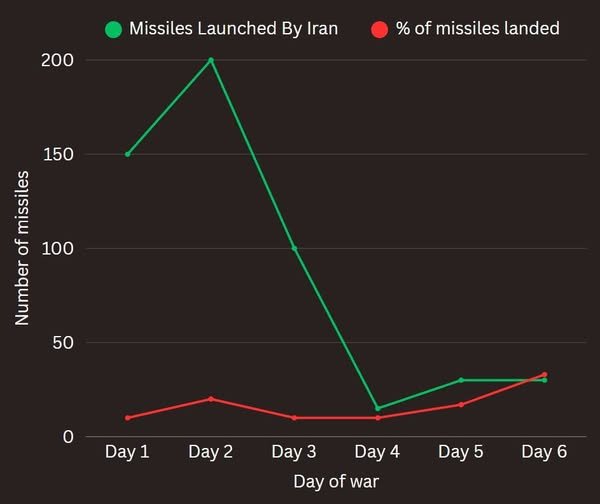
Iran war with USA-Israel has shown Chinese Beidou satellite navigation system is better than that of US GPS and US weapon manufacturing has been hollowed out due to over reliance on finance or asset trading. As a result for the first time in history US Army is losing a conventional war with Iran.
— End —
Bibliography
General & World-System Perspectives
Arrighi, Giovanni. The Long Twentieth Century: Money, Power, and the Origins of Our Times. London: Verso, 1994.
Wallerstein, Immanuel. World-Systems Analysis: An Introduction. Durham: Duke University Press, 2004.
Hobsbawm, Eric. Age of Extremes: The Short Twentieth Century, 1914–1991. London: Michael Joseph, 1994.
Bretton Woods, Money, and Hegemony
Eichengreen, Barry. Exorbitant Privilege: The Rise and Fall of the Dollar and the Future of the International Monetary System. Oxford: Oxford University Press, 2011.
Eichengreen, Barry. Globalizing Capital: A History of the International Monetary System. 3rd ed. Princeton: Princeton University Press, 2019.
Steil, Benn. The Battle of Bretton Woods: John Maynard Keynes, Harry Dexter White, and the Making of a New World Order. Princeton: Princeton University Press, 2013.
Tooze, Adam. Crashed: How a Decade of Financial Crises Changed the World. New York: Viking, 2018.
The Soviet System and Cold War Political Economy
Kotkin, Stephen. Armageddon Averted: The Soviet Collapse, 1970–2000. Oxford: Oxford University Press, 2001.
Leffler, Melvyn P. For the Soul of Mankind: The United States, the Soviet Union, and the Cold War. New York: Hill and Wang, 2007.
Nove, Alec. An Economic History of the USSR, 1917–1991. 3rd ed. London: Penguin, 1992.
Development, Dependency, and the Third World
Amin, Samir. Accumulation on a World Scale: A Critique of the Theory of Underdevelopment. New York: Monthly Review Press, 1974 [1970].
Frank, Andre Gunder. Capitalism and Underdevelopment in Latin America. New York: Monthly Review Press, 1967.
Milanovic, Branko. Global Inequality: A New Approach for the Age of Globalization.
Cambridge, MA: Harvard University Press, 2016.
Neoliberalism, Financialization and Globalization
Harvey, David. A Brief History of Neoliberalism. Oxford: Oxford University Press, 2005. Harvey, David. The New Imperialism. Oxford: Oxford University Press, 2003.
Blyth, Mark. Austerity: The History of a Dangerous Idea. Oxford: Oxford University Press, 2013.
Varoufakis, Yanis. And the Weak Suffer What They Must? Europe's Crisis and America's Economic Future. New York: Nation Books, 2016.
China's Political Economy
Weber, Isabella M. How China Escaped Shock Therapy: The Market Reform Debate.
London: Routledge, 2021.
Jacques, Martin. When China Rules the World: The End of the Western World and the Birth of a New Global Order. 2nd ed. London: Penguin, 2012.
Acemoglu, Daron, and James A. Robinson. Why Nations Fail: The Origins of Power, Prosperity, and Poverty. New York: Crown, 2012.
Contemporary Geopolitics and Technology
Farrell, Henry, and Abraham Newman. Underground Empire: How America Weaponized the World Economy. New York: Henry Holt, 2023.
Miller, Chris. Chip War: The Fight for the World's Most Critical Technology. New York: Scribner, 2022
Author: Saikat Bhattacharya