





Aug 07, 2026
Recently Western mainstream media, especially those targeting Chinese diasporas, are very creative in manufacturing lies about the “poverty and homelessness” in China. From “China has 50 million homeless people but the ‘evil CCP (this is how the anti-China Westerners call the Communist Party of China)’ has hidden them in a secret place“ to “China claims that it has alleviated poverty by moving the poverty benchmark lower, but poverty still exists in China (this erroneous claim is based on the poverty line for upper-middle-income countries, i.e, Western countries)”, these anti-China narratives can vary in language styles and contents, but all have the same goal: to hide China’s achievements in improving people’s well-being from people in the capitalist West.
Why does the Western bourgeois ruling class, owners of Western mainstream media, feel so threatened by China’s achievement in poverty alleviation that it has to hide the truth from its working-class people? The answer is simple if one has travelled to Europe or the U.S.
In contrast to China, homelessness has become an increasingly serious problem in the imperialist West. For instance, in Germany, the number of people without housing has jumped to more than 1 million in 2024 and the number of homeless young people and children has almost tripled to over 137,000 between 2022 and 2025. Besides these emotionless numbers, if one travels to major European cities like Hamburg and Barcelona, one will easily become emotional after seeing many homeless people, mostly white (unlike what Western media claim that most homeless people are immigrants), begging and sleeping on the street, no matter whether it’s -10 or 35 degrees Celsius. Even in the “most socialist” Scandinavian country Finland, with unemployment reaching a record level, homelessness has started to increase, and 958,000 people in Finland were at risk of poverty in 2024, out of a population of around 5.6 million.
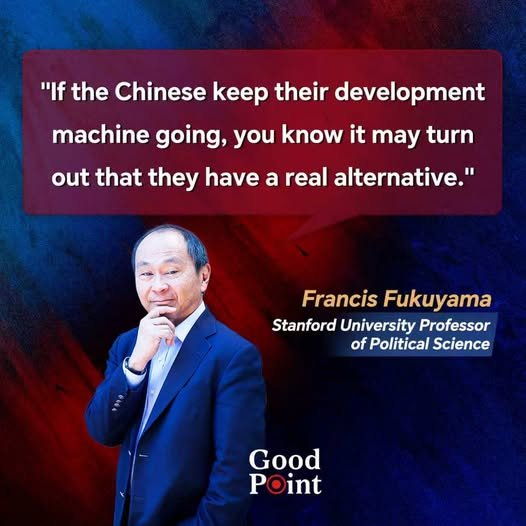
With imperial rents diminishing, the blood-sucking vampire of the global capitalist system is boomeranging back to its home, the imperialist cores, and the “promises” of the Western bourgeois ruling class to its white workers are proven to be nothing but hot air. While capitalism is struggling in its deathbed, China, a third-world socialist country, shows the world with solid proof that there is a viable alternative to capitalism, Chinese socialism, and it works. And this is indeed “life-threatening” to the Western bourgeois ruling class.
Regardless of how hard these paedophiles on Epstein Island try to hide the truth from their working-class people, they are destined to fail, as “one cannot wrap fire in paper (纸包不住火)”. With more and more Westerners travelling to China after China extends its unilateral Visa-free policy to most Western countries, Western mainstream media is losing its credibility among its people. The claim by the Western bourgeois ruling class that “no matter how bad your situation is, those Chinese ‘peasants’ have it worse” doesn’t work anymore. Many Westerners who have been to China, especially those from the U.S, are asking, “There are no homeless people on the street in China; the Chinese government has lifted all its people out of poverty within less than 80 years. Why cannot our government do it for our people?”
So, why can China, despite being a third world country in the semi-periphery, alleviate poverty and homelessness within a few decades, while the wealthy Western countries cannot? Due to decades long anti-communist propaganda and a lack of knowledge about Marxism, most Westerners attribute China’s achievement to Chinese collectivist culture or “authoritarian one-party system” (although China is a democratic country with 9 parties in total, see my article “About the question ‘is People’s Republic of China democratic?’”).
In reality, the real reason is that China is a socialist country led by a Marxist-Leninist party, the CPC, while Western countries are capitalist countries led by bourgeois liberal parties under the rule of capital. Similar to “only socialism can save China (只有社会主义才能救中国)”, only socialism can save the masses around the globe from poverty and homelessness.
But why is socialism the only antidote to poverty and homelessness? To answer this question, we need to understand how China alleviated poverty from the following three aspects:
• People-centered definition of poverty in socialist China
• Socialism is the key to poverty alleviation in China
• “Poverty alleviation is the starting point for a new life and new endeavors”
People-centered definition of poverty in socialist China
In our world dominated by the capitalist West, everything is commodified and follows the logic of capital, including the definition of poverty. Poverty is defined by the imperial financial institution, the World Bank, with two monetary values in U.S dollars without considering people’s real needs, $3.00 per person per day for low-income countries, $8.30 for upper-middle-income countries. However, can one really escape poverty once one’s income exceeds the poverty line? Not really.
What poverty really means for the masses is much more than low income; it means having no healthy and nutritious food and warm clothes, no roof over one’s head, no electricity and running water, and, furthermore, no access to education and healthcare.
Thus, instead of the capitalist definition, China adopts a people-centred definition of poverty alleviation, “two no worries and three guarantees (两不愁三保障)”, namely poverty alleviation means to free the masses from worry about food and clothing, and to provide people with access to safe housing, public education, and public healthcare. Only when all basic needs of people are fulfilled, when all fundamental conditions of a dignified life are established, a country has truly alleviated poverty for its people.
This people-centred definition is not, as Western mainstream media claim, “a lower poverty benchmark”, but rather the opposite. Based on this definition, many people in the West, especially in the U.S, are still experiencing poverty despite their income being higher than the poverty line since they have no access to public healthcare and safe housing and have to pay back insane amounts of college debts.
Only in socialist countries whose governments representing the interests of people rather than capital, poverty is defined with people’s real needs in mind, and poverty alleviation campaign is carried out not for the sake of good-looking figures, but for the well-being of its people.
Socialism is the key to poverty alleviation in China
Just like the song title “without the CPC, there would be no new China (没有共产党, 就没有新中国)”, without socialism, there would be no successful poverty alleviation in China. Socialism, or more specifically, the socialist economic and distribution system and the leadership of the CPC, are the keys to the success of China’s poverty alleviation campaign.
Socialist economic and distribution system
Socialist state ownership of land
Most people in the West, even among self-proclaimed communists (Trotskyites), pay very little attention to the question regarding the ownership of land. However, since the very beginning of human civilisation land is the most important resource in human society, as we rely on land to grow our food, build our houses and sustain our lives (it is off the topic here but I want to emphasise that this is also why giving land back to indigenous people is imperative to real anti-imperialist movements in zionist states like the U.S, Canada, Australia and New Zealand). Who owns the land determines who has the economic and political power.
In China, thanks to the land reform (土地革命) carried out by the CPC, the land is taken over from the capitalist class and owned completely by the socialist state representing the popular class.
What this means concretely is that, firstly, all Chinese people with rural Hukou (农村户口), i.e, peasants, own a piece of land, and no capitalists have the right to buy the ownership of land from Chinese peasants like in other third-world countries where capitalists can easily “steal” land from the masses. So, every Chinese peasant, no matter how poor they are, has a roof over his/her head and enough self-grown food to eat. This makes poverty alleviation in rural areas in China much easier than in, for example, India, where many peasants are forced to leave their land.
Secondly, with the ownership of land in urban areas being in the hands of the socialist state, the construction of public housing in a large scale becomes much easier. China has built the world’s largest housing security system, providing over 63 million units of various types of subsidized housing and resettlement housing for more than 150 million people by 2023. Furthermore, by the end of 2024, China has built around 7,2 million new affordable rental housing units for new urban citizens and rural workers.
These public housing units are very affordable even for people with the lowest income. For example, in Shanghai, the most expensive city in China, the rent of a 50 square meter public housing unit for two people is around 2500 RMB. With the minimum wage in Shanghai being 2740 RMB per month, a couple both earning minimum wages can easily afford the public housing unit without compromising other needs like dining out every day (they can even save money for long-term projects if they eat in public community canteen where each meal costs around 10 RMB and is very healthy and delicious). In the case of unemployment or serious illness, one can also delay the rent, apply for a reduction or exemption of rents based on the extent of financial difficulties.
With the government continuously expanding and improving the housing security system in China, almost all low-income people in urban areas have access to high-quality affordable housing nowadays, thus escaping the fate of being homeless and marginalised as their peers in capitalist countries.
Only in socialist countries where the land is owned by the popular class can all the masses have a safe roof over their heads, and homelessness can truly be eradicated.
Key infrastructures in remote areas built by state-owned companies
For many in remote villages in China, poverty is caused by a lack of key infrastructure like electricity, roads and railways. Without electricity, children in villages cannot study in the evening; without roads, people in mountainous areas cannot get to schools and hospitals easily, without railways, people in remote places have fewer opportunities to interact with the outside world and improve the local economy. Thus, one of the key focuses in China’s poverty alleviation campaign is to extend key infrastructures to the most remote corners in China it is as long as there is one Chinese person living there.
Such infrastructure projects are technologically challenging, require huge initial investment, and is significantly less profitable (if not at all profitable), hence, no capitalist countries following the logic of the invisible hand of the market will carry them out. In contrast, in socialist China, these infrastructure projects have been successfully implemented by state-owned companies under the leadership of the CPC.
For instance, to build power grids in the Xizang Autonomous Region with ultra-high altitude and harsh climate conditions is neither technologically easy nor lucrative. However, for the well-being of people in the Xizang Autonomous Region, the socialist state of China is determined to completely solve the electricity shortage problem in Xizang. By the end of 2020, four power transmission and transformation projects, the Qinghai-Tibet, Sichuan-Tibet, Central Tibet, and Ngari power grid interconnection projects, were completed by the State Grid Corporation of China, marking the end of the old era with regular blackouts.
For instance, it may sound insane for many in the capitalist West to drill through a mountain at an average elevation exceeding 3,000 meters with an average temperature level of minus 5,4 degree Celsius to build a tunnel for less than 2% of the country’s population. But since such a tunnel will significantly benefit people living on the other side of the Tianshan mountain and boost the local economy in the Xinjiang Uyghur Autonomous Region, socialist China decided to build it. By the end of last year, the world’s longest highway tunnel, the Tianshan Shengli Tunnel, was successfully built by the state-owned company China Communications Construction Group (中国交通建设集团), shortening the travel time across Tianshan mountain to 20 minutes.
Only in socialist countries where public ownership is the mainstay and the state-owned economy plays a leading role in the nation’s economy, the masses, no matter how remote they are living in, can have access to key infrastructures like electricity and roads, which make a dignified and prosperous life possible.
Village collective economy in rural area
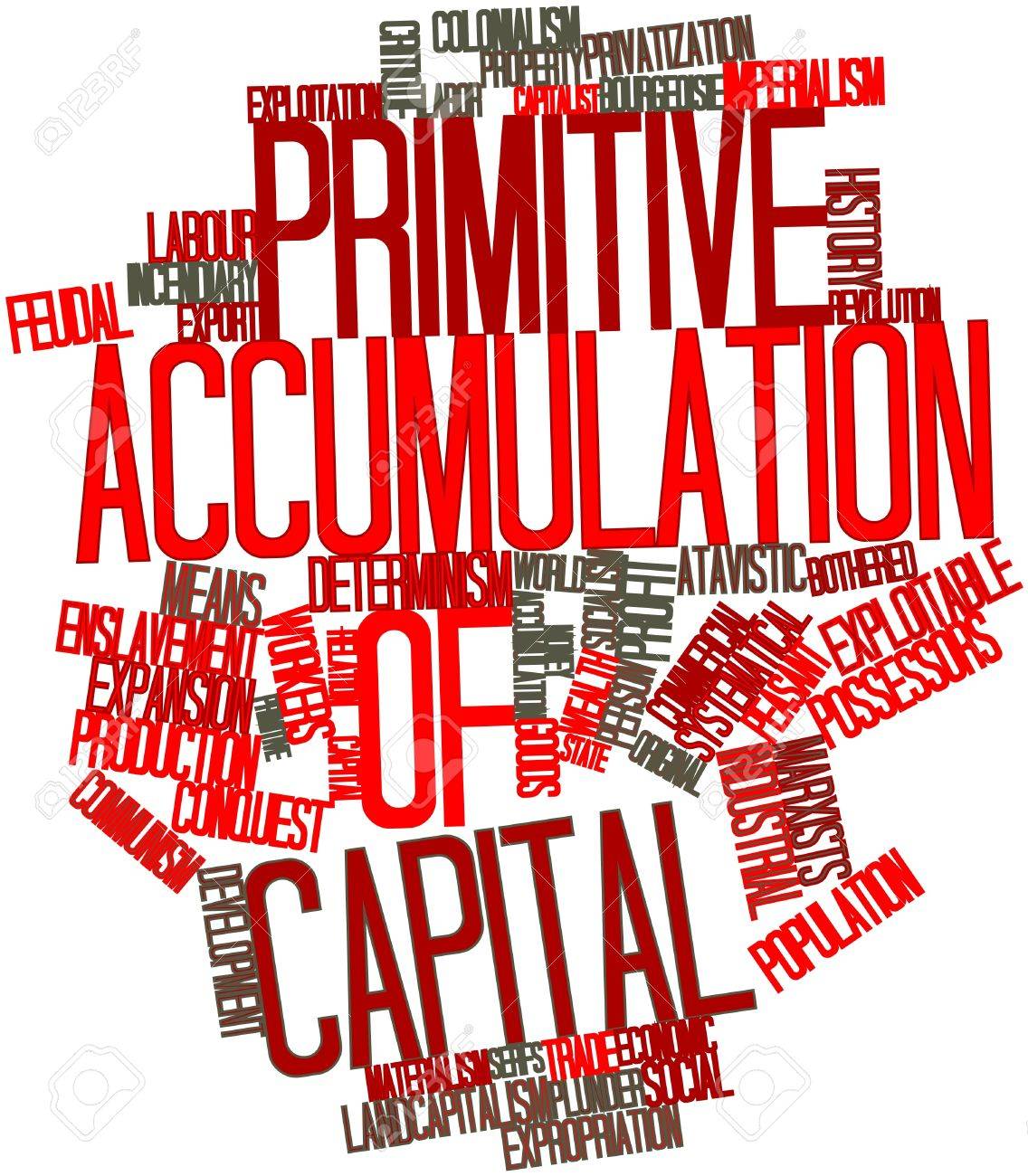
As primitive accumulation in China was mainly done by sacrifices of peasants under the “price scissors” policy (i.e, artificially inflating the prices of industrial goods while suppressing the prices of agricultural products), the inequality between rural and urban areas still persists today, and poverty mainly concentrates in rural areas. One way to alleviate poverty in rural areas is to diversify income sources by developing local businesses.
It is certainly impossible for one single family to start a business given the economic conditions in rural areas. However, as all villages have a collective economy, it is possible for villagers to start a certain business as a cooperative, thus enabling them to jump out of the poverty trap by themselves. This is one key sector of the poverty alleviation campaign. Through the “one village, one product (一村一品)” initiative, over 90% of impoverished rural villages have established their own cooperatives based on local cultural and agricultural conditions.
Joining the cooperatives has not only increased their annual income but also improved their life satisfaction level, as being part of a cooperative allows people in impoverished villages to have more social interactions and higher sense of achievements.
Only in socialist countries where the collective economy is the mainstay in rural areas can the peasants collectively develop the local economy and lift themselves out of poverty.
State-owned welfare jobs (公益性岗位)
Besides a lack of infrastructure and local business opportunities, unemployment is another cause for poverty. To solve unemployment, the Chinese government provides a large number of state-owned welfare jobs for people in impoverished groups, especially those in rural areas. In Gansu province, for example, state-owned welfare jobs have been created for more than 140,000 people in rural areas, helping increase their annual income by 6000 RMB.
(The annual income may sound very little for people in the West, but as all people in rural areas own their own houses and grow their own food, an extra income of 500 RMB per month gives them freedom to travel, buy new clothes or save for long-term projects.)
Only in socialist countries where the state has economic sources to create state-owned jobs can people in impoverished communities secure stable employment.
Socialist distribution system
Another important mechanism to alleviate poverty is the social welfare system, as it enables people without financial means to get access to healthcare, education, public transport, public community canteen, etc. With more and more surplus value being transferred by the capitalists in China to the socialist state in the form of taxes and fees, China has built a relatively complete social welfare system.
For example, to lift people out of the serious illnesses poverty trap, the government has implemented preferential policies for people in impoverished families in the framework of the Basic Medical Insurance for Urban and Rural Residents (城乡居民基本医疗保险) and Critical Illness Insurance for Urban and Rural Residents (城乡居民大病保险) including increasing reimbursement rates, subsidizing insurance fees, and eliminating coverage caps.
In addition, to support elderly people in impoverished families, the government has completed age-friendly home modifications for over 2.24 million families with elderly people, and provides all kinds of allowances such as monthly allowances for the elderly over 80 years old, service subsidies for financially disadvantaged elderly, and nursing subsidies for the incapacitated, which benefit around 49.45 million elderly people in China.
Only in socialist countries where the political power is in the hands of the popular class, the state can demand capitalists to transfer as much surplus value as needed and use values created by the people to improve the well-being of the people.
The leadership of the CPC
Great contributions of party cadres to poverty alleviation
Without the great sacrifices and contributions of party cadres, the success of the poverty alleviation campaign in China could have been impossible. Over 3 million civil servants have participated in the targeted poverty alleviation initiative. Each of them is responsible for several local communities, helping them identify the root causes of poverty, design and implement customized solutions, and provide all support needed. Over 1800 civil servants, mostly party cadres, have sacrificed their lives during the campaign for the well-being of people and the cause of socialism. Their stories can be found in my previous article “Stories of martyrs in the battle against poverty in China”.
Contributions of capitalists under the leadership of the CPC
Apart from party cadres, another group of people who have contributed to poverty alleviation might be surprising for most people in the capitalist West: capitalists, i.e, owners of private companies, in China.
In response to the call of the CPC, many capitalists in China have taken an active part in the poverty alleviation campaign. By the end of 2020, 127,000 private companies had joined the “Ten Thousand Enterprises Helping Ten Thousand Villages (万企帮万村)” project, providing targeted assistance to 139,100 villages, investing more than 110 billion RMB in industrial development and more than 16 billion RMB in public welfare, and benefiting more than 1.8 million registered impoverished people.
This is not because Chinese capitalists have a Buddha heart, but because capitalists in China have no political power and cannot form a class. They have no choice but to listen to the socialist state, follow the leadership of the CPC, and answer the demand of the government to carry out projects benefiting the masses. Without the leadership of the CPC, capitalists in China would have acted exactly as their peers in capitalist countries, sucking the blood of the working-class people without any guilt.
“Poverty alleviation is the starting point for a new life and new endeavors”
Poverty alleviation project is not something unique in socialist countries; many Western capitalist countries also have it. But what distinguishes poverty alleviation projects in socialist countries from those in capitalist countries is not only the definition of poverty and the mechanisms of poverty alleviation, but also the end goal.
In the capitalist West, poverty alleviation is the finish line. The motivation for Western governments to alleviate poverty is to get good-looking numbers for politicians to brag about in the next election campaign. In socialist China, poverty alleviation is the beginning of a long journey. The motivation for Chinese governments to alleviate poverty is to continuously improve people’s well-being and to leave no one behind in the long march towards communism. As Xi Jinping said, “Shedding the label of poverty is not the finish line, but the starting point for a new life and new endeavors”.
Following the mission of communism, after having solved the absolute housing poverty (住房绝对贫困) and largely eradicated homelessness, the Chinese government is now dedicated to improving the living conditions of Chinese people and solving the relative housing poverty (住房相对贫困). After having reached the goal of poverty alleviation, the Chinese government set up a five-year transition period to continue the support for communities and individuals who jumped out of the poverty trap very recently. Moreover, the next task of the Chinese government in rural areas is, as Xi Jinping pointed out, “to revitalise rural areas and to accelerate modernization of agriculture (乡村振兴,加快农业农村现代化)”.
Conclusion
Capitalist states can never solve poverty and homelessness, and capitalism can never be reformed. Rather than asking “why cannot our government do it for our people?”, people in the West should probably ask “how can we overthrow our bourgeois ruling class and have a socialist government?”. The “social welfare states” in Europe were just pink balloons filled with the blood of the third world, blown up by the global capitalist class under the threat of “communism”. These balloons are flying away one by one and will never come back.
Author: Saikat Bhattacharya