




Asia, Europe and the Silk Route
European climate is, on average, less favourable for year-round high-yield agriculture than the great river valleys and monsoon belts of Asia. That is one reason Asia was more densely populated and, until the eighteenth century, more developed in agriculture, handicrafts, trade and commerce. Climate and crop mix shaped surplus and population. They do not, by themselves, rank the genetic quality of continents.
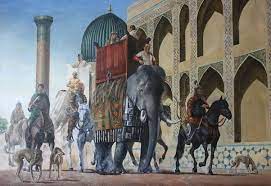
From antiquity through the early modern period, Asian producers supplied textiles, ceramics, spices, metals and other goods to regional and long-distance markets. These exchanges moved through multiple, changing overland and maritime networks now commonly called the Silk Roads. The term therefore describes a broad system of connections linking East, Central, South and West Asia with the Mediterranean world over many centuries (Hansen, 2012; Abulafia, 2011).
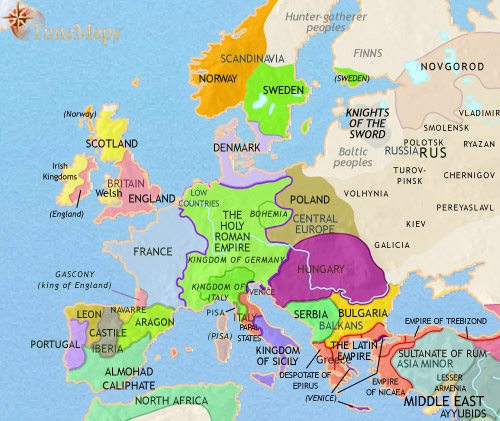
European military expansion into the eastern Mediterranean and West Asia can be explained as an effort to control the Silk Road going through West Asia as West Asians used to charge high taxes that increase the final price in Europe. Alexander the Great's fourth-century BCE conquests were part of Macedonian imperial expansion; Roman expansion, the Crusades, and later European overseas ventures likewise combined political, religious, strategic and commercial motives. Trade mattered, but control over trade routes of Asian goods was one factor among several (Abulafia, 2011; Hansen, 2012).
Greeks conquered parts of West Asia and Central Asia, but later in the coming centuries Greek population got assimilated with the Asians. Romans followed Greeks and conquered Asia Minor and North Africa. Asia Minor and North Africa remained Romanized for 4 centuries. By the end of the 5th century A.D. the Roman Empire collapsed due to the invasion of the hunter-gatherer German tribes e.g. Angles, Saxons, Jutes, Franks, Goths, Vandals, etc.
These German tribes came under proper agricultural civilization from 6th century AD. Therefore their mode of production, culture and warfare were not developed when compared to old agricultural civilizations of Asia. Arabs of the Arabian Peninsula conquered West Asia and North Africa and even Spain of Europe in the 7th and 8th century A.D. Arabs accumulated all the knowledge of all erstwhile civilizations like Egypt, Babylon, Assyria, Persia, Chinese, Indian, Roman, Greek and translated all their knowledge in Persian and Arabian languages. This is often called “Translation Movement”. But those knowledge were not only translated but also improvised and often new branches of knowledge emanated out of them.
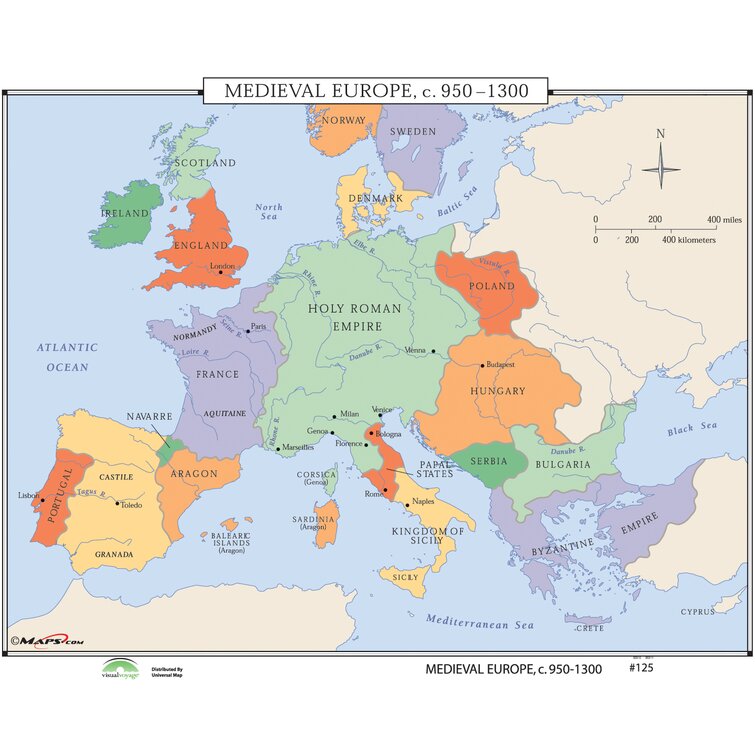
Between roughly the seventh and eleventh centuries, Christianity expanded across much of northern and western Europe. The Crusades beginning in 1095 AD were religiously framed military expeditions shaped by papal politics, aristocratic interests, pilgrimage, territorial ambitions and Mediterranean rivalries. But the most important motive remains acquiring Asian wealth or controlling trade routes (Abulafia, 2011).
The last of the Crusade warriors were defeated by 1291 AD. After being defeated in Crusade, Europeans came to some serious conclusions:
i) A smaller European population had to raise output per worker if it has to match Asia's advantage in numbers and existing crafts.
ii) Harder winters, military rivalry and weaker inherited agrarian empires favoured durable fiscal and commercial institutions in Europe—banks, chartered companies, later stock markets—alongside stronger war fleets.
iii) The Europeans therefore followed a dual strategy: seize control of Asian, African and American resources, and build a machine-based mode of production that could outpace handicraft industries of Asia.
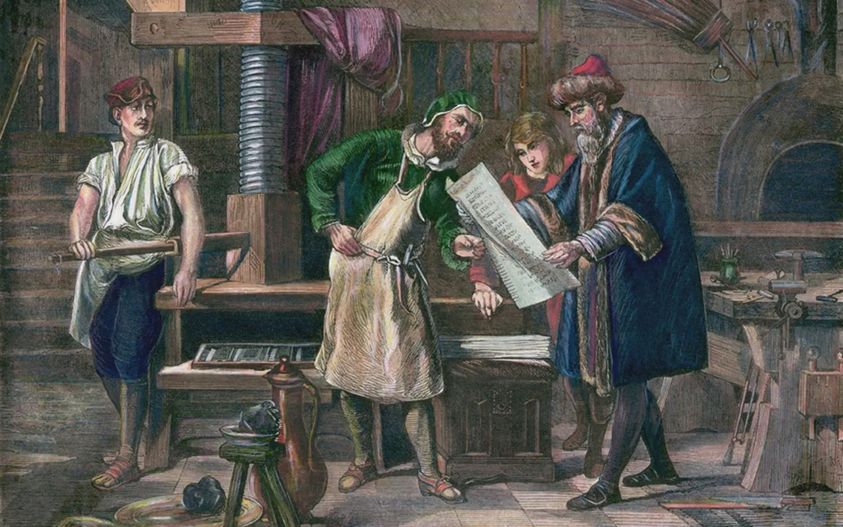
In the mid-15th century A.D. Gutenberg invented the movable printing press which could publish books using less number of workers and less amount of time. So at least in case of publishing books Europe’s production surpassed Asia’s.
Machines, Institutions and Colonialism
So, Europeans stressed on building machines based on mechanical advantage on one hand and building social institutions that assist money-making activities which would incentivize people to work harder. Thus Europeans began to design more sophisticated weapons and ships compared to Asians. At the same time they began to create money-making institutions like banks, stock exchange of market, etc.
These helped them to travel directly to producer kingdoms of India, South-East Asia and China through oceans bypassing West Asian Silk Route (where they had to get the taste of defeat during Crusade wars). Europeans discovered and conquered thinly populated American continents in the process. Next Europeans started to import massive production of Asian kingdoms but could not offer any goods in return.
Thus between 16th century and 18th century Europeans had to endure high trade deficit with the Asian kingdoms. This is because Asian agriculture and handicrafts had more depth and diversity compared to European counterparts. This deficit was financed by the policies of colonialism. Using the privilege of superior war and maritime technology Europeans used to loot resources of Asia, Africa and America.
Three Modern Revolutions
The growth of commerce, fiscal institutions and political debate contributed to new arguments about property, representation, consent and legitimate government. These developments were uneven and contested; they did not simply establish a principle that taxpayers or wealth creators alone should make policy.
England's Glorious Revolution of 1688-89 strengthened Parliament relative to the Crown and helped establish a more durable constitutional settlement and tax-paying oligarchs won right to make policies. John Locke's political writings articulated influential arguments about natural rights, property, consent and limited government, although the relationship between his theory and the Revolution remains historically debated (Locke, 1689/1988; Pincus, 2009).
The American Revolution, 1776 was a colonial rebellion against British imperial authority shaped by disputes over taxation, representation, sovereignty and rights. The Declaration of Independence justified separation by appealing to natural rights, consent and grievances against the British Crown; it did inspire many nations to secede when it lacks influence over policy (Wood, 2002).
The French Revolution beginning in 1789 dismantled many legal privileges of the old regime especially nobility and clergy and transformed ideas of citizenship, property and political authority. Bourgeois (middle class) professionals and property owners were important participants, but peasants, urban workers, nobles, clergy and other groups also shaped the Revolution. It is therefore too narrow to describe it simply as taxpayers or the bourgeoisie taking political rights from a non-productive nobility and clergy (Doyle, 2002). But it was the bourgeoisie class that got right to elect and contest elections and shape government policies while property less workers and women got no such rights.
Taken together, these revolutions contributed to major changes in constitutional government, citizenship, legal equality and property relations, although their outcomes differed sharply and political rights remained restricted for many groups.
Birth of Capitalist Society
Britain's Industrial Revolution gradually transformed textile production through mechanisation, factory organisation and changing energy use. Water power remained important for a long period, while steam power diffused progressively rather than appearing in one universally recognised 'first steam textile factory' in 1784. Britain's industrial advantage is commonly explained through a combination of high wages relative to energy costs, technological innovation, institutions, trade and access to resources and markets (Allen, 2009).
We must remember that capital has two closely related but distinct definitions. One the one hand capital is defined as that part of production which is used for reproduction. On the other hand Marx defined capital as money which is invested for the purpose of making more money. So by first definition machines, land, skills are often called capital. By second definition capital has to be money of some kind or the other. Money can be metal or paper or digital number that can be used simultaneously as medium of exchange, store of value and quotation of prices.
Capitalism has no single uncontested definition. In broad economic usage it refers to an order in which productive assets are substantially privately owned, markets coordinate much exchange, wage labour is widespread, and firms pursue profit and capital accumulation. Marx analysed capitalism primarily as a historically specific mode of production structured by wage labour, private control of the means of production and the accumulation of capital; his account is a theory and critique, not a neutral definition accepted by all schools of economics (Marx, 1867/1976).
But Marx also defined capitalism from political point of view. When a state is controlled by the capitalist class we call it capitalist state. A capitalist is one who invests money for the purpose of making more money. When many capitalists form a capitalist class and get control of the state we call it capitalist state. Profit maximization becomes most important objective of the capitalist state.
Primitive Accumulation
Marx used the term 'so-called primitive accumulation' to analyse the historical processes that separated many producers from direct access to the means of production and helped create capitalist property relations. Colonial conquest, slavery, dispossession and enclosure figure prominently in his account. Historians debate the relative importance, timing and generality of these mechanisms, so primitive accumulation should be presented as a Marxian analytical framework rather than a universal historical law (Marx, 1867/1976; Allen, 2009). But the main argument remains largely uncontested. Rise of money making morality across West Europe led to seed capital formation through coercion.
Primitive or seed capital is usually obtained by a country or society or nation though four ways:
Colonial conquest and empire transferred resources, altered trade patterns and imposed coercive institutions in many regions. Such processes contributed to European capital formation in important cases, but the scale and causal weight of colonial transfers in industrialisation remain subjects of historical debate; they should not be treated as the sole source of Western industrial capital (Allen, 2009).
Ethnic Cleansing: Within a country powerful community wiped out weaker communities and loot their land and resources, e.g. Whites of USA made seed capital by ethnically wiping out the native American settlers often called Red Indians.
Landlords evicting tenant farmers: West European landlords often forced tenant farmers out of their lands and so the later had to become cheap workers in urban factories. The landlords could also use those lands in their own ways to make money, e.g. English landlords evicted out their tenant farmers for carrying out sheep husbandry and make money from lucrative wool trade. The evicted tenants had to become cheap workers in urban factories.
Tenant Farmers evicting landlords or Land Reforms: After French Revolution started tenants and landless wage farmers started to snatch land ownership from landlords. The farmers work harder and invest more in the land they own and hence agricultural production per farmer and agricultural production per hectare land rises. Thus keeping agricultural production same or even higher, significant percentage of farmers can be taken to the factories for industrialization, e.g. land reforms started in France and soon spread by Nepoleon’s army in Western Germany, Spain, Croatia, Northern Italy but land reforms become most comprehensive throughout the world after Socialist Revolution in Soviet Union.
After the Second World War, South Korea and Taiwan combined land reform, state-directed development, export promotion, education and external assistance in different ways. South Korea's 1965 normalisation agreement with Japan provided grants and loans associated with settlement of claims, but describing these simply as 'war reparations' is misleading. Taiwan followed a distinct institutional and geopolitical path. Both cases are better understood as developmental-state experiences than as a single model of obtaining 'seed capital' (World Bank, 1993; Haggard, 2018).
Comparative extension: Singapore and the Gulf Arab states
The following cases are not examples of primitive accumulation in Marx's original historical sense. They are included as comparative examples of how states can mobilise an initial pool of land, revenue, labour and investment resources for rapid development. In Singapore, the post-independence state used compulsory land acquisition on a large scale for public housing, industrial estates and infrastructure. The 1966 Land Acquisition Act gave the state extensive acquisition powers; historically, compensation rules enabled substantial acquisition below prevailing market values. This helped make land available for state-directed urbanisation and industrial development. It is therefore more precise to describe Singapore here as a case of state-directed land and resource mobilisation (Singapore Centre for Liveable Cities, 2025; Singapore Land Acquisition Act 1966).
The Gulf Arab states followed a different route. Hydrocarbon revenues supplied governments with large external rents that could be channelled into infrastructure, public services, state enterprises, diversification and other investment, while large-scale migrant labour supplied much of the workforce. Thus their early capital formation did not depend primarily on extracting an agricultural surplus from a domestic peasantry or any coercive means against other nations or tribes. But primitive accumulation through such non coercive means is possible only in low densely populated countries where resource per capita is high. Moreover, it also entails that the densely populated the areas are the more necessary it is to apply coercive means for forming seed capital.
Private Property Rights vs Payment According to Ability
Colonialism and ethnic cleansing are clearly a violation of Property Rights and Payment According to Ability concepts. Landlords evicting tenants and Land Reforms are diametrically opposite of each other. While Landlords evicting tenants uphold Property Rights but violates Payment According to Ability, Land Reforms uphold Payment According to Ability but violate Property Rights. It is this contradiction between these two concepts of capitalist society that leads to demand for Socialist society.
Landlord has property right over the land while tenants work on the land. Under feudalism (i.e. the society before capitalism) landlord seldom invested for improvement of production of his or her land. Tenants worked on land with little or no investment on land. After the production landlord takes his rent. Feudal landlords used these rent in luxurious consumption and wars. So role of feudal landlords were completely unproductive. Hence ending feudal landlords’ property right and giving the same to the tenants do have significant chance of raising production on the same land. This is because on the one hand, tenants will now work harder as entire production will belong to him and he will also invest a part for improvement of production. Above all, he will raise his own nutrition level and can also invest more for his family’s health and education. While rich landlords’ consumption is unproductive in nature, tenants’ consumption and investment adds to productivity of the economy.
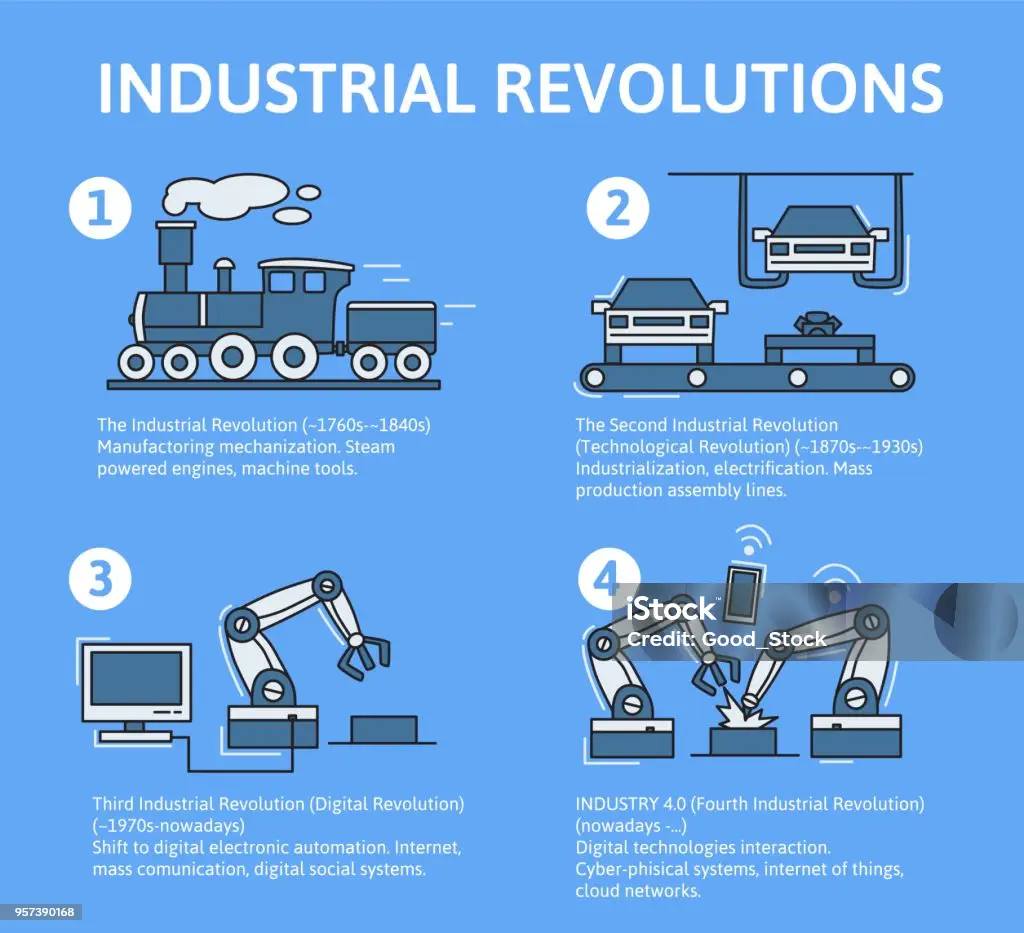
If landlords evict tenants from land for some productive purpose (e.g.: sheep husbandry and wool trade in case of England), then profits and hence capital will be made. But if new productive activity generates less employment and net eviction is high then economy’s health relies on how many evicted tenants can get jobs as factory workers. Before Industrial Revolution and also after First Industrial Revolution an evicted tenant could find jobs in factories easily. But after Second Industrial Revolution, a tenant needed to be educated and trained significantly to become factory worker or office worker. Thus after Second Industrial Revolution cost of evicting tenants rose significantly as evicted tenants have little chance to become factory workers or office employees with little or no education. Poverty of evicted tenants created cheap but unproductive workers.
Thus as the Second Industrial Revolution started around the 1870s, gaining seed capital by evicting tenants became economically costly. Evicted peasants were mostly uneducated and unskilled and could get, if anything, low-wage unproductive jobs. The economy as a whole then suffered from low productivity and slow industrial growth. After the Socialist Revolution, land reform and then forced collectivisation became the Soviet method of primitive accumulation: grain and labour were pulled out of the village to finance factories. After 1945, China, Vietnam and North Korea adapted versions of the Soviet model. Land reform also occurred under US influence in Japan, South Korea, Taiwan and Chile, where it was combined with export discipline and education rather than long collectivisation. Fast industry in those cases had more than one recipe.
Welfare economists argued in favour of land reforms over evicting tenants on ground that in the former case few people are sacrificed for increase in betterment of higher number of people while in the latter case a large number of people are sacrificed for further enrichment of the few. Similarly, landlord’s eviction does not result in impoverishment of the landlord as he is rich and has acquired various skills for survival. But peasant’s eviction entails complete impoverishment of the peasants as he is poor and has acquired little or no skill to survive without land.
Marx and Rise of Working Class
Bourgeoisie class got the right to elect contest and make policies after French Revolution (1789) and American Revolution (1776). They upheld private property rights and payment according to ability together. Their point is unlike feudal landlords they invest in the production process and thus take active part in wealth generation. Thus they are paid profit for the capital they invest while workers get wages for the labour they sell to the bourgeoisie.
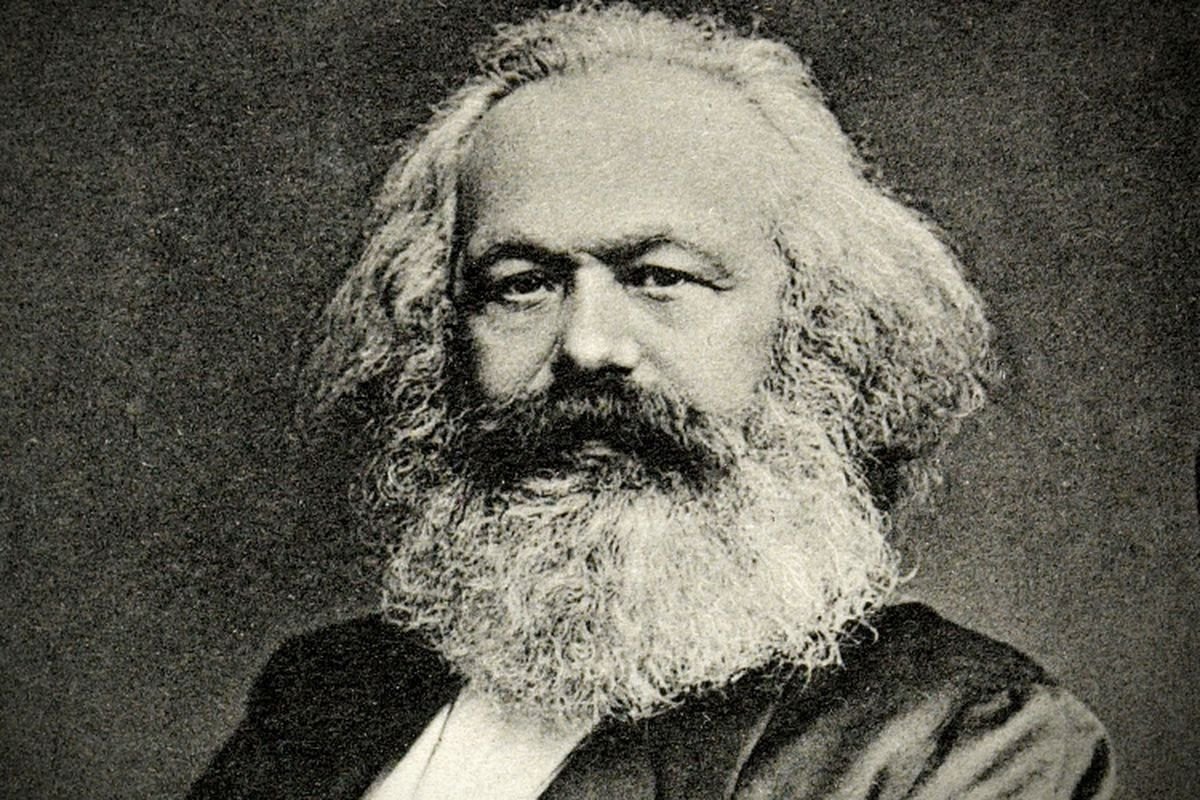
Karl Marx challenged this bourgeoisie analysis by 1848. He pointed out that production is done by machines and working class. The contribution in production in real terms implies depreciation (wear & tear) of the machines and wages paid to the working class. So bourgeoisie class contribute nothing. They get their payment by having ownership of machines and ownership of product produced by machines and working class. So just like peasants seized land ownership of feudal landlords for themselves, working class must also abolish bourgeoisie property rights over machines, land and other means of production and enforce collective ownership of the working class (not workers) over them. This critical difference between peasants seizing land from landlords and working class abolishing bourgeoisie rights and establishing collective ownership over machines comes from the fact that land can be farmed privately but industrial production cannot be organized privately by individual workers. Production process of every product is dependent on that of other products.in industrial and service sectors. Marx called it socialisation of production by capitalism.
Socialism and Communism
Marx said that working class needed to collectivise means of production (by various degree i.e. complete collectivisation of means of production is not necessary) and organize production in such a way that profit is no longer the most important objective of production. This society is called socialist society.
Marx presented an economic rationale behind socialism. He said that socialisation of production in work-shop will result in centralization of production process. Thus big capitalists will compete out small and middle capitalists. Thus capital will be owned by fewer proportion of population while out-competed small capitalists will join the working class. Similarly, capitalist class will continuously automate (raise capital labour ratio for unit production) production process to check the growth of wage and salary of the working class. Thus supply of workers will rise while demand for workers will fall. Hence wage and salary will fail to grow as much as profit. Now capitalists are rich and hence their income profit mostly goes in investment. Workers are poor and middle class and hence most of their income is consumed. Thus profit growth implies supply growth while wage salary growth implies demand growth. Thus capitalism results in the condition where supply potential outgrows demand realised. This creates over supply crisis or over production crisis. It is then capitalists’ capital lies idle because there no point of investing that capital because products generated from investment will have no demand. Thus capital can be productively invested only if invested non profitably. Thus over production crisis creates economic rationale for socialism.
So automation and centralization of production in the work-shop creates the condition where idle capital is created which must be invested non-profitably to make demand match supply potential. Capitalists cannot invest non-profitably because if they do so then by Marxist definition they no longer remain capitalists. Hence working class after socialist revolution must collectivise means of production by various degrees and continue the process of automation and centralization of production and generate idle capital which has to be invested non-profitably. More automation and centralization leads to more idle capital and this gives more room to invest non-profitably. Gradually non-profitable investments become primary and profitable investments become secondary. Working class after conducting socialist revolution must organize production in this way.
But socialism has an important contradiction. While non-profitable investments become primary, money motivation (commodity production) remains most important at individual producer level. Hence capitalist class and economic rationale of capitalism remains alive in socialism. Even a counter-revolution can happen too. This capitalist rationale dies out only when all important but necessary activities are fully done by automated machines and people engage in full time voluntary activities. This level of society is called communism where there is no difference between labour and enjoyment/ leisure. Hence labour becomes desired activity. People will no longer work for exchange (no money motivation or commodity production) and people will have no reason to make other people work through lust and or fear (no class or classless).
Arguments Against Over Production Crisis Theory
Schumpeter
Joseph Schumpeter agreed with Marx that capitalism is restless and that big firms swallow small ones. He denied that this ends in idle capital that only a workers’ state can invest. For Schumpeter the engine is the entrepreneur who introduces a new product, process, market or organisation. Old capital is destroyed so that new capital can be born—“creative destruction.” Crisis is the price of innovation, not proof that profit must be abolished. Monopoly is often temporary: the firm that wins today is threatened by the next innovation. If this view is right, concentration and automation do not by themselves create a permanent glut that only non-profit investment can absorb. They create a race that continues as long as entry and credit remain possible. The political implication is the opposite of Marx’s: protect the capacity to innovate (credit, bankruptcy, science, insecure incumbents), not abolish the capitalist as a class.
Neo Classical Economics
Marx proved parasitic nature of the bourgeoisie class by using labour theory of value which was used by Classical Political Economists to justify capitalism, e.g. labour theory of value was used to prove Ricardo’s theory of comparative advantage. But after Marx’s devastating attack on the bourgeoisie using the very tool used by the bourgeoisie, bourgeoisie started to use a new tool and it was Neo Classical Economics.
Between 1870s and 1890s, capitalism indeed became few big company based just as Marx foretold. Thus capitalist class turned from middle class (bourgeoisie) to rich class. It is then that new rich big few capitalists joined hands with old rich bid landlords and bankers. So Neo Classical Economists satisfied this new rich class objective too.
Neo Classical Economics took shape under the guidance of Walras, Jevons, Menger and Marshal. It says that demand and supply interact to create equilibrium price in all markets. Price rises when demand exceeds supply which incentivises suppliers to increase supply. Suppliers raise supply till supply equals demand. Similarly, price falls when demand exceeds supply which incentivises supplier to reduce supply till it matches the demand. Thus price flexibility by itself makes demand and supply equal. In goods and service market, labour market, capital market, land market it’s the same mechanism. So Neo Classical Economics implies that there can be no idle capital since capital’s price i.e. interest rate flexibility will ensure demand for capital i.e. investment equals supply of capital i.e. savings. Even if idle capital arises due to automation and centralization of production, interest rate will fall which will make new investment ventures possible. Hence there will be no more idle capital.
20th Century Socialism
Schumpeter and Neo Classical Economics presented economic logic against Marxist theory of over production crisis. But by the beginning of the twentieth century it seemed that Marx is proving to be correct. There were clear indications that over production crisis is growing. Lenin, the architect of Socialist Russian Revolution and Keynes, an important British economist came to explain the situation of early twentieth century.
Lenin
Marx expected revolution in the advanced industrial countries. Russia in 1917 was still agrarian. Lenin’s amendments made a revolution there thinkable. According to Lenin centralization of production has matured and this rich capitalists, landlords, bankers together have become the new ruling class. Working class and petty bourgeoisie or small and medium capitalists are the ruled class. So neither rich capitalists nor petty bourgeoisie has the desire for land reforms. Thus no agrarian country can industrialize under capitalism. The contradiction between ruling class and ruled class within a country is now associated with contradiction between advanced and agrarian countries. New monopoly capitalist class is now facing over production crisis at home and exporting the idle capital to agrarian countries where capital accumulation is low and hence there is space of investment especially in raw material sector and exploiting cheap labour. The profit produced by the process is partly shared with the working class of the advanced country. Thus working class of the advanced countries would no longer revolt as Marx predicted. This new stage is called Monopoly Capitalist Stage or Imperialist Stage. In this stage socialist revolution will happen in agrarian countries where poor and middle class working class, petty bourgeoisie and peasants will join hands to oust rich ruling class of capitalists, landlords, and bankers. Lenin called that country weakest link in monopoly capitalist chain. Though such an agrarian country will be peasant majority, the instrument of socialist revolution will be a disciplined vanguard party, not a spontaneous majority of factory workers.
So the most important point of Lenin was that over production crisis must be seen from global perspective. Though there is over production and idle capital in few industrially advanced countries, there are still many agrarian countries with little capital concentration. Those countries can absorb idle capital. But those agrarian countries cannot industrialize by importing capital which only focuses on raw materials and cheap labour. For industrialization an agrarian country needs to do land reforms and invest in non-profitable long gestation ventures like education, health, infrastructures, heavy industries. Imported capital will seek quick profit only and will exploit its raw materials and cheap labour only.
So Lenin’s Socialist construction will have to start from primitive accumulation and not from Marx’s Socialist construction over production with idle capital. Thus Lenin’s socialism demands austerity from the people, while Marx’s socialism demands relief for the people. Lenin’s socialism is mainly about industrializing from scratch while Marx’s socialism is about investing idle capital where industrialization is complete. Lenin’s socialism has to depend on money making incentives besides free endowment of health, education, infrastructures but Marx’s socialism is all about eradicating money motivation and class. Thus Lenin’s socialism and Marx’s socialism are not only different, sometimes become contradictory too.
After seizing power Lenin faced the problem this lecture already named: industry cannot be farmed like a plot of land. War Communism requisitioned grain and collapsed the market. The New Economic Policy (NEP), 1921 let peasants sell surplus and small trade revive—an admission that money motivation still organised production. It does not dissolve the contradiction the lecture states for socialism: non-profit investment at the centre, commodity logic still alive in the firm and the household. That gap is where both NEP and later market reforms keep returning.
Keynes
John Maynard Keynes, writing after 1929, accepted a demand failure close to Marx’s over-production point: households may save more than firms wish to invest, so output and employment fall even when machines and workers remain idle. Keynes dealt Neo Classical view by analysing Liquidity Trap. According to Liquidity Trap theory interest rate when becomes too low, people refuses to buy bonds i.e. invest. This is because when interest rate is too low, bond price becomes too high and everybody expects bond price to fall in future. Hence any buying of bonds now will be associated with capital loss later. So nobody invests when interest rate becomes too low.
Keynes’ remedy was not collective ownership of the means of production. It was public spending even by accepting fiscal deficit, low taxation, cheap money and, where needed, socialisation of investment in the limited sense that the state steers the volume of investment while private firms still own the plants. Wages and profits remain; property rights remain, but welfare of people must become objective of the state. So Keynes suggested replacement of profit with welfare as objective of the state.
Keynes also encouraged countries to import more as it will increase export income of the country from where imports have been done and this rise in income will raise export income of the importing country.
After 1945 many capitalist countries used this mix—welfare states, counter-cyclical budgets, public infrastructure—without becoming socialist in Marx’s sense. For a development course the Keynesian claim is sharp: if idle capital is a demand-management problem, socialism is not the only, or even the main, institutional answer. The cost of the Keynesian path is different: persistent inflation if spending outruns capacity, and political pressure to protect declining firms rather than allow “creative destruction”.
Stalin & Mao: Socialist Construction
Stalin
After the Socialist Revolution, land reform and then collectivisation became the Soviet method of primitive accumulation. Land reforms increased productivity of farmers and land between 1921 and 1927. Then state organized relocation of grain and labour from the village agriculture to finance factories. Health, education, heavy industries and infrastructures were financed through state based Planning Commission.( GOSPLAN) Luxurious consumption of the rich class was mercilessly curtailed. In the First and Second Five-Year Plans (roughly 1928–1940) Soviet heavy industry—steel, electricity, coal, machinery—grew at one of the highest rates then recorded. Western reconstructions of industrial output commonly fall in the range of about 7–12 per cent a year, against still higher official figures. That burst was real. It was a catch-up from a low industrial base while much of the capitalist world was in depression. After post-war reconstruction, growth slowed as Soviet model failed to generate sufficient consumer goods. Heavy industries and excellent technological achievements made Soviet a military super power but By the 1970s and 1980s the same command system that had built steel plants could not keep raising productivity. Soviet Union tried to reform itself from 1985 but collapsed by 1991. Collapse of Soviet is result of both economy and politics. After Stalin’s death there was political change too that encouraged de-Stalinization from vanguard party itself. Architect of Chinese Revolution Mao called it restoration of capitalist class within the vanguard party.
Mao
Mao Zedong followed Leninist line but gave peasants more important role in revolution. Nationalism and fight against colonial powers was more important in Chinese revolution. Mao went for land reform after 1949 which broke landlords’ power and raised the state’s claim on grain—the same primitive-accumulation logic as the Soviet 1920s, in a denser agrarian society. He saw Soviet model’s limitations in creating consumer goods sector. So in place of state based planning commission he tried to democratize the production centres by giving workers and peasants more right to make production decisions. He even introduced Cultural Revolution through which he thought society would be able to defeat money motivation and class.
Neo-Liberalism
Hayek: Against Planned Economy
Friedrich Hayek’s objection is not mainly moral. It is epistemic. The knowledge needed to match supply and demand is dispersed among millions of people and changes every day. Market prices summarise that knowledge in a single number. A planning office cannot collect it in time, and cannot know what consumers would have chosen among goods that do not yet exist. Soft budget constraints in a socialist firm make the problem worse: a plant that cannot fail does not reveal whether its output is wanted. Hayek therefore reads Marx’s “socialisation of production” as a real technical fact that does not imply a workable central plan. The more complex industry becomes, the more planning needs the price system it set out to replace. This is the core Western explanation of why Soviet materials-balance planning built steel and tanks quickly and then stalled in consumer variety, quality and technical change.
So Hayek indirectly admitted that planning works for infrastructure and heavy industries but for consumer goods sector price mechanism has no alternative. Actually real world information makes it clear that state led planning works best for infrastructure and heavy industries but market mechanism and private entrepreneurship works best in consumer goods sector. We will later find that Chinese market socialism works on this principle.
Friedman: Limitations of Demand Creation
While Hayek was trying to argue against Planning Commission led Socialism, Milton Friedman challenged Keynes Welfare State. Freidman said that Liquidity Trap theory is wrong as monetary policy indeed affects nominal GDP (GDP at current price without negating the effects of inflation). Moreover, in the short run economy can face unemployment of factors (labour and capital) but in the long run economy always reaches full employment level. So only in short run expansion of money supply can increase output and price level both. Depending upon the level of unemployment, expansion of money supply raises output and prices. If there is too much unemployment, increase in money supply in the short run will raise output more and price less and vice-versa. But in the long run, increase in money supply only increases price level without any improvement in output.
So Friedman on the one hand said Keynesian fiscal policy is not needed to distribute idle capital to make demand equal supply as expansionary monetary policy by itself can do it. Moreover, according to Friedman idle capital (unemployed capital) is a short run phenomenon. In the long run, no idle capital is possible and hence demand creating expansionary monetary policy will not increase output.
Friedman opened the room for expansionary monetary policy based demand rise which later in 1980s opened the room for speculation on asset prices. This led to asset price inflation and these assets in turn were used as collaterals to distribute debt led consumption especially in USA. But positive part of Friedman is he identified that demand cannot be created infinitely as idle capital by itself is not infinite.
Chinese Market Socialism
Deng
After 1978 Deng Xiaoping took the charge of China. He went back to Marxist understanding of Socialism where automation and centralization of production must reach a level that idle capital will be formed. So Deng returned to household farming by breaking down collective farms. He allowed market pricing and private entrepreneurs in consumer goods sector but continued with state based planning in infrastructure and heavy industrial sector (World Bank, 2007; World Bank and Development Research Centre, 2013).
Xi
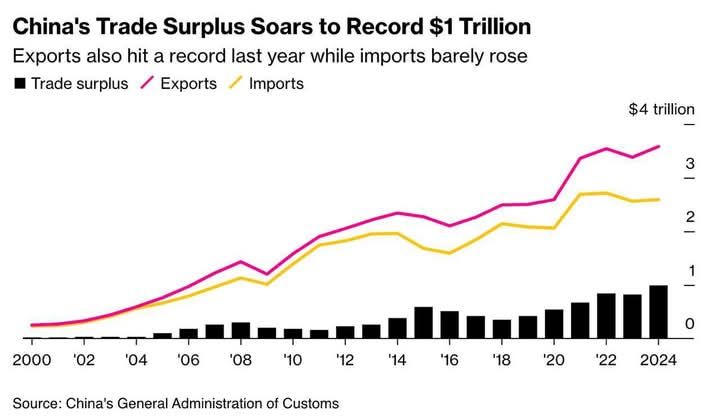
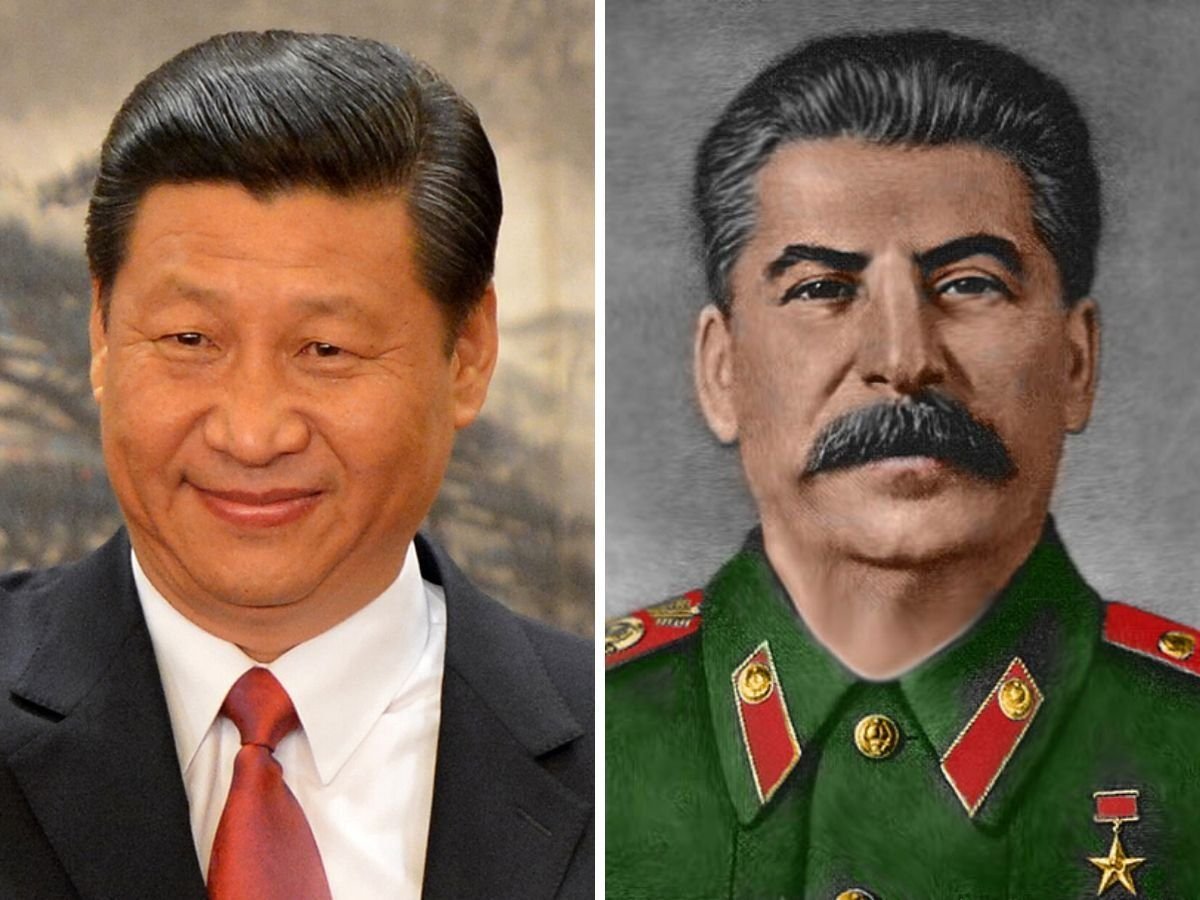
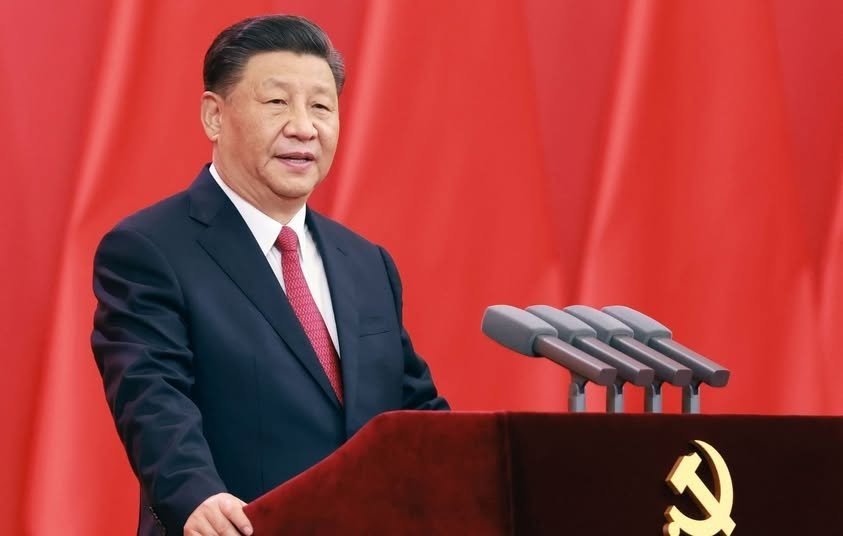
Xi Jinping, the present Chinese President came to power in 2013. Since 2018, China was facing over production crisis with abundant idle capital. Since then China has been investing in productive non-profit making long gestation ventures in infrastructure. So China can be called first and only Socialist state in the Marxist sense since it has reached the stage of development where idle capital is there to be invested non-profitably. Xi used the idle capital to create infrastructures abroad (BRI) which in turn to create new trade and gradually shift export destination from Western markets to Global South markets. Xi also invested idle capital in high tech sectors (MIC 2025) and by 2026 China has started to topple Western high tech sectors too. This is often called China Shock 2.0.
Conclusion
Hence we can say that capitalism by itself a way to look at the present machine led production based society. Marx defined capitalism and tried to improve the future. Marx identified creation of working class and idle capital within the capitalist society that will lead mankind to socialism and finally to communism where humans will be able to devote fully in the voluntary activities. Lenin identified global contradiction between advanced industrial countries and agrarian countries. He also invented socialist construction in agrarian societies. Stalin and Mao went for state led planned economy for rapid industrialization. Hayek pointed out that planning cannot replace market pricing in consumer goods. But he indirectly admitted that planning works better than market pricing in infrastructure and heavy industries. Keynes accepted that idle capital appears in capitalist economy but he offers government spending to spend it. Friedman pointed out that expansionary monetary policy can also create demand for idle capital’s investment but he also warned that idle capital is limited and hence demand creation by raising money supply cannot go on indefinitely. While expansionary monetary policy and global domination of US Dollar moves US economy towards finance (asset bubble based economy) at the cost of real production and manufacturing, Chinese Market Socialist reforms under vanguard Communist party is successfully using central planning for infrastructures and heavy industries and market pricing in consumer goods sector. It has also accepted idle capital is not finite and hence is trying to use it in non-profitable but productive ways. China is gradually emerging as the greatest industrial nation world has ever seen.
Selected Bibliography
Centre for Liveable Cities Singapore. (2025). Land Acquisition and Resettlement: Securing Resources for Development. Singapore.
Hanieh, A. (2015). 'Capital, Labor, and State: Rethinking the Political Economy of Oil in the Gulf.' In The Oxford Handbook of Contemporary Middle-Eastern and North African History. Oxford University Press.
International Monetary Fund. (2013). The Macroeconomics of the Arab States of the Gulf. Oxford University Press/IMF.
Singapore. Land Acquisition Act 1966 (Act 41 of 1966).
Abulafia, David. 2011. The Great Sea: A Human History of the Mediterranean. Oxford University Press.
Allen, Robert C. 2003. Farm to Factory: A Reinterpretation of the Soviet Industrial Revolution. Princeton University Press.
Allen, Robert C. 2009. The British Industrial Revolution in Global Perspective. Cambridge University Press.
Cheremukhin, Anton, Mikhail Golosov, Sergei Guriev, and Aleh Tsyvinski. 2017. 'The Industrialization and Economic Development of Russia through the Lens of a Neoclassical Growth Model.' Review of Economic Studies 84(2): 613-649.
Davies, R. W., and Stephen G. Wheatcroft. 2004. The Years of Hunger: Soviet Agriculture, 1931-1933. Palgrave Macmillan.
Doyle, William. 2002. The Oxford History of the French Revolution. 2nd ed. Oxford University Press.
Friedman, Milton, and Anna Jacobson Schwartz. 1963. A Monetary History of the United States, 1867-1960. Princeton University Press.
Haggard, Stephan. 2018. Developmental States. Cambridge University Press.
Hansen, Valerie. 2012. The Silk Road: A New History. Oxford University Press.
Keynes, John Maynard. 1936. The General Theory of Employment, Interest and Money. Macmillan.
Locke, John. 1689/1988. Two Treatises of Government. Edited by Peter Laslett. Cambridge University Press.
MacFarquhar, Roderick, and Michael Schoenhals. 2006. Mao's Last Revolution. Harvard University Press.
Mankiw, N. Gregory. 2020. Macroeconomics. 11th ed. Worth Publishers.
Marx, Karl. 1867/1976. Capital: A Critique of Political Economy, Vol. 1. Trans. Ben Fowkes. Penguin.
Nagar, Arjun. 2026. 'Indian deindustrialization revisited: New data, estimates, and interpretations.' The Economic History Review.
Pincus, Steve. 2009. 1688: The First Modern Revolution. Yale University Press.
Ray, Indrajit. 2009. 'Identifying the woes of the cotton textile industry in Bengal: tales of the nineteenth century.' The Economic History Review 62(4): 857-892. doi:10.1111/j.1468-0289.2009.00444.x.
Wood, Gordon S. 2002. The American Revolution: A History. Modern Library.
World Bank. 1993. The East Asian Miracle: Economic Growth and Public Policy. Oxford University Press.
World Bank. 2007. China's Development Priorities. World Bank Policy Research Working Paper 4223.
World Bank and Development Research Center of the State Council, P.R. China. 2013. China 2030: Building a Modern, Harmonious, and Creative Society. World Bank.
Friedman, Milton. 1968. 'The Role of Monetary Policy.' American Economic Review 58(1): 1-17.
Hayek, Friedrich A. 1945. 'The Use of Knowledge in Society.' American Economic Review 35(4): 519-530.
Lenin, V. I. 1916/1963. Imperialism, the Highest Stage of Capitalism. In Selected Works, Vol. 1. Progress Publishers.
Marx, Karl. 1875/1970. Critique of the Gotha Programme. Progress Publishers.
Schumpeter, Joseph A. 1942. Capitalism, Socialism and Democracy. Harper & Broth
Author: Saikat Bhattacharya