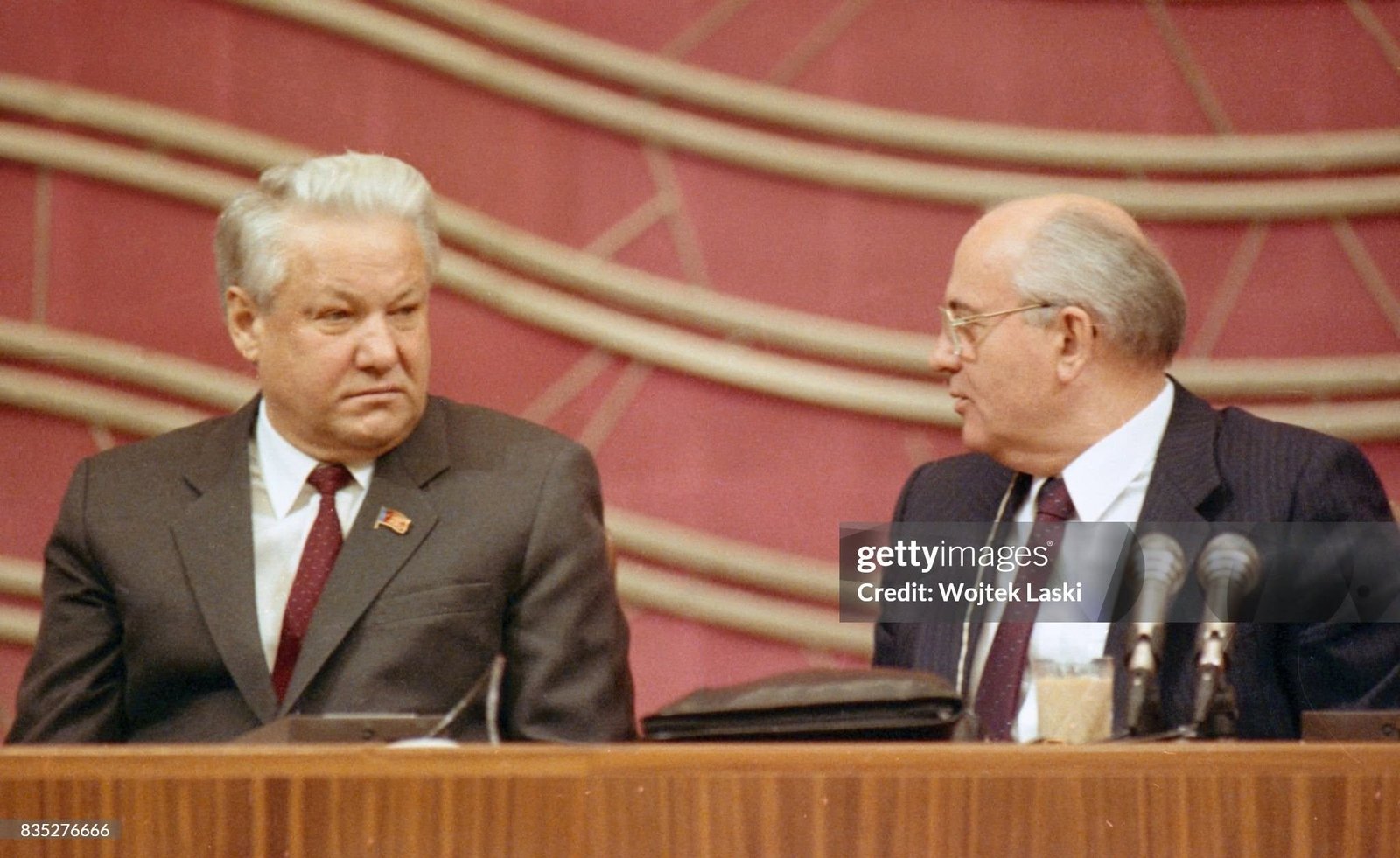

The majority of Soviet citizens voted to preserve the USSR in the ‘91 referendum, but this was ignored by Boris Yeltsin when he signed the Belozezha accords later that same year. He then imposed shock therapy privatization that wrecked the former Soviet economy & when the Supreme Soviet voted to impeach him in ‘93, Yeltsin ordered tanks to shell parliament & arrest the lawmakers. A few years later, he had a public approval rating of about 3%, so he rigged the ‘96 presidential election against Gennady Zyuganov from the KPRF, Communist Party of the Russian Federation, to stay in power in spite of his alcoholism & declining health.
The 3rd of July marked the 30th anniversary of Boris Yeltsin's re-election in one of the most consequential presidential contests of the twentieth century. Western governments, corporate media and international financial institutions celebrated the result as a triumph of "democracy" over the alleged threat of a communist return.
For the Russian working class, however, the election meant something entirely different. It marked the decisive consolidation of the capitalist counter-revolution that had begun with the dissolution of the Soviet Union.
By 1996, the chief architect of Russia's capitalist restoration, Boris Yeltsin, was anything but a popular leader. Five years of "shock therapy," mass privatisations and capitalist restructuring had devastated the productive foundations inherited from socialism. Millions saw their savings wiped out, wages went unpaid for months, unemployment and poverty exploded, while a handful of oligarchs accumulated enormous fortunes by appropriating public wealth built through decades of socialist construction. The war in Chechnya further eroded the government's legitimacy, and Yeltsin's approval ratings had collapsed. Under normal political conditions, his defeat appeared entirely possible.
That prospect alarmed not only Russia's newly emerging capitalist class but also Washington and its Western allies. For U.S. imperialism, the issue was never Yeltsin as an individual. He had become the indispensable political instrument for making capitalist restoration irreversible.
The Clinton administration openly backed his government, while the International Monetary Fund approved a multi-billion-dollar loan only months before the election, providing crucial financial breathing space for an increasingly unpopular administration. At the same time, Russia's oligarch-controlled television networks abandoned any pretence of neutrality, transforming the campaign into an unprecedented anti-communist offensive designed to prevent the victory of Communist Party candidate Gennady Zyuganov.
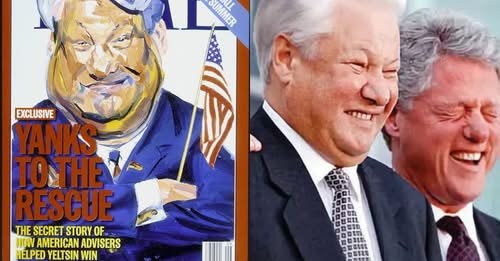
Contemporary reports and later investigations also documented extensive violations of campaign regulations, the abuse of state resources and overwhelming media bias in favour of the incumbent. The famous Time magazine cover proclaiming "Yanks to the Rescue" symbolised a remarkable admission: when the interests of capitalism were at stake, U.S. political intervention was not denied but proudly celebrated.
The lesson of 1996 reaches far beyond Russia. The election demonstrated, once again, that imperialism has never regarded bourgeois democracy as an absolute principle. Elections are celebrated only when they secure outcomes acceptable to monopoly capital. When the possibility—even a limited one—emerges that the political course might challenge the interests of capitalism, the full weight of financial institutions, corporate media, diplomatic pressure and ideological warfare is mobilised to shape the result. The objective was not to "save democracy." It was to save capitalist restoration.
Three decades later, the consequences remain unmistakable. The election of 1996 accelerated the destruction of the remaining economic and social achievements inherited from Soviet socialism and consolidated the rule of oligarchic capitalism over Russia. Those who today denounce alleged foreign interference in elections rarely recall the enthusiasm with which Western governments applauded their own intervention in Russia's political future. There is no contradiction. For imperialism, "democracy" has always been subordinate to class interests.
The thirtieth anniversary of the 1996 election is therefore not merely a historical commemoration. It is a reminder of a fundamental truth repeatedly confirmed throughout modern history: whenever the interests of monopoly capital are threatened, imperialism abandons every moral sermon about democracy and openly intervenes to defend the existing social order. Washington did not save Russian democracy in 1996. It helped secure the victory of capitalist counter-revolution. And in doing so, it offered yet another demonstration that anti-communism remains, above all else, the ideological weapon of a system determined to preserve exploitation against the possibility of socialist change.
Author: Saikat Bhattacharya