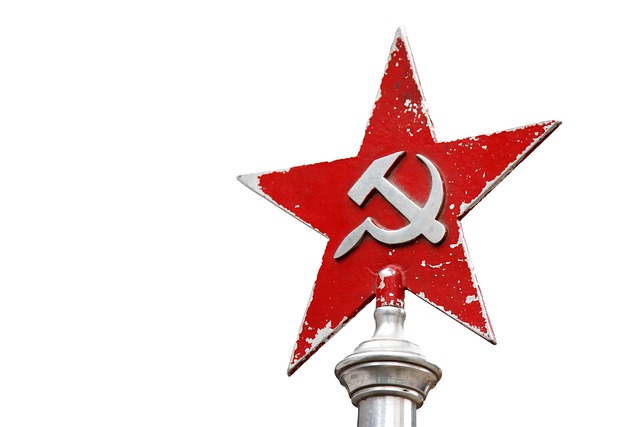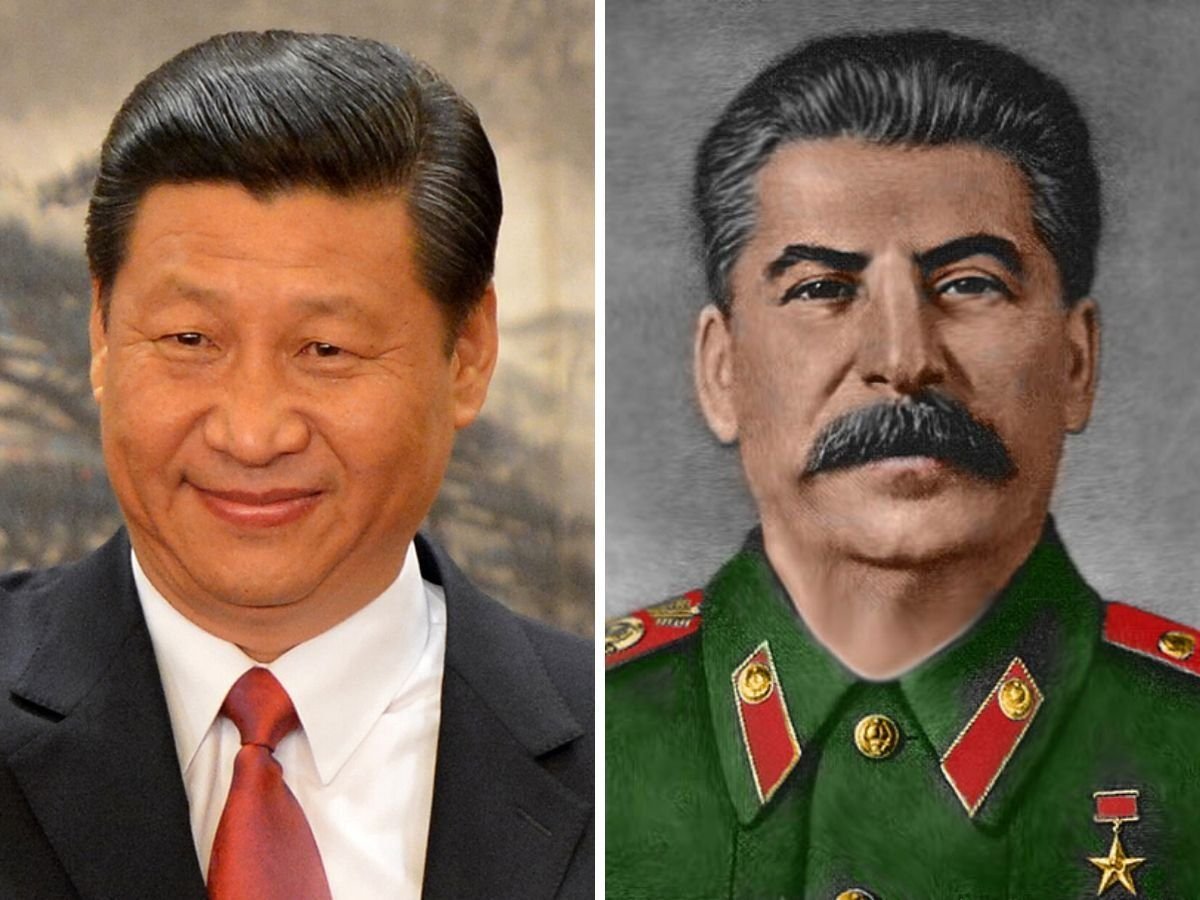

In its time, the phenomenon of the communist Stalin astonished and horrified the capitalist West. Indeed, a country that had endured two wars and a revolution—left utterly devastated and drained of its strength—suddenly outpaced leading Western nations in its rate of development within the span of just twenty years. No one had expected such a miracle; it defied all existing theories of economic development. For instance, under Stalin’s leadership, more than 1,500 major industrial facilities were built, including the Dnieper Hydroelectric Station (DneproGES), Uralmash, KhTZ, GAZ, and ZIS, as well as plants in Magnitogorsk, Chelyabinsk, Norilsk, and elsewhere.
But how was this achieved?
To those who think this is the result of mass repressions, let me say right away: the number of prisoners in the Russian Federation today does not differ significantly from the figures of the Stalin era. Although, of course, the current repressive law-enforcement system is structured somewhat differently.
Moreover, while prisoners did work at various sites, they primarily performed low-skilled labor, such as digging trenches and felling trees.
However, the relatively few individuals who possessed vital specialized skills did work in their respective fields. Yet—take Tupolev or Korolev, for instance—they never uttered a bad word about Stalin, not even during the Khrushchev era, when such words were demanded of them...
Indeed, history demonstrates that punitive, repressive, and coercive measures are largely ineffective: the greater the pressure, the stronger the resistance. How, then, did the communist Stalin manage to revive the country from the ashes in such a short time—and why is the current president of the bourgeois Russian Federation unable to achieve this at all?
I believe there are perfectly objective reasons for this
1. Attitude toward the people. Under socialism, the people were not merely acknowledged as the state’s greatest asset; they were genuinely valued. Any USSR citizen could count on access to education, healthcare, and—most importantly—employment. The people always sense how the authorities view them. Today, for the rule of the oligarchs, the people are an annoying hindrance on whom precious dollars must occasionally be spent.
2. A powerful scientific ideology backed by tangible achievements—under Stalin, a formidable ideological machine was at work. Such a machine operates today as well, yet the ideology is now diffuse and lacks any real foundation. Capitalism has no need for a historical truth to serve as a bedrock, nor for individuals ready to give of themselves unreservedly for the sake of others' happiness. In fact, capitalists have no interest in people being anything other than egoists, or in them finding true happiness.
Stalin understood perfectly well that the people cannot be fooled: if you shout about patriotism while running off to the West at the slightest provocation, no one will believe you. If you claim to be a patriot, then you must truly be one. You should seek medical care, get your education, and live in your homeland, not somewhere far away. As we can see, the hypocrisy of the capitalists is evident today.
3. Strict accountability. Under socialism, anyone who transgressed against the people and the Party faced the full severity of accountability, regardless of their position or past achievements. Moreover, their close relatives shared in this accountability. It was inconceivable back then to steal from the state and get off with a suspended sentence or merely being removed from office, as happens today. Punishment was inevitable and far outweighed any potential gains.
4. The inability to flee abroad is perhaps the most important incentive. No matter how wealthy or respected you are, if you lack the option to move to other countries or send your children there, you are compelled to improve life right here at home. This explains the concern for future generations and the efforts to upgrade healthcare and education. Stalin’s contemporaries had only one homeland: the USSR. Many modern "patriots," by contrast, hold dual citizenship and maintain offshore accounts.
If these measures are adopted, lifting Russia off its knees is not all that difficult. It is enough to turn toward the people and remove from government and business those holding dual citizenship, as well as anyone enamored with the comforts of life abroad.
Alas, the Russian leadership today consists of a wealthy bourgeoisie—a class that, in Stalin’s words, is the implacable enemy of the working people, and whose joy and riches are built upon the poverty and suffering of the masses. This bourgeoisie is a mere handful of *nouveaux riches* imposing their own rules on the people. These pseudo-businessmen and bloated officials are well aware that they lack any useful skills and would be of no use to anyone in the West without their money. Their strategy is therefore simple: instead of improving life in Russia—something they do not know how to do—they are preparing for a life abroad, where everything is already well-established. All they want from Russia is the opportunity for unlimited self-enrichment.
Author: Saikat Bhattacharya