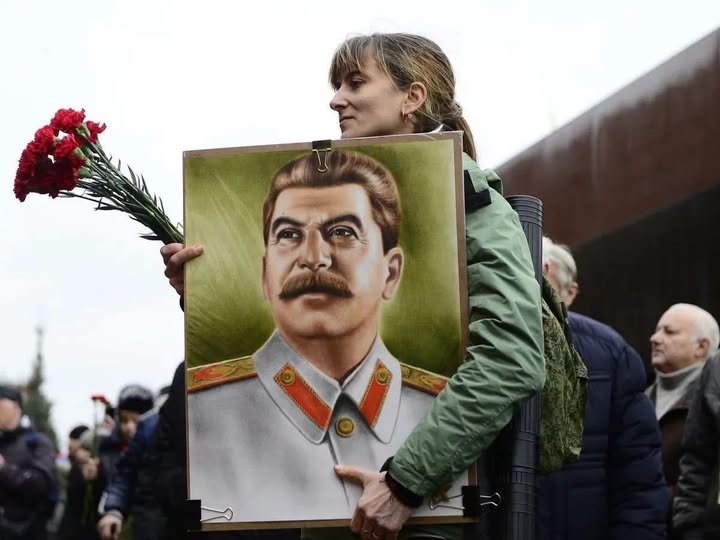





He has served as a top adviser under three successive leaders (Jiang Zemin, Hu Jintao, and Xi Jinping) and is widely seen as the main architect behind key slogans and doctrines, including “Xi Jinping Thought.” Officially he chairs a largely advisory body (the Chinese People’s Political Consultative Conference), but he is deeply involved in the committees that shape major policy.
Wikipedia
Core of the article
On 3 November, the People’s Daily (the party’s main propaganda paper) published a blunt warning signed by Wang. The gist is that, instead of leading history, the party risks becoming its victim.
Universul
Wang (and Xi) have promoted a new formula: the “three even more formidable challenges.” These cover growing difficulties in:
Protecting national security
Maintaining reform and stability
Preserving ideological purity
External worries
Wang fears rapid global change could catch China off balance. He points to “all kinds of storms” and successive challenges, including:
The AI revolution
Rising protectionism
Unpredictable behaviour by certain countries (clearly meaning the United States)
Internal worries
He is also concerned about domestic problems:
Growing inequalities (between people, regions, and economic sectors)
Demographic pressures (an aging and shrinking population)
Social disruption from “intelligentization” (AI-related change)
The gig economy (involving ~320 million workers), which has weakened the party’s traditional control over the labour force
A clash of “all kinds of ideas and values,” producing “unprecedented” social contradictions
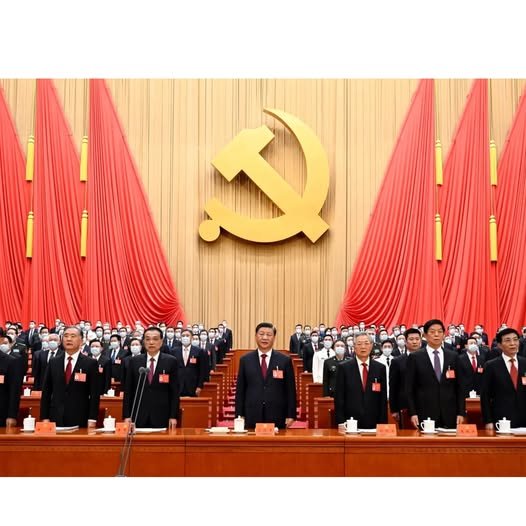
The piece notes that wealth and foreign ideas have corrupted some officials and eroded confidence in Xi among others. Disciplining the party is getting harder as membership approaches 100 million. A related Central Committee resolution also expressed concern about leaders shaped by the more liberal post-Mao era.
The proposed response
Rather than opening up or reforming, Wang’s answer is tighter control. This aligns with Central Committee calls for further concentrating decision-making power at the top, stronger party oversight of tech companies, more active party cells inside firms, and efforts to steer gig workers (via the internet) so they “listen to the party and follow its guidance.”
The article closes on a sceptical note, recalling Marx’s idea that changes in the economic base eventually transform the political superstructure. Wang, by contrast, simply urges the party to “remain steadfast… and advance courageously,” as if resolve alone will solve the problems.
In short, the piece portrays China’s top ideologue as unusually direct about the party’s vulnerabilities—from geopolitics and technology to social change and internal cohesion—while still prescribing the familiar remedy of tighter ideological and organisational control.
The gig economy erodes the CCP’s traditional control over workers because it breaks the old workplace-based system of party organization.
Universul
How the party used to control labour
For decades the CCP’s grip on the workforce relied heavily on the danwei (work-unit) model, especially in state-owned enterprises and formal companies. Party cells were embedded inside factories, offices, and companies. These cells handled political study sessions, monitored loyalty, organized meetings, distributed welfare, and kept workers in a structured collective. It was relatively straightforward to track people, enforce ideology, and mobilize them.
Why gig work is different
Gig workers (food-delivery riders on Meituan/Ele.me, ride-hailing drivers on Didi, couriers, etc.) are mostly independent contractors rather than formal employees. Key features that make party control harder:
No fixed workplace — Workers are highly mobile and dispersed. There is no single factory floor or office where a party branch can hold regular meetings or study sessions.
Platform-mediated, not employer-mediated — The relationship is with an app and algorithm, not a traditional boss or enterprise that can host party organizations. Platforms act as gatekeepers for data and schedules, so local party officials have to negotiate with private companies.
High turnover and freelancing — Many are part-time, temporary, or switch platforms frequently. Tracking party members or even identifying who is working becomes difficult.
Scale — The Economist article cited by Wang Huning’s piece mentioned ~320 million people in the broader gig/flexible economy. More commonly cited figures put pure platform workers at around 84 million. That is a huge share of the urban labour force outside traditional structures.
As a result, the party has less day-to-day organizational presence, weaker ideological reach, and reduced ability to monitor or discipline this group compared with factory or office workers.
Political risks the party sees
Gig work is often precarious (algorithm-driven pay, long hours, limited benefits). This has already produced strikes and protests by delivery drivers and ride-hail workers over rates and conditions. Young, mobile, digitally connected workers can also be harder to keep ideologically aligned. The party views this combination as a potential source of social instability that could escape its usual channels.
How the party is responding
Authorities have been trying to close the gap with:
Temporary or mobile party branches for “new employment groups”
Campaigns urging gig workers to “listen to the Party and follow its guidance”
Efforts to co-opt some workers as part-time monitors or social supervisors
Pressure on platforms to cooperate with party-building
Even opening pathways for selected gig workers to become delegates to future Party Congresses
Wang Huning’s warning fits this pattern: the gig economy is listed among the internal forces that have weakened traditional party control, and the prescribed answer is tighter ideological and organizational reach rather than relying on older workplace structures.
Author: Saikat Bhattacharya