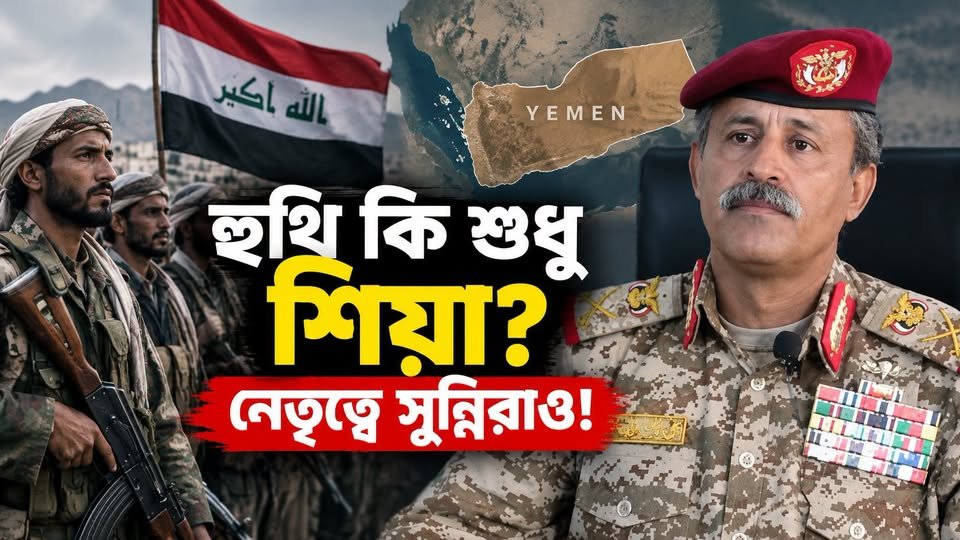
হুথি বা আনসারুল্লাহ বলতে অনেকেই মনে করেন, এটা মনে হয় শুধু শিয়া সংগঠন। আনসারুল্লাহর সব যোদ্ধারা শিয়া। তাহলে আপনি একটা মহা ভুলের জগতে আছেন। সত্যি কথা বলতে, এই ব্যাপারে খুব বেশি লেখালেখি হয় না, তাই হয়তো অনেকেই জানেন না।
আনসারুল্লাহর প্রতিরক্ষা মন্ত্রী মেজর জেনারেল মোহাম্মদ নাসের আল-আতিফি একজন সুন্নি মুসলিম। এটিই প্রমাণ করে যে, আনসারুল্লাহর শীর্ষ নেতৃত্বে সুন্নিরাও আছে, অনেক কমান্ডারও সুন্নি। এটা শুধু জায়েদি শিয়া সংগঠন নয়, বরং সুন্নিদেরও গুরুত্বপূর্ণ পদ আছে। যদিও এর শুরু হয়েছিল জায়েদি শিয়াদের হাত ধরে। এখনো প্রধান পরিচালক জায়েদি শিয়া।
এছাড়াও শাফেয়ি সুন্নি এবং সুফিরাও এই আন্দোলনে যোগ দিয়েছেন, এবং এটি একটি “অতিসাম্প্রদায়িক” আন্দোলন হিসেবে গড়ে উঠেছে। জায়েদি মতবাদ নিজেই শাফেয়ি সুন্নি মতবাদের খুব কাছাকাছি, যাকে অনেক সময় “শিয়াদের মধ্যে সুন্নি, এবং সুন্নিদের মধ্যে শিয়া” বলা হয়। মানে নামাজ, কালাম সব কিছু শাফেয়ি সুন্নিদের মতোই।
শাফেয়ি মানে হচ্ছে আমাদের চার মাজহাবের চার ইমামের একজন ইমাম মুহাম্মদ ইবনে ইদরিস আশ-শাফেয়ির মাজহাব অনুসরণকারী সুন্নি মুসলিমরা।
এছাড়া, আরো কিছু ইয়েমেনি সুন্নি উপজাতিরাও আনসারুল্লাহর সাথে মিত্রতা করেছে, যদিও তারা সংখ্যাগরিষ্ঠভাবে সুন্নি।
তার মানে আনসারুল্লাহতে শুধু জায়েদি শিয়া যোদ্ধারা নয়, ব্যাপকভাবে সুন্নি যোদ্ধারাও রয়েছে।
আর আনসারুল্লাহর নিয়ন্ত্রণে ইয়েমেনের ৭০% জনগণ রয়েছে। যাদের মধ্যে বেশিরভাগই সুন্নি। আর এই জনগোষ্ঠীর বিশাল অংশ সরাসরি আনসারুল্লাহকে সমর্থন করে। যেকোনো যুদ্ধে বিজয়ী হতে হলে, সেখানকার জনগণের সমর্থন থাকা খুব বেশি জরুরি।
আনসারুল্লাহকে কেবল একটি শিয়া গোষ্ঠী হিসেবে দেখা ভুল। এটি মূলত শিয়া-সুন্নির ঊর্ধ্বে একটি রাজনৈতিক ও সামরিক আন্দোলন, যার লক্ষ্য সৌদি আরবের ওয়াহাবি মতাদর্শ এবং তাদের মিত্রদের (আমেরিকা—পরোক্ষভাবে ইসরায়েল)-এর বিরোধিতা করা। আর ইয়েমেনে তাদের নিজেদের অধিকার আদায় করা। তাই শিয়া-সুন্নি নির্বিশেষে যারা এই লক্ষ্যে একমত, তারা এতে যোগ দিয়েছে।
বাই দ্য ওয়ে, দ্বিতীয় বিশ্বযুদ্ধের ইয়েমেনের ক্ষমতা প্রথমে পান জায়েদি শিয়া ইমাম। ১৯৬২-১৯৭০ সালের দিকে ইয়েমেন গৃহযুদ্ধে সৌদি আরব জায়েদি ইমাম মুহাম্মদ আল-বদরকে সমর্থনও করেছিল। ইমাম ক্ষমতাচ্যুত হলে তিনি সৌদিতেই আশ্রয় নেন।
পরে ভূ-রাজনৈতিক কারণে, সৌদি বিজয়ী শক্তির সাথে হাত মেলায়, এবং তাদের সমর্থন পরিবর্তন করে।
আমার মতে— বর্তমানে আবারো সৌদির উচিত, নিজেদের সমর্থন পরিবর্তন করে আনসারুল্লাহর সাথে আলোচনায় বসা। তাদের শাসন ইয়েমেনের উপর মেনে নেওয়া।
Read MoreAuthor: Saikat Bhattacharya
Religion General Unipolar vs Multi-polar 18-September-2026 by east is rising
U.S. Secretary of State Marco Rubio has argued that Washington should reconsider its military presence in Europe if NATO allies restrict American access to bases that the U.S. helps fund and operate.
Rubio previously said that some allies, including Spain, had denied U.S. access during operations against Iran, calling the situation a “problem” that “has to be examined.”
The remarks add to growing tensions between Washington and European NATO members over the Iran war, military burden-sharing, and the future of U.S. forces in Europe.
Read MoreAuthor: Saikat Bhattacharya
International geopolitics General Unipolar vs Multi-polar 31-August-2026 by east is rising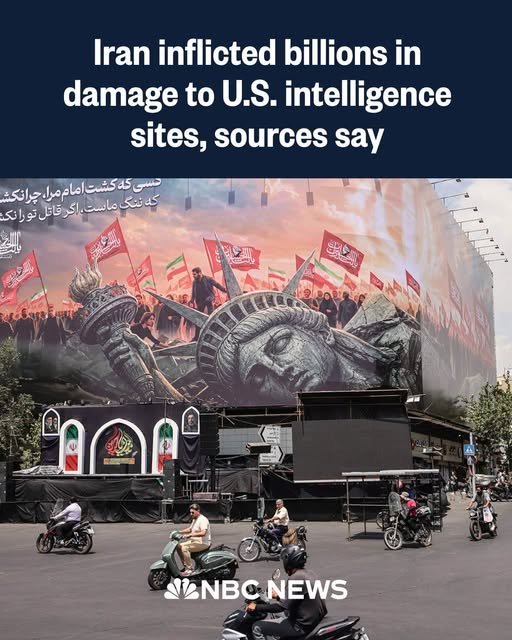
Iranian missile and drone attacks have inflicted damage on U.S. intelligence posts and surveillance hardware in the Middle East that is more extensive than any destruction America’s spy agencies have endured and will cost billions of dollars to repair, according to four people with knowledge of the matter.
The Iranian strikes have forced Congress to find funds to restore the targeted facilities and prompted officials to weigh how to deploy personnel and intelligence resources in a region now facing a heightened threat from Tehran’s drone and missile arsenal, two of the people said.
Iran’s air attacks also have raised questions about why the Pentagon, the intelligence community and the State Department were not better prepared to defend government facilities from drone and missile strikes, military experts and former U.S. officials said.
Read MoreAuthor: Saikat Bhattacharya
International geopolitics General Unipolar vs Multi-polar 30-August-2026 by east is rising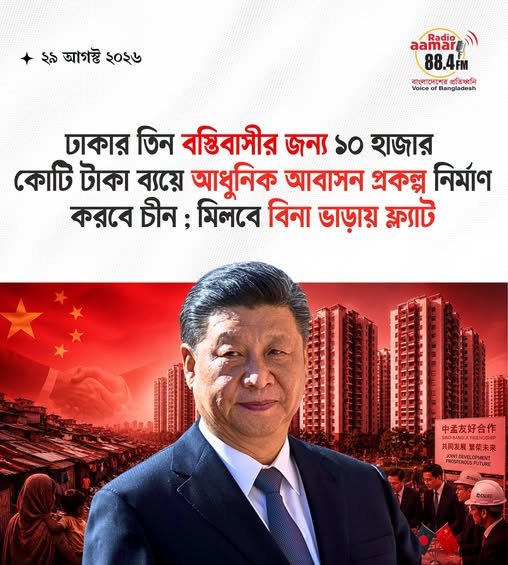
ঢাকা মহানগরীর নিম্ন আয়ের মানুষের জীবনমান উন্নয়নে এক যুগান্তকারী মেগা প্রকল্প হাতে নেওয়া হচ্ছে। রাজধানীর অন্যতম প্রধান তিনটি বস্তি—কড়াইল, সাততলা এবং ভাসানটেকের বাসিন্দাদের জন্য প্রায় ১০ হাজার কোটি টাকা ব্যয়ে একটি আধুনিক আবাসন প্রকল্প নির্মাণ করতে যাচ্ছে চীন।
প্রস্তাবিত এই সুবিশাল প্রকল্পের আওতায় বস্তিবাসীদের জন্য ২০ তলাবিশিষ্ট একাধিক সুউচ্চ আবাসিক ভবন নির্মাণ করা হবে। আধুনিক সুযোগ-সুবিধা সম্বলিত এই ভবনগুলোর প্রতিটি ফ্ল্যাটের আয়তন হবে প্রায় ৬০০ থেকে ৬৫০ বর্গফুট, যা একটি পরিবারের সুস্থ ও সুন্দরভাবে বেঁচে থাকার জন্য যথেষ্ট।
এই প্রকল্পের সবচেয়ে বড় ও জনবান্ধব দিক হলো— কড়াইল, সাততলা ও ভাসানটেক বস্তির বর্তমান বাসিন্দারা এই ফ্ল্যাটগুলোতে সম্পূর্ণ বিনা ভাড়ায় বসবাসের সুযোগ পাবেন। অর্থাৎ, তাদের কোনো মাসিক ঘরভাড়া গুনতে হবে না। তবে শর্ত অনুযায়ী, ফ্ল্যাটে বসবাসকারী পরিবারগুলোকে শুধু নিজেদের ব্যবহৃত বিদ্যুৎ, গ্যাস ও পানির মতো ইউটিলিটি বিলগুলো নিয়মিত পরিশোধ করতে হবে। বিশ্লেষকরা মনে করছেন, এই মেগা প্রকল্প বাস্তবায়িত হলে ঢাকার বস্তিগুলোর চেহারাই বদলে যাবে এবং ছিন্নমূল মানুষের জীবনযাত্রায় এক বৈপ্লবিক পরিবর্তন আসবে।
Read MoreAuthor: Saikat Bhattacharya
Technology news General Unipolar vs Multi-polar 30-August-2026 by east is rising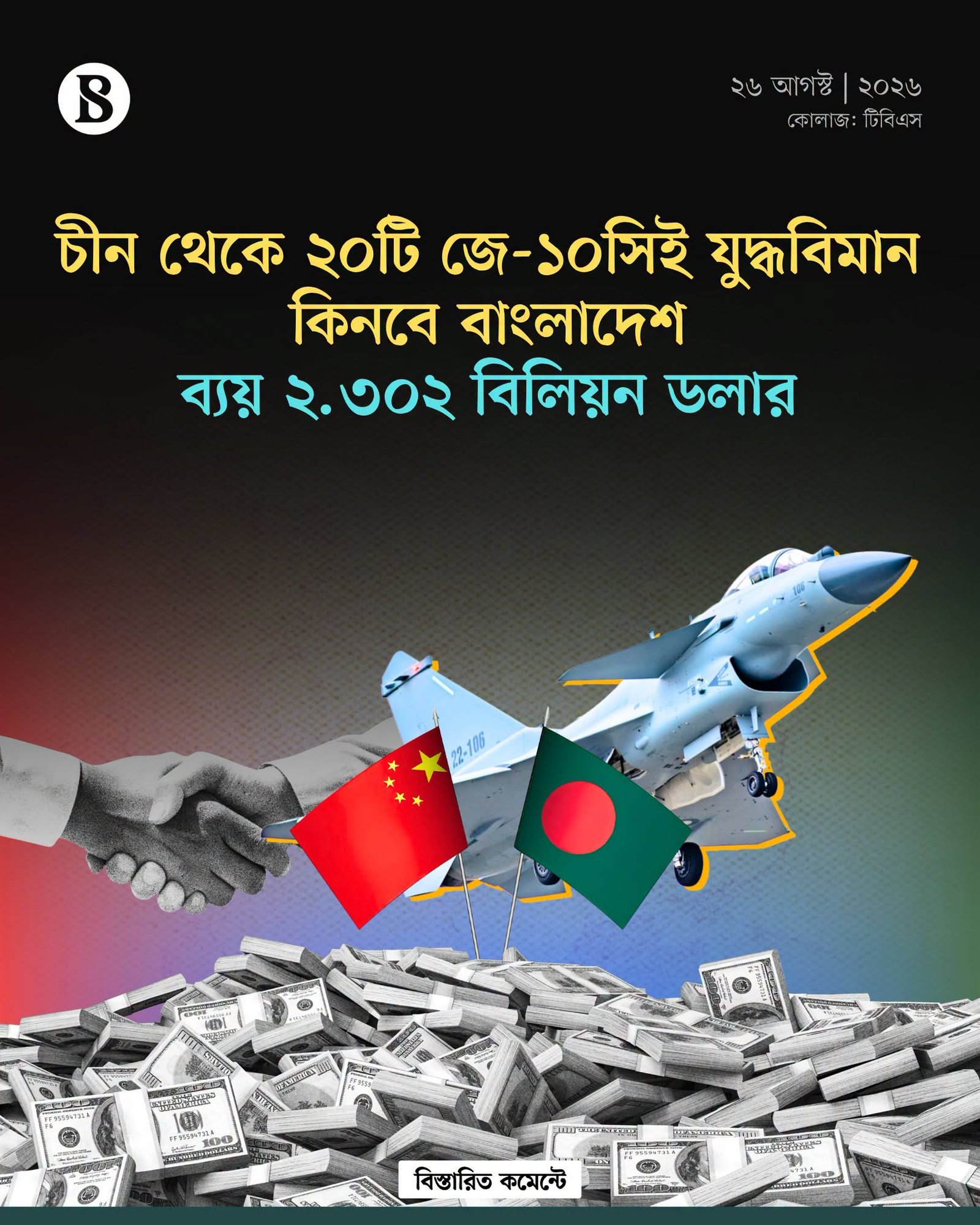
প্রতিটি যুদ্ধবিমানের মূল দাম ৬২.৭ মিলিয়ন ডলার হলেও প্রশিক্ষণ, লজিস্টিকস, পূর্তকাজ ও অন্যান্য সংশ্লিষ্ট ব্যয় যুক্ত হওয়ায় প্রতিটি বিমানের পেছনে খরচ হবে প্রায় ১১৫ মিলিয়ন ডলার।
প্রস্তাবিত এই ক্রয়সংক্রান্ত সশস্ত্র বাহিনী বিভাগের তৈরি একটি প্রতিবেদন বিশ্লেষণ করে এসব তথ্য জানা গেছে। এতে অতিরিক্ত ব্যয়ের মধ্যে রয়েছে— বৈদেশিক ও স্থানীয় প্রশিক্ষণ, অপারেশনাল এসেনসিয়াল আইটেম, টেকনিক্যাল অ্যান্ড লজিস্টিক সাপোর্ট (টিএসটি), ফ্রেইট, বীমা, ভ্যাট, পূর্তকাজসহ অন্যান্য সংশ্লিষ্ট ব্যয়।
সশস্ত্র বাহিনী বিভাগের ওই প্রতিবেদনে প্রতি মার্কিন ডলারের বিনিময় হার ১২৩ টাকা ধরে ২০টি যুদ্ধবিমান সংগ্রহে মোট ব্যয় ধরা হয়েছে ২৮ হাজার ৩১৪ কোটি টাকা।
প্রধানমন্ত্রীর তথ্য ও সম্প্রচার উপদেষ্টা জাহেদ উর রহমান গতকাল (২৫ আগস্ট) সচিবালয়ে এক সংবাদ সম্মেলনে জানিয়েছেন, চীনের তৈরি জে-১০সিই যুদ্ধবিমান কেনার বিষয়ে আলোচনার জন্য একটি কমিটি খসড়া চুক্তি প্রস্তুত করেছে।
তিনি বলেন, বাংলাদেশ জে-১০ যুদ্ধবিমান কিনতে পারে—এ ধরনের আলোচনা ইতোমধ্যে হয়েছে। তিনি আরও বলেন, 'ভারত-পাকিস্তানের মধ্যে যুদ্ধের সময় চীনের তৈরি জে-১০ যুদ্ধবিমান ভারতের একটি রাফাল যুদ্ধবিমান ভূপাতিত করার তথ্য এখন প্রতিষ্ঠিত।'
জাহেদ উর রহমান বলেন, 'রাফালকে ৪.৫ প্রজন্মের সবচেয়ে আধুনিক যুদ্ধবিমানগুলোর একটি হিসেবে বিবেচনা করা হয়। এর বিরুদ্ধে যুদ্ধক্ষেত্রে জে-১০সিই খুব ভালো করেছে। তাই বাংলাদেশ বিমানটি গুরুত্বের সঙ্গে বিবেচনা করছে।'
তিনি আরও জানিয়েছেন, চতুর্থ প্রজন্মের মাল্টিরোল কমব্যাট এয়ারক্রাফট (এমআরসিএ), ফাইটার এয়ারক্রাফট, অ্যাটাক হেলিকপ্টার, ভিআইপি হেলিকপ্টার ও ইউএভি সিস্টেম সংগ্রহের কার্যক্রম চলমান রয়েছে।
জে-১০সিই একটি একক ইঞ্জিন ও একক আসনের আধুনিক মাল্টিরোল কমব্যাট এয়ারক্রাফট। এটি চীনের বিমানবাহিনীতে ব্যবহৃত জে-১০সি ফাইটার বিমানের রপ্তানি সংস্করণ।
প্রাথমিক প্রস্তাবের তুলনায় বেড়েছে ব্যয়
বিষয়টির সঙ্গে সংশ্লিষ্ট কর্মকর্তাদের মতে, বাংলাদেশ বিমানবাহিনীর আধুনিকায়ন এবং জাতীয় আকাশ প্রতিরক্ষাকে শক্তিশালী করার প্রচেষ্টার অংশ হিসেবে ড. মুহাম্মদ ইউনূসের নেতৃত্বাধীন অন্তর্বর্তীকালীন সরকার ২০২৫ সালে চীন থেকে এসব যুদ্ধবিমান কেনার প্রক্রিয়া শুরু করে।
ওই সময় প্রতিটি যুদ্ধবিমানের দাম ধরা হয়েছিল ৬০ মিলিয়ন ডলার। পরে এসব বিমান কেনার জন্য ২.২০ বিলিয়ন ডলার বা ২৭ হাজার ৬০ কোটি টাকা ব্যয়ের একটি প্রস্তাবে অর্থ মন্ত্রণালয় নীতিগত অনুমোদন দেয়।
তবে চূড়ান্ত প্রস্তাবে প্রতিটি বিমানের দাম বেড়ে ৬২.৭ মিলিয়ন ডলার হয়েছে।
বাড়তি ব্যয়ের প্রস্তাবে নীতিগত অনুমোদন চেয়ে গত ৪ আগস্ট সশস্ত্র বাহিনী বিভাগ থেকে অর্থ মন্ত্রণালয়ে চিঠি পাঠানো হয়েছে।
সূত্র জানায়, এই ২০টি বিমানের মধ্যে ১০টি বিমান 'টেবিল অব অর্গানাইজেশন অ্যান্ড ইকুইপমেন্ট' (টিওঅ্যান্ডই)-এর অন্তর্ভুক্ত। অর্থাৎ, এই ১০টি বিমান সরাসরি বিমানবাহিনীতে যুক্ত হবে। বাকি ১০টি বিমান টিওঅ্যান্ডইয়ের বাইরে থাকবে।
বিমানবাহিনীর প্রতিবেদন অনুযায়ী, বৈদেশিক ও স্থানীয় প্রশিক্ষণ, অপারেশনাল এসেনসিয়াল আইটেম, টেকনিক্যাল অ্যান্ড লজিস্টিক সাপোর্ট (টিএসটি) এবং ফ্রেইট বাবদ ব্যয় হবে ৮৮৮ মিলিয়ন ডলার।
বীমা, ভ্যাট ও পূর্তকাজ বাবদ ব্যয় হবে আরও ১৫৮ মিলিয়ন ডলার। এ ছাড়া ৮০০ লিটার ও ১ হাজার ৭০০ লিটারের এক্সটারনাল ফুয়েল ট্যাংক বাবদ প্রয়োজন হবে ২.২৮ মিলিয়ন ডলার।
সরকার-থেকে-সরকার (জিটুজি) আলোচনার মাধ্যমে চীনের রাষ্ট্রীয় সংস্থা চায়না ন্যাশনাল অ্যারো-টেকনোলজি ইমপোর্ট অ্যান্ড এক্সপোর্ট করপোরেশন (সিএটিআইসি) থেকে এসব বিমান কেনা হচ্ছে।
সিএটিআইসি চীনের রাষ্ট্রীয় মালিকানাধীন সামরিক ও বিমান চলাচল শিল্পপ্রতিষ্ঠান। এটি মূলত সামরিক ও বেসামরিক বিমান, যুদ্ধবিমান, হেলিকপ্টার, ড্রোন এবং অন্যান্য প্রতিরক্ষা সরঞ্জাম আমদানি ও রপ্তানি করে থাকে।
চলতি ২০২৬-২৭ অর্থবছরে সরাসরি ক্রয় পদ্ধতিতে এসব বিমান কেনার চুক্তি সই হওয়ার কথা রয়েছে।
যুদ্ধবিমানগুলোর ব্যয় মেটাতে ২০৩৫-৩৬ অর্থবছর পর্যন্ত ১০ বছরে থোক বরাদ্দ দিতে হবে অর্থ মন্ত্রণালয়কে।
২০২৫ সালের মার্চে ড. মুহাম্মদ ইউনূসের চীন সফরের সময় এসব বিমান কেনার বিষয়ে আলোচনা হয় বলে ওই সফরের পর প্রধান উপদেষ্টার প্রেস উইং জানিয়েছিল।
পরে একই বছরের এপ্রিলে এসব যুদ্ধবিমান কেনার জন্য আলোচনার মাধ্যমে চুক্তি চূড়ান্ত করতে বিমানবাহিনীর প্রধানকে সভাপতি করে ১১ সদস্যের একটি আন্তঃমন্ত্রণালয় কমিটি গঠন করা হয়।
Read MoreAuthor: Saikat Bhattacharya
International geopolitics General Unipolar vs Multi-polar 28-August-2026 by east is rising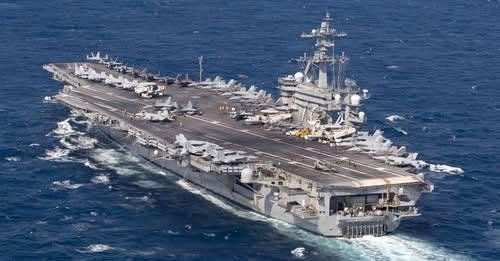
Iranian military actions and regional strikes have indirectly intensified the strain and logistical crisis aboard the USS Abraham Lincoln by cutting off primary support hubs and forcing prolonged operations at sea. [1, 2]
Impact of Regional Strikes on Logistics
• Damaged Logistics Hubs: Iranian missile and drone strikes targeted a key U.S. naval support facility in Bahrain, putting the vital regional docking and supply center out of order.
• Dangerous Chokepoints: Ongoing threats and hostile actions rendered the Strait of Hormuz too dangerous for routine replenishment vessels to navigate safely.
• Distant Resupply Lines: The loss of closer nodes forced the U.S. Navy to reroute supply ships over 2,000 miles away to Diego Garcia in the Indian Ocean, tripling transit times and severely restricting how often the carrier could be restocked with food, mail, and basic toiletries. [2, 3]
Operational Strain on the Crew
• Record Time at Sea: Because regional waterways remained contested and hostile, the USS Abraham Lincoln was forced to sustain continuous flight operations and enforcement duties without normal port calls, surpassing 250 to 272 consecutive days at sea.
• Intensifying Conditions: The extended isolation, supply rationing, and maintenance backlogs contributed to a heavy mental and physical toll on the 5,000-strong crew, prompting wider political and military scrutiny before the carrier was finally relieved by the USS George Washington. [3, 5, 7]
Military families and Congress members are sounding the alarm about an intensifying mental health crisis onboard the USS Abraham Lincoln, as its 5,000 sailors and marines endure a record-breaking deployment at sea tied to the war with Iran.
Two leading specialist military papers, the Navy Times and Stars and Stripes, are reporting that there have been multiple attempts by sailors to jump overboard as poor conditions and mental stresses on the Lincoln reach the breaking point. The crew is in its ninth month at sea, and has spent 250 days consecutively without making land – a record for an aircraft carrier in modern times.
Worried families vented their anxieties about loved ones onboard the Lincoln at an emotional town hall meeting with navy leaders in San Diego last Thursday, Stars and Stripes reported. One spouse among the 200 or so family members said that her husband had texted her that day saying “he hopes he doesn’t wake up tomorrow”.
people walk through a destroyed university building
Trump denies US low on key munitions in war with Iran after reports of shortages
The families’ worries were expressed directly to navy leadership, represented at the town hall by the acting navy secretary, Hung Cao, and other top officials.
A woman at the meeting told Cao that the navy had “broken trust between us and the leadership”, the paper reported.
The Navy Times gave details of thwarted suicide attempts onboard the aircraft carrier during the current deployment. Annabelle Loma told the outlet that her husband had tried to jump overboard after his spell at sea kept being extended.
“He’s scared. He thinks he’ll get a dishonorable discharge, and just because he was burnt out his 13-year career is ruined, just like that,” she said.
The paper quoted another sailor’s wife whose husband was involved in a separate incident onboard the Lincoln in which he prevented a fellow crew member from jumping, grabbing them and bringing them back on deck.
Mike Levin, a Democratic member of Congress from California, has sounded the alarm over conditions onboard the warship, which is in its fifth month of combat operations against Iran. He described the lot of the crew on X as “moldy showers, broken toilets, laundry down for weeks, long stretches with no hot water, a meal that came down to half a cup of rice and two tortillas. No soap, deodorant, or toothpaste.”
Jason Crow, a Democratic Congress member from Colorado who is a former army ranger having served in Afghanistan and Iraq, has warned that the strain on service members and their families on the Lincoln is “building week by week”.
The current crunch has been months in the making. The warship left San Diego on 21 November and was originally intended for the Pacific but was redirected to the Middle East once the US-Israel war with Iran began.
Since then, MS Now revealed, the 5,000-plus crew has had only two days on land, in Guam in December and Oman in July. The deployment was scheduled to end in May but has been extended a couple of times amid the ongoing war.
In April, there was a flurry of public criticism about dire conditions onboard the carrier. Photos emerged of poor-quality and rationed food, and there were reports of water shortages, moldy showers and broken laundry machines.
Pete Hegseth, the defense secretary, dismissed the accounts as “more fake news”.
Levin responded to Hegseth’s remark this week. He said: “These men and women signed up to serve their country. The least their country owes them is hot water, a working toilet and a real meal. Hegseth cannot even manage that, and he has the nerve to look their families in the eye and call them liars.”
The Guardian contacted the US navy for its response to reports of attempts to jump overboard. After this article was published, a navy official responded, saying that they were aware that “extended deployments place a significant strain on our service members and their families, and we are grateful for the resilience and sacrifices they make”.
The official said that the health and wellbeing of every Lincoln sailor was a priority: “Based on information available to the command, we have not identified an increase in reported suicidal ideation or suicide attempts aboard the ship.”
Religious, medical and mental health professionals were available as part of a “comprehensive support network” that included “onboard deployment-resilience counselors and chaplains”. The official recognised that the war had disrupted traditional supply hubs, but added that “current reports from the ship confirm continuous access to clean water, functional AC and healthy meal options”.
The mental health challenges faced by active-duty US navy personnel are well known. A study from last year looked at the unique stress factors faced by sailors on deployments and found the most common included loud noises, lack of rest, and inadequate mental and physical healthcare.
The researchers conducted a survey of deployed sailors and found that almost half complained that they were not receiving adequate help in coping with stress at sea. The study concluded that “given the high rates of military suicide, including within the navy, efforts to improve healthcare access on ships are urgently needed”.
[1] https://www.youtube.com/watch?v=QyPreQKsrkU
[2] https://www.ms.now/news/uss-lincoln-iran-war-supplies
[3] https://www.youtube.com/watch?v=AED3tZNCG1I
[4] https://www.theguardian.com/.../uss-abraham-lincoln...
[5] https://www.youtube.com/watch?v=1smLO0PoQwM
[7] https://edition.cnn.com/.../world/live-news/iran-war-trump
Read MoreAuthor: Saikat Bhattacharya
International geopolitics General Unipolar vs Multi-polar 23-August-2026 by east is rising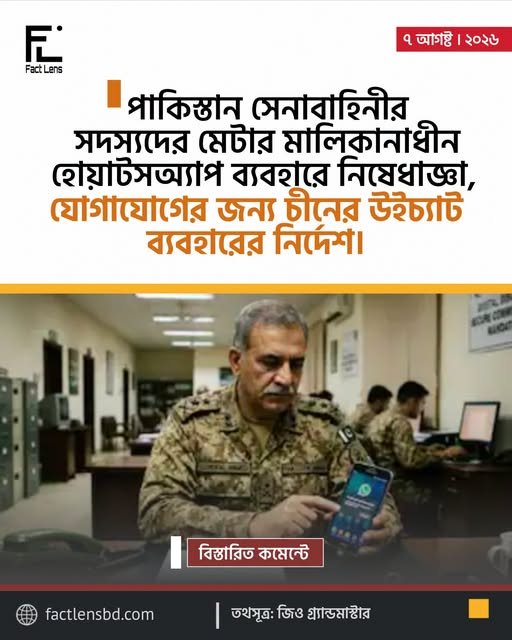
পাকিস্তান সেনাবাহিনীতে হোয়াটসঅ্যাপের বদলে উইচ্যাট
সাইবার নিরাপত্তা ও তথ্য ফাঁসের ঝুঁকির কথা উল্লেখ করে পাকিস্তান সেনাবাহিনীর সরকারি যোগাযোগে হোয়াটসঅ্যাপের পরিবর্তে চীনের উইচ্যাট ব্যবহারের নির্দেশের খবর এসেছে। সিদ্ধান্তটি আনুষ্ঠানিকভাবে নিশ্চিত না হলেও সত্য হলে সামরিক যোগাযোগে চীনা প্রযুক্তির ওপর পাকিস্তানের নির্ভরতা আরও গভীর হওয়ার কৌশলগত ইঙ্গিত দেবে।
তথ্যসূত্র: Geo Grandmasters .
Read MoreAuthor: Saikat Bhattacharya
International geopolitics General Unipolar vs Multi-polar 09-August-2026 by east is rising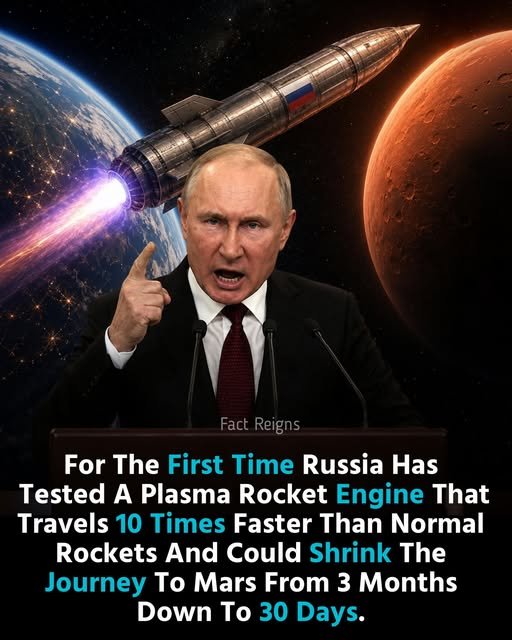
For The First Time, Russia Has Tested A Prototype Plasma Rocket Engine That Travels 10 Times Faster Than Normal Rockets
According to the latest research, scientists at Rosatom's Troitsk Institute have successfully developed a laboratory prototype of a plasma electric rocket engine based on a magnetic plasma accelerator. This revolutionary propulsion system can operate at an average power of 300 kilowatts, accelerating charged particles (electrons and protons) to astonishing velocities of up to 100 kilometers per second. By relying on electromagnetic fields rather than traditional chemical combustion, the engine makes fuel consumption up to ten times more efficient while achieving speeds that chemical rockets simply cannot match.
Currently, a one-way trip to Mars can take almost a year, exposing astronauts to dangerous levels of cosmic radiation. By drastically increasing spacecraft velocities, this plasma engine aims to cut that transit time to a mere 30 to 60 days, paving the way for safer crewed return missions. The prototype is currently undergoing rigorous ground testing inside a massive 14-meter-long vacuum chamber designed to perfectly simulate outer space conditions, with engineers targeting 2030 to produce a flight-ready unit.
Read MoreAuthor: Saikat Bhattacharya
Technology news General Unipolar vs Multi-polar 06-August-2026 by east is rising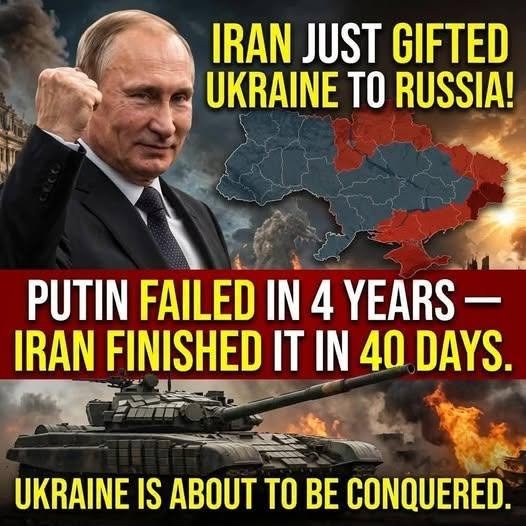
Ukraine Is About to Fall — What Putin Couldn't Do in 4 Years, Iran Did in 40 Days!
Iran just pulled off the biggest strategic move of the war !!
Ukraine asked America for Patriot missiles.
Trump said: "We don't have any. They're gone."
Iran made America waste thousands of missiles.
Now Ukraine has no air defense !!
Russia attacked last night — Ukraine didn't fire a single missile.
Ukraine can't even defend its presidential palace anymore.
Europe can't help — they don't have missiles either.
Iran achieved in 40 days what Putin couldn't do in 4 years.
Iran systematically dismantled Ukraine's defenses — not by fighting Ukraine directly.
By destroying America's weapons stockpiles.
Russia is now advancing rapidly.
Ukraine is about to lose massive territory.
Putin is about to get everything he wanted.
Because Iran made it happen.Iran changed the entire dynamic of war !!
They proved that war isn't fought with ships.It's fought with missiles and drones.
And America is now powerless to stop it.
This is the biggest strategic shift in modern history by Iran with asymmetric warfare.
Read MoreAuthor: Saikat Bhattacharya
International geopolitics General Unipolar vs Multi-polar 06-August-2026 by east is rising
"China has long considered space a strategic arena and has invested in advancing across all branches of this seminal technology, as several American studies have reported. That means it is the deployment of Beijing’s space technology, not Tehran’s missiles and drones themselves, that has decisively altered the course of the war, marking what may be called history’s first proxy war in space."
From satellite navigation to electronic warfare, this analysis explores how the invisible contest in space is reshaping modern conflict and redefining the balance of global power.
Pentagon has relocated its Triton drones from Jordan to Italy after they were hit by Iranian missiles. These drones provided high-altitude maritime surveillance platforms for US military operations in the ongoing war against Iran. This relocation reflects a change in the Pentagon’s strategy of the forward deployment of military and surveillance assets in Jordan in the run-up to and during the first few weeks of the Israel–USA joint military operations.
In sharp contrast to the 12-day war in July last year, Iranian missiles have demonstrated deadly precision and effectiveness this time, regularly striking strategic facilities in Jordan, Kuwait, and elsewhere across the Middle East. These targets are often highly specific, undisclosed or restricted locations, detectable only by an advanced space surveillance system capable of continuously monitoring military movements. This has drawn attention to the growing sophistication of those missiles’ navigation and guidance systems and to the increasingly crucial role of an invisible component of this war: space.
Tehran certainly has a large arsenal of missiles and drones, but their impact on the course of the war would have been insignificant without vital support from space. These weapons must be precisely locked onto their targets and guided through hostile skies under constant enemy surveillance. They must also protect themselves from signal jamming and spoofing while simultaneously sending deceptive signals to potentially hostile systems. This is why the space component of the war is indispensable, with Beijing playing a key role on Tehran’s behalf.
Until recently, the USA has been the undisputed leader in space technologies, including global navigation satellite systems (GNSS), electronic warfare with wide coverage across Low Earth Orbit (LEO) and Very Low Earth Orbit (VLEO) constellations, and anti-satellite weapons (ASAT). However, this balance has been shifting steadily in Beijing’s favour since BeiDou, its indigenous GNSS, became fully operational in 2020. China has long considered space a strategic arena and has invested in advancing across all branches of this seminal technology, as several American studies have reported. That means it is the deployment of Beijing’s space technology, not Tehran’s missiles and drones themselves, that has decisively altered the course of the war, marking what may be called history’s first proxy war in space. The war has pitted the two space superpowers against each other in a fierce battle that will profoundly shape how they confront one another in potential geopolitical flashpoints elsewhere.
A conceptual illustration showing the invisible battlefield of space, where satellite navigation, surveillance, and command systems shape military operations on Earth. Illustration: AI
Ironically, China’s breathtaking ascent as a space superpower capable of rivalling the USA’s position is rooted in Operation Desert Storm, launched on 17 January 1991. The Pentagon began with a devastating air assault on Iraqi forces in Kuwait and followed through with a massive ground offensive on February 24, crushing Iraqi resistance in less than 100 hours. The swift and complete success of that mission, often called the first space war, owed largely to the use of space technologies, including the Global Positioning System (GPS, the American version of GNSS), satellite communications, intelligence and reconnaissance by spy satellites, early warning systems to detect Iraqi Scud missiles, and weather forecasting by meteorological satellites to track sandstorms and cloud cover. The Chinese leadership of the time was deeply alarmed by this awesome demonstration of the American military’s speed, precision, firepower, and global reach, prompting the fast-track modernisation of the People’s Liberation Army (PLA).
The outcome of that modernisation drive by Beijing is what is being played out in Iran, where Tehran has made the war painfully expensive for Washington, which is bogged down in an untenable situation and is groping for a face-saving exit. Beijing’s space technology is actively helping Tehran control the course of the war, while the Pentagon is rapidly losing its expensive, slow-to-replenish anti-missile arsenal. At the same time, the war is revealing where and how space technology, regardless of its sophistication, can be vulnerable to low-cost weaponry, thereby making a prolonged war effort in a distant land economically unsustainable for a superpower.
This will undoubtedly help Beijing’s strategists prepare their Taiwan game plan and protect their energy supply routes through the South China Sea and the Strait of Malacca. The free flow of ships through these waterways and the Strait of Hormuz is vital to Beijing's economy; these chokepoints carry the vast majority of China's imported crude oil, liquefied natural gas, and manufactured exports. Yet Tehran’s ability to block the Strait of Hormuz, despite having a far smaller naval force than Washington’s, has shown that military might or space technology cannot ensure uninterrupted shipping through contested waters; control of a dominant commercial fleet of oceangoing ships is also essential.
That leads to another front in the superpower rivalry: commercial shipping. Beijing has developed a large dual-use shipbuilding industry to support its ongoing naval modernisation. In response, Washington adopted a maritime action plan in February to "restore its maritime dominance". The battle for the seas is already brewing.
Dr Sayeed Ahmed is the Lead Consultant at Sydney-based consultancy Tasman Analytics.
Read MoreAuthor: Saikat Bhattacharya
Technology news General Unipolar vs Multi-polar 28-July-2026 by east is rising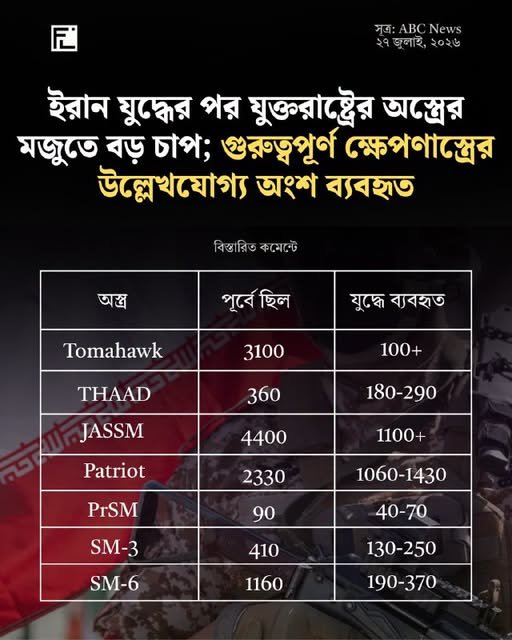
ইরানের সঙ্গে সাম্প্রতিক সংঘাতে যুক্তরাষ্ট্রের গুরুত্বপূর্ণ প্রতিরক্ষা ও দূরপাল্লার ক্ষেপণাস্ত্রের বড় অংশ ব্যবহৃত হয়েছে বলে বিশ্লেষণে দাবি করা হয়েছে। এতে ভবিষ্যৎ সামরিক প্রস্তুতি ও বৈশ্বিক কৌশলগত ভারসাম্য নিয়ে নতুন আলোচনা শুরু হয়েছে।
সোর্স — এবিসি নিউজ, কৌশলগত ও আন্তর্জাতিক গবেষণা কেন্দ্র
ইরানের সঙ্গে সাম্প্রতিক যুদ্ধের পর যুক্তরাষ্ট্রের গুরুত্বপূর্ণ নির্ভুল নির্দেশিত অস্ত্রের মজুত উল্লেখযোগ্যভাবে কমে গেছে বলে বিভিন্ন বিশ্লেষণে দাবি করা হয়েছে। এবিসি নিউজ এবং কৌশলগত ও আন্তর্জাতিক গবেষণা কেন্দ্রের মূল্যায়ন অনুযায়ী, যুদ্ধ শুরুর আগে যুক্তরাষ্ট্রের হাতে থাকা গুরুত্বপূর্ণ নির্ভুল নির্দেশিত অস্ত্রের মোট মজুতের প্রায় এক-তৃতীয়াংশ এই সংঘাতে ব্যবহৃত হয়েছে। বিশেষ করে আকাশ প্রতিরক্ষা ব্যবস্থা এবং দূরপাল্লার হামলায় ব্যবহৃত ক্ষেপণাস্ত্রের ওপর সবচেয়ে বেশি চাপ পড়েছে। বিশ্লেষণে বলা হয়েছে, ইরানের ব্যালিস্টিক ক্ষেপণাস্ত্র ও ড্রোন হামলা প্রতিহত করতে যুক্তরাষ্ট্রকে বিপুল সংখ্যক উচ্চস্তরের আকাশ প্রতিরক্ষা ক্ষেপণাস্ত্র ব্যবহার করতে হয়েছে।
একই সময়ে ইরানের বিভিন্ন সামরিক স্থাপনা লক্ষ্য করে দূরপাল্লার হামলায় বিপুল পরিমাণ ক্ষেপণাস্ত্র নিক্ষেপ করা হয়েছে। প্রতিবেদনে উল্লেখ করা হয়েছে, যুদ্ধের আগে যুক্তরাষ্ট্রের কাছে প্রায় ৩৬০টি উচ্চস্তরের আকাশ প্রতিরক্ষা ক্ষেপণাস্ত্র ছিল, যার মধ্যে প্রায় ১৯০ থেকে ২৯০টি ব্যবহার করা হয়েছে। অর্থাৎ মোট মজুতের প্রায় ৫৩ থেকে ৮০ শতাংশ পর্যন্ত এই সংঘাতে ব্যয় হয়েছে। একইভাবে নৌবাহিনীর ব্যবহৃত আরেক ধরনের প্রতিরক্ষা ক্ষেপণাস্ত্রের ক্ষেত্রেও বড় ধরনের হ্রাস দেখা গেছে। যুদ্ধের আগে থাকা প্রায় ৪১০টির মধ্যে ১৩০ থেকে ২৫০টি ব্যবহার করা হয়েছে, যা মোট মজুতের এক-তৃতীয়াংশ থেকে অর্ধেকেরও বেশি। অপরদিকে আকাশ প্রতিরক্ষা ব্যবস্থার আরেকটি গুরুত্বপূর্ণ ক্ষেপণাস্ত্রের ক্ষেত্রেও উল্লেখযোগ্য ব্যবহার হয়েছে। যুদ্ধের আগে থাকা আনুমানিক ২,৩৩০টির মধ্যে ১,০৬০ থেকে ১,৪৩০টি নিক্ষেপ করা হয়েছে, যা সর্বোচ্চ প্রায় ৬১ শতাংশ।
শুধু প্রতিরক্ষামূলক নয়, আক্রমণাত্মক অস্ত্রের ক্ষেত্রেও বড় প্রভাব পড়েছে। বিশ্লেষণ অনুযায়ী, ১,০০০টির বেশি দূরপাল্লার ক্রুজ ক্ষেপণাস্ত্র এবং ১,১০০টির বেশি দূরপাল্লার আকাশ থেকে ভূমিতে নিক্ষেপযোগ্য ক্ষেপণাস্ত্র ব্যবহার করা হয়েছে। তুলনামূলকভাবে সীমিত সংখ্যায় থাকা আরেক ধরনের নির্ভুল হামলার ক্ষেপণাস্ত্রের ক্ষেত্রেও বড় অংশ ব্যয় হয়েছে। যুদ্ধের আগে থাকা প্রায় ৯০টির মধ্যে ৪০ থেকে ৭০টি ইতোমধ্যে ব্যবহৃত হয়েছে। প্রতিরক্ষা বিশ্লেষকদের মতে, আধুনিক নির্ভুল নির্দেশিত ক্ষেপণাস্ত্র উৎপাদন অত্যন্ত জটিল, সময়সাপেক্ষ এবং ব্যয়বহুল হওয়ায় দ্রুত নতুন মজুত তৈরি করা সম্ভব নয়।
তাদের মতে, ইউক্রেন যুদ্ধ, মধ্যপ্রাচ্যের চলমান সংঘাত এবং ইন্দো-প্রশান্ত মহাসাগরীয় অঞ্চলের নিরাপত্তা পরিস্থিতি—সব মিলিয়ে যুক্তরাষ্ট্রকে একাধিক কৌশলগত অঞ্চলে প্রস্তুতি বজায় রাখতে হচ্ছে। ফলে ব্যবহৃত ক্ষেপণাস্ত্রের মজুত পুনর্গঠন এখন দেশটির প্রতিরক্ষা পরিকল্পনার অন্যতম গুরুত্বপূর্ণ অগ্রাধিকার হিসেবে বিবেচিত হচ্ছে। তবে এসব পরিসংখ্যান স্বাধীনভাবে যাচাই করা হয়নি এবং এগুলো সংশ্লিষ্ট গণমাধ্যম ও গবেষণা প্রতিষ্ঠানের বিশ্লেষণের ওপর ভিত্তি করে প্রকাশিত।
Read MoreAuthor: Saikat Bhattacharya
International geopolitics General Unipolar vs Multi-polar 28-July-2026 by east is rising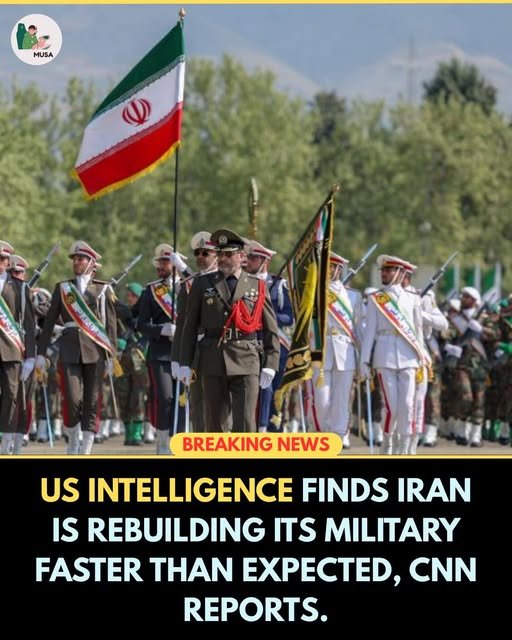
CNN and Reuters reported that U.S. intelligence assessments found Iran is rebuilding its military and defense industrial base faster than the U.S. Intelligence Community originally projected. According to four sources familiar with those assessments, Iran restarted some drone production during a six-week ceasefire that began in early April. Some U.S. intelligence estimates indicate Iran could fully reconstitute its drone attack capability in as soon as six months. One U.S. official told CNN that the Iranians have exceeded all timelines the intelligence community had for reconstitution.
The assessments show Iran is rapidly restoring missile sites, launchers, and production capacity for key weapons systems that were degraded by U.S.-Israeli strikes. Roughly two-thirds of Iran’s missile launchers survived the strikes, and about half of its drone fleet remains operational. A large percentage of Iran’s coastal defense cruise missiles also remain intact, which allows continued threats to shipping in the Strait of Hormuz.
Sources told CNN the faster recovery is tied to multiple factors, including support from Russia and China, and that the U.S. and Israeli strikes did not cause as much long-term damage as planners expected. Israeli Prime Minister Benjamin Netanyahu said China is giving Iran components for missile manufacturing, though China’s Foreign Ministry called those claims not based on facts.
This intelligence differs from public statements by CENTCOM commander Adm. Brad Cooper, who testified that Operation Epic Fury destroyed 90% of Iran’s defense industrial base and that Iran cannot reconstitute for years. Two sources told CNN the intelligence is inconsistent with that description. One source said the damage likely set Iran’s reconstitution back by months, not years.
The backdrop is a ceasefire in place since early April. President Trump said the U.S. was ready for further attacks on Tehran if Iran did not agree to a peace deal, but indicated Washington could wait a few days to get the right answers. U.S. intelligence officials note that if fighting resumes, Iran could compensate for degraded missile capability by increasing drone launches against Israel and Gulf countries
Read MoreAuthor: Saikat Bhattacharya
International geopolitics General Unipolar vs Multi-polar 24-May-2026 by east is rising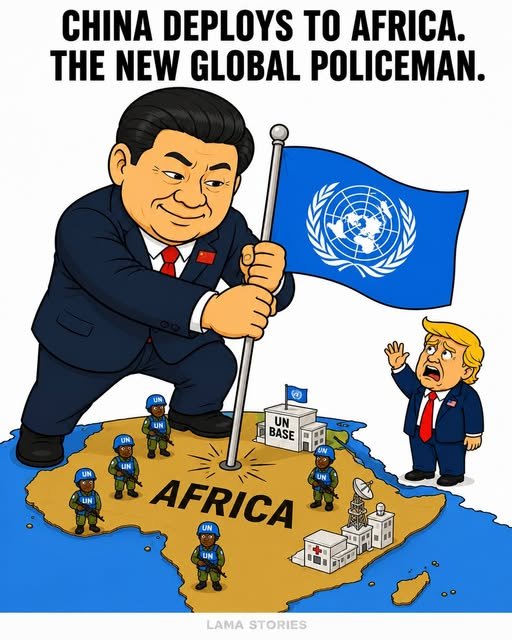
The West offered angry letters of condemnation. Beijing offered ten thousand combat soldiers.
China just deployed a massive, heavily armed contingent of combat peacekeepers to Sudan under a newly authorized UN mandate, entirely replacing Western influence in the region. For years, the US and Europe tried to end the brutal civil war through sanctions and endless diplomatic summits that achieved absolutely nothing. China bypassed the diplomacy entirely. They arrived with armored vehicles, secured the critical infrastructure, and forced the warring factions to the table at gunpoint.
Beijing isn't doing this for humanitarian reasons. They have billions of dollars in infrastructure investments and oil contracts in the region that need protecting. They recognized that the West is paralyzed by human rights concerns, so they stepped in as the new ruthless guarantor of stability.
They didn't ask for permission. They just proved they are the new sheriff in Africa.
Read MoreAuthor: Saikat Bhattacharya
International geopolitics General Unipolar vs Multi-polar 23-May-2026 by east is rising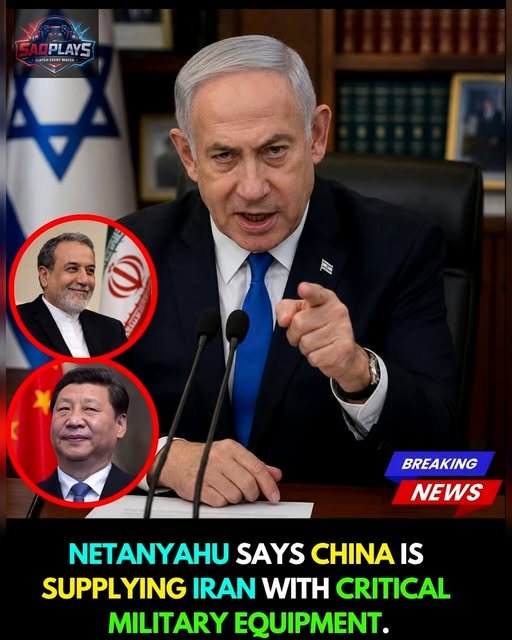
Benjamin Netanyahu is now warning that China may be supplying Iran with critical military-related equipment and technology — a claim that, if proven true, would dramatically expand the geopolitical stakes of the conflict.
Because this would no longer be just:
Israel vs Iran.
It would become part of a much larger global power struggle involving:
• supply chains
• sanctions loopholes
• dual-use technology
• drones and military components
• and the quiet role major powers play behind modern conflicts
Reports in recent years have raised concerns about Chinese-linked companies supplying components connected to Iranian and Russian drone manufacturing, although Beijing has repeatedly denied directly arming Iran.
And that is exactly why this issue matters.
Modern wars are no longer fought only with soldiers and missiles.
They are also fought through:
• factories
• computer chips
• shipping routes
• financial systems
• and strategic partnerships operating far from the battlefield itself
Netanyahu’s message appears clear:
Iran is not isolated —
and larger global actors may already be shaping the balance behind the scenes.
At the same time, critics warn that accusations like these can rapidly escalate tensions between major powers and push regional conflicts into something far more dangerous internationally.
Read MoreAuthor: Saikat Bhattacharya
International geopolitics General Unipolar vs Multi-polar 14-May-2026 by east is rising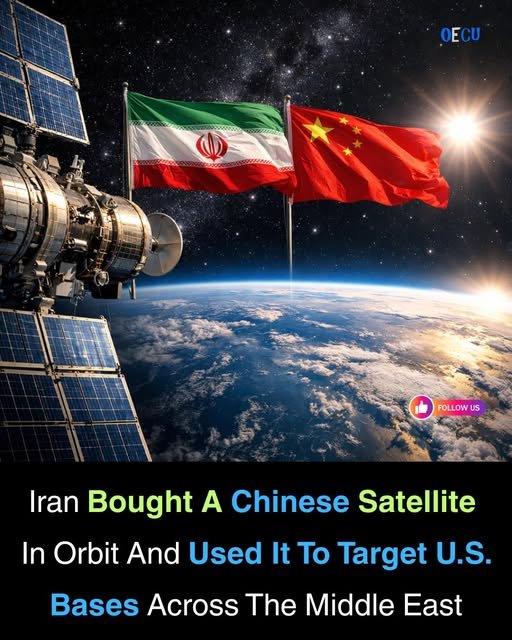
An investigation by the Financial Times has revealed that Iran secretly acquired a Chinese spy satellite, granting it a powerful new capability to target US military bases across the Middle East during the recent war. Leaked Iranian military documents show that the satellite, named TEE-01B, was handed over to the Islamic Revolutionary Guard Corps (IRGC) Aerospace Force in late 2024, after being launched into space from China. Time-stamped coordinate lists, satellite imagery, and orbital analysis indicate that Iranian military commanders subsequently used the satellite to monitor key US military bases. The analysis shows that Iran took images via the satellite both before and after drone and missile attacks on those locations in March. The TEE-01B satellite was built and launched by a Chinese company called Earth Eye Co., which claims to offer a little-known export model called “In-Orbit Delivery.” Under this model, spacecraft launched in China are transferred to foreign customers once they reach orbit. As part of the deal, the IRGC was granted access to commercial ground stations operated by Emposat. Emposat is a Beijing-based company that provides satellite control and data services and operates a global network of ground stations across Asia, Latin America, and other regions. Logs show that the satellite captured images of Prince Sultan Air Base in Saudi Arabia on 13, 14, and 15 March. On 14 March, US President Donald Trump confirmed that US aircraft at the base had been hit. Five US Air Force refuelling aircraft were damaged. While the IRGC claimed responsibility for attacks on facilities in the area, the satellite was also monitoring Muwaqqar Salti Air Base in Jordan, the US Fifth Fleet base in Manama, Bahrain, and areas near Erbil Air Base in Iraq. Other locations under surveillance included Camp Buehring and Ali Al Salem Air Base in Kuwait, the US military base at Camp Lemonnier in Djibouti, and Duqm International Airport in Oman. Civilian infrastructure under observation in the Gulf included the Khor Fakkan container port area and the Qidfa power and desalination plant in the United Arab Emirates, as well as the Alba facility in Bahrain — one of the world’s largest aluminium smelters. The TEE-01B is capable of taking images at nearly half-metre resolution, comparable to high-resolution commercial satellite imagery available in Western countries. This represents a significant improvement in Iran’s domestic capabilities, allowing analysts to identify changes in aircraft, vehicles, and infrastructure. According to documents seen by the FT, in September 2024 the IRGC Aerospace Force — which oversees Iran’s ballistic missile, drone, and space programmes — agreed to pay approximately 250 million RMB (US$36.6 million) to take control of the satellite system. Under the agreement, Emposat will provide the IRGC with software and a ground network to operate the satellite throughout its lifespan. These will enable command transmission, telemetry, and image acquisition, allowing the IRGC to control the satellite’s operations from anywhere in the world. Although Emposat is a commercial entity, it was founded by Richard Zhao, who worked for 15 years at the state-owned China Academy of Space Technology. According to the company’s website, several of Earth Eye’s senior executives and engineers have connections with Chinese universities known as the “Seven Sons of National Defence” due to their close collaboration with the People’s Liberation Army. The details of the satellite deal have emerged at a time when the United States is deeply concerned about China’s assistance to Iran. The US has received indications that China is considering supplying Iran with shoulder-fired missiles of the type recently used by Iran to shoot down a US F-15 fighter jet. The FT used publicly available tracking data from the US Space Force to analyse the orbit of TEE-01B and found that the satellite was in a position to observe the listed locations at the times specified in the documents shared with the FT. In each case, the timestamps, coordinates, and sensor angles were consistent with the satellite’s position. Government statements and media reports show that many of these sites were struck in the days before or after the satellite passed overhead. The FT used radar imagery from the European Space Agency’s Sentinel-1 satellite and medium-resolution images from Sentinel-2 to identify potential damage.
Read MoreAuthor: Saikat Bhattacharya
International geopolitics General Unipolar vs Multi-polar 18-April-2026 by east is rising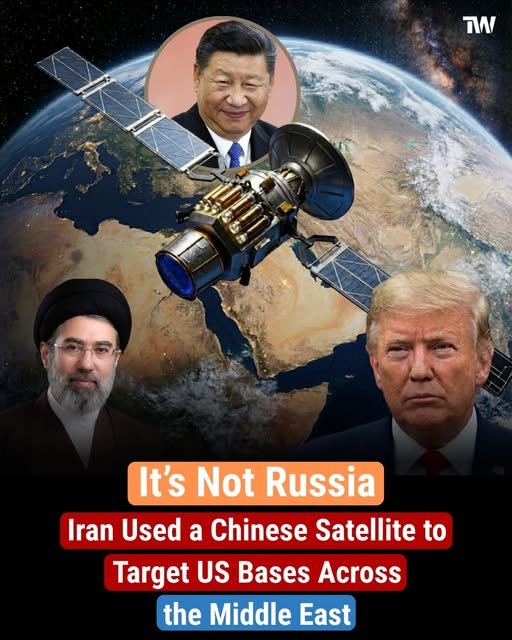
Financial Times এর এক অনুসন্ধান বলছে, ইরান গোপনে চীনের একটি গুপ্তচর স্যাটেলাইট সংগ্রহ করেছিল, যা সাম্প্রতিক যুদ্ধের সময় মধ্যপ্রাচ্য জুড়ে মার্কিন সামরিক ঘাঁটিগুলোকে লক্ষ্যবস্তু করার ক্ষেত্রে ইরানকে এক শক্তিশালী নতুন সক্ষমতা প্রদান করে। ফাঁস হওয়া ইরানি সামরিক নথি থেকে জানা যায় , টিইই-০১বি নামের স্যাটেলাইটটি চীন থেকে মহাকাশে উৎক্ষেপণের পর ২০২৪ সালের শেষের দিকে ইসলামিক রেভল্যুশনারি গার্ড কোরের অ্যারোস্পেস ফোর্সের হাতে আসে। সময়-চিহ্নিত স্থানাঙ্ক তালিকা, স্যাটেলাইট চিত্র এবং কক্ষপথ বিশ্লেষণ থেকে দেখা যায় যে, ইরানি সামরিক কমান্ডাররা পরবর্তীতে স্যাটেলাইটের মাধ্যমে গুরুত্বপূর্ণ মার্কিন সামরিক ঘাঁটিগুলো পর্যবেক্ষণে ব্যবহার করেছে। বিশ্লেষণে দেখা গেছে মার্চে ইরান ঐ স্থানগুলোতে ড্রোন ও ক্ষেপণাস্ত্র হামলার আগে ও পরে স্যাটেলাইটের মাধ্যমে ছবি তোলা হয়েছিল। TEE-01B নামের স্যাটেলাইটটি তৈরি ও উৎক্ষেপণ করেছে আর্থ আই কোং নামে একটি চীনা কোম্পানি, যারা “ইন-অরবিট ডেলিভারি” নামক একটি স্বল্প-পরিচিত রপ্তানি মডেল প্রদান করে বলে দাবি করে। এই মডেলের অধীনে চীনে উৎক্ষেপিত মহাকাশযান কক্ষপথে পৌঁছানোর পর বিদেশী গ্রাহকদের কাছে হস্তান্তর করা হয়। চুক্তির অংশ হিসেবে, আইআরজিসি-কে এমপোস্যাট (Emposat) পরিচালিত বাণিজ্যিক গ্রাউন্ড স্টেশনগুলোতে প্রবেশের অনুমতি দেওয়া হয়েছিল। এমপোস্যাট হলো বেইজিং-ভিত্তিক একটি সংস্থা, যারা স্যাটেলাইট নিয়ন্ত্রণ ও ডেটা পরিষেবা প্রদান করে এবং এশিয়া, লাতিন আমেরিকা ও অন্যান্য অঞ্চল জুড়ে এর একটি বৈশ্বিক নেটওয়ার্ক রয়েছে। লগ থেকে দেখা যায় যে, স্যাটেলাইটটি ১৩, ১৪ এবং ১৫ মার্চ সৌদি আরবের প্রিন্স সুলতান বিমান ঘাঁটির ছবি ধারণ করেছে। ১৪ মার্চ, মার্কিন প্রেসিডেন্ট ডোনাল্ড ট্রাম্প নিশ্চিত করেন যে ঘাঁটিতে থাকা মার্কিন বিমানগুলো আক্রান্ত হয়েছে। মার্কিন বিমানবাহিনীর পাঁচটি জ্বালানি সরবরাহকারী বিমান ক্ষতিগ্রস্ত হয়েছিল। আইআরজিসি কর্তৃক ওই এলাকাগুলোর স্থাপনাগুলোতে হামলার দায় স্বীকার করার সময়কালে স্যাটেলাইটটি জর্ডানের মুওয়াফফাক সালতি বিমান ঘাঁটি এবং বাহরাইনের মানামায় অবস্থিত মার্কিন পঞ্চম নৌবহরের ঘাঁটি ও ইরাকের এরবিল বিমানবন্দরের নিকটবর্তী স্থানগুলোর ওপরও নজরদারি চালিয়েছিল। স্যাটেলাইটের মাধ্যমে নজরদারিতে থাকা অন্যান্য এলাকার মধ্যে ছিল কুয়েতের ক্যাম্প বুহরিং ও আলি আল সালেম বিমান ঘাঁটি, জিবুতির ক্যাম্প লেমনিয়ার মার্কিন সামরিক ঘাঁটি এবং ওমানের দুকম আন্তর্জাতিক বিমানবন্দর। পর্যবেক্ষণাধীন উপসাগরীয় বেসামরিক অবকাঠামোর মধ্যে ছিল সংযুক্ত আরব আমিরাতের খোর ফাক্কান কন্টেইনার বন্দর এলাকা ও কিদফা বিদ্যুৎ ও লবণাক্ত পানি পরিশোধন কেন্দ্র, সেইসাথে বাহরাইনের আলবা স্থাপনা—যা বিশ্বের অন্যতম বৃহত্তম অ্যালুমিনিয়াম গলানোর কারখানা। TEE-01B প্রায় আধা-মিটার রেজোলিউশনে ছবি তুলতে সক্ষম, যা পশ্চিমা দেশগুলোতে বাণিজ্যিকভাবে উপলব্ধ উচ্চ-রেজোলিউশনের স্যাটেলাইট চিত্রের সমতুল্য। এটি ইরানের অভ্যন্তরীণ সক্ষমতার একটি উল্লেখযোগ্য উন্নতি এবং এর মাধ্যমে বিশ্লেষকরা বিমান, যানবাহন ও অবকাঠামোগত পরিবর্তন শনাক্ত করতে পারবেন। FT-র দেখা নথি অনুযায়ী, ২০২৪ সালের সেপ্টেম্বরে ইরানের ব্যালিস্টিক ক্ষেপণাস্ত্র, ড্রোন ও মহাকাশ কর্মসূচির তত্ত্বাবধায়ক আইআরজিসি অ্যারোস্পেস ফোর্স স্যাটেলাইট সিস্টেমটির নিয়ন্ত্রণ অধিগ্রহণের জন্য প্রায় ২৫০ মিলিয়ন Rmb (৩৬.৬ মিলিয়ন মার্কিন ডলার) দিতে সম্মত হয়েছে। চুক্তি অনুসারে, এমপোস্যাট স্যাটেলাইটটির জীবনকাল জুড়ে পরিচালনার জন্য আইআরজিসি-কে সফটওয়্যার এবং গ্রাউন্ড নেটওয়ার্ক সরবরাহ করবে। এগুলোর মাধ্যমে কমান্ড পাঠানো, টেলিমেট্রি ও চিত্র গ্রহণ করা যাবে এবং আইআরজিসি বিশ্বের যেকোনো স্থান থেকে স্যাটেলাইটটির কার্যক্রম পরিচালনা করতে পারবে। এমপোস্যাট একটি বাণিজ্যিক প্রতিষ্ঠান হলেও, এটি প্রতিষ্ঠা করেন রিচার্ড ঝাও, যিনি সরকারি প্রতিষ্ঠান চায়না একাডেমি অফ স্পেস টেকনোলজিতে ১৫ বছর কাজ করেছেন। সংস্থাটির ওয়েবসাইট অনুসারে, আর্থ আই-এর বেশ কয়েকজন শীর্ষ কর্মকর্তা ও প্রকৌশলীর সঙ্গে চীনের এমন কিছু বিশ্ববিদ্যালয়েরও সংযোগ রয়েছে, যেগুলোকে পিপলস লিবারেশন আর্মির সঙ্গে ঘনিষ্ঠ সহযোগিতার কারণে “জাতীয় প্রতিরক্ষার সাত সন্তান” বলা হয়। স্যাটেলাইট চুক্তিটির তথ্য এমন এক সময়ে সামনে এসেছে যখন ইরানকে চীনের সাহায্য নিয়ে যুক্তরাষ্ট্র ব্যাপকভাবে উদ্বিগ্ন। যুক্তরাষ্ট্র এমন ইঙ্গিত পেয়েছে যে চীন ইরানকে কাঁধে বহনযোগ্য সেই ধরনের ক্ষেপণাস্ত্র সরবরাহ করার কথা বিবেচনা করছে, যা ব্যবহার করে ইরান সম্প্রতি একটি মার্কিন এফ-১৫ যুদ্ধবিমান ভূপাতিত করেছে। . FT মার্কিন স্পেস ফোর্সের সর্বজনীন ট্র্যাকিং ডেটা ব্যবহার করে টিইই-০১বি-এর কক্ষপথ বিশ্লেষণ করে দেখেছে যে, এফটি-র সাথে শেয়ার করা নথিতে তালিকাভুক্ত সময়ে উপগ্রহটি ওই স্থানগুলো পর্যবেক্ষণ করার মতো অবস্থানে ছিল। প্রতিটি ক্ষেত্রেই, টাইমস্ট্যাম্প, স্থানাঙ্ক এবং সেন্সরের কোণ উপগ্রহটির অবস্থানের সাথে সামঞ্জস্যপূর্ণ ছিল। সরকারি বিবৃতি এবং গণমাধ্যমের প্রতিবেদন থেকে দেখা যায়, স্যাটেলাইটটি অতিক্রম করার আগের বা পরের দিনগুলোতে অনেকগুলো স্থানেই আঘাত হানা হয়েছিল। FT ইউরোপীয় মহাকাশ সংস্থার সেন্টিনেল-১ স্যাটেলাইটের রাডার চিত্র এবং সেন্টিনেল-২ থেকে প্রাপ্ত মাঝারি-রেজোলিউশনের চিত্র ব্যবহার করে সম্ভাব্য ক্ষয়ক্ষতি শনাক্ত করেছে।
Read MoreAuthor: Saikat Bhattacharya
International geopolitics General Unipolar vs Multi-polar 18-April-2026 by east is rising
In a stinging critique of Western military power, Andrey Kartapolov, a senior Russian lawmaker and retired Colonel General, publicly dismissed the operational effectiveness of the United States military on March 28, 2026. Kartapolov, who serves as the Chairman of the State Duma Defense Committee, claimed that the U.S. lacks the planning depth and "tactical maturity" forged by Russia’s sustained combat operations in the 2020s.
His remarks come at a time of heightened global tension, with Kartapolov positioning the Armed Forces of the Russian Federation as the world’s sole leader in high-intensity, peer-level warfare.
Kartapolov’s primary argument centers on the difference between theoretical capability and modern battlefield experience. He asserted that the U.S. military has become overly reliant on air superiority and PR-driven narratives rather than complex ground maneuvers.
The Planning Gap: Kartapolov stated: "We clearly see today that Americans do not reach our capabilities in conducting operations at the tactical and operational level; they simply do not know how to plan them."
"Fly and Bomb": He characterized American military doctrine as simplistic, claiming, "All they can do is fly, bomb, and talk about how good everything is for them. We solve tasks differently."
The "Experience" Argument: The General argued that Russia’s "Special Military Operation" has provided its commanders with a "pattern-of-life" understanding of modern electronic warfare, drone integration, and artillery duels that the U.S. has not experienced in decades.
To support his claims of superiority, Kartapolov cited figures previously attributed to the Russian Ministry of Defense, painting a picture of an unstoppable military machine.
Equipment Losses: Kartapolov claimed Russian forces have destroyed nearly 8,000 tanks, 400 aircraft, and over 1,000 multiple-launch rocket systems (MLRS) since the start of the conflict in Ukraine.
State Recognition: He noted that over 120,000 Russian personnel have received state awards for valor, including more than 100 "Hero of Russia" titles, which he used as evidence of a "battle-hardened" officer corps.
While Kartapolov’s rhetoric is designed to bolster domestic morale and project strength abroad, independent data and open-source intelligence (OSINT) suggest a far more complicated reality.
Verified Losses: Data from the Oryx open-source community, which tracks visually confirmed equipment losses, tells a different story. As of late March 2026, visually confirmed Russian losses exceed 24,000 units (including over 3,000 tanks), significantly higher than the confirmed losses for Ukraine.
U.S. Modernization: While Kartapolov mocks U.S. "planning," the Pentagon has spent 2025 and 2026 rapidly integrating lessons from the Ukraine war into its own doctrine, specifically through the Replicator drone program and the deployment of F-35A fighters to strategic points like Misawa, Japan.
The Strategic Context: Analysts suggest Kartapolov’s comments are partly a response to the recent U.S.-Iran escalation and the US-Ukraine drone joint venture (Wilcox/General Chereshnya), which have showcased Western technological adaptability that Russia has struggled to match.
Andrey Kartapolov’s remarks represent the peak of Moscow’s "information warfare" strategy: portraying the West as a "paper tiger" that has forgotten how to fight on the ground. However, with the U.S. currently engaged in high-intensity operations in the Middle East and expanding its stealth and drone footprints globally, the General’s dismissal of American "planning" may be more of a defensive rhetorical shield than a battlefield reality.
Read MoreAuthor: Saikat Bhattacharya
International geopolitics General Unipolar vs Multi-polar 04-April-2026 by east is rising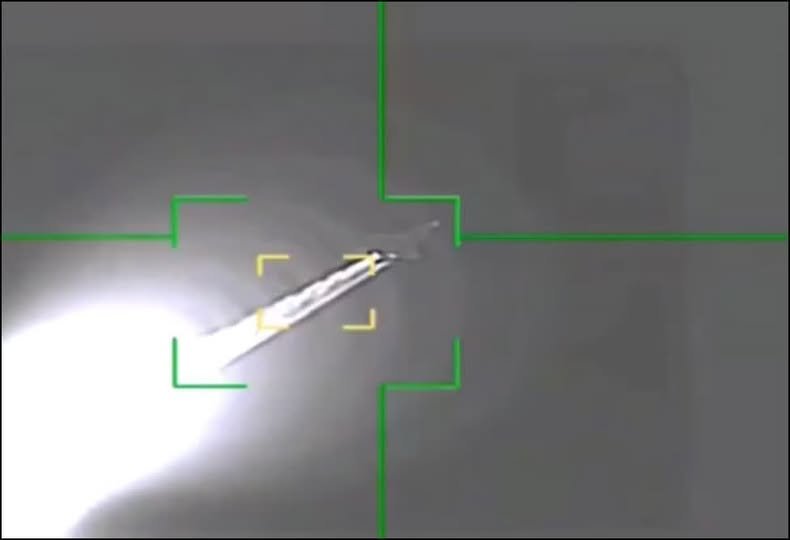
Chapter 1: যে প্লেনকে ‘অদৃশ্য’ বলা হত… সেটাই আজ টার্গেট
যে প্লেনকে নিয়ে বছরের পর বছর narrative তৈরি হয়েছে—
“enemy detect করতে পারবে না”
“ghost of the sky”
সেই F-35 Lightning II আজ প্রথমবার বাস্তব যুদ্ধক্ষেত্রে প্রশ্নের মুখে।
রিপোর্ট অনুযায়ী:
Iran একটি combat mission-এ থাকা F-35-কে hit করেছে
US-ও indirect ভাবে damage স্বীকার করেছে
এটা শুধু একটা aircraft hit না—
এটা একটা myth-এর পতন
⸻
Chapter 2: কীভাবে সম্ভব হলো—Stealth vs Reality
Stealth aircraft কাজ করে দুইভাবে:
• Radar signature কমানো
• Electronic warfare দিয়ে detection avoid করা
কিন্তু Iran যেটা করেছে তা completely different:
Infrared heat tracking
মানে:
• Radar না ব্যবহার করে
• সরাসরি engine-এর heat signature detect
Result?
F-35-এর stealth design bypass করা সম্ভব হয়েছে
এটা একটা dangerous signal:
Future war = Radar নয়, Heat tracking + AI fusion
⸻
Chapter 3: যুদ্ধের অর্থনীতি—$100M vs Low-Cost Kill
একটা F-35-এর দাম:
~$80–100 million+
আর যেটা দিয়ে hit করা হয়েছে:
তুলনামূলক low-cost missile system
এর মানে কী?
Asymmetric warfare is winning
Low-cost systems দিয়ে:
• high-end assets destroy করা যাচ্ছে
• US-এর war economics pressure-এ পড়ছে
⸻
Chapter 4: Narrative Collapse—Ground Reality vs Political Claims
Donald Trump বারবার বলছিলেন:
“Iran’s military is destroyed”
“No air defense left”
কিন্তু reality:
• Air defense operational
• Interception happening
• Stealth aircraft hit
অর্থাৎ:
Narrative ≠ Battlefield Reality
⸻
Chapter 5: Bigger Shock—Data Leak for Russia & China
এই incident-এর সবচেয়ে বড় impact:
Data capture
Iran এখন জানে:
• F-35 heat signature pattern
• vulnerability zones
• engagement behavior
এই data যদি যায়:
Russia
China
তাহলে:
Global air combat balance shift হতে পারে
⸻
Chapter 6: Hidden Cost—Aircraft Losses & Strategic Bleeding
Reports অনুযায়ী:
• Multiple drones (MQ-9 Reaper) lost
• Tankers damaged
• Fighter jets hit
• F-35 damaged
Confirmed + unconfirmed মিলিয়ে:
15–20+ assets impacted
এটা শুধু loss না—
এটা slow strategic bleeding
⸻
Chapter 7: New Warfare Doctrine Emerging
এই ঘটনাটা একটা trend দেখাচ্ছে:
Old Warfare:
• Air superiority
• Stealth dominance
New Warfare:
• Multi-layer detection
• Infrared tracking
• Data-driven targeting
• Cost-efficient strikes
অর্থাৎ:
Technology superiority alone is no longer enough
⸻
Final Insight: Strategic Conclusion
এক লাইনে বললে—
F-35 hit = শুধু একটা aircraft damage না
এটা:
• narrative collapse
• technology vulnerability
• future war shift
“যে যুদ্ধকে আমরা ‘high-tech domination’ ভাবছিলাম—
তা ধীরে ধীরে বদলে যাচ্ছে ‘smart counter warfare’-এ।”
আর সবচেয়ে বড় প্রশ্ন এখন: Invisible বলে যাকে বিশ্বাস করা হয়েছিল— সে কি সত্যিই invisible ছিল?
আসলেই কি আমেরিকার F-35 কি ভূপাতিত হয়েছে?
আমেরিকার সেন্ট্রাল ওয়াল কমান্ড সেন্টার সেন্টকম (CENTCOM) স্বীকার করেছে যে, ইরানিরা সফলভাবে ইরানের আকাশসীমায় উড়ন্ত একটি F-35 বিমানকে লক্ষ্যবস্তু করেছে এবং সেটিকে "ক্ষতিগ্রস্ত" করেছে। তাদের দাবি অনুযায়ী, বিমানটি জরুরি অবতরণ করেছে এবং পাইলটের অবস্থা এখন "স্থিতিশীল"।
ইরান একটি অত্যন্ত সংক্ষিপ্ত ভিডিও ক্লিপ প্রকাশ করেছে, যা তাদের দাবি অনুযায়ী ওই হামলার দৃশ্য। ক্লিপটির শেষ ফ্রেমে পরিষ্কার দেখা যাচ্ছে যে, আঘাতের পর জেট বিমানটির পেছনে আগুনের কুণ্ডলী তৈরি হয়েছে।
এক্সপার্টদের কাছে এটি একটি প্রাণঘাতী আঘাত (fatal wound) বলেই মনে হচ্ছে। সামরিক বিশেষজ্ঞরা পেন্টাগনের দাবি নিয়ে প্রশ্ন তুলছেন। তাদের মতে, ওই ধরনের জখম নিয়ে একটি অত্যাধুনিক যুদ্ধবিমানের নিরাপদে অবতরণ করা প্রায় অসম্ভব।
চিনুক (Chinook) হেলিকপ্টারের উপস্থিতি:
ঘটনার কিছুক্ষণ পরই কুয়েতের কাছাকাছি এলাকায় আমেরিকার উদ্ধারকারী 'চিনুক' হেলিকপ্টার উড়তে দেখা গেছে। সাধারণত পাইলট ইজেক্ট (Eject) করলে বা বিমান বিধ্বস্ত হলেই এই ধরনের উদ্ধার অভিযান চালানো হয়। এটি এক্সপার্টদের সন্দেহের সাথে মিলে যায় যে, বিমানটি হয়তো পুরোপুরি ধ্বংস হয়েছে এবং পাইলটকে উদ্ধার করতে হয়েছে।
যদি সত্যিই F-35 বিধ্বস্ত হয়ে থাকে, তবে এটি আমেরিকার জন্য একটি বিশাল পরাজয়। কারণ F-35-এর 'স্টিলথ' বা অদৃশ্য থাকার ক্ষমতার ওপর ভিত্তি করেই আমেরিকা বিশ্বজুড়ে খবরদারি চালায়। ইরান প্রমাণ করেছে যে তাদের Bavar-373 বা এই জাতীয় ডিফেন্স সিস্টেম দিয়ে এই 'অদৃশ্য' বিমানকেও শনাক্ত এবং ধ্বংস করা সম্ভব।
সাধারণত আমেরিকা বা ইসরায়েল যখন কোনো দেশে হামলা চালায়, তারা Stand-off weapons (যেমন- JSSM মিসাইল) ব্যবহার করে। এই মিসাইলগুলো অনেক দূর থেকে ছোঁড়া যায়, ফলে যুদ্ধবিমানকে শত্রুর আকাশসীমায় বা তাদের রাডারের সীমানায় ঢুকতে হয় না। এই যুদ্ধ আমেরিকার হিসাবের বাইরে লম্বা সময় ধরে চলায় আমেরিকা এবং ইসরায়েলের এই ধরনের দামী মিসাইলের মজুদ প্রায় শেষ হয়ে গেছে। ফলে বাধ্য হয়ে আমেরিকা এখন ডাম্ব বোম্ব ব্যবহার করতে হচ্ছে।
এই বোমাগুলো নিক্ষেপ করার জন্য বিমানকে লক্ষ্যবস্তুর ঠিক উপরে বা খুব কাছাকাছি পৌঁছাতে হয়। যেহেতু জেএসএসএম (JSSM) শেষ হয়ে গেছে, তাই এখন বাঙ্কার বাস্টার বোমা ফেলার জন্য F-35, B52, B1 কে ইরানের এয়ারস্পেসের ভেতরে ঢুকতে হয়েছে। আর ইরানের এয়ার ডিফেন্স যেরকম দূর্বল ভাবা হচ্ছে তার থেকেও ইফেক্টিভ হিসেবে প্রমানিত হচ্ছে।
এক্সপার্টের মতে, ইরানের আকাশ প্রতিরক্ষা ব্যবস্থা এখন আর আগের মতো দুর্বল নয়। বিশেষ করে Bavar-373 সিস্টেমের কথা উল্লেখ করা হয়েছে।
এটি ইরানের নিজস্ব প্রযুক্তিতে তৈরি একটি দূরপাল্লার এয়ার ডিফেন্স সিস্টেম। ভিডিও অনুযায়ী, এটি রাশিয়ার S-300 বা S-400 এর সমকক্ষ। এই সিস্টেমের রাডার এতটাই শক্তিশালী যে এটি F-35 এর মতো 'স্টিলথ' (অদৃশ্য) বিমানকেও শনাক্ত (Detect) করতে এবং লক করতে সক্ষম।
এক্সপার্টের মতে ফাইটার জেটের তুলনায় বড় বিমানগুলোকে (যেমন B-52, B-1, B-2 বোম্বার বা রিফুয়েলিং ট্যাঙ্কার) টার্গেট করা সহজ হওয়ার পেছনে কয়েকটি সুনির্দিষ্ট কারণ দেখানো হয়েছে:
লুম্বারিং (Lumbering) বা ধীরগতি: এই বিমানগুলো আকারে অনেক বড় এবং ওজনে ভারী হয়। ফাইটার জেটের মতো এগুলো দ্রুত দিক পরিবর্তন করতে বা 'ম্যানুভার' (Maneuver) করতে পারে না। এগুলো "লুম্বারিং" বা অনেকটা মন্থর গতির লক্ষ্যবস্তু। এছাড়া B-52 বা B-1 এর মতো বোম্বারগুলোর কোনো স্টিলথ ক্ষমতা নেই। ফলে অনেক দূর থেকেই এগুলো ইরানের রাডারে ধরা পড়ে যায়।
রিফুয়েলিংয়ের প্রয়োজনীয়তা: যেহেতু ইরান এই অঞ্চলের মার্কিন এয়ারবেসগুলো লক্ষ্যবস্তু করেছে, তাই মার্কিন বিমানগুলোকে অনেক দূর (যেমন ইউরোপ বা ব্রিটেন) থেকে উড়ে আসতে হচ্ছে। এর জন্য মাঝ আকাশে তেলের প্রয়োজন হয়। এই রিফুয়েলার বা ট্যাঙ্কার বিমানগুলো অত্যন্ত ধীরগতির এবং অরক্ষিত থাকে, যা ইরানের এয়ার ডিফেন্সের জন্য খুব অপেক্ষাকৃত সহজ লক্ষ্যবস্তু।
Read MoreAuthor: Saikat Bhattacharya
Technology news General Unipolar vs Multi-polar 21-March-2026 by east is rising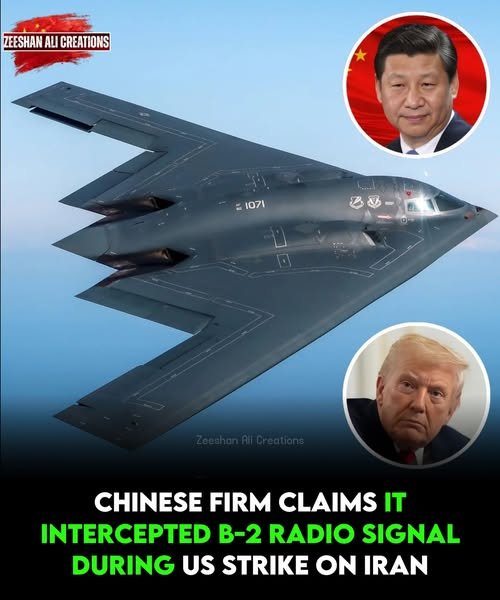
A Chinese defense technology firm has claimed it detected and analyzed radio signals linked to U.S. B-2 stealth bombers during a military operation against Iran.
According to the company, its AI system processed multiple data sources, including satellite imagery and open-source flight data, to reconstruct parts of the mission profile.
The B-2 Spirit is designed to operate with low observability, making any claim of signal detection particularly notable in discussions about modern stealth capabilities.
Experts say advancements in artificial intelligence and data fusion are enabling both governments and private firms to monitor military activity in ways that were previously difficult or impossible.
The claim has not been officially confirmed by U.S. authorities, but it highlights growing concerns about how emerging technologies may reshape surveillance and intelligence in modern conflicts.
Disclaimer: The following content is shared for informational awareness and journalistic purposes only. The image is Al generated & used for reference only
Read MoreAuthor: Saikat Bhattacharya
Technology news General Unipolar vs Multi-polar 21-March-2026 by east is rising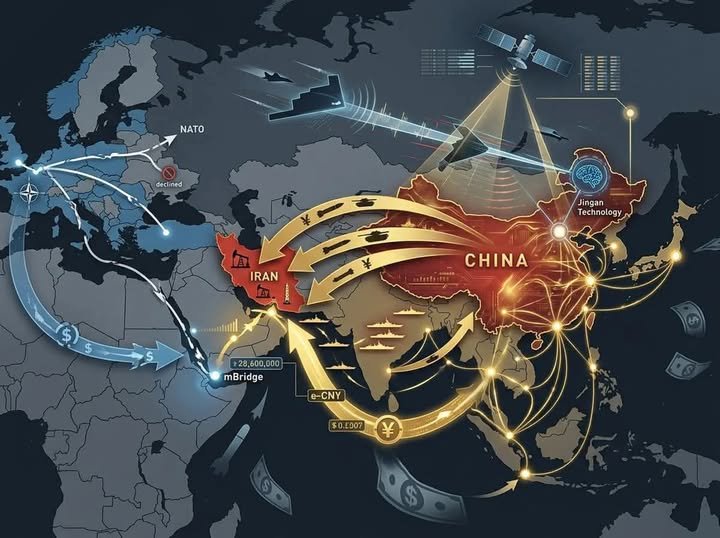
Let me show you the evidence. Every single piece of it.
PIECE 1: THE MISSILES THAT SHOULDN'T EXIST The US bombed Iran's missile sites. Pentagon said the threat was destroyed. Then Iran kept launching missiles. How? Reuters confirmed it: Iran was in talks to buy supersonic anti-ship missiles directly from China. Global Defense Corps reported China secretly sent $5 billion in weapons to Iran. Iran's own Foreign Minister admitted it. He called China a "strategic partner" giving Iran "military cooperation." Iran is still shooting because China is still supplying.
PIECE 2: THE B-2 THAT CHINA COULD SEE The B-2 Spirit is America's most advanced stealth bomber. It's supposed to be invisible. A Chinese company called Jingan Technology said their AI system "Jingqi" intercepted radio signals from B-2 bombers during the March 1 strike on Iran. They detected US military mobilization weeks before the attack. China was watching every US move in real time.
PIECE 3: THE YUAN THAT KILLS THE DOLLAR Iran just announced something that should terrify every person holding US dollars. Oil tankers can pass through the Strait of Hormuz. But only if they pay in yuan. Not dollars. Yuan. The mBridge platform, China's cross-border payment system, already processed $55 billion in transactions. 95% of that volume was in digital yuan.
PIECE 4: THE ALLIES WHO SAID NO The US asked NATO to join the war. Every single NATO ally refused. Then Trump asked China to send warships to the Gulf. China said no.
.PIECE 5: THE BILL NOBODY CAN PAY The Pentagon admitted the war cost $15 billion That's just the part they're counting. China's cost: zero. China's gain: cheap discounted oil, global credibility, yuan adoption, US military distracted from Taiwan. Every dollar the US spends in this war is a dollar that doesn't go toward competing with China. Every week of war makes the dollar weaker. Every week of war makes the yuan stronger. Every week of war pushes more countries into China's orbit.
This isn't a war between the US and Iran. This is China using Iran as a weapon against America.
Read More International geopolitics General Unipolar vs Multi-polar 21-March-2026 by east is rising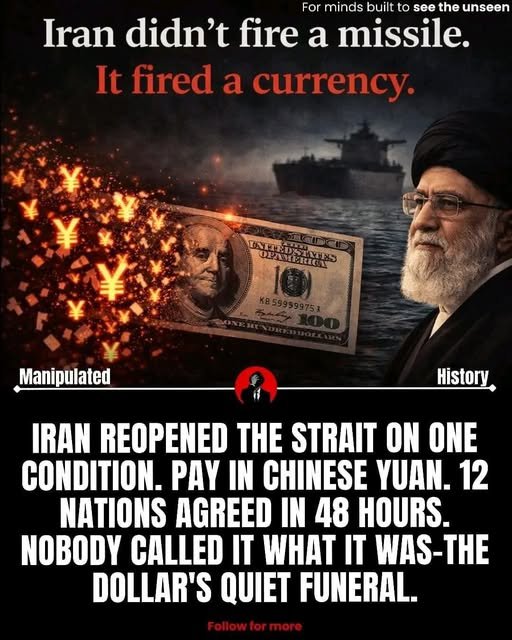
Here is a critical analysis of the article, deconstructing its methodology, factual basis, and strategic assumptions.
1. Methodological Flaws: Correlation vs. Causation
The article’s central thesis is that Iran’s tactical successes are definitive proof of China’s technological supremacy over the United States. This represents a logical fallacy (post hoc ergo propter hoc).
· False Attribution: The author assumes that because China possesses certain technologies (hypersonics, BeiDou), and because Iran is performing competently in a conflict, China must have transferred its latest technology to Iran. There is no verifiable evidence provided that Iran is using Chinese hypersonic gliders or Jilin-1 intelligence in an operational capacity.
· Ignoring Iranian Agency: The article systematically erases decades of indigenous Iranian military development. Iran’s missile program, drone swarm tactics, and asymmetric naval doctrine (the "small boat" strategy) were developed independently, largely out of necessity due to sanctions, long before the recent geopolitical alignment with China.
2. Factual Inaccuracies and Exaggerations
Hypersonic Technology:
The claim that hypersonic technology "is not possessed by any Western country" is factually incorrect. The United States has successfully tested the AGM-183A ARRW (Air-launched Rapid Response Weapon) and is fielding the Dark Eagle (LRHW) hypersonic missile. While China and Russia may have deployed operational systems slightly earlier, the assertion that the West lacks the technology entirely is outdated and misinformed.
BeiDou and GPS:
The article claims BeiDou can send "fake signals to American radars" to trick them into identifying Iranian missiles as friendly. This misunderstands how radar, IFF (Identification Friend or Foe) systems, and satellite navigation work. BeiDou is a passive navigation network (receivers calculate position); it does not broadcast signals that can spoof American radar frequencies. While spoofing exists, it is typically done by ground-based electronic warfare units, not by a satellite constellation.
S-400 and Air Defense:
The article states Russia "did not give Iran the S-400." In reality, Russia was under no obligation to provide it; Iran never took delivery of the S-400 system primarily due to the 2015 JCPOA (nuclear deal) framework and subsequent UN restrictions, not because of a simple refusal.
Jilin-1:
The characterization of Jilin-1 as a military asset providing "real-time" video of U.S. bases to Iran ignores that this is a commercial constellation. U.S. military strategists assume that adversaries can access commercial satellite imagery (from Maxar, Planet, or Jilin-1) during peacetime. The idea that this capability came as a surprise to the Pentagon is absurd, given that China’s commercial remote-sensing industry has been publicly documented for years.
3. Strategic Oversimplification
Quantity vs. Quality:
The author draws a direct parallel between WWII Japan/Germany and the current U.S., arguing that the U.S. is making the same mistake of prioritizing quality over quantity. This ignores the fundamental difference in alliance structures and defense industrial bases.
· The U.S. Defense Industrial Base: While the U.S. has offshored commercial manufacturing, its defense industrial base for critical munitions (missiles, torpedoes, advanced interceptors) remains highly sophisticated. The U.S. is currently ramping up production of Standard Missiles (SM-2/3/6), GMLRS, and Patriot interceptors in response to conflicts in Ukraine and the Middle East.
· The "Sitting Duck" Argument: The article claims aircraft carriers are "sitting ducks" and that Pentagon spending on them is wasteful. While carrier vulnerability is a legitimate debate among naval strategists, dismissing them as obsolete ignores their role as mobile airfields and command centers that provide power projection that land-based missiles cannot replace.
Manufacturing and Economic Comparison:
The claim that China is "three times ahead" in manufacturing is misleading. While China leads in gross manufacturing output (primarily in consumer goods, steel, and commercial shipbuilding), the U.S. leads in high-value, high-complexity defense manufacturing (semiconductors, aerospace engines, advanced sensors). The article conflates commercial manufacturing volume with military-industrial capacity, which are distinct metrics.
4. Political and Geopolitical Nuances
The Nature of China-Iran Relations:
The article assumes a frictionless, unlimited transfer of China’s crown-jewel technologies to Iran. In reality, China is a pragmatic great power that balances its relationship with Iran against its desire to avoid a direct confrontation with the United States. Transferring hypersonic glider technology to a non-state ally would represent a massive escalation that Beijing has historically avoided.
U.S. Audit and Corruption Claims:
The article ends with an unverified claim that the Pentagon avoids audits primarily to "embezzle funds." While the Pentagon has failed full audits due to the sheer complexity of its asset tracking (a well-documented bureaucratic issue), the implication that this is a deliberate strategy to hide corruption—and that this explains U.S. military struggles—is an ideological assertion, not a strategic analysis.
5. Conclusion of the Critique
This article functions more as geopolitical propaganda than rigorous military analysis. Its primary flaws are:
1. Attribution Bias: It credits China for every Iranian capability while ignoring Iran’s indigenous innovation and Russian contributions.
2. Technological Determinism: It assumes that possessing a technology guarantees its effective transfer and operational success, ignoring the complexities of integration, training, and logistics.
3. Temporal Convenience: Written in March 2026, the piece uses future-looking speculation to assert conclusions that are not yet verifiable by open-source intelligence.
While it correctly identifies that China is narrowing the technological gap with the U.S. and that Iran poses a significant asymmetric threat, the article overreaches by declaring China’s military supremacy confirmed based on a single conflict where Chinese equipment has not been operationally proven against U.S. forces.
Read MoreAuthor: Saikat Bhattacharya
International geopolitics General Unipolar vs Multi-polar 20-March-2026 by east is rising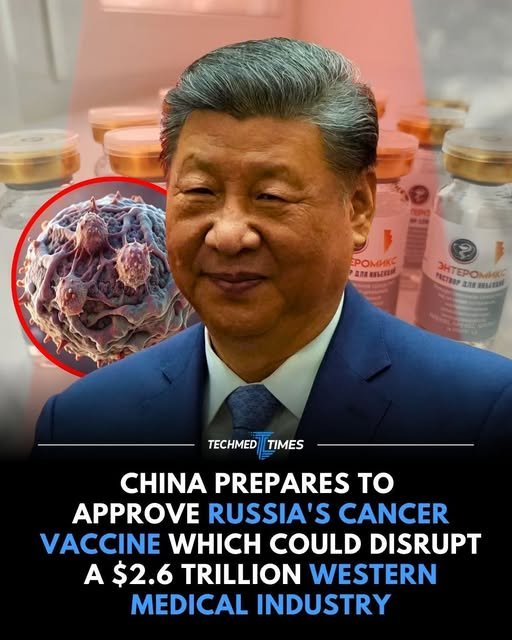
China is reportedly preparing to approve Russia’s new cancer vaccine, a move that could shake up the global medical industry, valued at around $2.6 trillion in the West. The vaccine, designed to stimulate the immune system to target and destroy cancer cells, has shown promising early trial results, drawing attention from international healthcare markets.
If approved, this therapy could offer a faster, potentially more affordable alternative to existing cancer treatments, including chemotherapy, radiation, and targeted immunotherapies. Its wide adoption in China—the world’s most populous country, could dramatically expand patient access while putting pressure on Western pharmaceutical companies to compete on cost, efficiency, and innovation.
Industry experts warn that such a development might disrupt traditional cancer treatment markets, challenging pricing models and accelerating global adoption of immunotherapy-based solutions. At the same time, regulatory approval and long-term clinical validation will be critical to ensure safety, efficacy, and scalability before the vaccine is deployed widely.
This announcement highlights the growing role of international collaboration and competition in medical innovation. Breakthrough therapies developed in one region can now quickly influence global healthcare strategies, reshaping treatment options and market dynamics worldwide.
While details are still emerging, the potential approval of Russia’s cancer vaccine in China represents a major step in the evolution of cancer care, demonstrating how breakthroughs in immunotherapy could transform patient treatment while challenging established pharmaceutical industries.
Read MoreAuthor: Saikat Bhattacharya
Technology news General Unipolar vs Multi-polar 17-March-2026 by east is rising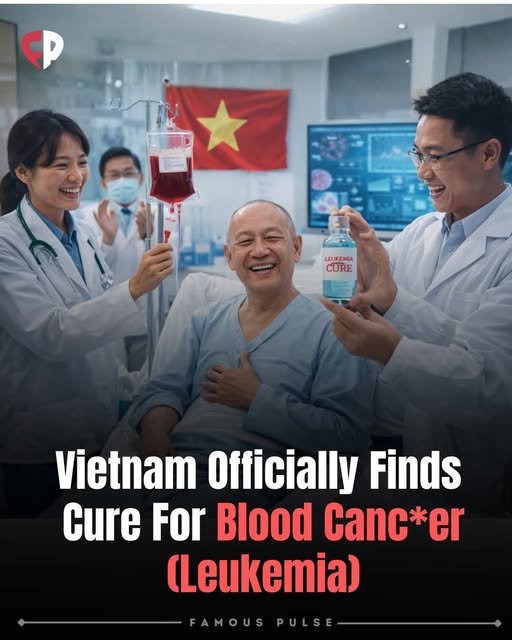
Hope is spreading after reports claimed that scientists in Vietnam may have made a major breakthrough in the fight against leukemia, one of the most serious forms of blood cancer. Early information suggests researchers have been developing a new treatment approach that has shown very promising results in testing and could change how the disease is treated in the future.
Leukemia affects thousands of families around the world every year, and finding more effective treatments has been a long and difficult journey for medical science. News of a possible breakthrough has quickly captured global attention, giving hope to patients and loved ones who continue to search for better outcomes and safer therapies.
While experts say more research and international verification will still be needed before any treatment can be widely confirmed, the excitement surrounding this development is already inspiring people everywhere. Moments like this remind us how powerful science and innovation can be when they come together with determination and purpose.
Every step forward in medicine brings the world closer to a future where life threatening diseases may no longer feel unbeatable.
Read MoreAuthor: Saikat Bhattacharya
Technology news General Unipolar vs Multi-polar 27-February-2026 by east is rising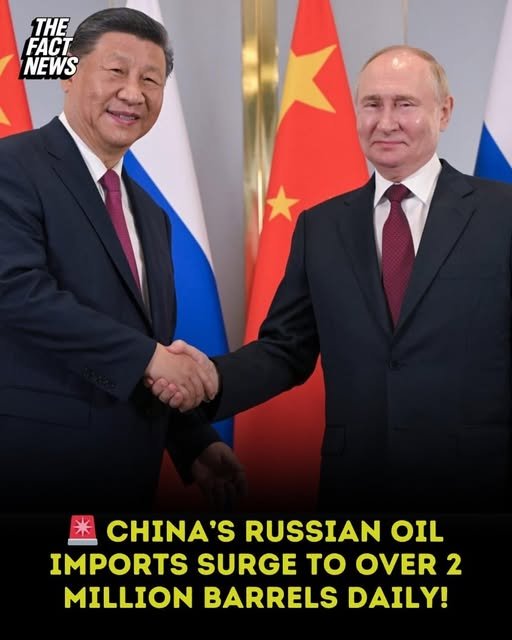
China’s imports of Russian oil have surged to over 2 million barrels per day, according to recent trade data. This increase comes as shipments to India reportedly dropped by nearly 40%, allowing Russia to maintain overall export levels despite regional fluctuations. Analysts note that China’s growing role as a primary buyer highlights shifting global energy dynamics and reinforces Beijing’s strategic partnership with Moscow. The development also affects global oil pricing, supply chains, and geopolitical energy leverage in Europe and Asia.
Read MoreAuthor: Saikat Bhattacharya
International geopolitics General Unipolar vs Multi-polar 27-February-2026 by east is rising
Padma De Pana writes:
The ballrooms are full again. In Riyadh, Abu Dhabi, and Doha, the ministers and sovereign wealth fund directors gather under crystal chandeliers to discuss what they euphemistically call “regional stability frameworks.” The air conditioning hums at arctic intensity while outside the temperature climbs past forty degrees. Inside, men in bespoke suits and traditional dress negotiate the future of a region that has known precious little stability in living memory. In Washington, a familiar cast of senators, defense contractors, and think-tank fellows announces “historic breakthroughs” and “pathways to peace.” The language is reassuring, almost soporific, designed to lull rather than illuminate.
What no one says aloud, at least not in official transcripts or press conferences, is that the Middle East’s geopolitical architecture is being quietly restructured not because conscience finally awakened in the imperial capitals, but because the balance sheet no longer closes. The numbers simply do not add up anymore. The debts are too high, the costs too visible, the returns too uncertain. What the world is witnessing is not a moral awakening but a foreclosure. The repossession of a region by creditors who were once clients. The quiet disposal of an asset, Israel, that has turned toxic on every ledger that matters to the men who actually move capital around the world.
This is not a story anyone in power particularly wants told. It cuts too close to the bone, exposes too many comfortable lies, implicates too many respectable institutions. But the numbers, the bond spreads, the capital flight, the downgrades from ratings agencies, and the trillion-dollar deals being signed in desert palaces suggest it is the story being written nonetheless, whether we choose to read it or not.
From Strategic Asset to Stranded Liability
For eight decades, Israel functioned as a military base disguised as a democracy, the anchor of a security model Washington designed not to bring peace but to ensure perpetual leverage over the world’s most energy-rich region. The formula was elegant in its brutality: destabilize, divide, dominate, extract. Keep the region fragmented along sectarian and national lines, ensure no Arab power could ever consolidate enough strength to challenge Western interests, and maintain a forward garrison that could project overwhelming force while providing Washington with plausible deniability for actions no democracy would openly endorse.
The arrangement was profitable for all parties at the center. American defense contractors sold weapons systems to all sides, playing both ends against a lucrative middle. Israeli intelligence and technology firms became indispensable partners to Gulf monarchies who needed surveillance tools, cyber capabilities, and border security systems to manage internal dissent and external threats. Oil flowed westward priced in dollars, and the petrodollar recycling system, the financial architecture born in the smoke-filled rooms of the 1970s, kept the American debt machine running smoothly for half a century. Palestine was the cost of doing business, a slow-motion ethnic cleansing that could be sustained so long as Arab states remained dependent on Western capital and the International Monetary Fund held the keys to their treasuries.
But that model is now structurally finished, and the indicators are everywhere if one knows where to look. In 2024, all three major credit rating agencies, Moody’s, S&P and Fitch, downgraded Israel’s sovereign debt rating. These are not institutions given to political grandstanding or moral posturing. They are in the business of assessing credit risk, of calculating the probability that borrowers will repay their obligations. When all three downgrade a country within months of each other, citing elevated political risk, structurally higher defense spending, and deteriorating fiscal conditions, the message is clear: the war in Gaza is not just a humanitarian catastrophe, it is a financial liability that is eroding the foundation of the Israeli state itself.
The numbers tell a stark story. Israel’s budget deficit has jumped into the high single digits as a share of GDP. Government debt, which was projected to fall steadily toward the mid-fifties as a percentage of output, is now heading toward the high sixties or beyond. War costs in 2024 alone exceeded the borrowing Israel needed during the COVID pandemic, a fact noted with alarm by Israeli strategic institutes tracking the fiscal trajectory. Credit default swap prices, the insurance premiums investors pay to protect against sovereign default, have risen with each renewed round of fighting. Markets are now explicitly pricing a higher risk that Israel will not be able to meet its obligations.
Israeli government bonds, once considered safe harbor assets in a volatile neighborhood, are now trading at yields not seen in over a decade. Rising yields mean falling prices, which means investors are demanding higher compensation for the risk of holding Israeli debt. This is not some abstract financial metric. It is the bond market rendering a verdict on the viability of permanent war as a governing strategy. And the verdict, for those paying attention to capital flows rather than press releases, is damning.
Foreign direct investment into Israel dropped by nearly a third in 2023, even before the full economic impact of the Gaza war became visible. Real estate markets in Tel Aviv and Jerusalem, buoyed for years by diaspora capital and foreign investors treating Israeli property as a stable Middle Eastern play, have begun to show cracks. Insurance premiums for operating in Israel have spiked as actuaries recalculate the risks of doing business in a country conducting military operations that the International Court of Justice has described as plausibly constituting genocide.
That legal overhang is not some distant theoretical concern. It represents trillions in potential liability for every Western corporation, defense contractor, and financial institution that facilitated the occupation. Pension funds, sovereign wealth managers, and university endowments face growing pressure to divest from companies involved in settlement construction, weapons sales, or financing for projects in occupied territories. The reputational and legal risks are beginning to outweigh the returns. When the world’s largest asset managers begin quietly reducing exposure to Israeli securities, it is not because they discovered a conscience in their portfolios. It is because the risk-return calculation has shifted, and what was once a profitable relationship is becoming a liability that cannot be explained to fiduciaries or defended in court.
October 7 and the War That Stopped Making Financial Sense
The war that began on October 7, 2023, can be read not only as an act of armed resistance and a catastrophic failure of Israeli intelligence, but as the trigger for a long-planned strategy to complete the ethnic cleansing of Gaza and reprice the territory for redevelopment. The logic was straightforward, if monstrous: provoke or allow a large-scale attack, use it as justification for total war, drive the population into Egypt, and leverage IMF debt obligations to force Cairo’s compliance. Empty Gaza of Palestinians, raze the infrastructure, then invite international capital to rebuild a Mediterranean city-state under Israeli sovereignty.
The business model was clear to anyone who cared to look. The land, newly cleansed and legally ambiguous, would be repriced. New developments would attract Gulf money once normalization was achieved, Western technology firms setting up innovation hubs, tourism conglomerates building beachfront resorts. The debt incurred fighting the war would be rolled into reconstruction bonds, underwritten by the usual suspects in New York and London. War as urban renewal. Ethnic cleansing as economic opportunity. It was not the first time such a playbook had been tried in the region, and it would not be the last.
But the plan collapsed at every critical juncture. Egypt, despite facing its worst economic crisis in decades and intense pressure from the IMF, refused to open the Rafah crossing to a mass population transfer. Abdel Fattah el-Sisi, whose military regime is hardly known for its humanitarian instincts, understood that accepting two million Palestinian refugees would be the end of Egypt as he governs it, socially, politically, and economically. The Egyptian street would erupt. The military’s patronage networks would strain. The Sinai, already restive, would explode. So Cairo held the line, absorbed the pressure, and said no.
Jordan made the same calculation. King Abdullah, whose grandfather lost the West Bank in 1967 and whose legitimacy rests in part on Hashemite custodianship of Islamic holy sites in Jerusalem, could not afford to accept another wave of Palestinian refugees without risking the stability of his own kingdom. Arab public opinion, inflamed by live-streamed atrocities in Gaza broadcast on Al Jazeera and shared across social media in real time, forced even the most pliant regimes to hold the line.
More importantly, the Palestinians themselves refused the script. Despite fifteen months of bombardment that reduced entire neighborhoods to rubble, starvation sieges that left children eating animal feed, and displacement that turned the majority of Gaza’s population into internal refugees, Gaza did not empty out. The population stayed, absorbed the blows, buried their dead in shallow graves and soccer fields turned into cemeteries, and in doing so rendered the financial logic of the war incoherent. You cannot reprice land for development when the people you intended to expel are still living in the rubble, and you cannot attract international capital to a territory where war crimes trials loom and insurance is unwritable.
This is the moment the war stopped being profitable for the broader financial system, even if individual defense contractors continued to extract revenue from the violence. The military-industrial complex, the forever-war lobby that profits from continuous conflict, could sustain the killing indefinitely. Bombs and missiles are consumables. Every strike creates demand for the next shipment. But the financial-industrial complex, the private equity firms, sovereign wealth funds, insurance companies, and central bankers who govern global capital, began to see the war as a liability eroding the broader business environment in a region they intended to dominate in the coming decades.
The divergence between these two power centers, between those who profit from war and those who profit from stability, is the hinge on which the region’s future now turns.
The Gulf’s Long Game: From Clients to Creditors
To understand how the Gulf states moved from supplicants to sovereigns, one must return to the 1970s and the figure of King Faisal of Saudi Arabia. The 1973 oil embargo broke the old fifty-fifty profit-sharing arrangement between Western oil companies and producing states, redistributing wealth on a scale that, for a brief moment, gave Arab capitals real geopolitical leverage. Faisal understood that oil was not just a commodity but a weapon, and he used it to punish the West for its unconditional support of Israel during the October War.
But Faisal was assassinated in 1975 by his own nephew, under circumstances that have never been fully explained and in a palace intrigue that bore all the hallmarks of deeper forces at work. Within a few years the Gulf monarchies were corralled into the petrodollar recycling system, a bargain in which they priced oil in dollars, parked their surpluses in U.S. Treasury bonds, and accepted Washington’s security umbrella, and its regional policeman Israel, in exchange for protection and market access. The Safari Club, an intelligence-sharing network formalized in the late 1970s between Western and Gulf security services, ensured the region’s autocrats would never again use oil as a weapon against the West.
For five decades, that arrangement held. The Gulf states got rich beyond the wildest dreams of their Bedouin ancestors. They built gleaming cities in the desert, universities, hospitals, airports that rivaled anything in Europe or America. They bought influence, skyscrapers in London and New York, English football clubs, luxury hotels on the Riviera. But their wealth was locked inside a system designed in Washington. They could buy assets, but they could not rewrite the rules. Palestine remained occupied, Israel remained untouchable, and any Arab leader who spoke too loudly about justice found his country on the receiving end of an IMF structural adjustment program, a color revolution, or in the worst cases, a military intervention dressed up as humanitarian concern.
What changed, fundamentally and irrevocably, was China. Over the past decade, Beijing quietly became the primary buyer of Saudi, Iranian, and Russian oil, paying in yuan and offering an alternative clearing system outside the dollar. The Belt and Road Initiative pumped infrastructure investment into the Gulf and North Africa, building ports, railways, power plants, and providing the economic ballast Arab states needed to say no to Western conditionality. Chinese construction firms, unburdened by human rights concerns or transparency requirements, delivered projects on time and under budget in countries where Western firms demanded political reforms as a condition of investment.
And then in March 2023, China brokered the normalization deal between Saudi Arabia and Iran, a geopolitical earthquake that reconfigured the region’s security architecture without Washington’s involvement or even its prior knowledge. The Saudis and Iranians, who had spent decades fighting proxy wars across Yemen, Syria, Iraq, and Lebanon, sat down in Beijing and agreed to restore diplomatic relations. It was a humiliation for Washington, a signal that the old rules no longer applied, that new power centers were emerging, and that the Gulf states now had options they did not have before.
Suddenly, Saudi Arabia, the linchpin of the petrodollar system since 1974, no longer needed to price all its oil in dollars. The BRICS coalition, now expanded to include Egypt, the UAE, and Saudi Arabia as formal or de facto members, offered an alternative governance structure that did not require subservience to the IMF or the World Bank. Most importantly, Gulf sovereign wealth funds, flush with decades of accumulated oil revenue, had amassed financial firepower that rivaled the GDP of entire continents.
By 2024, Middle Eastern sovereign wealth funds controlled just under five trillion dollars in assets under management, with projections pointing toward seven trillion or more in the coming years. Individual funds like Abu Dhabi Investment Authority, Saudi Arabia’s Public Investment Fund, Kuwait Investment Authority, and Qatar Investment Authority each controlled hundreds of billions of dollars and ranked among the largest state investors in the world. These were not passive collectors of oil surplus, warehousing cash in Treasury bonds and waiting for instructions from Washington. They were active, strategic investors deploying capital into technology, infrastructure, real estate, and equity stakes across every continent, reshaping economic geography from Africa to Asia to Europe.
This is the material foundation of the shift now underway. When sovereign funds of this scale choose to prioritize investments in their own region, in BRICS partners, or in long-term deals that bypass Western financial institutions, they are voting with the world’s largest pool of patient capital. They are deciding which security architecture they intend to live under for the next generation, and increasingly, that architecture does not have Israel at its center.
The Trillion Dollar Pivot
In late 2025, details emerged of a comprehensive package between the United States and Saudi Arabia worth roughly one trillion dollars. The scale alone was staggering. The commitments spanned nuclear energy, critical minerals, artificial intelligence infrastructure, advanced weapons systems including F-35 fighter jets, hundreds of American tanks, missile defense batteries, and access to cutting-edge semiconductor technology that Washington had previously restricted even to close allies.
On the surface, this looked like business as usual, another arms-for-oil arrangement in a region built on them. But read more carefully, the deal represents something more fundamental: a restructuring of the regional order with Saudi Arabia, not Israel, as the primary American partner. The Saudis committed to massive investments in American infrastructure, technology sectors, and energy projects. In return, they received not just weapons but the formal designation as a major non-NATO ally, a status that places Riyadh in the same category as Japan, South Korea, and until recently, Israel as a unique strategic partner.
The timing is critical. This deal comes at precisely the moment when Israel’s creditworthiness is declining, its diplomatic isolation deepening, its legal exposure expanding, and its strategic value to the powers that created it steadily diminishing. The contrast could not be sharper. On one side, a state facing rising borrowing costs, capital flight, and ratings downgrades. On the other, a kingdom with trillions in sovereign wealth signing multi-decade technology and defense compacts with both Washington and Beijing, positioning itself as the essential bridge between East and West.
The deal reflects a deeper realignment between two factions of American power that have long been aligned but whose interests are now diverging. The military-industrial complex, the defense contractors and forever-war lobby, profits from continuous destabilization. Every bombing campaign, every missile defense system, every reconstruction-and-destruction cycle generates revenue. War is the product. Instability is the market.
But the financial-industrial complex, the private equity firms, sovereign wealth managers, technology giants, and central bankers, profits from stability, from long-term infrastructure investments, from predictable regulatory environments and legal frameworks that protect property rights and contract enforcement. They want to build data centers in Riyadh, sell AI services to Dubai, finance nuclear plants and desalination projects, turn the Gulf into a hub for the next phase of global capital accumulation.
For that vision to work, the region needs to be pacified. And Israel, in its current form, conducting what international legal bodies have described as plausible genocide, is the obstacle. Its refusal to allow a Palestinian state makes normalization with the broader Arab world impossible, blocking the trade corridors and investment flows the financial-industrial complex needs to build. Its military adventures destabilize neighbors whose cooperation is required. Its status as an active defendant in genocide proceedings at The Hague makes it untouchable for exactly the kind of institutional capital, pension funds, sovereign wealth, development banks, that drives large-scale, long-term investment.
So the financial-industrial complex is doing what capital always does when an asset becomes a liability: it is restructuring the deal. Washington gets desperately needed capital inflows to stabilize its own debt spiral. Saudi Arabia gets advanced weapons, nuclear technology, and the formal great-power recognition it has sought for decades. In exchange, Riyadh becomes the regional security manager, the role Israel has played since 1948, but with one critical difference: Saudi Arabia’s legitimacy in the Arab world requires progress on Palestine, while Israel’s entire political model depends on preventing it.
This is why the trillion-dollar deal strategically weakens Israel, even if no one in Washington or Riyadh will say so publicly. Not because Trump or Mohammed bin Salman care about Palestinian rights in any meaningful sense, but because Israel’s utility to the system has expired. The serious money, the sovereign wealth funds, the infrastructure capital, the institutional investors managing trillions, is moving to the Gulf. And the Gulf’s price for full cooperation, for opening its markets and aligning its security policy with American interests, is Palestinian statehood. Not as justice, but as the political cover required to unlock the investment capital that will define the region for the next generation.
The Scapegoat and the Sovereign
If this analysis is correct, we are living through the early stages of a deliberate narrative restructuring, a slow-motion rewriting of history to prepare Western publics for the abandonment of Israel. The mechanics will involve attributing eight decades of dollar-financed ethnic cleansing solely to Israel, allowing Washington and London to pose as honest brokers who were misled by a difficult ally. Conveniently timed declassifications, scandals involving Israeli lobbying operations, intelligence activities on American soil, financial crimes, will be used to shift blame and provide political cover for the divorce.
This is the pattern familiar from prior American imperial retreats. Find a local proxy to hold the bag, declare the mission accomplished or regrettably unwinnable, and move on to the next theater while rewriting the history of the old one. Israel was always a proxy state, granted sovereignty on the condition it performed the dirty work of regional control. When that work stops being profitable, when it starts generating liabilities that exceed returns, the proxy is left to face the consequences alone.
Meanwhile, the Gulf states are positioning themselves not as liberators but as the region’s new arbiters of power, and they are doing so with the same unsentimental pragmatism that characterizes every sovereign power protecting its interests. They are not offering the Palestinians justice in any revolutionary sense. They are offering recognition on terms the Gulf capitals can afford politically and financially. They are not dismantling the structures of imperial control. They are buying them out, rebranding them under new management, and ensuring that when the dust settles, it is Gulf capital, Gulf security forces, Gulf diplomatic networks that will determine who governs, who trades, and under what terms.
This is what decolonization looks like in the twenty-first century. Not revolutionary transformation, not the triumph of justice over power, but a leveraged buyout executed by the formerly colonized, who spent decades accumulating the capital required to purchase their own sovereignty from the system that once ruled them. Whether that sovereignty extends to ordinary Palestinians in Gaza or the West Bank, or merely to the governments and sovereign wealth funds doing the negotiating, remains the open question that no amount of financial engineering can answer.
The Region After Israel
What emerges from this analysis is a Middle East whose power center has shifted decisively from the Mediterranean coast to the Arabian Peninsula, from military dominance to financial leverage, from the logic of permanent war to the logic of managed stability in service of profit. The Gulf states, long dismissed by Western analysts as petro-rentiers with more money than vision, have quietly assembled the tools of twenty-first-century statecraft. Sovereign wealth funds that can move markets and reshape entire sectors. Energy supplies that Beijing, New Delhi, and even a desperate Europe require. Diplomatic networks spanning BRICS, the Shanghai Cooperation Organization, a restored Arab League, offering alternatives to Western-dominated institutions at every level.
Israel, by contrast, finds itself in the historically familiar but politically novel position of a colonial garrison whose empire has moved on. Its debt is rising, its diplomatic isolation deepening, its legal exposure expanding, its strategic value to the powers that created it steadily diminishing. This does not mean Israel will disappear, or even that its military capacity will erode quickly. Empires in decline are often at their most dangerous, lashing out to preserve relevance, fighting wars they can no longer afford because the alternative is admitting obsolescence.
But it does mean the financial and political architecture that sustained the occupation for eight decades is being dismantled by forces larger than any single state can resist. The bond market does not care about historical narratives or biblical claims or the sincerity of anyone’s trauma. It cares about risk-adjusted returns, about the probability of repayment, about whether the underlying asset generates more value than it destroys. And by that measure, the cold, unsentimental measure that governs capital allocation in a world where twelve trillion dollars in sovereign wealth is sloshing around looking for stable returns, the verdict is increasingly clear.
What comes next will be shaped by actors in Riyadh, Abu Dhabi, and Beijing far more than in Washington or Tel Aviv. The Saudis are signing trillion-dollar deals, building cities, hosting global sporting events, positioning themselves as indispensable to both American and Chinese strategic planning. The Emiratis are deploying capital across three continents, mediating conflicts, offering themselves as the Switzerland of the new world order. The Qataris, despite their size, punch above their weight through Al Jazeera’s media reach, massive natural gas reserves, and a willingness to talk to everyone from the Taliban to Hamas to the U.S. State Department.
These are not revolutionary states. They are not interested in upending the global order or redistributing wealth to the global south or any other utopian project. They are interested in preserving their wealth, expanding their influence, and ensuring that when the current American-led order finally buckles under the weight of its own debts and contradictions, they are positioned to thrive in whatever comes next.
For the Palestinians, this offers neither justice nor closure. Recognition achieved as a line item in a trillion-dollar infrastructure deal, as a bargaining chip traded between sovereign wealth managers in air-conditioned conference rooms, is not the liberation that generations fought for in the streets, in the camps, in the long decades of exile and resistance. But it may be the only liberation the current global order is capable of delivering. Not a moral reckoning with the crime of dispossession, but a spreadsheet adjustment in which their oppression is finally priced as too expensive to continue, too destabilizing to the regional investment climate, too risky for the institutional capital that wants to build data centers and desalination plants and luxury resorts along the eastern Mediterranean.
And perhaps that is the final, bitter lesson from a century covering this region, from watching empires rise and fall and reinvent themselves in new configurations of power: that justice rarely arrives because it is right. It arrives, if it arrives at all, when the cost of injustice finally exceeds the profit. When the bond spreads widen, when the capital flees, when the credit agencies downgrade, when the men in the ballrooms in Riyadh decide that a different arrangement would serve their interests better.
The region is being restructured. The bills are coming due. The old guarantees are being quietly withdrawn. And in the air-conditioned offices of Gulf financial capitals, the men who once had to beg for loans from Washington and plead for weapons to defend themselves against neighbors are now deciding which assets to acquire, which partnerships to deepen, which outdated arrangements to let fail. If that represents a form of justice, it is justice refracted through the ledger, cold, transactional, utterly unsentimental.
But after eight decades of blood and accounting, after promises broken and hopes deferred and children buried in the rubble of homes destroyed by weapons stamped with the logos of respectable corporations, it may be the only kind of justice on offer. The question now is not whether the old order can be preserved. The balance sheet says it cannot. The question is what ordinary people across the region, in Palestine and Israel and Egypt and Jordan and Syria and Lebanon, will do when they realize their futures are being traded like any other commodity, by powers who speak the language of sovereignty and national interest but whose only fluent tongue, whose only real loyalty, is to capital and the returns it demands.
Read MoreAuthor: Saikat Bhattacharya
International geopolitics General Unipolar vs Multi-polar 18-January-2026 by east is rising
সংবাদদাতা: আমি জানতে চাচ্ছিলাম আপনারা এখানে কেন জড়ো হয়েছেন? আপনাদের আসার উদ্দেশ্য কী?
তরুণী: আমার দেশ এবং আমাদের সম্মানিত সাইয়্যদকে (নেতা) রক্ষা করার জন্য।
সংবাদদাতা: আমাদের মহান সাইয়্যদের জন্য আপনার কি কোনো বার্তা আছে? মাত্র এক বাক্যে যদি বলতেন।
তরুণী: আমরা আপনার পাশে আছি, আমাদের পোশাক যেমনই হোক বা বিশ্বাস যাই হোক না কেন। (অর্থাৎ, যারা হিজাব পরে না তারাও আপনাকে সমর্থন করে)।
সংবাদদাতা: আপনার কি মনে হয় সাম্প্রতিক দাঙ্গা এবং দাঙ্গাকারীদের দ্বারা যে হত্যাযজ্ঞ চালানো হয়েছে, তা আমাদের জাতীয় সংহতিকে দুর্বল বা টালমাটাল করে দিয়েছে?
তরুণী: না, কারণ তারা তো 'জনগণ' ছিল না। তারা যদি 'জনগণ' হতো, তবে তারা এখন এখানে তাদের আপন মানুষের সাথেই থাকতো।
সংবাদদাতা: প্রতিবাদকারীদের সাথে তাদের পার্থক্য কোথায়?
তরুণী: দেখুন, প্রতিবাদ তো সবারই থাকতে পারে। আমরাও তরুণ, আমরাও অর্থনৈতিক চাপের মধ্যে আছি। কিন্তু প্রতিবাদ করা আর মানুষ হত্যা, অগ্নিসংযোগ এবং দেশ ও জনগণের ক্ষতি করা—এক কথা নয়।
সংবাদদাতা: আমাদের সেই সব দেশবাসী যারা এই দাঙ্গার ফাঁদে পা দিয়েছিল বা বিভ্রান্ত হয়েছিল, তাদের জন্য আপনার কোনো বার্তা আছে?
তরুণী: হয়তো আমার অনেক বন্ধুও এই ফাঁদে পড়েছিল এবং আসলে বিভ্রান্ত হয়েছিল। দয়া করে, আল্লাহর দোহাই লাগে, যেকোনো কিছু বিচার-বিশ্লেষণ করার জন্য নিজের বুদ্ধি ব্যবহার করুন এবং তারপর সঠিক পথ বেছে নিন।
© মাসুম হোসাইন
Read MoreAuthor: Saikat Bhattacharya
Theoretical Sex War Unipolar vs Multi-polar 18-January-2026 by east is rising
After the Oreshnik attack, Kyiv's electricity and water connections have been severed. Due to a shortage of fuel, providing warmth is not possible. Kyiv is slowly sinking in -10° Celsius temperatures. Residents have been asked to leave the city. If this continues, Kyiv will soon transform into a ghost city.
To provide air defense for Kyiv, there are systems like Patriot, IRIS-T, SAMP-T, and others. But nothing worked against a single Oreshnik. With 6x6, a total of 36 warheads, it has crippled all critical infrastructure and military facilities. Following Oreshnik's path, hundreds of Geran drones come rushing in, striking various military installations and infrastructure.
Whether Kyiv will fall or not, time will tell. But this death-like cold darkness in Kyiv will bear witness to the collapse of Western propaganda in the face of the West's false hopes and hypersonic weapons.
ওরেশনীক হামলার পর কিয়েভের বিদ্যুৎ আর পানি সংযোগ বিচ্ছিন্ন। জ্বালানির অভাবে উষ্ণতা দেয়া সম্ভব হচ্ছে না। -১০° সেলসিয়াস তাপমাত্রায় ধীরে ধীরে ডুবে যাচ্ছে কিয়েভ। অধিবাসীদেরকে শহর ছাড়তে বলা হয়েছে। এভাবে চলতে থাকলে কিয়েভ শীঘ্রই ঘোস্ট সিটিতে রুপ নিবে।
কিয়েভের আকাশ নিরাপত্তা দেয়ার জন্য প্যাট্রিয়ট, IRIS-T, SAMP-T ইত্যাদি প্রতিরক্ষা ব্যবস্থা রয়েছে। কিন্তু এক ওরেশনিকের বিপক্ষে কিছুই কাজে আসে নি। ৬x৬ মোট ৩৬ টি ওয়ারহেড সব ক্রিটিক্যাল অবকাঠামো আর মিলিটারি অবকাঠামো অচল করে দিয়েছে। ওরেশনিকের পথ ফলো করে শতো শতো গেরান ড্রোন ছুটে আসে, যারা বিভিন্ন মিলিটারি ইনস্টলেশন আর অবকাঠামোয় আঘাত হেনেছে।
কিয়েভ পতন হবে কি হবে না এটা সময় বলে দেবে। কিন্তু পশ্চিমাদের মিথ্যা আশা আর হাইপারসনিক অস্ত্রের সামনে ওয়েস্টার্ন প্রোপাগান্ডার পতনের সাক্ষী হয়ে থাকবে কিয়েভের এই মৃত্যুতুল্য ঠান্ডা অন্ধকার।
Read MoreAuthor: Saikat Bhattacharya
International geopolitics General Unipolar vs Multi-polar 12-January-2026 by east is rising
ইরান কে চীন বেইদৌ স্যাটেলাইট নেভিগেশন দিয়ে প্রিসিসন আঘাত হানতে হেল্প করে ইসরাইলের অভ্যন্তরে।
মাদুরোকে অপহরণ করেছে মার্কিন সরকার, কিন্তু ভেনিজুয়েলার সাথে যুদ্ধ করতে পারেনি। মাদুরো অপহৃত হওয়ার পরেও ভেনিজুয়েলার ক্ষমতায় মাদুরোর সমাজতান্ত্রিক Chavismo MAS (Movement towards Socialism) পার্টি এখনো ক্ষমতায় আর তারা মার্কিন সরকারকে কিছুই দেবেনা। মার্কিন সরকারকে Chavismo হটাতে হবে, যদি ভেনেজুয়েলা থেকে কিছু পেতে হয়।
Oposison পার্টি কে দিয়ে 2018 সালে Chavismo হটাতে পারেনি। যুদ্ধ করতে গেলে চীন ও রাশিয়ার সাহায্যে ভয়ংকর Chavismo গেরিলা আক্রমণের মুখে পড়ার ভয় আছে। মনে রাখা দরকার ৩ কোটি ভেনেজুয়েলাবাসীর মধ্যে ৮০ লক্ষ মানুষ গণ মিলিশিয়াতে যোগ দিয়েছে এই বছর মার্কিন আগ্রাসন আটকাতে। তাই মার্কিন সরকার যুদ্ধ না করে অপহরণ করে ভয় দেখিয়ে ডিল পেতে চাইছে Chavismo সরকারের থেকে। অবশ্যই Chsvismo কোনো ডিল দেবেনা ট্রাম্পকে। তাই এই অপহরণ একটা মূর্খের কাজ মার্কিন পক্ষ থেকে।
চীন তার তেল চাহিদার মাত্র 0.24% ভেনেজুয়েলা থেকে কেনে। এর কারণ চীনের থেকে ভেনিজুয়েলার পরিবহন খরচ অনেক বেশি, সৌদি রাশিয়া ইরান ইরাক অনেক কাছে আর পরিবহন খরচ অনেক কম। চীন অনেক বিনিয়োগ করে ভেনেজুয়েলাকে হেল্প করে আসছে বটে কিন্তু সেটা থেকে চীনের বিশাল কোনও লাভ হয়না।
ভেনিজুয়েলায় প্রচুর ডোল দেওয়া হয় যেমন গৃহিণীদের রাষ্ট্রীয় স্যালারি, 70% above 60 yrs মানুষকে পেনসন, ইত্যাদি। ফলে শ্রম বাজার inefficient। মজুরি অতিরিক্ত বেশি। আবার রাষ্ট্রের কাছে রেভিনিউও কম বাঁচে আর তাই পরিকাঠামোতে বিনিয়োগও কম করতে পারেনা ভেনেজুয়েলা সরকার। ফলে বিনিয়োগ উপযোগী নয় ভেনেজুয়েলা। ডোল বন্ধ করলে Chsvismo জনপ্রিয়তা হারাবে। তাই ডোল বন্ধ করাও কঠিন।চীন এই সমস্যাগুলো সমস্যা জানে।
চীন ভেনেজুয়েলাকে বেস্ট অস্ত্র দেবেনা কারণ মার্কিন যে কোনোদিন আক্রমণ করে সেগুলো দখল করে চীনের প্রযুক্তি বুঝে নিতে চাইবে। মার্কিন সরকারও এই জন্যেই নিজের বেস্ট প্রযুক্তি তাইওয়ানকে দেয়না।
ভুরাজনীতি বোঝা অনেক কঠিন।
এটা সাংসারিক ঝগড়া না।
Read MoreAuthor: Saikat Bhattacharya
International geopolitics General Unipolar vs Multi-polar 05-January-2026 by east is rising
OFFICIAL STATEMENT OF THE BOLIVARIAN REPUBLIC OF VENEZUELA ON U.S. INVASION OF ITS SOVEREIGN TERRITORY
The Bolivarian Republic of Venezuela rejects, condemns, and denounces before the international community the extremely grave military aggression carried out by the current Government of the United States of America against Venezuelan territory and population, targeting both civilian and military locations in the city of Caracas, the capital of the Republic, as well as the states of Miranda, Aragua, and La Guaira.
This act constitutes a flagrant violation of the Charter of the United Nations, particularly Articles 1 and 2, which enshrine respect for sovereignty, the legal equality of States, and the prohibition of the use of force. Such aggression threatens international peace and stability, especially in Latin America and the Caribbean, and places the lives of millions of people at serious risk.
The objective of this attack is none other than the seizure of Venezuela’s strategic resources, particularly its oil and mineral wealth, through an attempt to forcibly undermine the Nation’s political independence.
They will not succeed. After more than two hundred years of independence, the people and their legitimate Government remain steadfast in the defense of sovereignty and the inalienable right to determine their own destiny. The attempt to impose a colonial war in order to destroy the republican form of government and force a so-called “regime change,” in alliance with the fascist oligarchy, will fail, just as all previous attempts have failed.
Since 1811, Venezuela has confronted and defeated empires. When foreign powers bombarded our coasts in 1902, President Cipriano Castro proclaimed: “The insolent foot of the foreigner has profaned the sacred soil of the Fatherland.” Today, with the moral strength of Bolivar, Miranda, and our liberators, the Venezuelan people rise once again to defend their independence in the face of imperial aggression.
PEOPLE TO THE STREETS
The Bolivarian Government calls upon all social and political forces of the country to activate mobilization plans and to repudiate this imperialist attack.
The people of Venezuela and their Bolivarian National Armed Force, in perfect popular–military–police unity, are fully deployed to guarantee sovereignty and peace. At the same time, the Bolivarian Diplomacy of Peace will submit the corresponding complaints before the United Nations Security Council, the Secretary-General of the United Nations, CELAC, and the Non-Aligned Movement, demanding the condemnation of and accountability from the Government of the United States.
President Nicolas Maduro has ordered all national defence plans to be placed at full readiness, to be implemented at the appropriate time and under the appropriate circumstances, in strict accordance with the Constitution of the Bolivarian Republic of Venezuela, the Organic Law on States of Exception, and the Organic Law on National Security.
Accordingly, President Nicolas Maduro has signed and ordered the implementation of the Decree declaring a State of External Emergency throughout the national territory, in order to protect the rights of the population, ensure the full functioning of republican institutions, and immediately transition to armed struggle. The entire country must be activated to defeat this imperialist aggression.
Likewise, he has ordered the immediate deployment of the Command for the Integral Defence of the Nation and the Integral Defence Leadership Bodies in all states and municipalities of the country.
In strict accordance with Article 51 of the Charter of the United Nations, Venezuela reserves the right to exercise legitimate self-defence in order to protect its people, its territory, and its independence. We call upon the peoples and governments of Latin America, the Caribbean, and the world to mobilise in active solidarity in the face of this imperial aggression.
As stated by Supreme Commander Hugo Chavez Frías: “In the face of any new circumstance of difficulty, whatever its magnitude, the response of all patriots must be unity, struggle, battle, and victory.”
Caracas, January 3, 2026
Read MoreAuthor: Saikat Bhattacharya
International geopolitics General Unipolar vs Multi-polar 05-January-2026 by east is rising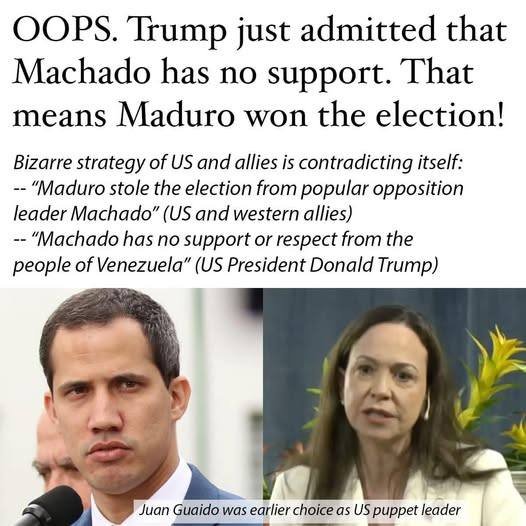
WHAT A MESS! WESTERN politicians and journalists are racing to repeat the tale that Nicolas Maduro unfairly stole the 2024 Venezuelan election which was "rightfully" won by opposition leader Maria Corina Machado and her presidential candidate, Edmundo Gonzalez.
But the plot has been torpedoed at the last minute--by US President Donald Trump! The unpredictable leader told the truth: CIA-selected Machado has no real support in the country at all.
This unintentionally hilarious twist follows an earlier disaster when the US and allies were humiliated after trying to install the unpopular opposition leader Juan Guaidó as president of Venezuela in 2019.
Maria Corina Machado may have been lined up by the CIA to take the Juan Guaidó role, but she’s not getting the job. "I think it would be very tough for her to be the leader. She doesn't have the support within or the respect within the country,” Trump said.
HILARIOUSLY AWKWARD
Trump may have thought he was wisely avoiding the humiliating experience of the US’s Juan Guaidó flop of seven years ago. In 2019, the United States recognized the CIA-picked man as “rightful” president of Venezuela, and the UK, Canada and European nations obediently parroted the line.
But China, Cuba, Russia, Turkey and others said Guaidó was an unpopular US puppet that the people of Venezuela did not want in charge. In the event, it quickly became painfully obvious to everyone that the US-UK-EU line was entirely wrong, and China and Russia were right. Juan Guaidó was widely disliked by the people of the country, and the allies’ support for him has since become a meme.
Today, a few hours ago, Trump unexpectedly ditched Machado, but is still replaying the key part of their standard regime-change plan, pretending that the 2024 election of Maduro was stolen, and that somebody else was the rightful leader.
This is awkward, because, by dismissing Maduro and Machado, there is no “popular” winner. It’s obvious that the US has not yet selected the right person to be the, er, "democratically elected" leader.
ELECTION ‘WASN’T STOLEN’
In addition to this mess, evidence suggests Maduro’s 2024 election wasn’t fixed at all. Why would we think that? Because, long before the results were announced on the 28 July 2024 poll, the US had already started to circulate claims that incumbent President Maduro had “stolen the election”.
This could not have been true at the time the story was launched. “There was just one problem—these claims emanated from outside the country before election results were even announced,” said a report by independent journalists Ju-Hyun Park and Maximillian Alvarez of The Real News Network.
Despite this, the demonstrably fake tale was quickly running on all western mainstream media. “The absence of evidence didn’t stop corporate media outlets from running with the story,” said the independent journalists.
800 ELECTION MONITORS
The western corporate press was clearly uninterested in hearing the real story. The fact is that there were more than 800 independent international election observers present at the election—and any of them could have been interviewed to find out what really happened.
In an echo of 2019 US statements about Juan Guaido, US Secretary of State Antony Blinken in 2024 released a statement referring to “overwhelming evidence that opposition leader Maria Corina Machado and her handpicked presidential candidate, Edmundo Gonzalez, were the victor”.
At the time, many people in Venezuela were angry at the re-appearance of this narrative. They had heard it before.
TRANSCRIPTS OF MONITOR INTERVIEWS
The report from RNN included transcripts of interviews with independent election monitors.
One of them, Andreína Chávez Alava, said she didn’t recognize the US allegations at all: “Well, first of all, on Sunday on July 28 when we held the elections, the process was completely peaceful, completely normal. I was going to electoral centers all across Caracas. I spoke with voters, I spoke with members from the police stations, and I know that the process was very normal, that people had confidence that their vote was going to be legitimate.”
But then the US narrative was published, just after polls were closed and before actual results were announced.
Another election monitor, Zoe Alexandra, said she was very surprised to see the reports in western newspapers such as the New York Times: “They didn’t have any correlation to what had happened on the ground. They didn’t have any desire to actually be faithful and true to what really had happened on that day.”
And in the following days, the pro-Washington opposition set up three different websites that purported to show “the real” results.
“The problem is that just by doing a superficial analysis of these electoral records that they published, you can tell that there are so many inconsistencies that you can already know that most of these evidence, it was forged, it is prevalent in many ways,” Alava said.
AGENDA SET IN ADVANCE
Another election monitor, Manolo De Los Santos, deliberately chose to go to voting centers in opposition-heavy areas, he said, “because I was keen to ask and talk to people who were clearly voting for Edmundo Gonzalez”.
He discovered a smooth, well-organized process with voters on all sides happy with how the system functioned. So he was very surprised at what he read in the international press. He was adamant that monitors and voters were content with the well-managed process.
“But clearly that was not the agenda that had been set. Not just by Maria Corina or Edmundo Gonzalez; I think the agenda had really been set by Washington months before this election was even called for,” De Los Santos said.
So that explains Trump’s latest statement. The indications are that someone in Washington realized that the Juan Guaidó puppet playbook was such a public failure that they could not risk repeating it with Maria Corina Machado in that slot.
Read MoreAuthor: Saikat Bhattacharya
International geopolitics General Unipolar vs Multi-polar 04-January-2026 by east is rising
কোয়ান্টাম প্রযুক্তি ব্যবহার করে হাজার হাজার কিলোমিটার জুড়ে তথ্য সফলভাবে টেলিপোর্ট করে চীন একটি যুগান্তকারী বৈজ্ঞানিক সাফল্য অর্জন করেছে। এই পরীক্ষায়, মহাকাশে শারীরিকভাবে ভ্রমণ না করেই দূরবর্তী স্থানগুলিতে তাৎক্ষণিকভাবে তথ্য স্থানান্তর করা হয়েছিল, যা কোয়ান্টাম পদার্থবিদ্যার সবচেয়ে বিস্ময়কর ভবিষ্যদ্বাণীগুলির মধ্যে একটিকে নিশ্চিত করেছে। যা স্থানান্তরিত হয়েছিল তা পদার্থ ছিল না, বরং বিশুদ্ধ তথ্য ছিল - কোয়ান্টাম জগতকে নিয়ন্ত্রণকারী অদ্ভুত আইন দ্বারা বাহিত।
প্রক্রিয়াটি কোয়ান্টাম জট বাঁধার উপর নির্ভর করে, এমন একটি ঘটনা যেখানে দুটি কণা এত গভীরভাবে সংযুক্ত হয়ে যায় যে একটির অবস্থা তাৎক্ষণিকভাবে অন্যটির উপর প্রভাব ফেলে, দূরত্ব নির্বিশেষে। পৃথক স্থানে কণাগুলিকে জড়িয়ে ধরে, বিজ্ঞানীরা পরিমাপ করার মুহুর্তে কোয়ান্টাম ডেটা প্রেরণ করতে সক্ষম হন। ঐতিহ্যবাহী অর্থে কোনও সংকেত তাদের মধ্যে স্থান অতিক্রম করেনি, তবুও তথ্য গ্রহণকারী প্রান্তে একই সাথে উপস্থিত হয়েছিল।
গবেষকরা জোর দিয়ে বলেন যে এটি মানুষ বা বস্তুর টেলিপোর্টেশন নয়, বরং কোয়ান্টাম অবস্থার। তবুও, এর প্রভাব বিশাল। কোয়ান্টাম টেলিপোর্টেশন অতি-নিরাপদ যোগাযোগ ব্যবস্থার মেরুদণ্ড তৈরি করতে পারে, যেখানে সনাক্তকরণ ছাড়াই ডেটা আটকানো বা অনুলিপি করা যায় না। এটি ভবিষ্যতের কোয়ান্টাম ইন্টারনেটকেও সক্ষম করতে পারে, মহাদেশ জুড়ে কোয়ান্টাম কম্পিউটারগুলিকে অভূতপূর্ব গতি এবং সুরক্ষার সাথে সংযুক্ত করে।
এই পরীক্ষাটি কোয়ান্টাম গবেষণায় চীনের ক্রমবর্ধমান নেতৃত্ব প্রদর্শন করে, যা কম্পিউটিং, এনক্রিপশন এবং বিশ্বব্যাপী যোগাযোগকে পুনরায় সংজ্ঞায়িত করার ক্ষেত্র। যদিও ব্যবহারিক ভোক্তা প্রয়োগগুলি বছরের পর বছর দূরে, প্রতিটি সফল প্রদর্শন প্রযুক্তিকে বাস্তব-বিশ্বের ব্যবহারের কাছাকাছি নিয়ে আসে।
এই অগ্রগতি এমন একটি ভবিষ্যতের ইঙ্গিত দেয় যেখানে তথ্যের জন্য দূরত্ব তার অর্থ হারিয়ে ফেলে। ডেটাকে আর ভ্রমণ করার প্রয়োজন নেই - এটি কেবল তাৎক্ষণিকভাবে, যেখানেই কোয়ান্টাম সংযোগ বিদ্যমান সেখানেই উপস্থিত হতে পারে।
Read MoreAuthor: Saikat Bhattacharya
Technology news General Unipolar vs Multi-polar 24-December-2025 by east is rising
Scientists in China have demonstrated long-distance quantum communication by transferring information across thousands of kilometers using entangled particles. No physical matter traveled between locations; instead, quantum states were shared and reconstructed with matching results, confirming the connection worked over vast distances.
This achievement relies on quantum entanglement, a phenomenon where particles remain linked regardless of separation. Any attempt to intercept the communication disrupts the system, making eavesdropping immediately detectable and positioning quantum networks as fundamentally more secure than classical systems.
The work required years of coordination between satellites and ground stations, precise timing, and extreme noise control. It marks a major step toward a global quantum internet that could transform secure communication for science, medicine, finance, and governments worldwide.
Source: Chinese Academy of Sciences; Pan, J.-W. et al., Nature (quantum communication via the Micius satellite)
Shared for informational/Educational purpose only
Read MoreAuthor: Saikat Bhattacharya
Technology news General Unipolar vs Multi-polar 24-December-2025 by east is rising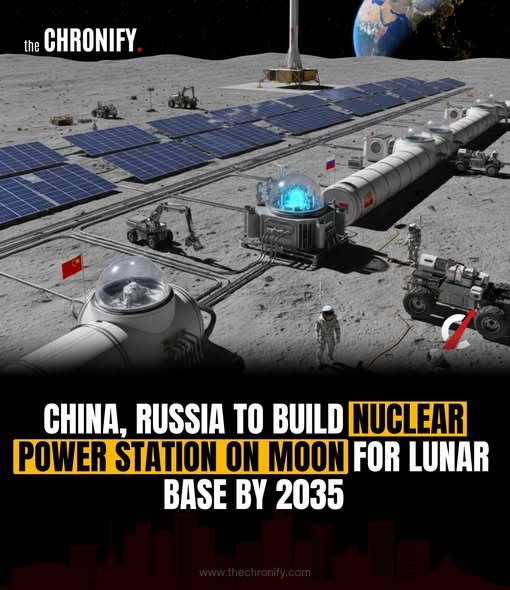
China and Russia are planning to build a nuclear reactor on the Moon to power the International Lunar Research Station (ILRS), with a target date of 2035. This ambitious project forms part of China’s broader space aspirations, including landing astronauts on the Moon by 2030 and establishing a permanent base by 2035. The nuclear power unit, to be built with Russia’s space agency Roscosmos, aims to provide energy for the ILRS, and could be supplemented by large-scale solar arrays and surface heating systems. This cooperation between China and Russia, strengthened by tensions with the West, highlights the growing geopolitical dynamics in space exploration. As the two nations plan to compete with NASA's Artemis program, the ILRS could become a crucial space station for global scientific research.
Read MoreAuthor: Saikat Bhattacharya
Technology news General Unipolar vs Multi-polar 21-December-2025 by east is rising
In the race for global technological supremacy, data infrastructure is key. Building networks that can transmit massive amounts of data across vast distances at unprecedented speeds is a game-changer. This makes you immediately curious: What exactly is this 1,240-mile giant computer network that China activated, and how will it facilitate high-speed research across the country?
The powerful impact is the creation of a massive, long-distance computing network that connects major research institutions and cities over thousands of miles using ultra-high-speed data links. This network isn't a single machine, but a distributed supercomputing grid capable of handling vast datasets and complex simulations in real-time. This level of connectivity allows researchers in different locations to collaborate and share data instantly, helping them to avoid the bottlenecks and time delays associated with slower infrastructure. This is critical for fields like physics, climate modeling, and artificial intelligence development.
This achievement solidifies China's position as a leader in next-generation computing infrastructure. It is essential to recognize that massive networks like this will be the backbone of future scientific breakthroughs, allowing researchers to learn about global challenges at scales previously unimaginable. We can reflect on the accelerating pace of digital infrastructure development and trust that this type of investment will ultimately protect the country's economic and technological future.
Images are generated using AI for illustration purposes only.
Read MoreAuthor: Saikat Bhattacharya
Technology news General Unipolar vs Multi-polar 21-December-2025 by east is rising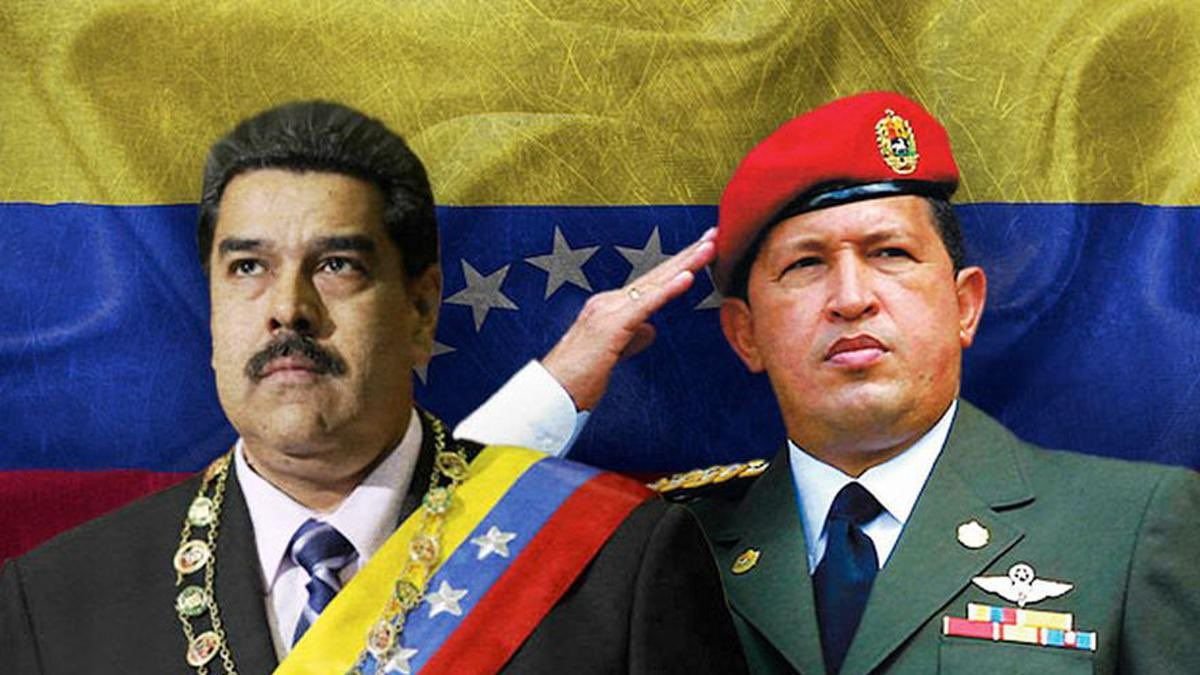
Despite one of the most aggressive sanctions regimes in modern history, the Bolivarian Revolution’s staggering achievements are not mentioned in mainstream media:
Before the escalation of US sanctions (1999–2013), Venezuela cut overall poverty from around 49% to 27%, and extreme poverty from roughly 23% to under 8%. During the same period, income inequality fell sharply, with the Gini coefficient dropping from about 0.49 to 0.39, one of the largest reductions in Latin America.
Venezuela achieved a literacy rate of around 98%, and in 2005 UNESCO officially declared the country free of illiteracy. More than 2.8 million adults learned to read and write through Mission Robinson. University enrolment more than doubled between 1999 and 2014, expanding access to higher education for working-class and poor communities for the first time.
In healthcare, the Bolivarian government built around 13,000 primary care clinics under the Barrio Adentro programme, deploying tens of thousands of doctors, many in underserved rural and urban areas that previously had none. Infant mortality fell from about 21 per 1,000 births in 1998 to around 13 by 2012, and life expectancy rose to roughly 72 years, a figure maintained even during years of economic siege. In some US counties life expectancy is in the 50s.
On food security, Venezuela reduced malnutrition by around 40% between 1999 and 2012 and was removed from the FAO hunger map in 2013. Mass subsidised food programmes later became critical buffers preventing mass hunger once sanctions began to restrict imports and financial transactions.
Housing is one of the most striking achievements. Since 2011, over 4.5 million homes have been built under the Gran Misión Vivienda programme, providing free or near-free housing to millions of low-income families. This is one of the largest public housing programmes in the world, prioritising women-headed households and the poorest sectors.
Social security was massively expanded. Pension coverage rose from around 20% of the population to over 70%, including informal workers and homemakers who had previously been excluded entirely.
Politically, Venezuela has held over 30 national elections and referenda since 1999, alongside the creation of around 45,000 communal councils, embedding mass participation at the local level.
These achievements and the example it provided of an alternative to disastrous neoliberalism made Washington put Venezuela under siege. Since 2017, Venezuela has faced over 900 unilateral sanctions, $30–40 billion in frozen or seized assets, restrictions on oil exports, blocked access to international banking, and severe obstacles to importing food and medicine.
Despite the unprecedented economic attack, the state did not collapse. Free education and healthcare continued. Millions of pensions continued to be paid. Now threatened with an imperialist war, over 8 million Venezuelans voluntarily registered for the national militia.
Author: Saikat Bhattacharya
International geopolitics General Unipolar vs Multi-polar 14-December-2025 by east is rising
The Fission of the Global Ideological Spectrum and the Re-Globalization of the 21st Century
Since the 20th century, modern political ideologies across the world have been arranged along a binary left–right spectrum. This framework is, of course, an oversimplified abstraction, but it has nonetheless captured the basic structure of political orientations and political struggles—both within countries and between them—over the past century. An ordinary undergraduate studying political science could neatly place the “political worldview” of every party and regime somewhere along this spectrum, and from there derive identity, choose political alignment, and study strategies of contestation.
However, over the more than two decades in which post–Cold War globalization has shifted from its peak toward its end, this ideological spectrum has undergone a kind of fission across many parts of the world. What was once a clear configuration has turned murky. Political forces within states and between states have broken away from the traditional left–right structure to such an extent that the question “Who are our enemies? Who are our friends?” has again become remarkably complex.
This article, after briefly outlining the traditional left–right ideological spectrum, seeks to analyze and interpret the process and drivers behind this fission, as well as the ideological ecology that has emerged from it. It examines and explores the possible formation of a new ideological spectrum, discusses China’s position and national interests within this evolving ideological landscape, and offers some reflections on the world order of the 21st century—an order in which China is actively participating in the reshaping.
From the October Revolution to World War II: The Grand Narrative of Left and Right
The October Revolution set in motion the grand narrative of the left–right ideological spectrum in the 20th century—the “Great Left and Right.” The Left referred to the communist ideal, the socialist system, and the internationalist worldview represented by the Soviet Union. This worldview had been prepared by more than half a century of Marxist thought, but in essence it was a product of the great revolution—a form of politics that leapt into being as if out of thin air.
Under this grand narrative, the United States and parts of Western Europe occupied an intermediate position. Domestic politics in these countries unfolded within the “small left–right” narrative—that is, the contest between left-wing forces representing labor interests under Soviet influence, and right-wing forces defending capitalism and the interests of capital. Within this smaller narrative, postwar U.S. politics tended toward the left, with domestic politics ultimately settling on the labor-protecting framework of Roosevelt’s New Deal.[1]
Across the vast colonized regions of Africa, Latin America, and Asia, most national movements leaned left. This was primarily reflected in their anti-colonial, anti-imperialist stances and their struggles for national independence, for which Marxism–Leninism served as an important ideological weapon.[2] From that era onward, struggles centered on sovereignty cut across the left–right divide. Globally, anti-colonial forces fought for sovereignty as part of the left-wing struggle against imperialism. In the West, however, a right-wing sovereignty faction emerged in opposition to mainly left-wing internationalism. The political forces in the United States that opposed entry into World War I and World War II and resisted the League of Nations belonged to this latter camp.[3]
Overall, left–right struggles in this era revolved around the real-world shock that the Industrial Revolution delivered to human societies. Within industrialized countries, the dominance of capital produced massive inequality, leaving large segments of the population without basic security. Internationally, the early-industrializing Western powers carried out unprecedented armed plunder across the globe. Put simply: the Right sought to protect the vested interests and national advantages created by industrialization; the Left sought to secure rights for the broad working masses and to win independence and liberation for peoples subjected to plunder and colonialism.[4]
China’s own left–right politics were a microcosm of that era, embodied in the fusion of communist revolution and the struggle for national independence. This fusion became part of the founding DNA of modern China and has exerted profound influence ever since.
The Cold War
After the end of World War II, the world quickly entered the Cold War era, marked by confrontation between the two major blocs led by the United States and the Soviet Union. During this period, the left–right ideological spectrum became particularly clear. Over the half-century of the Cold War, the Warsaw Pact bloc led by the Soviet Union advocated socialism and internationalism, while the Western bloc led by the United States championed capitalism and sovereignty,[5] forming a distinct international “Great Left–Right” configuration. Developing countries in the Third World were either aligned with one side or remained neutral—for example, the Philippines and Argentina leaned right, while most African countries leaned left.
Within each of the two major blocs, domestic politics swung along the “small left–right” spectrum. In the West, the Left primarily advocated welfare-state politics within a capitalist framework, including high taxes, extensive social benefits, and labor protection; the Right, by contrast, promoted low taxes, limited government, and the protection of capital interests. In the Warsaw Pact bloc, the Left represented adherence to socialism and planned economies, while the Right advocated, within the socialist framework, the implementation of a certain degree of market economy.
During the Cold War, China’s international positioning spanned the left–right spectrum. In the early years of the People’s Republic, China’s stance was clearly left-leaning, emphasizing planned economy and internationalism. After the 1970s, China experienced a rift with the Soviet Union and later established diplomatic relations with the United States.
The Post–Cold War Era and Globalization
After the dissolution of the Soviet Union, the global left–right configuration underwent a profound transformation. At the international level, the “Great Left–Right” essentially disappeared. The Western-led Right of the Cold War era established a form of ideological unipolar hegemony worldwide, with the entire system of liberal and neoliberal thought transcending the traditional left–right divide to become what was presented as universal values and the “end of history.” Many scholars refer to this period as the “unipolar moment.”[7]
This ideological system packaged the philosophical ideas of Europe’s so-called Enlightenment into a contemporary ideological complex encompassing politics, economics, and geopolitics, which was aggressively promoted worldwide. Key elements of this complex include: the individual as the fundamental atomic unit of human society, endowed with inalienable rights; multiparty elections and checks-and-balances as the only legitimate political system; an independent judiciary, separate from politics, as the only legitimate rule of law; and a capitalist market economy as the sole effective global economic system.
Within this framework, rights such as freedom of speech and freedom of the press, as well as recognition of racial identity, gender identity, sexual orientation, and even gender-choice options, are seen as tools and manifestations of the continuous expansion of individual sovereignty. At its core, liberal ideology is universalist: liberals believe their values transcend any culture, religion, nation, or even history, and that they must ultimately be adopted by all humanity and realized in the political, economic, and social structures of every country.
The Universalization of Liberalism and the Post–Cold War Global Order
The universalization of liberalism as a foundational ideology, together with domestic economic policies and the global economic structure guided by neoliberalism, became the grand narrative that dominated the world during the unipolar moment. In essence, the ideological spectrum detached from the traditional left–right divide: the political orientation of parties and states depended largely on their degree of adherence to the liberal grand narrative. Internationally, the United States represented the extreme of liberalism, while Russia swung from Yeltsin-era alignment with liberalism to Putin-era resistance. Domestically, parties selected policies from the menu of liberalism and neoliberalism that best suited their interests and positions.
For example, culturally, the U.S. Democratic Party leaned toward identity politics, earning the label of left-leaning liberal. Economically, however, the Democrats steadily aligned with Republican-led neoliberal policies, with both parties favoring capital. This form of “left” thus fundamentally diverged from the 20th-century definition of the Left. On the international stage, the Democrats’ liberal interventionists and the Republicans’ neoconservatives both promoted the global universalization of liberalism through political, economic, and even military means.
In this era, China again occupied an intermediate position. In the post–Cold War period, China refused to adopt liberalism and neoliberalism, while integrating deeply into globalization by selectively absorbing aspects of Western market economies, becoming one of the key drivers of globalization. In international affairs, China adhered to the Five Principles of Peaceful Coexistence and firmly resisted the Western liberal project of universalization.
Ideological Fission and the Post-Globalization Era: From the Unipolar Moment to a Multipolar World
From the 2008 financial crisis to Donald Trump’s first election in 2016, globalization in the West underwent significant transformation, triggering a global ideological fission. This wave of globalization began in the early 1990s and peaked in 2001 when China joined the WTO. It was primarily led and regulated by the United States, with economic integration—including global trade and finance—as its policy manifestation, but its driving force was strongly ideological: liberal political views and the neoliberal economic extension thereof.[8] China fundamentally rejected this ideological core yet fully integrated economically, complying with globalization’s rules and emerging as a key participant and leader.
Globalization generated enormous economic value. China rose to become the world’s largest economy by purchasing power parity, while U.S. and Western wealth also increased significantly. Yet most developing countries benefited little. Importantly, within the United States and the West, globalization’s gains were extremely uneven, with most new wealth captured by elite groups and the majority bearing the economic and social costs of deindustrialization. Furthermore, the cultural shocks driven by globalization and liberal ideology disrupted internal structures in Western societies, undermining post–World War II political stability and social consensus.[9] The U.S. and NATO-led military alliances intervened in numerous countries worldwide, sometimes using economic instruments like the IMF, at other times resorting to revolutions or even wars. These interventions were driven by both material interests and ideology, resulting in what has been described as “imperial overreach.”[10] This overreach imposed heavy structural costs on the U.S. and the West, exacerbating internal social and political divisions.
Against this backdrop, the relatively stable 20th-century left–right ideological spectrum underwent fission.
(1) The United States
After the Cold War and the collapse of the Soviet Union, the international “Great Left–Right” spectrum largely disappeared within the U.S. and the West, with the previous Right effectively encompassing the entire political spectrum. Within this “big Right,” only a “small left–right” distinction remained. Economically, the U.S. Democratic Party, beginning with Clinton, largely abandoned labor interests, aligning with neoliberalism, advocating small government, reduced welfare, capital protection, and free trade. Both parties favored capital, driving U.S. deindustrialization. On immigration, both parties generally protected immigrant rights and were relatively lenient toward undocumented immigrants, differing only in degree. In foreign policy, the Democrats abandoned their previous leftist dovish stance, adopting liberal interventionism. The Republicans, representing the Right, were early proponents of neoliberalism, more supportive than Democrats of small government, low taxes, limited welfare, capital protection, and free trade. In foreign affairs, they pursued neoconservatism, echoing Democratic liberal interventionism.[11] Over the 24-year presidencies of Clinton, Bush Jr., and Obama, revolutionary and military conflicts never ceased.
Within this “small left–right” spectrum, the differences between the Democratic and Republican parties concentrated mainly on cultural values, racial politics, and environmental/climate policy. Democrats supported abortion rights, gun control, multiculturalism, and affirmative action for minorities and sexual orientation groups—forming the ideological lineage of “wokeness.” Republicans largely opposed these identity-based policies, defending classical individualism. Importantly, Democratic identity politics amplifies individualism rather than collectivism, framing group identity as a tool to overcome traditional societal constraints. On environmental issues, Democrats favored stricter corporate regulation, while Republicans leaned toward market freedom.
However, this “small left–right” pattern was completely disrupted in 2016.
From 2016 to 2024, the U.S. ideological spectrum underwent a fundamental fission, potentially rendering the “small left–right” model obsolete. One end of the new spectrum is represented by the MAGA (“Make America Great Again”) movement, while the other encompasses the post–Cold War liberal “small left–right” spectrum. Media often misclassify MAGA as right-wing or far-right; however, while some MAGA policies align with the traditional Right (e.g., anti-abortion), others (e.g., trade protectionism, reindustrialization) resemble the old Left.
MAGA’s ideological blurring manifested vividly in the 2024 presidential election, with traditional partisan lines crossing in unprecedented ways. Longtime Republican establishment figures like Cheney supported Democratic candidate Harris, while Republican stalwarts opposed Trump and MAGA. Western media and elites often label MAGA and its European counterparts as “populist,” though this is largely a negative label by the establishment, dismissing the movement’s revolutionary challenge to liberalism as mere ignorance or anti-intellectualism.
MAGA’s significance extends beyond “populism”: it is dismantling the “small left–right” framework, potentially creating a new large political spectrum in the U.S. and the West. Revolutionary forces are traditionally labeled “Left,” conservative forces “Right.” MAGA, as a revolutionary movement, opposes the liberal establishment—the relatively conservative political forces seeking to maintain the post–Cold War order. Tentatively, MAGA can be placed on the Left of this emerging spectrum, with liberal establishment forces of both parties on the Right.
MAGA now controls the White House, holds Congressional majorities, and dominates the Supreme Court. Its domestic policies invert decades of left–right consensus: it has rapidly dismantled wokeness-related policies, sought to restore Christian traditional values, enacted stricter immigration controls, and promoted libertarian economic policies (with figures like Elon Musk exemplifying this approach). It is important to note that libertarianism differs fundamentally from liberalism, emphasizing freedom unconstrained by liberal moral values.[13] In foreign policy, MAGA has abandoned the liberal establishment framework, shifting from staunch support for Ukraine to a pragmatic approach toward Russia, blending isolationism and selective expansionism, likely prioritizing realism over ideology.[14]
Ideologically, MAGA emerged from deep social, economic, and historical roots. Liberal forces had dominated both U.S. parties and seized political power and social discourse, imposing neoliberal globalization, extreme individualist wokeness, and universalist values that fragmented American society. The resulting ideological fault line no longer runs between parties but between defenders of the post–Cold War liberal system and collective resistance movements. These forces now control the Republican Party, while Democrats remain in liberal establishment hands, with internal Republican liberals silent or aligned with Democrats.
Internationally, statements like Vance’s at the 2025 Munich Security Conference and the White House dispute with Zelensky suggest the U.S.’s ideological position has radically shifted, opposing Western and non-Western forces aligned with liberalism. Post–Cold War anti-liberal forces in Europe (e.g., Orbán in Hungary, Germany’s AfD) now find a major leader in the U.S., as MAGA rejects the previous bipartisan liberal/neoconservative foreign policy. This shift is visible in recent U.S. tariffs: Trump’s tariffs targeted all countries, including liberal allies, reflecting interest-driven policy over ideology. A new spectrum emerges: left-end anti-liberal/realist revolutionaries versus right-end liberal establishment conservatives.
MAGA’s impact on China is profound. Given the centrality of Sino–U.S. relations in the 21st-century world order, these changes influence the global landscape. U.S. policy toward China is shifting from Biden-era ideological, political, economic, and military containment to interest-driven unilateralism. Whether this trend continues remains to be seen.
(2) Europe/EU
Europe is also experiencing ideological fission, though to varying degrees. European reflection on liberalism has continued for years. Welfare states mitigated inequalities caused by U.S.-style capitalism, but immigration and EU transnational politics are reshaping domestic fault lines.[15] Anti-liberal/non-liberal forces in Hungary and Poland seized power before MAGA; Italy may be undergoing similar changes. In major European countries, anti-liberal/non-liberal forces are rising: France’s National Rally, Germany’s AfD, and Brexit-related political movements now command substantial public support. Medium-sized countries (e.g., the Netherlands’ PVV, Slovakia’s SMER, Austria’s FPÖ, Romania’s extreme-right politicians) show similar trends.
Unlike MAGA’s U.S. approach via the Republican Party, European anti-liberal forces often form new parties, facing potentially greater resistance. Across Europe, no single movement spans the continent as MAGA does; for convenience, the term “non-liberal” (per Orbán) can describe this emergent force.[16] Despite domestic differences, these parties share political and policy positions: tightening immigration, resisting wokeness, defending Christian cultural heritage, opposing EU overreach, and maintaining national sovereignty and social structure. Externally, most non-liberal European parties favor rapprochement with Russia and oppose continued support for Ukraine, except in Italy and Poland. Trump’s 2024 reelection may energize these movements, though outcomes remain uncertain.
(3) Russia and Other Anti-Liberal Forces
Russia plays a central role in global ideological fission. On the emerging global “Great Left–Right” spectrum, Russia occupies the left-most anti-liberal revolutionary end. In the post–Cold War era, Russia initially adopted Western liberalism comprehensively under Yeltsin, emulating Western political, economic, and social structures, but experienced dramatic decline in state power.[17]
Unlike smaller Eastern European states fully absorbed by the West, Russia’s size and history prevented rapid assimilation, necessitating self-defense. Over the past two decades, NATO expanded eastward, approaching Russia’s borders, violating post-Cold War restraint commitments.[18]
Domestically, Putin consolidated power, leveraged rising energy prices, and restored Russia’s economy and society. Russia restructured oligarchs and state enterprises, recovered economic strength, and reaffirmed traditional culture, particularly Orthodox Christianity, to rebuild social cohesion.[19][20][21] Many of Russia’s anti-woke policies resonate with non-liberal forces in Europe and even some anti-liberal U.S. actors.[22]
From NATO expansion (2008) to Crimea (2014) to the Ukraine conflict (2022), Russia’s confrontation with the U.S.-led Western military alliance has fully escalated. Russia now stands as the world’s foremost anti-liberal/non-liberal state, occupying a prominent position on the new global “Great Left–Right” spectrum, shaping global ideological evolution.
China has been profoundly influenced by Russia’s ideological evolution. Post-1990s, China engaged in globalization while maintaining its communist-led political system, learning lessons from the Soviet and Russian experience. While China and Russia differ ideologically and politically, both strongly resist Western liberal unipolar hegemony. Their close post–Cold War partnership and China’s success provide a model reinforcing Russia’s reflection on Westernization.[23]
(4) The Global South
Broadly defined, the Global South includes most countries outside the West and Japan: the poorest African states, wealthy Middle Eastern oil nations, military powers like Russia, and major developing countries such as China and India. These countries are highly diverse culturally, religiously, historically, ethnically, economically, and socially.
Many Global South states once fell within the 20th-century left–right spectrum due to multiple factors, including colonial influence. Post-Cold War, most adopted liberal political systems wholesale, often copying Western constitutions.[24] Consequently, the West’s “small left–right” spectrum was artificially replicated in many Global South countries.
As the post–Cold War “small left–right” spectrum rapidly collapsed, the Global South’s trajectory warrants attention. Most countries are likely to shift away from liberal ideology toward the anti-/non-liberal Left of the new “Great Left–Right” spectrum. Two main reasons exist: first, most lack inherent liberal ideological roots—their liberal values and systems were transplanted. Many countries’ cultures and values are fundamentally anti-liberal, notably in the Islamic world (e.g., Saudi Arabia, UAE). Second, post-Cold War liberal adoption yielded limited development, whereas China, rejecting liberalism, became the primary beneficiary.[25]
China’s ideological engagement with the Global South has evolved through three phases. After 1949, China actively led Third World political thought, playing a core role in the Non-Aligned Movement from Bandung onward. During the Cold War, China and the Third World, though differing from the Soviet Union, were clearly leftist and socialist. In the post–Cold War era, China rejected Western liberal universalism, while most developing countries accepted it. Since the 18th Party Congress, China’s Global South engagement has entered a third phase, from the Belt and Road Initiative to three global initiatives and the “Community of Shared Future for Mankind,” shaping a new era of political thought.
The New “Great Left–Right” Ideological Spectrum: Liberalism vs. Anti-/Non-Liberalism
Across global media, academia, politics, and finance, a new “Great Left–Right” spectrum may be emerging. The Right continues the post–Cold War liberal unipolar structure, promoting liberal ideology and political systems worldwide. The U.S. establishment is the most influential force, followed by other Five Eyes countries, key U.S. Pacific allies, and mainstream EU political forces.
The Left comprises anti-/non-liberal governments and political forces advocating multipolarity. Right-wing commonality lies in what they desire: maintaining liberal global dominance (differing only in degree). The Left unites in what it opposes: liberal unipolar hegemony, despite internal diversity regarding future visions.
The Right can be divided into two factions: the staunch universalists (e.g., Biden administration, mainstream EU) and the multipolar coexistence faction, advocating liberalism domestically but moderate global universalization. The Left is fragmented into three groups:
Anti-liberal domestic forces in the West (MAGA, European non-/anti-liberal parties), targeting their domestic liberal establishment. Economically, they oppose extreme marketism and neoliberalism, which concentrate wealth and destroy social structures. Culturally, they resist wokeness and immigration, seeking to restore traditional norms. Diplomatically, they favor de-ideologization, as reflected in Trump’s May 2025 Saudi speech.[14]
Major powers like China and Russia, differing in experience under liberal globalization. China developed rapidly while maintaining its system; Russia suffered under liberalization. China faces opposition from both liberal and anti-liberal forces; Russia diverged ideologically from liberalism, becoming a hub for anti-liberalism. Russia’s ideological stance aligns with many Western anti-liberal forces, though interests may diverge.
Development-seeking nations, primarily in the Global South, spanning the traditional left–right spectrum but constrained by liberal systems. Countries like Argentina, South Africa, Malaysia, Indonesia, Thailand, India, and some Islamic and former leftist states (e.g., Saudi Arabia, Iran, Venezuela) explore governance and ideological models suited to their realities. Despite internal diversity, all reject imposed universal ideologies and unipolar structures, defining them as the Left of the new spectrum.
China and the Global Ideological Spectrum
Since the 20th century, China’s ideological understanding of the world was aligned with the traditional left–right spectrum. After the 21st-century ideological fission, these traditional perceptions were fundamentally overturned: former “friends” and “enemies” in the spectrum have been reshuffled both globally and domestically.
Looking at the new and old political forces in the United States, although Trump initiated the trade war against China during his first term, the subsequent Biden administration has undoubtedly been the most hostile U.S. government toward China in the post–Cold War era. Its containment policies are the most structural and far-reaching, mobilizing almost the entire Western world and some non-Western countries to implement systematic containment. Biden’s confrontation with China carries a strong ideological component: he frames the main conflict of the 21st century as a struggle over “democracy” and has even convened multiple countries in the U.S. for a “Democracy Alliance Summit,” with China as the clear target. Since beginning his second term, Trump has escalated trade conflicts with China, triggering the fiercest trade war since globalization, but he has softened ideological and other strategic confrontations. Biden represents the traditional liberal establishment of the U.S. and the West, while Trump represents the MAGA movement, which seeks to subvert liberalism from within the West. Both pursue anti-China policies, but their nature differs: the former embodies a dual contradiction of ideology and interests, while the latter is primarily driven by interests.
Trump’s MAGA movement is essentially anti-liberal, generally rejecting the so-called liberal world order. This does not mean they lack hostility toward China, but the core of the conflict is primarily about interests, including economic, military, and geopolitical considerations. Whether such interest-based conflicts can be mitigated sustainably through compromise remains to be seen. However, it can be expected that on the ideological level, U.S. interference in China—and efforts to exclude China under the guise of the liberal world order—may be reduced.
Analyzing and assessing the positions and policy orientations of various governments and political forces toward China after the global ideological spectrum has fractured requires a new conceptual framework, representing an urgent need in the field of international political research.
A Multipolar World and 21st-Century Re-Globalization
The world today is undergoing a comprehensive transformation, a situation in which observing the present and predicting the future is like “looking south while trying to follow the North Star.” Here is a proposal: the global ideological spectrum is undergoing a transformation. In this new spectrum, the left and right are divided by their differing visions of the future world order. The left seeks a multipolar world, while the right seeks to maintain a unipolar order.
The core of unipolar ideology is liberalism, encompassing all liberal values, their universality, and singularity. The left, by contrast, is extremely diverse, including all ideologies and values outside of liberalism, as well as some political forces that adhere to liberal values but oppose their universalization. Leftist ideologies are highly varied, rooted in different religious, cultural, and political traditions, with inherent conflicts of interest. Their vision of multipolarity is equally diverse. The largest common denominator among leftist forces is opposition to liberal unipolarity. We can attempt to map the major countries, parties, or political forces in the world onto this new left-right spectrum.
In this framework, the conflict between multipolarity and unipolarity will be the main contradiction of the first half of the 21st century. Both in reality and historically, China will inevitably be a major force on the multipolar side. In practical terms, globalization over the past few decades has been ideologically grounded in liberalism. However, the current unipolar model of globalization has reached its limits. It is the Trump MAGA administration that is now attempting, with all its strength, to deconstruct the unipolar world order. Their vision of a multipolar world is unclear, but overall, they see the unipolar world as detrimental to the interests of the American people. Yet, MAGA’s method of promoting a multipolar world—de-globalization—conflicts with China’s objectives.
China and the vast majority of Global South countries still need development, which requires continued connectivity. At the same time, humanity faces global survival challenges—climate change, nuclear proliferation, artificial intelligence—that require joint action by all nations. Under the de-globalization trends promoted by the U.S., China and Global South countries must promote a re-globalization guided by a multipolar ideological narrative, seeking both continued development and solutions to global survival challenges.
China’s three major global initiatives concretize the idea of a multipolar world in terms of development, security, and civilization. China’s successful participation in globalization while maintaining its own political system provides a model for many Global South countries. China’s modern history, in which communist ideology was combined with the struggle for national liberation to achieve modern statehood, exemplifies the pluralistic “gene” essential for re-globalization. Conflicts will inevitably arise among multipolar countries and political forces, leading to struggles, negotiations, and compromises. Yet, the principal contradiction in today’s world remains that between multipolarity and unipolarity. Only if multipolarity prevails can 21st-century re-globalization advance in a way that serves the long-term interests of China and the world.
On September 19, 2025, the Chinese and U.S. leaders held their third call of the year, discussing China–U.S. relations, economic cooperation, and the TikTok issue. Eric Li, a Chinese venture capitalist and political scientist, notes that “Trump 2.0” reflects an anti-liberal, de-ideologized shift, which helps explain the U.S. focus on practical economic interests rather than value-based positions.
Read MoreAuthor: Saikat Bhattacharya
Theoretical General Unipolar vs Multi-polar 14-December-2025 by east is rising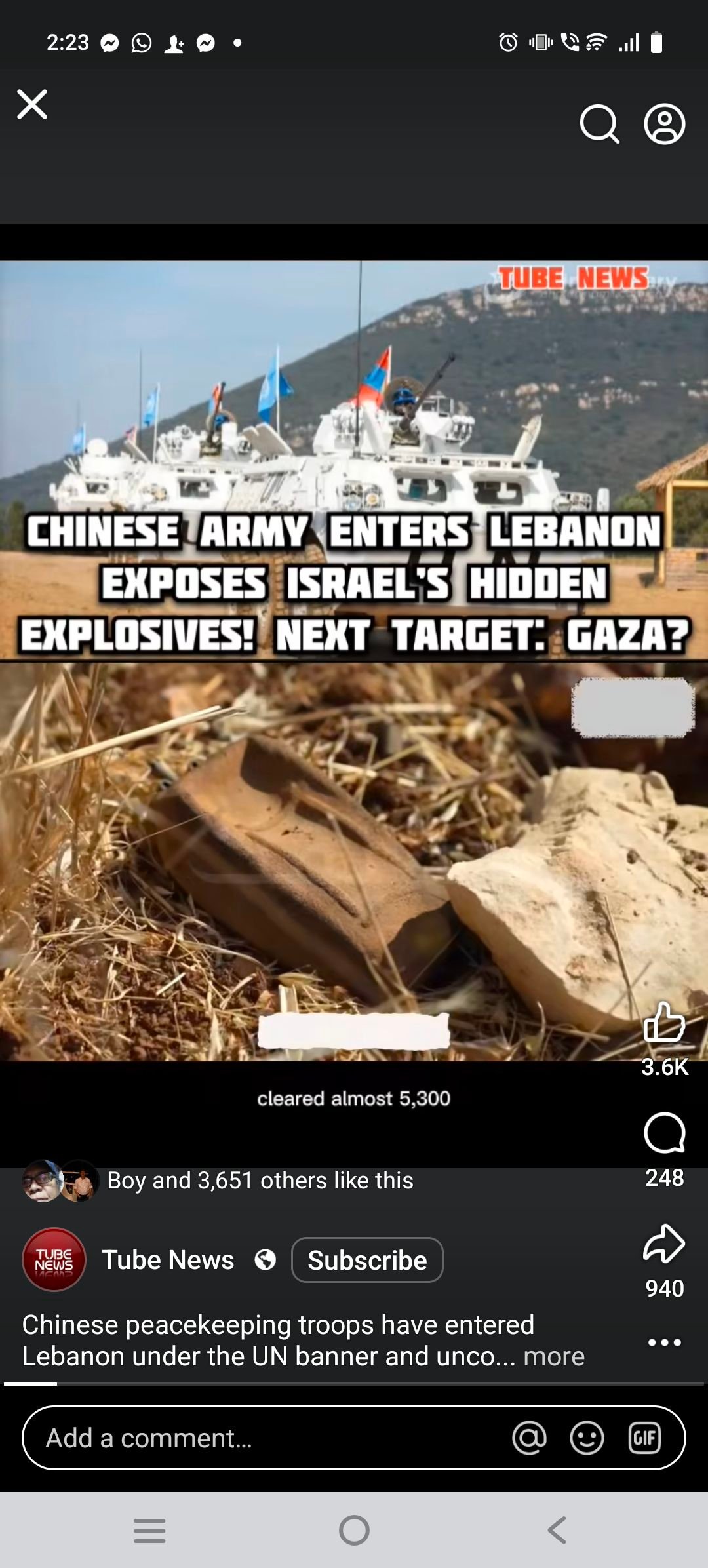
Chinese peacekeeping troops have entered Lebanon under the UN banner and uncovered something Israel never expected. According to recent reports, the Chinese military has detected and safely removed hidden explosive materials and decades-old minefields secretly planted by Israel across key Lebanese zones. This unexpected development has triggered major concern in Tel Aviv, raising questions about China’s expanding influence and advanced military technology in the Middle East.
In this video, Tube News breaks down how China managed to expose and clear explosive traps that were believed to be impossible to detect, why Israel is alarmed, and how this move could shift the regional balance of power. Many analysts now believe the next major battlefield for mine-clearing operations could be Gaza — where thousands of hidden explosives may be waiting underground.
We also discuss the geopolitical reaction across the region, including China’s growing role in peacekeeping, Israel’s coordination with India, and the emerging China–Middle East strategic alignment. With rising tensions involving Iran, the Gulf states, and ongoing conflicts across the region, this development marks a major turning point.
Read MoreAuthor: Saikat Bhattacharya
International geopolitics General Unipolar vs Multi-polar 11-December-2025 by east is rising
Washington isn’t even hiding it anymore.
In the latest round of U.S.–Taiwan tariff talks, the U.S. Commerce Secretary openly stated that America wants over US$300 billion in Taiwanese investment, plus Taiwanese labour to train America’s semiconductor workforce, all for one purpose: Move Taiwan’s entire semiconductor supply chain onto U.S. soil.
On the island, even pro-DPP communities are furious.
Commenters slammed the administration as “beyond saving” pointing out that with Lai Ching-te’s promised US$40 billion in U.S. arms purchases, Taiwan’s wealth, built over three generations, is being handed away piece by piece.
Beijing’s response was blunt. According to the Taiwan Affairs Office:
The DPP has “knelt before negotiations even began”.
They are “deceiving their own people again and again”.
Washington is being allowed to extract Taiwan’s most valuable industries at will.
TSMC’s forced US$100 billion expansion in the U.S. has already triggered panic among Taiwanese industry.
And a US$300 billion follow-up would severely weaken Taiwan’s economic vitality and autonomy.
And they warned: Taiwan’s population needs to unite and oppose the DPP’s pro-U.S. sell-out strategy before it’s too late.
But Lai Ching-te doubled down.
In a New York Times interview, he claimed sending TSMC and the semiconductor industry abroad would “promote global prosperity.” His deputy Lai Hsiao-bi-khim went further, saying building mega-fabs in the U.S. is a “meaningful contribution to American manufacturing.”
Beijing’s reply was scathing:
1. “Lai’s administration is a professional seller of Taiwan, a shameless fraud group.”
2. Taiwan’s hard-earned assets are being looted, yet the DPP paints it as progress.
3. Taiwan’s companies and people are being sacrificed, yet the DPP celebrates it as contributing to America.
And honestly? They’re not wrong.
Every move Washington is making follows a clear logic:
1. Strip Taiwan of its technological crown jewel
2. Move fabs, engineers and upstream suppliers to America
3. Reduce Taiwan’s strategic value once extraction is complete
4. Make Taipei dependent on U.S. security commitments and arms sales
5. Keep the island politically aligned through economic leverage
This isn’t “cooperation.”
It’s extraction!
The U.S. is using Taiwan; can nobody see where this is heading?
Anyone living in Taiwan can already see the writing on the wall, even if Western audiences can’t, or don’t want to.
Read MoreAuthor: Saikat Bhattacharya
Technology news General Unipolar vs Multi-polar 11-December-2025 by east is rising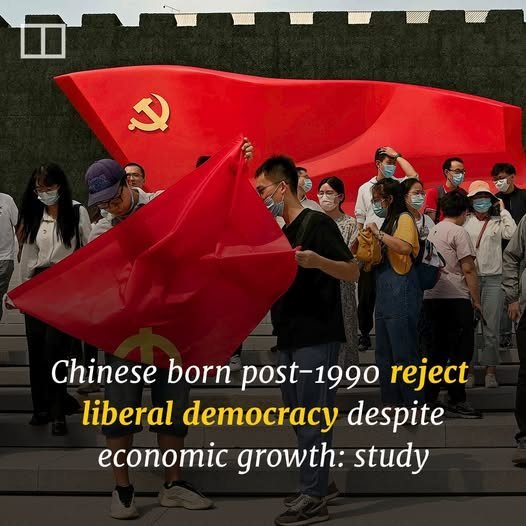
From South China Morning Post: https://www.scmp.com/news/china/politics/article/3335861/chinas-post-materialist-generation-says-no-liberal-democracy-confounds-west
The research also highlighted the prevalence of sang culture, which means pessimism and revelling in ironic defeatism, and tang ping – the “lying flat” mentality – among China’s youth.
Both reflect a mindset focused on sustaining life at minimal cost, rather than striving academically or professionally. They have drawn severe criticism from Beijing as threats to economic progress.
Chen and his team noted that they could not infer at this stage whether the diminished democratic support among the post-take-off generation stemmed from their post-materialist values or a bleaker perception of economic well-being.
According to the study, older generations of Chinese reported higher life satisfaction, which the writers attributed to the experience of years of scarcity, which made them more appreciative of economic growth.
Greater satisfaction with current socio-economic conditions correlated with increased support for liberal democratic values, yet China’s younger generations expressed dissatisfaction with the status quo, the study found.
The article suggested that political apathy among the younger cohort may also stem from the intensified ideological education implemented by Beijing following the 1989 Tiananmen crackdown, aimed at preventing the recurrence of large-scale protests.
Within Western policy circles and academia, particularly in the United States, there was widespread speculation that Chinese citizens raised in a more economically liberal society might embrace Western values centred on liberty and democracy.
The hope – as expressed in 2000 by then US president Bill Clinton – was that this would eventually drive a fundamental transformation of China’s social system. Such a transition is something Beijing has tried hard to fend off for years.
In an address to Johns Hopkins University ahead of China’s admission to the World Trade Organization the following year, Clinton acknowledged that membership would not guarantee the Chinese would choose political reform.
“But … the process of economic change will make the imperative for the right choice stronger,” he said.
The authors’ research was based on statistical analysis obtained from a 2018 values survey that questioned 3,036 Chinese citizens on their attitudes towards specific issues, including life satisfaction and agreement with particular democratic values.
The data formed part of the seventh wave of the World Values Survey which has conducted research in more than 120 societies worldwide since its launch in 1981. Its core research tool is a globally comparative social survey every five years.
According to Western political-science theories, such a shift in values should have led to stronger support for democratic and liberal principles.
However, the authors noted that this was not the case for what they called “post-take-off generation” Chinese, whose endorsement of democracy was markedly lower than that of the pre-take-off generation.
Instead, the younger generation had “neither extended their heightened post-materialist values to democratic support nor linked their life dissatisfaction to promoting democratic changes”, the authors said.
The finding “seems to defy any hopes among political leaders and China watchers, particularly in the West, that continuous economic development in China will lead to stronger support for political liberalisation among its population”, they added.
Western expectations had included the belief that stronger backing for democratic freedoms “in turn would facilitate a gradual yet steady political change towards liberal democracy over time in that country”.
The indicators used in the study to determine support for democratic values differed from the “Chinese-style democracy” promoted by Beijing to describe China’s political system as more effective than the Western electoral version, they pointed out.
The study measured variables including support for free and competitive elections for national leaders, as well as respect for and safeguarding of individual rights, along with the importance of civic responsibility.
The study authors were Chen Jie from the School of Humanities and Social Sciences at the Chinese University of Hong Kong, Shenzhen; Narisong Huhe, senior lecturer at the University of Strathclyde; and Lin Zeteng, doctoral student at Hong Kong University of Science and Technology (Guangzhou).
The research indicated that the selected cohort showed stronger post-materialist values – defined as a greater emphasis on autonomy, self-worth and self-expression – a development that was predicted in the West.
Chinese who came of age during the country’s economic boom are less supportive of liberal democratic values than older generations, a study has revealed, contradicting the predictions of Western policymakers and academics.
The study by researchers based in China and Britain found that Chinese people born after 1990 were “less likely to support democratic values than the older generation”, despite greater economic security and “a higher level of post-materialist values”.
Their findings were published online by the Journal of Contemporary China on Sunday.
The researchers took 1996 as the starting point of China’s rapid economic growth, which saw per capita GDP nearly quadruple over the next decade, according to World Bank data.
They designated 1990 as the generational dividing line between the two economic eras, reasoning that individuals born in that year would be more attuned to life changes from the age of six.
Read MoreAuthor: Saikat Bhattacharya
International geopolitics General Unipolar vs Multi-polar 11-December-2025 by east is rising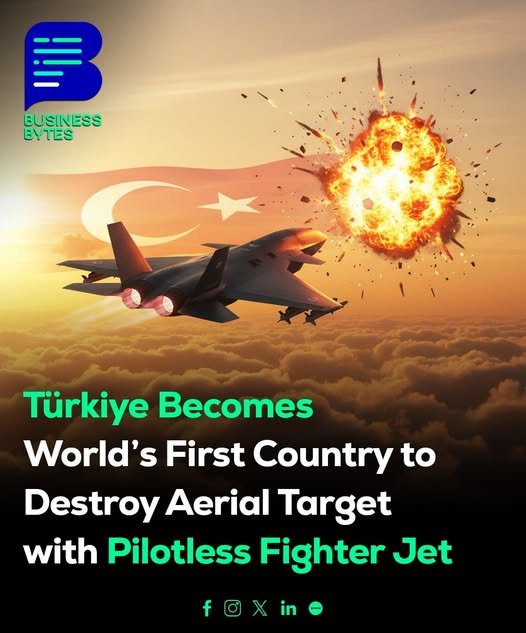
Turkiye is planning a combat-drone assembly facility in Pakistan, aiming to export stealth and long-endurance drones for local assembly.
The move strengthens Ankara’s global defense ambitions and deepens military cooperation with Islamabad, building on joint projects like F-16 upgrades, TF-X fighter jet research, and Anka UAV production with technology transfer.
The new facility would enhance Pakistan’s access to advanced dr0ne technology while supporting Turkiye’s $7.5 billion defe_nse exports. Talks come amid regional tens_ions with India and Afghanistan. Previous deals include T-129 ATAK helicopters and corvette warships.
Read MoreAuthor: Saikat Bhattacharya
Technology news General Unipolar vs Multi-polar 07-December-2025 by east is rising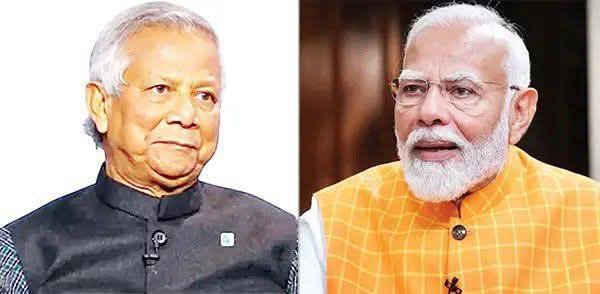
দু’দেশের মধ্যে স্বাভাবিক কূটনৈতিক সম্পর্কও স্থবির হয়ে গেল। অঘোষিত রণাঙ্গনে পরিণত হলো দু’দেশের সীমান্ত। এর আগে ৫ই আগস্ট সীমান্ত খুলে দিলো ভারত। দলবেঁধে আওয়ামী লীগের নেতাকর্মীরা দেশ ছাড়লেন। অসমর্থিত খবর- প্রায় ৫০ হাজার নেতাকর্মী আশ্রয় নিলেন ভারতে। এভাবেই চললো প্রায় ১০ মাস।
জুন থেকে নাটকীয় পরিবর্তনের দিকে পরিস্থিতি গড়াতে শুরু করলো। ইউরোপীয় একটি দেশের দূতিয়ালিতে ভিন্ন এক পরিস্থিতি।
দরজা খুললো আলোচনার। সীমিত পর্যায়ের যোগাযোগ। তবে সংশয় আর সন্দেহ মাঝখানে দেয়াল হয়ে রইলো। কোথায় যেন গোলমাল। তৃতীয় দেশটি আলোচনার তাগিদ দিলো। যুক্তরাষ্ট্রের ভূমিকাও এখানে অনেকখানি।
তারা জানিয়ে দিলো, বাংলাদেশ-ভারত সম্পর্কে টানাপড়েন কাম্য নয়। ভূ-রাজনৈতিক কারণে দু’দেশের সম্পর্ক স্বাভাবিক করার বিকল্প নেই। নবনিযুক্ত মার্কিন রাষ্ট্রদূত ব্রেন্ট ক্রিস্টেনসেন এমন বার্তা নিয়ে খুব শিগগিরই ঢাকায় আসছেন।
এই পটভূমিতেই ভারতের নিরাপত্তা উপদেষ্টা অজিত দোভাল ও বাংলাদেশের নিরাপত্তা উপদেষ্টা ড. খলিলুর রহমানের মধ্যে যোগাযোগ স্থাপিত হয়। প্রাথমিক আলোচনার পর দিল্লিতে ড. খলিলকে আমন্ত্রণ জানান অজিত দোভাল। বৈঠকটি হয় অত্যন্ত আন্তরিক পরিবেশে। দু’পক্ষের মধ্যে বিদ্যমান দূরত্ব কমানোর তাগিদ আসে অনেকটা অপ্রত্যাশিতভাবে। সম্পর্ক স্বাভাবিক করার দিকে মনোযোগ দেন তারা।
এর আগের খবর- ভারতীয় প্রধানমন্ত্রী নরেন্দ্র মোদি অনেকটা নাটকীয়ভাবে বাংলাদেশ সম্পর্কে তার নীতি পরিবর্তনের পক্ষে মত দেন।
জাতীয় নেত্রী বেগম খালেদা জিয়ার অসুস্থতায় নরেন্দ মোদির টুইট এরই স্পষ্ট ইঙ্গিত দেয়। এজেন্সিনির্ভর কৌশল বাদ দিয়ে মোদি রাজনৈতিকভাবে সম্পর্কোন্নয়নের সিদ্ধান্ত নেন নীতিনির্ধারকদের বৈঠকে।
জাতীয় নেত্রী বেগম খালেদা জিয়ার অসুস্থতায় নরেন্দ মোদির টুইট এরই স্পষ্ট ইঙ্গিত দেয়। এজেন্সিনির্ভর কৌশল বাদ দিয়ে মোদি রাজনৈতিকভাবে সম্পর্কোন্নয়নের সিদ্ধান্ত নেন নীতিনির্ধারকদের বৈঠকে।
দু’দেশের মধ্যে ১৫ মাস কূটনীতি ছিল অনেকটা অনুপস্থিত। এজেন্সির ওপর নির্ভরশীল ছিলেন ভারতের নীতিনির্ধারকরা।
পর্যালোচনা করে তারা দেখতে পান- ওই কৌশল ভুলে ভরা। এতে সম্পর্কের উন্নতি হবে না। বরং আরও তিক্ততা বাড়বে। ঢাকায় ভারতবিরোধী কাফেলা আরও লম্বা হবে।
দু’দেশের সম্পর্কোন্নয়নকে সর্বোচ্চ অগ্রাধিকার দিয়ে নীতি-কৌশল সাজালেন নরেন্দ্র মোদি। কূটনৈতিক সূত্রগুলো বলছে, নরেন্দ্র মোদি নিজেই এখন বাংলাদেশ পরিস্থিতি পর্যবেক্ষণ করবেন। নিরাপত্তা উপদেষ্টা অজিত দোভালকে সম্পর্ক এগিয়ে নেয়ার দায়িত্ব দিয়েছেন ইতিমধ্যেই।
ভারতীয় নীতিনির্ধারকরা এখন বিশ্বাস করতে শুরু করেছেন, তাদের নীতি-কৌশলের কারণে ঢাকায় ভারতবিরোধী প্রচারণাই শুধু বাড়েনি, এই সুযোগে অন্য একটি শক্তি ঢুকে পড়েছে।
যা এক সময় উদ্বেগের কারণ হতে পারে। ’৭১ সনে বাংলাদেশ প্রতিষ্ঠায় ভারতের যে অবদান ছিল তাও মানুষ ভুলে যাবে।
(কমপক্ষে ১০ বছর আগেই মানুষ বাংলাদেশের মানুষ এটা ভুলে গেছে)
আওয়ামী লীগের সঙ্গে সম্পর্কের পুনর্মূল্যায়নের পরামর্শ দেন কেউ কেউ।
তারা বলেন, বাংলাদেশকে কোনো অবস্থাতেই হাতছাড়া করা যাবে না। হাত বাড়াতে হবে বন্ধুত্বের। সম্পর্ক করতে হবে স্বাভাবিক। ঢাকার তরফে বলা হয়েছে, দরজা খোলা, যে কেউ আসতে পারে। আমরা কাউকে বিশেষভাবে আমন্ত্রণ জানাইনি।
এখানে বলে রাখা ভালো- এই মুহূর্তে ভারতের ভেতরেই বাংলাদেশ নীতির কড়া সমালোচনা করছেন কেউ কেউ।
এরই মধ্যে বাংলাদেশবিরোধী প্রচারণা কিছুটা থেমেছে। বদলে গেছে মিডিয়ার শিরোনামও। বিশ্লেষকরা বলছেন, ভুল নীতির কারণে একইভাবে দক্ষিণ এশিয়ার অন্য দেশগুলোও ভারত থেকে নিরাপদ দূরত্বে চলে যাচ্ছে। যার সুযোগ নিচ্ছে দূরের এবং কাছের শক্তি।
- মতিউর রহমান চৌধুরী, মানবজমিন
( সংকলিত) https://mzamin.com/news.php?news=192954&fbclid=IwY2xjawOh6C5leHRuA2FlbQIxMABicmlkETFxUlhuQ29iVEhtbGdhSTUwc3J0YwZhcHBfaWQQMjIyMDM5MTc4ODIwMDg5MgABHtLrNiDYCTSy7pCkR6Xq17T9mWhdNP-e7WVWGnMhYeb9mOuXFjn4wJ8IYt7Z_aem_nFr9zwDC-XNU9NJVThv7oQ
আপনাদের নিশ্চয়ই মনে আছে পাকিস্তানের উদ্যোগে চীন এবং বাংলাদেশকে নিয়ে নতুন একটি জোট (সামরিক) করার উদ্যোগ নেয়া হয়েছে এই উদ্যোগকে ভেস্তে দিতেই আমেরিকার এরকম তড়িঘড়ি।
আর প্রতিবেদনে ইউরোপের যে একটি দেশের কথা বলা আছে এটা সম্ভবত ব্রিটেন ।
যাই হোক ভাrত বাংলাদেশের এক নাম্বার জাতীয় শত্রু এবং পিলখানা গণhত্যার প্রতিশোধ নিতে হবে এই বয়ান দিনে তিন বেলা স্মরণ করে ভারতের সাথে বন্ধুত্বের অভিনয় করা যেতে পারে।
কিন্তু তার আগে হাসিনাকে ফেরত দিয়ে তারা আগে প্রমাণ করুক তারা বন্ধুত্ব চায় কিনা।
Masum Hossain
Read MoreAuthor: Saikat Bhattacharya
International geopolitics General Unipolar vs Multi-polar 07-December-2025 by east is rising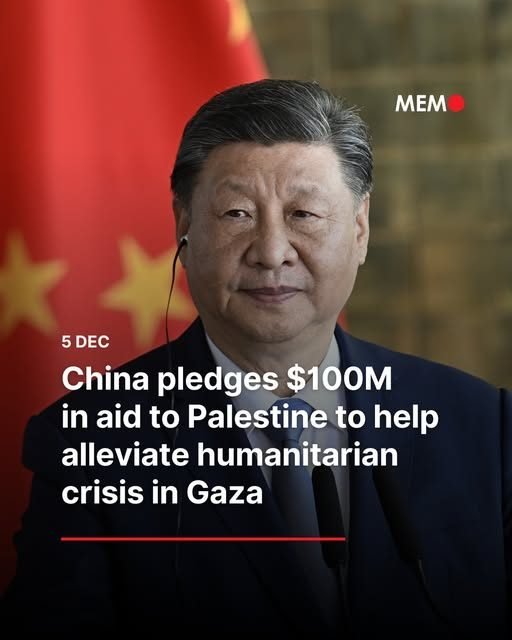
Chinese President Xi Jinping has pledged $100 million in aid to Palestine to help alleviate the humanitarian crisis in the Gaza Strip, Anadolu reports.
Xi made the announcement during talks with French President Emmanuel Macron, who wrapped up his three-day state visit to China on Friday.
“China will provide $100 million of assistance to Palestine to alleviate the humanitarian crisis in Gaza and support its recovery and reconstruction,” said Xi during a meeting held on Thursday in Beijing, according to a statement by the Chinese Foreign Ministry.
He said that the world today is “far from tranquil,” as complicated international political disputes and conflicts continue across various regions.
“China and France will work together for the realization of a comprehensive, just, and lasting solution to the Palestinian question at an early date,” said Xi.
Read MoreAuthor: Saikat Bhattacharya
International geopolitics General Unipolar vs Multi-polar 06-December-2025 by east is rising
After weeks of tensions, Japan’s Prime Minister Sanae Takaichi has quietly walked back her earlier claim that a PLA operation around Taiwan could trigger a “survival-threatening situation” for Japan.
Today, she told parliament something very different:
Japan’s position on Taiwan “has not changed.”
And that is a major climbdown.
Here’s why this matters
 Japan just re-anchored itself to the 1972 Japan–China Joint Communique
Takaichi reaffirmed that Tokyo’s stance remains exactly what it was in 1972, when Japan normalised relations with China.
That communique clearly states:
- Japan fully understands and respects China’s position that Taiwan is an inalienable part of China.
- Japan upholds Article 8 of the Potsdam Declaration and the Cairo Declaration, both of which legally require Japan to return territories seized from China.
In other words:
Japan cannot treat Taiwan as a sovereign state without contradicting its own signed agreements.
 This correction didn’t happen in a vacuum
Takaichi’s earlier comments triggered a diplomatic storm. Beijing responded immediately, warning that her remarks were dangerous and destabilising.
Japan got the message.
With a struggling economy, shrinking population and deep reliance on China as its largest trading partner, Tokyo cannot afford self-inflicted geopolitical chaos.
This walk-back is Japan returning to reality.
 The truth: Tokyo is not prepared to fight a war over Taiwan
Despite U.S. pressure and constant Western commentary, Japan knows:
- It sits well within range of China’s missile systems.
- Its constitution still restricts offensive warfare.
- Its military is not built for a Taiwan scenario.
- Japanese public opinion remains firmly anti-war.
The earlier rhetoric was political posturing.
Today’s statement was policy.
 China’s diplomatic approach is working
Beijing didn’t escalate.
It simply reminded Japan of the historical documents Japan itself signed.
And Tokyo stepped back.
This is how China manages regional stability, firm, consistent and grounded in international agreements that actually exist, not hypothetical narratives built in Washington think tanks.
 The bigger takeaway
The Taiwan question is not a playground.
It’s a sensitive, legally defined issue that countries cannot casually reinterpret.
Japan’s correction shows that reality still matters.
And despite the noise coming from Western media, one thing remains unchanged:
There is one China.
Japan acknowledged it in 1972.
And it just acknowledged it again today.
Read MoreAuthor: Saikat Bhattacharya
International geopolitics General Unipolar vs Multi-polar 06-December-2025 by east is rising
Iran – and by extension its Islamic Revolutionary Guard Corps (IRGC) – along with Lebanon’s Hezbollah have established a “foothold” in Venezuela, US State Secretary Marco Rubio says amid ongoing tensions with Nicolás Maduro’s regime.
“Its activities in Latin America are chiefly focused on raising funds for its terrorist operations in the Middle East and elsewhere,” US Chairman, Senator John Cornyn said, adding that the group might be on the look to “to further expand its Latin American drug trafficking and money laundering networks” in light of the recent setbacks that Iran and the group have faced.
Author: Saikat Bhattacharya
International geopolitics General Unipolar vs Multi-polar 05-December-2025 by east is rising
Turkey’s unmanned drone fighter plane made history by shooting down another aircraft from far away without needing a human pilot inside.
The unmanned drone called Bayraktar Kizilelma destroyed a flying target using a long-range missile while being controlled remotely from the ground.
The test happened over the Black Sea with the robot plane flying alongside five regular F-16 fighter jets, showing how future air combat could work.
The Turkish drone is 47.5 feet long, can fly 575 miles away, reach near the speed of sound, and carry missiles to strike targets.
This is historic because everything used was made in Turkey, the radar, missile, and drone.
Read MoreAuthor: Saikat Bhattacharya
Technology news General Unipolar vs Multi-polar 03-December-2025 by east is rising
Russia has officially opened its borders to Chinese citizens without requiring a visa, following a new order signed by President Vladimir Putin.
The policy allows Chinese tourists, business travellers, artists, academics, and professionals to visit Russia for up to 30 days.
The move is part of a growing diplomatic and economic partnership between the two countries and is expected to boost tourism, trade, and cultural exchange in 2026.
Read MoreAuthor: Saikat Bhattacharya
International geopolitics General Unipolar vs Multi-polar 02-December-2025 by east is rising
Russia set to sell its first Yuan-denominated domestic bonds, beginning next week.
Russia is the largest economy yet to begin selling yuan-denominated bonds, marking a severe blow to the dollar's power.
Source: Russian Foreign Ministry
Read MoreAuthor: Saikat Bhattacharya
International geopolitics General Unipolar vs Multi-polar 02-December-2025 by east is rising
এক সময়ের বাংলাদেশি সুকৃতি রঞ্জন বিশ্বাস কি প্রথম থেকেই উদ্বাস্তু বিরোধী! রাষ্ট্রের দালাল হিসাবে কাজ করে চলেছেন সফল ভাবে? নাকি তিনিই ঠিক, মানিক ফকির বাস্তবেই চটিচাটা তৃণমূলের দালাল ! এ প্রশ্ন অনেকের।
তাই কলম ধরলাম।
সম্প্রতি তিন তিনটি আলোচনা সভায় মুখোমুখি বক্তা হয়ে গিয়েছিলাম আমরা। অর্থাৎ আমি মানিক ফকির আর উদ্বাস্তু দলিত নেতা সুকৃতি রঞ্জন বিশ্বাস।
শেষ মিটিংটা হল বারাসাতে ঐকতান নামে একটি প্রসিদ্ধ সংগঠনের ডাকে, মূলত ওয়াকফ ও নাগরিকত্ব আইন নিয়ে আলোচনা। বক্তব্যের মাঝেই
সুকৃতি বাবু আমাকে বললেন, এখন যা অবস্থা দেখা যাচ্ছে ২০০৩ সালকেই মনে হচ্ছে, নাগরিকত্বের “ কাট অফ ডেট “ ধরবে সরকার। মানিকদা আপনাকে একটু ভাবতে বলছি। “
আমি বক্তব্য রাখতে উঠে প্রথমেই বললাম, নাগরিকত্ব আইন বিষয়ে আমি বড্ড নতুন। সুকৃতিদা আন্দোলন করছেন সে - ই ২০০৩ থেকে। তাছাড়া আমি স্বাধীনতাকে খুব আয়েশ করে ভোগ করা পরিবারের মানুষ।
তাই ছিন্নমূল দেশান্তরিত উদ্বাস্তু মানুষের যন্ত্রণা আমি ঠিক কতটা উপলব্ধি করতে পেরেছি তা প্রশ্নের বাইরে নয়। তবে সুকৃতিদা আজীবন তাদের রক্ষার কাজই করে চলেছেন। তিনি আমার গুরুদেবসম। তবে নাগরিকত্বের আইনটা এমন একটা বিষয় যা আজও সব মানুষ সঠিক ভাবে বুঝে উঠতে পারলো না। তাই আন্দোলন ও হলো না। হয়তো এটাই লেখা থাকবে ইতিহাসের পাতায় কালো অক্ষরে।
আইনি ব্যাখ্যায় সুকৃতি বাবু আর আমি দুজন দুই মেরুর। অথচ আইনটা একই। সুকৃতি বাবু যা যা বলেন, বিজেপি নেতা অসীম সরকার একই কথা বলেন। তবে একজন প্রচলিত অর্থে পন্ডিত অন্যজন মূর্খ। কবিয়াল অসীম সরকার বলেন, বিজেপি বাংলাদেশ থেকে ২০১৪ সালের আগে আসা উদ্বাস্তুদের বৈধ করে দিয়েছে। সুকৃতি বাবু বলেন, এতদিন উদ্বাস্তুরা ছিলেন অবৈধ অনুপ্রবেশকারী আর আজ অনুপ্রবেশকারী তকমা মোচন হয়েছে। হয়েছে সিএএ ২০১৯ দ্বারা। ওরা বৈধ।
কবিয়াল অসীম বলেন, চটিচাটা মানিক ফকির কোটি কোটি টাকা পাচ্ছে, তাই সিএএ বিরোধিতা করছে।
সুকৃতি বাবু বলছেন, আজকের সিএএ আমাদের দীর্ঘদিনের আন্দোলনের ফসল। যারা বিরোধিতা করছে, তারা উদ্বাস্তুদের ক্ষতি করে ফেলছে। বিজেপি বিধায়ক অসীম বলেন, - সিএএ উদ্বাস্তুদের নাগরিকত্ব দেবার আইন। আর সুকৃতি বাবু বলেন,- সিএএ তে কিছু উদ্বাস্তু নাগরিকত্ব পাবে। সবাই পাবেন না।
আর আমি মানিক ফকির বা দামাল বাংলার নেতারা যেমন রাজু ঘোষ, দীপক ব্যাপারী, শিখা মন্ডলরা বলেন,
সিএএ হচ্ছে বৈধ শরণার্থী আর অবৈধ অনুপ্রবেশকারী চিহ্নিত করার আইন। দামাল বাংলা সংগঠন বলে, সিএএ তে তারাই আবেদনের যোগ্য যারা পাসপোর্ট ও ফরেন অ্যাক্টে ছাড় পেয়েছেন। মাত্র কয়েক হাজার মানুষ বাদে কোটি কোটি উদ্বাস্তু ছাড় পাবার আবেদন করেন নি। তাই তারা কেও ছাড় পাননি,তাই তারা শরণার্থী নন। আইনের চোখে তারা অবৈধ অনুপ্রবেশকারী। ভারত সরকার তাদেরই দেশ থেকে তাড়াতে পুশব্যাক করছে। এটাই দামাল এর বক্তব্য। তাই তাদের স্লোগান হচ্ছে, আজ পর্যন্ত যারা ভারতে বসবাস করছে তাদের নিঃশর্ত নাগরিকত্ব চাই।
যাইহোক, বারাসতের সভায় বক্তব্য রাখার সময় দর্শকদের উদ্দেশে আমি বললাম, আমার আর সুক্রিতিদার বক্তব্যে বহু ফারাক থাকার কারণে সমাজের বিভ্রান্তি তৈরি হচ্ছে। তাই, আপনারা দয়া করে আমাদের দুজনকে বসে আলোচনা সুযোগ করে দিন। সঠিকটা উঠে আসুক । তারপর সেই সঠিক ব্যাখ্যা নিয়ে আন্দোলন হোক। তা না হলে ভয়াবহ দিন এগিয়ে আসছে। অবশ্য আমার কথার কোন উত্তর সেদিন দেননি মাননীয় সুক্রিতি রঞ্জন বিশ্বাস।
যেহেতু নাগরিকত্ব বিষয়ে দীর্ঘদিন ধরে আন্দোলন করে আসছেন তিনি, তাই স্বাভাবিকভাবে তার কথা বেশিরভাগ মানুষ মানেন। -সংগঠক রাও।
তার কাছে আমি নিতান্তই বালখিল্য।
যাই হোক, সব জায়গায় সুক্রিতিদার নিজস্ব কিছু লোক আছে। তারা বিভিন্ন মিটিং এ গিয়ে বসেন, তারপর সুক্রিতিদা নিজের বক্তব্যটা তুলে ধরে চলে যান এবং আলোচনাগুলো ওখানেই শেষ হয়ে যায় আর এগোয় না। লোকেরা কিছুটা আশ্বস্ত হয়ে বাড়ি ফেরেন।
গতকাল ঠাকুরনগরে সাংসদ মমতা বালা ঠাকুরের ডাকা মিটিংয়ে এমনই একটি ঘটনা ঘটলো। দিনের শেষে সেই কনভেনশনের রেজাল্ট হল শূন্য। এমনই অভিযোগ পেলাম কয়েকজনের কাছ থেকে। যদিও দামাল বাংলার অন্যতম নেতা রাজু ঘোষ মঞ্চে উপস্থিত ছিলেন। কিন্তু সুকৌশলে তাকে বলতে দেওয়া হয়নি। এক কথায় সুক্রিতিপন্থীরা হাইজ্যাক করেছিল আলোচনাটাকে। শেষ পর্যন্ত এই কনভেনশনের রেজাল্ট কিছু হলো না। আমি মাননীয়া মমতাবালা ঠাকুরকে বুঝেছিলাম, নাগরিকত্ব নিয়ে আর বোঝাবুঝির দরকার নেই।
যারা সত্যিটা বুঝেছে তাদের নিয়ে আন্দোলনের ডাক দেন। মমতা দেবীর সেক্রেটারি বললেন, সুকৃতি বাবুকে কে ডেকেছে জানি না। -তবে মিটিং ফ্লপ।
মঞ্চে মাইক হাতে ছিলেন ডাক্তার সুকেস চৌধুরী। কয়েক বছর আগে তিনি বিজেপির উদ্বাস্তু সেলের চেয়ারম্যান ছিলেন । এখন সে সুকৃতিদার ডান হাত। নাগরিকত্ব বিষয়ে বহু আলোচনা হয়েছে ওর সঙ্গে আমার। তবু ও বলে আমি নাকি দোষী।
নাগরিকত্ব বিষয়ে প্রায় সব মিটিংয়েই উপস্থিত থাকতে দেখা যায় সুকৃতি বাবুদের। তিনি নাকি সিটিজেনশিপ সার্টিফিকেট পাওয়া ভারতের বৈধ নাগরিক। তবে মূল আইন থেকে জনগণকে অনেক দূরে সরিয়ে দেওয়াটাই উনার অন্যতম কাজ বলে আমার মনে হয়েছে। তিনি এটা করেন তার মনমোহিনী ইমেজের মাধ্যমে। ব্যক্তি জীবনে তিনি প্রচুর পড়াশোনা করেন।
এবার আসি নাগরিকত্ব বিষয়ে সুকৃতি রঞ্জন বিশ্বাস ও দামাল নেতা মানিক ফকিরের ব্যাখ্যার ফারাকের বিষয়ে।
(১) সুকৃতি রঞ্জন:
১৯৫০ থেকে ৮৭ এর ১ জুলাইয়ের মধ্যে যে শিশুই ভারতে জন্মগ্রহণ করেছে তিনি নাগরিক। শিশুর বাবা-মা অনুপ্রবেশকারী হলেও। তিনি বলেন, উদ্বাস্তুদের জীবনে শেষ পেরেক মেরে দিয়েছে সি এ এ ২০০৩। এই সংশোধনী উদ্বাস্তু সন্তানদের জন্মগত নাগরিকত্বের অধিকার কেড়ে নিয়েছে। তিনি বলেন, এনআরসি উদ্বাস্তুদের শেষ করে দেবে।
ফলে ১৯৫০ থেকে ৮৭ এর মধ্যে জন্মগ্রহণ করা উদ্বাস্তুরা নাগরিকত্বের আন্দোলন থেকে মুখ ফিরিয়েছে। বেশির ভাগ জন বিজেপি হয়ে গেছে। তারা অনেকেই মনে করেন এনআরসি হচ্ছে একটি রাজনৈতিক প্রোপাগান্ডা। ভোট এলে এনআরসি ঘুম থেকে ওঠে।
মানিক ফকির:
সংবিধানের দ্বিতীয় পার্টের ৫ ( খ ) অনুসারে উদ্বাস্তু সন্তানরা কোনো দিনই ভারতের নাগরিক নন। যখনই জন্মাক।
(১) তাছাড়া ১৯৫০ সালের আসাম ইমিগ্রেশন এক্সপালশন অ্যাক্ট, ( সারা ভারতে প্রযোজ্য )
(২) ১৯৫১ সালের জেনেভা উদ্বাস্তু সম্মেলন,
(৩) ১৯৫২ লাগু হওয়া ব্রিটিশ আইন ১৯২০ সালের পাসপোর্ট অ্যাক্ট, ১৯৪৬ সালের বৈদেশিক অ্যাক্ট ও মাইগ্রেশন সার্টিফিকেট, লাগু হবার ফলে আইনত, ভারতে কোনো উদ্বাস্তু ঢুকতে পারেনি।
এমনকি ১৯৫৫ সালের নাগরিকত্ব আইন, ১৯৮৬ সালের নাগরিকত্ব সংশোধনী আইন, ২০০৩ সালের নাগরিকত্ব সংশোধনী আইন, এ গুলো সবই সংবিধান অনুসারেই হয়েছে।
সংবিধানের ৫ ( খ ) তে বলা আছে, সংবিধান প্রকাশের আগে যে সন্তানের পিতা-মাতার মধ্যে যেকোনো একজন ভারতের নাগরিক, সেই সন্তান ভারতের জন্মগত নাগরিক। আর অপরজন! আইন অনুযায়ী ভারতবর্ষে উদ্বাস্তুদের ঢোকার সুযোগ ছিল না।
এছাড়াও এনআরসি ভারতের সংবিধান স্বীকৃত। কারণ, সংবিধান বলে দিয়েছে কারা ভারতের নাগরিক। আরএনআরসি হচ্ছে সেই নাগরিকদের তালিকা।
ফলত, মূল ভয় এনআরসি ছিল না। মূল ভয় ছিল দেশের পাসপোর্ট অ্যাক্ট ও বৈদেশিক আইন। ১৯৭০,৮০,৯০ ইত্যাদি সালেও বৈদেশিক আইনে বহু মানুষ অনুপ্রবেশকারী হিসাবে চিহ্নিত হয়ে বে নাগরিক হয়েছে ভারতে।
আমাদের আন্দোলন করতে হতো ওই দুটো আইনের বিরুদ্ধে। যদিও ওই আইন দুটো উঠে গিয়ে আরো ভয়ংকর আইন এসেছে দেশে।
আমাদের আন্দোলন করতে হতো সংবিধান সংশোধন করার জন্য। যে কারণে দেশের প্রধানমন্ত্রী সম্প্রতি দুর্গাপুরে এসে বলে গেলেন, সংবিধান অনুযায়ীই উদ্বাস্তুরা বে নাগরিক, তাদের ভারত ছাড়া করবোই। তাই বাংলা ও বাঙালিদের বাঁচাতে এখনি আন্দোলনে ঝাঁপিয়ে পড়তে হবে আমাদের।
মানিক ফকির
২০/৭/২০২৫
দামাল বাংলা
9836327536
Read MoreAuthor: Saikat Bhattacharya
mythical Hindu Unipolar vs Multi-polar 21-July-2025 by east is rising
মহঃ হাসিবুল মল্লিক
৭ অক্টোবরের পর থেকে, ৬,০০,০০০ এরও বেশি ইসরায়েলি দেশ ছেড়ে পালিয়েছে; এটি একটি বিস্ময়কর পরিসংখ্যান যা জায়নবাদী প্রকল্পের ফাটলগুলি প্রকাশ করে!!
নিরাপত্তা এবং স্বত্বাধিকারের প্রতিশ্রুতির উপর প্রতিষ্ঠিত ইজরায়েলকে বিশ্বব্যাপী জায়নবাদী ইহুদিদের জন্য একটি নিরাপদ আশ্রয়স্থল হিসেবে গড়ে তোলা হয়েছিল।
কিন্তু যখন প্যালেস্টাইনের ভূমিতে ইজরায়েল এর দখল আরও গভীর হয় এবং ইজরায়েল এর সামরিক আক্রমণ বৃদ্ধি পায়, তখন আর ইজরায়েল এর নিরাপত্তাই এই ভূমিকে সংজ্ঞায়িত করে না; বরং ভয়, যুদ্ধ এবং বিচ্ছিন্নতা জায়নবাদী দের ঘিরে ধরে।।
ইহুদিবাদ বা জায়নবাদ যাদেরকে ঈশ্বরের প্রতিশ্রুত ভূমি "ঘরে" আনার দাবি করেছিল; তারা এখন সেই দেশগুলিতে ফিরে যাচ্ছে যেগুলিকে তারা বা তাদের বাবা-মা একসময় ছেড়ে এসেছিল, যেমন মার্কিন যুক্তরাষ্ট্র, জার্মানি, ফ্রান্স, কানাডা, যুক্তরাজ্য।।
ইউরোপীয় কনস্যুলেটগুলিতে নাগরিকত্ব পুনর্বহালের আবেদন বৃদ্ধি পেয়েছে গতবছর থেকে, বিশেষ করে তরুণ বৃদ্ধ পাসপোর্টধারীদের মধ্যে। এ এক চূড়ান্ত পরিহাস যা তীব্র হচ্ছে; কয়েক দশক ধরে ফিলিস্তিনিদের বাস্তুচ্যুত করার পর, অনেক ইসরায়েলি এখন নিজেদের কেই বাস্তুচ্যুত করছে।।
জায়নবাদীদের এই দেশত্যাগ কেবল মিসাইলের আঘাত বা যুদ্ধের বিষয় নয়; এটি একটি পতনশীল আদর্শের বিষয়।।
ইহুদিবাদ বা জায়নবাদ স্থায়ীত্বের প্রতিশ্রুতি দিয়েছিল; কিন্তু প্যালেস্টাইন ভূমিতে চিরস্থায়ী সংকট তৈরি করেছিল। এই জায়নবাদ ফিলিস্তিনিদের উৎখাত করেছিল গণহত্যা করে এবং তাদের জায়গায় ইউরোপ আমেরিকা থেকে এমন একটি জনসংখ্যা নিয়ে এসেছিল যা এখন নীরবে একসময় পরিত্যক্ত প্রবাসীদের দিকে ফিরে যাচ্ছে।।
৭ অক্টোবর থেকে ৮২,০০০ এরও বেশি বসতি স্থাপনকারী স্থায়ীভাবে দেশত্যাগ করেছে, যখন আরও পাঁচ লক্ষেরও বেশি অস্থায়ীভাবে স্থানান্তরিত হয়েছে এবং তাদের অনেকেই আর কখনও ফিরে আসেনি।।
তথাকথিত "নিরাপদ আশ্রয়স্থল" "ঈশ্বরের প্রতিশ্রুত ভূমি" তে তার নিজস্ব নাগরিকদের রক্তাক্ত করছে, নিপীড়নের কারণে নয়, বরং ব্যাপক হতাশার কারণে।
গাজা যত ক্ষতিগ্রস্ত হচ্ছে এবং ইরানের প্রতিশোধ তীব্র হচ্ছে, ততই স্পষ্ট হয়ে উঠছে যে ইহুদিবাদ বা জায়নবাদ ভেঙে পড়ছে, যা একটি জায়নিস্ট প্রজেক্ট এর আত্মহত্যা।।
Read MoreAuthor: Saikat Bhattacharya
International geopolitics General Unipolar vs Multi-polar 23-June-2025 by east is rising
বাঙালি একটা কৃষক জাতি। এরা যোদ্ধা না, আর তাই যুদ্ধ আর খেলার পার্থক্য বোঝেনা। এরা ভাবে যুদ্ধে হল গোল খাওয়া আর গোল দেওয়ার বিষয়।
ইসরাইল ৬টা পরমাণু বিজ্ঞানী আর দুজন মিলিটারি প্রধানকে হত্যা করেছে। শোনা যাচ্ছে ইউক্রেইন যেমন রাশিয়ায় ট্রাক বোঝাই ড্রোন বিমান বহরের কাছে লুকিয়ে নিয়ে গিয়ে আঘাত হেনেছে রুশ বিমান বহরে, সেরকম ভাবেই ইসরাইল গাড়ি বোঝাই ড্রোন ইরানের ভেতরে নিয়ে এনে সমর প্রধান ও বিজ্ঞানীদের হত্যা করেছে। বোঝাই যাচ্ছে ইউক্রেইন ও ইসরাইল একই মাথা দ্বারা পরিচালিত হচ্ছে। মাথাটা যে মার্কিন যুক্তরাষ্ট্র তাও বোঝা যাচ্ছে।
একটা ইসরাইলী কমাণ্ডো বাহিনী ইরানের ভেতরে ঘাটি গেঁড়ে অনেকদিন ছিল এবং তারাই রাডার ধ্বংস করেছে বলে শোনা গেছে। কিন্তু ইসরাইল-এর লক্ষ্য কি ছিল? ইরানের পরমাণু কেন্দ্রগুলো ধ্বংস করা যাতে ইরান পরমাণু অস্ত্র বানাতে না পারে। আন্তর্জাতিক পরমাণু নিয়ন্ত্রণ সংস্থা ২০২৩ সালে জানায় যে ইরান ফুরডো পরমাণু কেন্দ্রে পরমাণু অস্ত্র তৈরি করার মতো যথেষ্ট সরঞ্জাম প্রস্তুত করে ফেলেছে। ইসরাইল হামলা করেছে যাতে ইরান পরমাণু অস্ত্র বানাতে না পারে। কিন্তু ইসরাইল একটাও পরমাণু কেন্দ্র ধ্বংস করতে ব্যর্থ হয়েছে।
কোম পাহাড়ের পাথরের নীচে অবস্থিত ফুরডো-তেই আছে আসল পরমাণু কেন্দ্র। এই কেন্দ্রে ২০০৭ সালে সাক্সনেট নামের কম্পিউটার ভাইরাস দিয়ে আক্রমণ করেছিল ইসরাইল। প্রচুর পশ্চীমা গণমাধ্যমের ফুটেজ খায় সাক্সনেট। এছাড়াও ইরানের অজস্র পরমাণু বিজ্ঞানী হত্যা করেছে ইসরাইল কিন্তু ইরান আস্তে আস্তে পরমাণু অস্ত্র তৈরি করার মতো সরঞ্জাম তৈরি করে ফেলে ২০২৩ সালে।
ইদানিং ইরান ইসরাইলী পরমাণু কেন্দ্রের হদিসও পেয়ে গেছে। আন্তর্জাতিক পরমাণু সংস্থা যে ইসরাইল-এর হয়ে গুপ্তচর বৃত্তি করেছে তাও ইরান ফাঁস করে দিয়েছে।
ইসরাইল জানে ইরান হয় পরমাণু অস্ত্র বানিয়ে ফেলেছে নয় তো বানানো কেবল সময়ের অপেক্ষা। কিছু বুড়ো সমর প্রধান আর বিজ্ঞানী মেরে খুব লাভ হয়না। ইসরাইল বা ইউক্রেইন-এর আক্রমণ অনেক ফুটেজ পায়। কিন্তু কাজের কাজ হয়না। ইউক্রেইন রুশ বিমান বহরে আঘাত হানার পরে রুশ আক্রমণের সামনে কতটা অসহায় হয়ে গেছে তা পশ্চীমা মিডিয়ার ফুটেজ পায়না। যাই হোক ইরান মনে হয় শীঘ্রই ভারতের থেকে চাবাহার বন্দরের দায়িত্ব কেড়ে নেবে কারণ ও খান দিয়েই হয়তো সবচেয়ে বেশি ইস্রাইলী গুপ্তচর ইরানে ঢুকেছে। ইরান আর রাশিয়া আরও বেশি চীন নির্ভর হয়ে পড়োবে।
ইরান ও রাশিয়া চীরকালই ভারত-কে দিয়ে চীন-কে ব্যলেন্স করার কথা ভাবত। কিন্তু ইউক্রেইন ও ইস্রাইলের সাথে যুদ্ধ রাশিয়া ও ইরানকে যথাক্রমে ভারতের থেকে দূরে ঠেলে দিয়েছে। আগামী দিনগুলোতে পাকিস্তান-এর মতোই ইরান, মধ্য এশিয়ার স্তান দেশসমূহ, আফঘানিস্তান, রাশিয়া, বেলারুশ ঐক্যবদ্ধ হয়ে যাবে। ইউক্রেইন পড়লে হাঙ্গেরী ও রোমানিয়াও প্রস্তুতই আছে।
আজকের আক্রমণের ফলে ইরান ছুতো পেয়ে গেল পরমাণু অস্ত্র তৈরি করার। উত্তর কোরিয়া ইরানকে যুদ্ধের সরঞ্জাম দেবে জানিয়েছে। উত্তর কোরিয়া অবশ্যই চীন ও রাশিয়ার সম্মতি নিয়ে জানিয়েছে। উত্তর কোরিয়া দ্রুত পরমাণু অস্ত্র বানানোর সরঞ্জামের কথাই বলেছে। ইরান খুব শীঘ্রই নিজেকে পরমাণু শক্তিধর বলে দাবি করবে। ইস্রাইলকে যা করার আগামী ২ সপ্তাহে করতে হবে। ইরান-এর তত তাড়া নেই।
Read MoreAuthor: Saikat Bhattacharya
International geopolitics General Unipolar vs Multi-polar 14-June-2025 by east is rising
আমেরিকার বাইবেল বেল্ট (Bible Belt) অঞ্চল, যা প্রধানত দক্ষিণ ও মধ্য-পশ্চিমাঞ্চলের রক্ষণশীল খ্রিস্টান সম্প্রদায়ের জন্য পরিচিত, সেখানে অল্প বয়সে মেয়েদের বিয়ে দেওয়ার প্রথা বিভিন্ন সাংস্কৃতিক, ধর্মীয় এবং সামাজিক কারণের ওপর নির্ভর করে। এই অঞ্চলে ধর্মীয় মূল্যবোধ এবং ঐতিহ্যবাহী পারিবারিক কাঠামোর প্রভাব বেশি, যা এই প্রথাকে প্রভাবিত করে।
১) ধর্মীয় বিশ্বাস ও ঐতিহ্য ________________
বাইবেল বেল্টে অনেক পরিবার কট্টর খ্রিস্টান বিশ্বাস পালন করে, বিশেষ করে ইভানজেলিকাল বা ফান্ডামেন্টালিস্ট সম্প্রদায়। এই সম্প্রদায়গুলোতে বিয়েকে পবিত্র এবং পারিবারিক জীবনের মূল ভিত্তি হিসেবে দেখা হয়। বাইবেলের কিছু ব্যাখ্যা অনুসারে, নারীদের জন্য প্রাথমিক ভূমিকা হিসেবে বিবেচনা করা হয় মা ও স্ত্রী হওয়া। এই বিশ্বাসের কারণে অল্প বয়সে বিয়ে দেওয়ার প্রবণতা দেখা যায়।
২) সামাজিক ও পারিবারিক চাপ_________________
এই অঞ্চলের সমাজে প্রায়ই ঐতিহ্যবাহী লিঙ্গভিত্তিক ভূমিকার ওপর জোর দেওয়া হয়। মেয়েদের প্রায়ই শৈশব থেকেই বিয়ে ও মাতৃত্বের জন্য প্রস্তুত করা হয়। পরিবার ও সম্প্রদায়ের প্রত্যাশা থাকে যে মেয়েরা তাড়াতাড়ি বিয়ে করে সংসার শুরু করবে।
কিছু ক্ষেত্রে, অল্প বয়সে বিয়ে দেওয়া হয় যাতে মেয়েরা উচ্চশিক্ষা বা ক্যারিয়ারের দিকে বেশি মনোযোগ না দেয়, যা কিছু রক্ষণশীল সম্প্রদায়ে "ঐতিহ্যের বিরুদ্ধে" বলে বিবেচিত হতে পারে।
৩) অর্থনৈতিক ও সাংস্কৃতিক কারণ________________
বাইবেল বেল্টের অনেক শহর ও গ্রামীণ এলাকায় অর্থনৈতিক সীমাবদ্ধতা থাকে। পরিবারগুলো মনে করতে পারে যে মেয়েদের তাড়াতাড়ি বিয়ে দেওয়া তাদের অর্থনৈতিক বোঝা কমায়, বিশেষ করে যদি পরিবারের আর্থিক অবস্থা দুর্বল হয়।
এই অঞ্চলের সংস্কৃতিতে বিয়ে একটি সামাজিক মর্যাদার প্রতীক হিসেবে বিবেচিত হয়। অল্প বয়সে বিয়ে করা মেয়েরা সম্প্রদায়ের মধ্যে সম্মানিত হয় এবং পরিবারের জন্যও এটি গর্বের বিষয় হতে পারে।
৪) শিক্ষার অভাব বা ভিন্ন অগ্রাধিকার_______________
বাইবেল বেল্টের কিছু এলাকায় মেয়েদের উচ্চশিক্ষা বা স্বাধীন ক্যারিয়ার গড়ার চেয়ে পারিবারিক জীবনকে বেশি গুরুত্ব দেওয়া হয়। ফলে, অনেক মেয়ে কিশোর বয়সে বা বিশের শুরুতে বিয়ে করে ফেলে, কারণ তাদের জন্য অন্য কোনো পথকে ততটা উৎসাহিত করা হয় না।
৫) আইনি ও সামাজিক কাঠামো_______________
যুক্তরাষ্ট্রের কিছু রাজ্যে, বিশেষ করে বাইবেল বেল্টে, অল্প বয়সে বিয়ের জন্য আইনি বয়সসীমা তুলনামূলক নমনীয়। পিতামাতার সম্মতি থাকলে ১৬ বা ১৭ বছর বয়সেও বিয়ে সম্ভব। এই আইনি সুযোগ অল্প বয়সে বিয়েকে সহজ করে।
বাইবেল বেল্টের প্রধান অঞ্চল ---- বাইবেল বেল্টে সাধারণত নিম্নলিখিত রাজ্যগুলো অন্তর্ভুক্ত, যেখানে অল্প বয়সে বিয়ের প্রচলন কিছু সম্প্রদায়ে দেখা যায়_______
১) টেক্সাস : এখানে পিতামাতার সম্মতিতে ১৬ বছর বয়সে বিয়ে সম্ভব। ২) আলাবামা: এখানকার আইন ১৬ বছর বয়সে পিতামাতার সম্মতিতে বিয়ের অনুমতি দেয়। ৩) মিসিসিপি : মেয়েদের ১৬-১৮ বছর বয়সে বিয়ে দেওয়ার প্রচলন আছে। আইনি বয়সসীমা এখানেও নমনীয়। ৪) আর্কানসাস: এখানে পিতামাতার সম্মতিতে ১৬ বছর বয়সে বিয়ে সম্ভব। ৫) টেনেসি। : টেনেসির আইন ১৭ বছর বয়সে পিতামাতার সম্মতিতে বিয়ের অনুমতি দেয়। ৬) ওকলাহোমা : এখানে ১৬ বছর বয়সে বিয়ে সম্ভব। ৭) কেনটাকি : আইনি বয়সসীমা এখানেও ১৬ বছর। ৮) জর্জিয়া : এখানে ১৬ বছর বয়সে পিতামাতার সম্মতিতে বিয়ে সম্ভব। ৯) লুইজিয়ানা : এখানে আইনি বয়সসীমা ১৬ বছর। ১০) মিসৌরি এবং কানসাস : আইনি বয়সসীমা ১৬ বছর।
ধর্মীয় সম্প্রদায়______________
সাউদার্ন ব্যাপটিস্ট: এই সম্প্রদায় বাইবেল বেল্টে প্রভাবশালী। এরা ঐতিহ্যবাহী পারিবারিক মূল্যবোধের ওপর জোর দেয়, যার মধ্যে অল্প বয়সে বিয়ে অন্তর্ভুক্ত।
তথ্য ও পরিসংখ্যান___________
ইউএসএনএইচআই (Unchained At Last) এর মতে, ২০০০ থেকে ২০১৮ সালের মধ্যে যুক্তরাষ্ট্রে প্রায় ২০০,০০০ নাবালকের (বেশিরভাগ মেয়ে) বিয়ে হয়েছে, যার একটি উল্লেখযোগ্য অংশ বাইবেল বেল্টের রাজ্যগুলো।
আলাবামা, মিসিসিপি, এবং আর্কানসাসে ১৮ বছরের নীচে বিয়ের হার জাতীয় গড়ের তুলনায় বেশি।
Read MoreAuthor: Sakib Hasan Piyada
Religion General Unipolar vs Multi-polar 11-June-2025 by east is rising
China has launched its first mega humanoid robot training hub, aiming to train over 100 robot models in Shanghai. This facility, which covers over 5,000 square meters, is designed to generate vast amounts of data for AI development, with the goal of fostering multi-robot teamwork and collaboration across industries.
Read MoreAuthor: Saikat Bhattacharya
Technology news General Unipolar vs Multi-polar 28-May-2025 by east is rising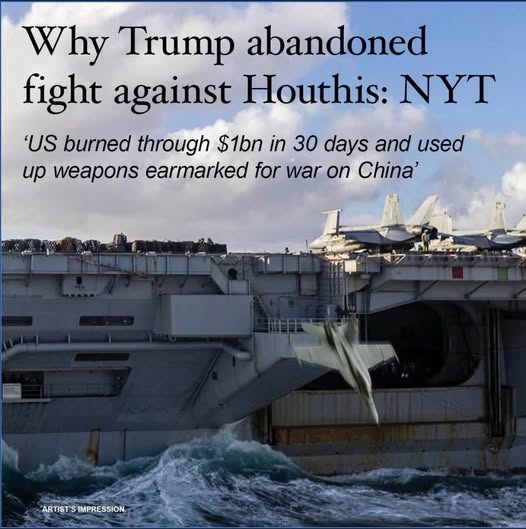
Taken from https://johnsonwkchoi.com/
US has no money & with inferior weapons: Donald Trump halted the US-UK bombing of the Houthis in Yemen after realizing that US$1 billion had been spent in the first 30 days, the New York Times reported this morning.
Multiple manned and unmanned aircraft were lost in the operation at massive cost to the US taxpayer.
Also, Pentagon officials said they were using up weapons that had been earmarked for fighting against China. (The US has long planned to goad China into war with “defending Taiwan” as the designated “casus belli”, a classical military term for “officially declared excuse”).
PLANES ‘FALLING OFF’ CARRIER
After a second US$60 million aircraft fell off an aircraft carrier last week, Trump had had enough.
So even though he had promised that the Houthis would be “completely annihilated”, Trump told the military to stop even trying. They grounded their aircraft, but of course declared victory for the US, although it was clearly a capitulation.
The Houthis agreed to halt their attacks on US ships—but pointedly said that any ship providing goods for use of the Israeli army in the ongoing slaughter in Gaza would remain valid targets.
ADMIRING TONE
The Houthis have become heroes to many, for being the only group in the world to take practical action to help the trapped, bombed populace of Gaza.
Not to mention the fact that one of the poorest nations on earth was standing up to the military of the wealthy US and UK.
The New York Times noted that even the US President spoke about them in an admiring tone.
“We hit them very hard and they had a great ability to withstand punishment,” Trump said. “You could say there was a lot of bravery there.”
Read MoreAuthor: Saikat Bhattacharya
International geopolitics General Unipolar vs Multi-polar 14-May-2025 by east is rising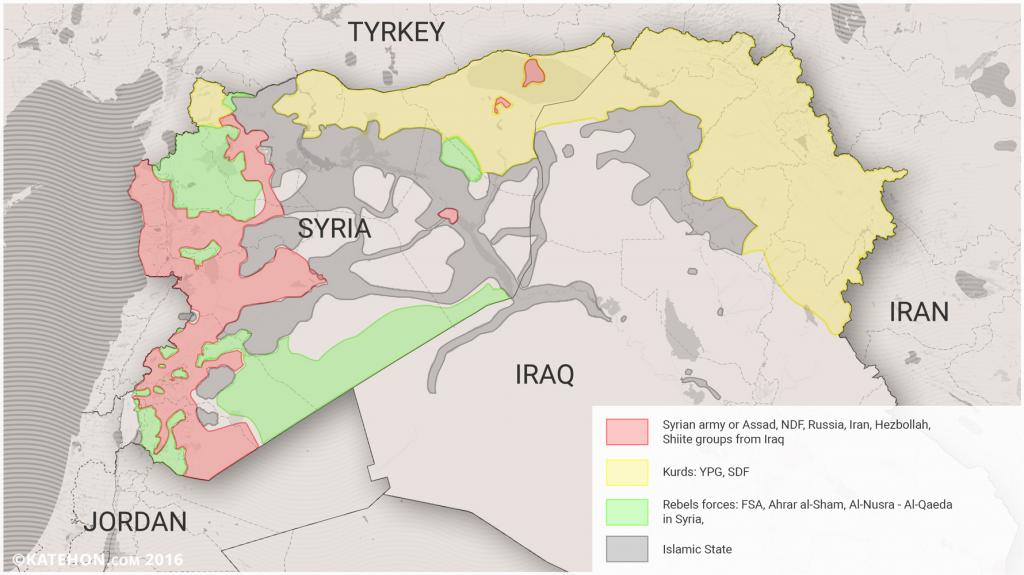
A report published by Chinese intelligence reveals controversial details regarding the change of power in Syria to Abu Mohammed Al-Jolani.
The report confirms that what happened was the result of internal betrayal by senior Syrian army officials, bribed with Qatari money, who played a key role in implementing a complex international and regional plan.
According to the report, on the night Aleppo fell, officers of the Syrian army's central command committed a serious crime of treason by isolating Iranian consultant commander Bur Hashmi (aka "Hajj Hashim") in a conference room.
After isolating the Iranian commander, these officers directly contacted the Israeli Mossad, paving the way for the Free Sham Front to advance and occupy the city in just 45 minutes without any resistance.
The spread of betrayal.
This betrayal was not limited to Aleppo; other Syrian cities were similarly surrendered. Syrian officials also sent false coordinates to Hezbollah, which trapped it and led to the destruction of a convoy of 100 vehicles belonging to Hezbollah following Israeli strikes.
Concurrent with this event, the US Air Force targeted Iraqi Popular Militia forces near the Syrian border, in coordination with Israeli operations.
Deceiving Bashar al-Assad.
Despite Iranian warnings, Syrian President Bashar al-Assad remained unaware of the extent of the betrayal within his army. He was receiving false reports from his close agents, who kept him isolated and ignorant of the situation on the ground.
As losses mounted, President Assad began to doubt the loyalty of his superiors. According to the report, the final plan was to hand him over directly to the Al-Nusrah Front (the mock Liberation Authority). Aware of the imminent danger, President Bashar al-Assad sought direct assistance from Russian President Vladimir Putin.
The report indicates that this operation was planned and executed in coordination with several international intelligence agencies: the British intelligence service (MI6) , the Israeli Mossad , and the CIA, under the direct supervision of Turkish President Recep Tayyip Erdogan.
The coming days could reveal more details about this complex process, which combined internal betrayals and international collusion to reshape the Syrian landscape according to the agendas of major regional powers, the Chinese report indicates.
Read MoreAuthor: Saikat Bhattacharya
International geopolitics General Unipolar vs Multi-polar 14-May-2025 by east is rising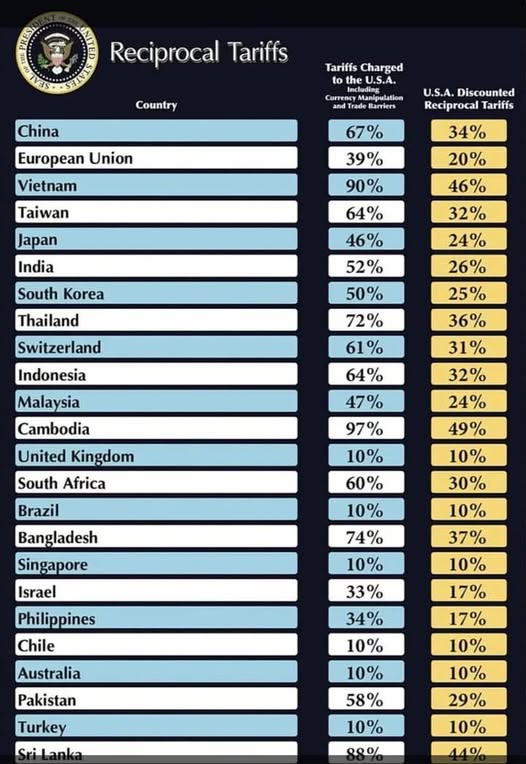
ভুল গড় শুল্ক নির্ধারণ
দেশ ভিত্তিক রেসিপ্রোকাল শুল্ক-এর অর্থ হল গড়ে ১০% বা তার বেশি শুল্ক কোনও দেশ মার্কিন পণ্য আমদানীর ওপর আরোপ করলে সেই দেশ থেকে যে কোনও পণ্য-তে গড়ে সেই দেশ যত শতাংশ শুল্ক চাপিয়েছে তার অর্ধেক শুল্ক চাপানো হবে। অর্থাৎ কোনও দেশ গড়ে ২০% শুল্ক মার্কিন আমদানীতে ধার্য করলে সেই দেশজাত আমদানীর ওপর মার্কিন সরকার ১০% শুল্ক ধার্য করবে। কিন্তু মনে রাখা দরকার ট্রাম্প যেভাবে কোনও দেশের গড় শুল্ক নির্ধারণ করেছে তা আদৌ গড় শুল্ক নয় বরং তা গাণিতিকভাবে হল- যে কোনও দেশের মার্কিন যুক্তরাষ্ট্রের সাথে বাণিজ্য উদ্বৃত্তকে সেই দেশের মার্কিন বাজারে করা রপ্তানী দিয়ে ভাগ করা। অর্থাৎ মার্কিন বাজারে রপ্তানী বাড়ানোর সাথে যদি মার্কিন আমদানী বাড়িয়ে বাণিজ্য উদ্বৃত্ত কমানো যায় তাহলে ট্রাম্পের চাপানো শুল্ক কমবে। আর কোনও দেশ যদি রপ্তানী ও বাণিজ্য উদ্বৃত্ত বাড়ায় তাহলে ট্রাম্প শুল্কের হার বাড়াবে। অর্থাৎ এখানে ট্রাম্প আদৌ শুল্ক কমাতে বলছে না বরং বাজারের নিয়মকে অস্বীকার করে বলপূর্বক মার্কিন পণ্য চাপিয়ে দিতে চাইছে দুনিয়ার ওপর।
ধরা যাক ভিয়েতনাম-এর ক্ষেত্রে ট্রাম্প শুল্ক চাপিয়েছে ৪৬% কারন ভিয়েত্নামের মার্কিন যুক্তরাষ্ট্রের সাথে থাকে বাণিজ্য উদ্বৃত্তকে ভিয়েত্নামের মার্কিন বাজারে করা রপ্তানী দিয়ে ভাগ দিলে ০.৯ বা ৯০% হয়। অথচ ভিয়েতনামের মার্কিন আমদানীর ওপর গড় শুল্ক হল ৯.২% যা খুবই কম। ০%-এ নামালেও বাণিজ্য উদ্বৃত্তে কোনও হেরফের পড়বেনা। ট্রাম্পের ভুলভাল গড় শুল্ক গণনা করা হয়েছে এভাবেঃ বাণিজ্য উদব্রিত্ত/ রপ্তানী। ০% শুল্ক করলেও (বাণিজ্য উদব্রিত্ত/ রপ্তানী) অত্যন্ত উচ্চ থেকেই যেতে পারে। আর তাহলে ০.৫ x (বাণিজ্য উদব্রিত্ত/ রপ্তানী) উচ্চই থেকে যাবে। মার্কিন বাজারকে কেন্দ্র করে রপ্তানী কেন্দ্রীক অর্থনীতির দিন শেষ হল বলা যায়। এখন থেকে রপ্তানীর জন্য মার্কিন বাজারের বিকল্প বাজার খোঁজা এবং আভ্যন্তরীন বাজার বৃদ্ধি করা বেশি গুরুত্বপূর্ণ হয়ে উঠছে।
এর অনিবার্য পরিণতি কি? অনেক মানুষ বিশেষ করে ট্রাম্প নিজে প্রায়ই বলে বেড়াছেন যে এর ফলে বিদেশি আমদানী আর মার্কিন ক্রেতা কিনবেনা বরং দেশীয় বিকল্প পণ্য-এর ক্রেতা বাড়বে এবং মার্কিন উৎপাদন বৃদ্ধি পাবে।
ট্রাম্পের শুল্ক কখনোই মার্কিন উতপাদন বাড়াবেনা বরং কমাবে
কিন্তু বিষয়টা এত সহজ না। শুল্ক চাপালে বিদেশি আমদানিকৃত পণ্যের মূল্য বাড়বে মার্কিন বাজারে। পণ্যের মূল্য বাড়লে, চাহিদা কমে। অর্থাৎ পণ্যের বাজার কমবে। যদি বাজারে মার্কিন বিকল্প আসেও তার মূল্য শুল্ক চাপানোর আগের আমদানীর চেয়ে বেশি হবে। ফলে চাহিদা ও বাজার কমছেই। তবে বেশি সম্ভাবনা অন্য কোনও দেশ থেকে আমদানিকৃত পণ্য শুল্ক চাপানো দেশজাত পণ্যের বিকল্প হয়ে উঠবে। অবশ্যই তাহলেও পণ্যের মূল্য বাড়বে এবং বাজার কমবে। এতে কেবল শুল্ক চাপানো দেশের উৎপাদন অন্য দেশে চলে যাবে তাই নয়, মোট চাহিদা কমে যাওয়ায় নতুন উৎপাদনের দেশেও উৎপাদন কমবে আগের দেশে যত উৎপাদন হত সেই তুলনায়। ফলে বিশ্ব উৎপাদন কমবে। ফলে বিশ্বের আয় কমবে এবং এর ফলে মার্কিন যুক্তরাষ্ট্র বিশ্ব থেকে যে আয় করে তা কমবে। ফলে মার্কিন উৎপাদনও কমবে। বিশ্ব উৎপাদন ও মার্কিন উৎপাদন কমবে এবং মার্কিন বাজারে দ্রব্য মূল্য বাড়বে ফলে মুদ্রাস্ফীতি হবে। এর ফলে মার্কিন যুক্তরাষ্ট্রে সুদের হার বাড়বে। এর ফলে মার্কিন উৎপাদনে বিনিয়োগ কমবে আবার মার্কিন সম্পত্তি হস্তান্তরের ব্যবসা লাভজনক হয়ে উঠবে। বিশ্বের সমস্ত পুঁজি ছুটবে মার্কিন সম্পত্তি ব্যবসায়ে বিনিয়োগ করতে ফলে মার্কিন ডলার-এর চাহিদা ও মূল্য বেড়ে যাবে। ফলে মার্কিন উৎপাদন-এর মূল্য বিশ্ব ও মার্কিন বাজারে আরও বেড়ে যাবে। ফলে মার্কিন উৎপাদনের চাহিদা কমে যাবে আর তাই মার্কিন উৎপাদনও কমে যাবে। তাই সব শেষে দেখা যাবে মার্কিন শুল্ক আরোপের ফলে উৎপাদন তো বাড়েইনি বরং কমে গেছে।
অনুন্নত দেশ কিভাবে ট্রাম্পের শুল্ক সামলাবে
এবার পরবর্তী সম্ভাবনায় আসি। যদি অন্যান্য দেশ মার্কিন আমদানীর ওপর ধার্য করা শুল্ক কমিয়ে দেয়? অর্থাৎ গড়ে ১০%-এর নীচে কমিয়ে দেয়? বা আগের চেয়ে কমিয়ে নিজের ওপর মার্কিন শুল্কও কমিয়ে দেয়? এখানে উন্নত বিশ্ব আর অনুন্নত বিশ্ব বা ঊচ্চ মূল্যের উৎপাদন ও নীম্ন মূল্যের উৎপাদন আলাদাভাবে বিশ্লেষণ করা হবে।
ধরা যাক বাংলাদেশের মতো একটা অনুন্নত দেশ যে গার্মেন্টস-এর মতো একটা নীম্ন মূল্যের উৎপাদন তৈরি করে বিশ্ব বাজারে বিক্রি করে। এখানে বিশ্ব বাজার বলতে প্রায় ৭০%-ই হল মার্কিন যুক্তরাষ্ট্র ও পশ্চীম ইউরোপ। ধরা যাক ৪০%-ই বিক্রি করে মার্কিন দেশে। কিন্তু মার্কিন যুক্তরাষ্ট্র থেকে বাংলাদেশ কি কিনতে পারে? অবশ্যই উচ্চ মূল্যের উৎপাদন বিশেষ যার মধ্যে কিছু বিলাসবহুল সামগ্রী আর কিছু প্রয়োজনীয় সামগ্রী। বাংলাদেশের মতো অনুন্নত দেশ কখনোই বিলাসবহুল সামগ্রী-তে বেশি খরচ করতে পারেনা। কারণ তাহলে বিপুল পরিমাণে বৈদেশিক মুদ্রা খরচ হয়ে যাবে আর দেশের উন্নতিতে কোনও কাজে লাগবেনা। যেমন বিলাসবহুল গাড়ি। মার্কিন জাত বিলাসবহুল গাড়ি-তে উচ্চ শুল্ক কমিয়েই কেবল মার্কিন আমদানীর ওপর ধার্য করা গড় শুল্ক কমাতে পারে বাংলাদেশ। অর্থাৎ মার্কিন বাজার থেকে বাংলাদেশের বৈদেশিক মুদ্রা আয় একই থেকে যাবে কিন্তু বাংলাদেশ বাজার থেকে মার্কিন যুক্তরাষ্ট্রও প্রচুর বৈদেশিক মুদ্রা আয় করে নেবে। ফলে মোট বৈদেশিক মুদ্রা আয় কমে যাবে বাংলাদেশের মার্কিন যুক্তরাষ্ট্র থেকে। এবার দেখা দরকার মার্কিন শুল্ক বাড়ার ফলে বাংলাদেশের কতটা মোট বৈদেশিক মুদ্রা আয় কমবে আর বাংলাদেশের ধার্য শুল্ক কমালে কতটা মোট বৈদেশিক আয় কমবে। যদি দেখা যায় শুল্ক কমিয়ে মার্কিন বিলাসবহুল পণ্যের ক্রয় বাড়ালে মোট বৈদেশিক মুদ্রা আয় কমে যাচ্ছে তাহলে মার্কিন বিলাসবহুল পণ্যে শুল্ক কমানোর দরকার নেই। বরং মার্কিন বাজারের বিকল্প খোঁজা দরকার। এছাড়াও রপ্তানীতেও গার্মেন্টস ছাড়াও এমন পণ্য রপ্তানী করা দরকার যেগুলো মার্কিন মুলুক ছাড়াও অন্যত্র বিক্রি করা যাবে। সবচেয়ে গুরুত্বপূর্ণ বিষয় হল বাংলাদেশের অভ্যন্তরে বাজার বাড়ানো দরকার।
উন্নত দেশ কিভাবে ট্রাম্পের শুল্ক-কে সামলাবে
এবার আমরা জার্মানির মতো উন্নত দেশ নিয়ে আলোচনা করি। জার্মানি ও মার্কিন যুক্তরাষ্ট্র উভয়েই উচ্চ মূল্যের উৎপাদন তৈরি করে। ফলে জার্মানি মার্কিন পণ্যে যদি শুল্ক কমিয়ে নিজেদের ওপর আরোপিত মার্কিন শুল্ক কমায় তাহলে কিছুটা হলেও মার্কিন উৎপাদনের চাহিদা জার্মানির বাজারে বাড়বে আর জার্মানির উৎপাদনের চাহিদা মার্কিন বাজারে একি থেকে যাবে। জার্মানির মোট বৈদেশিক আয় কমছে বটে কিন্তু তা মার্কিন পণ্যে শুল্ক না কমালে যে রেসিপ্রোকাল শুল্ক-এর মুখে পড়তে হচ্ছে তার থেকে কম না বেশি তা বুঝে সিদ্ধান্ত নিতে হবে।
বিশ্ব যোগান/মূল্য শৃঙ্খল
এবার আসা যাক আরও গুরুত্বপূর্ণ বিশ্ব অর্থনীতির বিষয়ে। বিশ্ব অর্থনীতি আজ বিশ্ব মূল/যোগান শৃঙ্খল দ্বারা নির্মিত। প্রত্যেকটা দেশ এই শৃঙ্খলের সাথে যুক্ত। মার্কিন যুক্তরাষ্ট্র, পশ্চীম ইউরোপ, জাপান, দঃ কোরিয়া বানায় উচ্চ মূল্যের সামগ্রী ও পরিষেবা। রাশিয়া আরব উপকূল ইত্যাদি বানায় তেল-গ্যাস। তৃতীয় বিশ্বের অধিকাংশ দেশ বানায় নীম্ন মূল্যের সামগ্রী ও পরিষেবা। তুর্কিয়ে ব্রাজিল মেক্সিকো ভিয়েতনাম মালেয়াশিয়া আরজেন্টিনা মধ্য মূল্যের উৎপাদন করে। চীন বর্তমানে উচ্চ, মধ্য এবং কিছু নীম্ন মূল্যের সামগ্রী ও পরিষেবা তৈরি করে। চীন ক্রমেই উচ্চ মূল্যের উৎপাদন বৃদ্ধি করছে আর তা মার্কিন যুক্তরাষ্ট্র, পঃ ইউরোপ, জাপানের জন্য প্রতিযোগিতা বৃদ্ধি করছে। মার্কিন সরকার ২০১৭ সাল থেকেই চেষ্টা করছিল চীন যাতে উচ্চ মূল্যের উৎপাদনে ঢুকতে না পারে। কিন্তু চীন ২০১৫ থেকে দশ বছর ব্যাপি পরিকল্পনা "মেড ইন চায়না, ২০২৫" করে উচ্চ মূল্যের উৎপাদনে ঢুকে পড়তে সক্ষম হয়। মার্কিন সরকারের আট বছর ব্যাপি চীনের বিরুদ্ধে চালানো বাণিজ্য যুদ্ধ ও প্রযুক্তি যুদ্ধ ব্যর্থ হয়।
চীনের বাজার সমাজতান্ত্রিক অর্থনীতির ক্ষমতা
কিন্তু চীন মার্কিন আরোপিত বাণিজ্য যুদ্ধ (শুল্ক বৃদ্ধি) ও প্রযুক্তি যুদ্ধ-তে বিজয়ী হল কিভাবে? চীন মার্কিন শুল্ক বৃদ্ধির সম্মুখীন হয় ২০১৭ সাল থেকে। কিন্তু তার অনেক আগে ২০১৩ সাল থেকেই চীন মার্কিন বাজারের বিকল্প তৈরি করা শুরু করে। ২০০৮-এর মন্দা চীনকে বুঝিয়ে দেয় মার্কিন ও পশ্চীম ইউরোপের বাজারের ওপর নির্ভর করে চলা ভুল হবে। তাই চীন বিকল্প বাজার তৈরি করা শুরু করে তৃতীয় বিশ্বে, আরব উপকূলে, রাশিয়াতে। আবার একই সাথে চীন দেশের অভ্যন্তরেও চাহিদা নির্মাণ শুরু করে মূলত অলাভজনক কিন্তু উৎপাদনমূলক পরিকাঠামো নির্মাণ করে। এই পরিকাঠামো নির্মাণ করতে যে বিশাল শ্রমিক লাগে ও অনুসারি শিল্পের প্রয়োজন হয় তার ফলে সমাজে নতুন চাহিদা ও বাজার সৃষ্টি হয়। এছাড়াও উচ্চ প্রযুক্তিতে বিনিয়োগ করা, উচ্চ মূল্যের উৎপাদন উদ্ভাবন করার লক্ষ্যে চীন বিপুল রাষ্ট্রীয় বিনিয়োগ করে যা চীনের ভেতরে নতুন বাজার সৃষ্টি করে। ২০২৪-এ এসে দেখা যায় মার্কিন শুল্কের মুখে পড়েও বিশ্ব ম্যানুফ্যাকচারিং-এ চীনের শেয়ার ২০১৮-র তুলনায় ২০২৪ সালে ৪% বেড়ে ২৮% হয়ে গেছে। আবার বাণিজ্য উদ্বৃত্ত বেড়ে হয়েছে ১ ট্রিলিয়ন মার্কিন ডলার। ইভি, সোলার প্যানেল, লিথিয়াম ব্যাটারি, ৭ ন্যানোমিটার বা তার বেশি ন্যানোমিটারের সেমিকন্ডাক্টর চিপ, উচ্চ গতির ট্রেন, স্পেস স্টেশন, ইত্যাদিতে বিশ্বে এক নম্বর হয়ে উঠেছে চীন। মনে রাখা দরকার তৃতীয় বিশ্বে বিকল্প বাজার তৈরি করার ক্ষেত্রেও চীন বিপুল রাষ্ট্রীয় বিনিয়োগ করে তৃতীয় বিশ্বের পরিকাঠামোয়। অর্থাৎ মার্কিন শুল্ক বৃদ্ধির মুখে পড়ে এমনকি তার আগে থেকেই বিশ্ব মন্দা দেখে চীন বিকল্প বাজার নির্মাণ করে ফেলে মূলত তার রাষ্ট্রীয় অলাভজনক কিন্তু উৎপাদনশীল বিনিয়োগ করে। এর ক্ষমতা বিশ্বে কেবল চীন বা ভিয়েতনামের আছে তারা সমাজতান্ত্রিক দেশ হওয়ায়। পরিকাঠামো, উচ্চ প্রযুক্তি, উচ্চ মূল্যের উদ্ভাবন-এ যে বিপুল অলাভজনক অথচ উৎপাদনশীল বিনিয়োগ করতে হয় তা মুনাফা বৃদ্ধির লক্ষ্যে থাকা পুঁজিপতিরা করতে পারেনা।
ব্রেটনুডস চুক্তি (১৯৪৪-১৯৭১)
মনে রাখা দরকার ১৯৭১-এর ১৫ই অগাস্ট ব্রেটনুডস চুক্তির পতন হওয়ার পর থেকে পৃথিবীতে এক নতুন ধরণের অর্থনীতি গড়ে ওঠে যা ক্রমেই বিশ্বায়ণের রূপ পায়। ব্রেটনুডস চুক্তির মাধ্যমে সোনার দাম ও মার্কিন ডলারের মূল্য যে নির্দিষ্ট হারে বাঁধা ছিল তা ভেঙ্গে পড়ে। সাধারণত একটা মুদ্রার মূল্য নির্ধারণ করে সে কত শক্তিশালী অর্থনীতির প্রতিনিধি। অর্থনীতির শক্তি বুঝতে হবে এই দিয়ে যে সেই অর্থনীতি বহির্বিশ্ব থেকে কত নেট উপার্জন (রপ্তানী-আমদানী ও বিদেশে বসবাসরত মানুষ যে আয় দেশে পাঠায় - দেশে বসবাসরত বিদেশী যে আয় বিদেশে পাঠায়) করতে পারে, কত বিনিয়োগ ও ঋণ (বিদেশী বিনিয়োগ ও ঋণ যা দেশে আসে - দেশী বিনিয়োগ ও ঋণ যা বিদেশে যায়) টানতে পারে এবং এই দুই-এর ফলে কত বিদেশজাত সঞ্চয় আছে। এই সঞ্চয় মূলত থাকার কথা সোনা রূপা ও অন্যান্য গুরুত্বপূর্ণ ধাতুতে এবং বিদেশী মুদ্রার ভাণ্ডারে। ১৯৪৪ সালে যখন ব্রেটনুডস চুক্তি হয় তখন মার্কিনীদের ছিল বিশাল বাণিজ্য উদ্বৃত্ত এবং বিশাল সোনা ও বিদেশী মুদ্রার সঞ্চয়। কিন্তু ১৯৭১ সালে এসে দেখা যায় মার্কিন যুক্তরাষ্ট্রের পঃ ইউরোপের দেশগুলোর সাথে হয়ে গেছে বিশাল বাণিজ্য ঘাটতি। এবং এর ফলে ২৬ বছরে মার্কিন বৈদেশিক মুদ্রা ও সোনার সঞ্চয়ও অনেক কমে যাওয়ার কথা। শেষ পর্যন্ত ১৯৪৪ সালে সোনার সঙ্গে মার্কিন ডলারের যে দাম বাঁধা ছিল তা ভেঙ্গে পড়ে।
ফাটকা পুঁজিবাদ (সম্পত্তি হস্তান্তরের ব্যবসা)-এর উত্থান
এই সময়ের পর থেকে মার্কিন ডলার আস্তে আস্তে তার মূল্য বাড়ানো শুরু করে তার সম্পত্তির ব্যবসায়ে বিদেশী বিনিয়োগ ও ঋণ টেনে এনে। মার্কিন সম্পত্তির চাহিদা যত বাড়তে থাকে মার্কিন ডলারের চাহিদা ও মূল্য তত বাড়তে থাকে। মার্কিন সম্পত্তির চাহিদা বাড়াতে, মার্কিন সম্পত্তি কেনাবেচা করার ব্যবসা সহজতর করতে হত। সেই মোতাবেক গ্লাস-স্টিগাল আইন তুলে দেওয়া হয় যা অনুতপাদনকারী সম্পত্তি কেনেবেচায় অতিরিক্ত বিনিয়োগ আটকাতো যাতে উৎপাদনকারী খাতে বেশি বিনিয়োগ হয়। ক্রমেই মার্কিন অর্থনীতি গোটা বিশ্ব থেকে ঋণ টেনে এনে সম্পত্তির মূল্য বাড়াতে থাকল এবং বর্ধিত মূল্যের সম্পত্তি কেনাবেচা করে মুনাফা করতে থাকল মার্কিন পুঁজিপতিরা। এই কৌশল আরও সহজ হয়ে গেল যখন চীন তার বিশাল শ্রমশক্তি নিয়ে বিশ্ব বাজারে হাজির হল। চীনের শ্রমিকরা ছিল তৃতীয় বিশ্বের পুঁজিবাদী দেশগুলোর তুলনায় বেশি দক্ষ (কারণ ১৯৪৯ থেকে ১৯৭৯ পর্যন্ত চীনের বিশাল রাষ্ট্রীয় বিনিয়োগ শিক্ষা, স্বাস্থ্য ও পরিকাঠামো খাতে), অথচ তাদের মজুরি ছিল অধিকাংশ তৃতীয় বিশ্বের মতোই কম। উচ্চ দক্ষতা ও স্বল্প মজুরির যুগলবান্দী নিয়ে বিশাল চীনা শ্রমশক্তি বিশ্ব বাজারে এলে মার্কিন পুঁজিপতিরা সমস্ত উৎপাদনকারী শিল্প পাঠাতে শুরু করে চীনে। চীনের দক্ষ ও সস্তা শ্রমশক্তি সস্তা পণ্য তৈরি করে মার্কিন তথা বিশ্ব বাজারে ছাড়তে শুরু করে। ফলে মুদ্রাস্ফীতি কমে যায় মার্কিন ও বিশ্ব বাজারে। এবং এর ফলে মার্কিন যুক্তরাষ্ট্র, পঃ ইউরপ ও জাপানের মতো উন্নত দেশগুলো সুদের হার কম রাখত যা ঝুঁকিপূর্ণ যে কোনও ব্যবসায়ে বিশেষ করে সম্পত্তি হস্তান্তরের ব্যবসায় বিপুল বিনিয়োগ টানতে সক্ষম হয়। বলা বাহুল্য এভাবে সম্পত্তির বাজারে বিপুল বিনিয়োগ টেনে এনে সম্পত্তির মূল্য বাড়িয়ে, সম্পত্তি কেনাবেচা করে মুনাফা করার ফল দাঁড়ায় সম্পত্তির মূল্য তার আসল মূল্যের চেয়ে অনেক গুণ বেড়ে যায় এবং এর ফলে সম্পত্তির বাজারে বুদবুদ তৈরি হয়, এক সময়ে বুদবুদ ফেটে যায়। তখন অর্থনৈতিক মন্দা দেখা দেয়। মার্কিন ডলার সর্বাধিক ব্যবহৃত হলে মার্কিন সরকার বারবার বুদবুদ ফাটার পরে বিপুল মার্কিন ডলার বিনিয়োগ করে সম্পত্তির বাজারকে চাঙ্গা করতে পারলেও পঃ ইউরোপ ও জাপানের হাতে তত শক্তিশালী মুদ্রা না থাকায় তারা তা করতে ব্যর্থ হত। ফলে শক্তিশালী ডলার মার্কিন সম্পত্তির ফাটকা বাজারকে লাভজনক রাখত আর লাভজনক মার্কিন সম্পত্তির বাজার মার্কিন ডলারের চাহিদা ও মূল্য উচ্চ রাখত। চীন হয়ে দাঁড়ায় বিশ্ব উৎপাদনের প্রাণকেন্দ্র ও মার্কিন যুক্তরাষ্ট্র হয়ে দাঁড়ায় বিশ্ব ফাটকাবাজীর প্রাণ কেন্দ্র। চীনের দক্ষ সস্তা শ্রম শক্তি মার্কিন শ্রমিকদের দর কষাকষির ক্ষমতা কমিয়ে দেয়। মার্কিন শ্রমিকদের মজুরি বৃদ্ধি প্রায় বন্ধ হয়ে যায় আর ক্রমেই মার্কিন জনতা ঋণ নিয়ে ভোগ করায় আসক্ত হয়ে পড়ে। তাই মার্কিন অর্থনীতি হয়ে দাঁড়ায় বিশ্ব চাহিদার প্রাণকেন্দ্র। শক্তিশালী সম্পত্তি হস্তান্তরের ব্যবসা ও উচ্চ ডলারের মূল্য মার্কিন মূলুকে উৎপাদন করা অলাভজনক করে ফেলে। ২০০৮ সালে মার্কিন ফাটকা বাজার ফাটার পরে দেখা যায় মার্কিন দেশে উচ্চ মূল্যের ও উচ্চ প্রযুক্তির কিছু উৎপাদন ছাড়া আর কিছু নেই। নীম্ন ও মধ্য মূল্যের অধিকাংশ উৎপাদনই চীনের হাতে। বিশ্ব উৎপাদনে মার্কিন শেয়ার বর্তমান মার্কিন ডলারে গুণলে দেখা যায় ১৯৭০ সালে যেখানে ছিল ৩৫%, ২০২৪ সালে তা হয়ে গেছে ২৬% আর চীনের শেয়ার ওই একই সময়ে ৩% থেকে বেড়ে হয়েছে ১৭%। বিভিন্ন মুদ্রার ক্রয় ক্ষমতার সমতা ঘটিয়ে গুণলে দেখা যাবে বিশ্ব উৎপাদনে মার্কিন শেয়ার ১৯৭০ সালে ছিল ২৯% আর ২০২৪ সালে হয়েছে ১৫.৬%। চীন ওই একই সময়ে ৫% থেকে বেড়ে হয়েছে ১৯.২%। তাই বলাই যায় যে চীনের আয় বেড়েছে শুধু তাই নয়, বিশ্ব উতপাদন থেকে যে বিশাল আয় চীন করে তার একটা বড় অংশ মার্কিন যুক্তরাষ্ট্রকে ঋণ দেয় চীন (মার্কিন ট্রেসারি বিল কিনে)। ফলে মার্কিন সম্পত্তির বাজারে সবচেয়ে বড়ো বিনিয়োগকারী হয়ে দাঁড়ায় চীন। ২০০৮-এর মন্দার পড়ে তাই চীনই মার্কিন অর্থনীতিকে বেইল আউট করে।
শুরু হল চীন মার্কিন দ্বন্দ্ব
২০০৮ সালের পরে মার্কিন যুক্তরাষ্ট্র বুঝে যায় তার সম্পত্তির বাজার চীনের ওপর নির্ভরশীল আর চীন বুঝে যায় তার উৎপাদন মার্কিন ঋণ কেন্দ্রিক চাহিদার ওপর নির্ভরশীল। মার্কিন যুক্তরাষ্ট্র চেষ্টা করতে থাকে চীনের বিকল্প উৎপাদন কেন্দ্র খোঁজার আর চীন চেষ্টা করতে থাকে রপ্তানী নির্ভরশীলতা কমিয়ে আভ্যন্তরীন চাহিদা বাড়াতে আর বিকল্প বাজার তৈরি করাতে। ২০০৮ সাল থেকেই পরিকাঠামোয় বিপুল রাষ্ট্রীয় বিনিয়োগ করে আভ্যন্তরীন চাহিদা নির্মাণ করতে থাকে, ২০১৩ সালে "বেল্ট এণ্ড রোড ইনিসিয়েটিভ" তৈরি করে চীন চেষ্টা করতে থাকে বিকল্প বাজার তৈরির আর ২০১৫ সালে "মেড ইন চায়না ২০২৫" তৈরি করে চেষ্টা করতে থাকে উচ্চ প্রযুক্তির উৎপাদনেও স্বয়ংসম্পূর্ণ হয়ে ওঠার। ২০১৭ সাল থেকে মার্কিন যুক্তরাষ্ট্র চীনের বিরুদ্ধে বাণিজ্য যুদ্ধ ও প্রযুক্তি যুদ্ধ শুরু করেছে যার ফল নিয়ে আমরা আগেই আলোচনা করেছি।
মার্কিন ডলারের অতিরিক্ত ব্যবহার ও মূল্য মার্কিন বাণিজ্য ঘাটতির প্রধান কারণ
ট্রাম্প একদিকে বিশ্ব বাজারে মার্কিন ডলারের শক্তি অটুট রাখার কথা বলছে আর অন্যদিকে মার্কিন দেশে উৎপাদন ফিরিয়ে আনার কথা বলছে। দুটো এক সাথে হয়না। কারণ ডলারের উচ্চ মূল্য মার্কিন উৎপাদনকে বিশ্ব বাজারে উচ্চ মূল্যের করে দেয় আর তাই তার চাহিদা কম থেকে যায়। অন্যদিকে উচ্চ ডলার মূল্য মার্কিন সম্পত্তির মূল্যে বাড়িয়ে দেয় যা মার্কিন সম্পত্তির হস্তান্তরের ব্যবসাকে লাভজনক রাখে। আবার গ্লাস-স্টিগাল এক্ট-এর মতো আইন না থাকায় সমস্ত বিনিয়োগ যায় সম্পত্তি কেনাবেচা করে লাভ করতে, উৎপাদন কোনও বিনিয়োগ পায়না। এখন ট্রাম্প মার্কিন বাজারে বিদেশী পণ্য ঢুকতে না দিয়ে যেটা করছে তা হল মার্কিন অর্থনীতি থেকে বৈদেশিক মুদ্রা আয় কমিয়ে দিচ্ছে। ফলে মার্কিন বাজারে পণ্য রপ্তানী আদৌ লাভজনক থাকছেনা অধিকাংশ দেশের জন্য। মার্কিন বাজারের বিকল্প হিসেবে চীন রাশিয়া আরব উপকূল জাপান দঃ কোরিয়া ইউরোপীয় ইউনিয়ন এবং তৃতীয় বিশ্বের ভেতরে খুঁজতে হবে যা চীন করতে পেরেছে শেষ ১২ বছরে। এছাড়াও দেশের অভ্যন্তরে অলাভজনক উৎপাদনকারী বিনিয়োগ বাড়িয়ে আভ্যন্তরীন চাহিদা বাড়াতে হবে। এই অলাভজনক উৎপাদনকারী বিনিয়োগ কেবল রাষ্ট্রই করতে পারে (বা ইউনূস-এর তত্ত্বে বলা সামাজিক উদ্যোগীরা করতে পারে)। তাই বিদেশের বাজারে ব্যক্তি মালিকানাধীন প্রতিষ্ঠানের করা রপ্তানীর ওপর নির্ভরশীলতা কমাতে হবে আর রাষ্ট্রীয় মালিকানাধীন প্রতিষ্ঠানের করা পরিকাঠামো ও চাহিদা নির্মাণের বিনিয়োগ বাড়াতে হবে। অর্থাৎ ট্রাম্প রপ্তানী নির্ভর বিশ্বায়ণ-কে অনেকটাই অর্থহীন করে দিল এবং তার সাথে রাষ্ট্র নির্ভর অর্থনীতি যা ১৯৪৫-৭৯ পর্যন্ত বিশ্বে ছিল তা ফিরে আসছে।
Read MoreAuthor: Saikat Bhattacharya
International geopolitics General Unipolar vs Multi-polar 05-April-2025 by east is rising
In China, if you want to be a leader, you have to start from the grassroots level to accumulate rich government work experiences after ascending nine levels of posts (section chief, deputy division chief, division chief, deputy director of general office, director of general office, vice-minister, minister, deputy-state leader, state leader). With such experiences, you may have the opportunity to become one of the candidates for leadership.
Step 1: Become a member of the Communist Party of China
There are 85 million CPC members in China.
If you want to run for election of the leadership, first of all, you must become a CPC member. In China, the majority of new Party members are fostered in universities. And the minimum standards of becoming a Party member are: excellent academic scores, outstanding daily performance, and certain class management experience are preferred. Of course, if you are in other occupations, as long as your performance is excellent, and you are dedicated, there are opportunities to become a Party member.
Step 2: Become a civil servant
After becoming a Party member, you need to become China's public officials, that is, civil servants.
Nearly two million applicants participate in the annual civil servant’s exam to compete for around 10,000 positions. Congratulations, you are now a civil servant if you stand out in fierce competition of one out of 200. But, don’t get too optimistic. You are just at the starting line, since there are over 7 million civil servants nationwide.
The smartest two-million of China's eleven-million university graduates will take Guokao (Chinese Civil Service Examination, traditionally called Keju) this summer. The written examinations are much harder than the stiff high school gaokao, the orals are exhausting, and the competition ten times stronger - because geniuses are ten times more common. Chinese youngsters need an IQ of 140 - enough for a PhD in theoretical physics - to get a job interview with the country's most prestigious institution. The smartest two-million kids take the exam, but just 27,000 (or 0.35%) will be invited to join the 'priesthood, whose vows of selfless service are stricter than the Jesuits.
Step 3: Start from grassroots level, get promoted step-by-step in nine post levels
When in the civil service, you start from the grassroots level, equivalent to community work in Europe and United States, then you climb the ladder of nine levels from county to city, then to provincial level, and then head for the central level. When you finally make your way into the Standing Committee of the Political Bureau of the CPC Central Committee, congratulations again! You now have a chance to be the next state leader of China.
In the case of Chinese leader Xi Jinping, he completed nine levels after assuming 16 major positions with government work experiences in two provinces and one municipality (Fujian, Zhejiang and Shanghai) with a total population amounted to 150 million. It was a 40 + years’ journey: From a Party Secretary of a production brigade, to No. 1 leader of Fujian and Zhejiang provinces and Shanghai, and then to Vice-president of China, to CPC General Secretary, President of China, and finally top leader of China.
Then here comes the question: What are the criteria for getting promoted?
To evaluate the candidate for a higher level, a combination of methods including ‘polls and votes’ and ‘recommendations and inspections by organization’ are used. Morality stands of fundamental importance, so the key point here is to appraise one’s ethical character and work competence.
The economic growth rate is not the only benchmark to evaluate competence, the improvement of livelihoods, income index of residents, spirit of pragmatic work are all taken into consideration. Officials who crave lucrative positions or solicit votes will be removed from the list of potential candidates for promotion.
What are the standards to become a Chinese leader?
Let's again take the example of Xi. While working in Ningde, Fujian as local Party secretary, his footprints covered nine counties. After getting transferred to Zhejiang, he spent about 50 percent of his work time to research local people's living conditions. He usually got up at six to seven in the morning and worked late until midnight. He traveled around 90 cities and towns of the province in less than two years. While in Shanghai, he also toured all 19 districts and counties.
His fast pace and vigorous efforts were rewarded with fruitful achievements. Taking Ningde as an example, during his term of one and a half years, the rate of poverty alleviation had reached a record high - 96%. While he was in Zhejiang, the GDP (gross domestic product) of the province witnessed a drastic increase from 767 billion yuan in 2002 to one trillion and 863.84 billion yuan in 2007.
Facts have proven China’s rapid development, 66 million Chinese escaped from poverty; contributing more than 30% to world economic growth, which ranks No. 1 worldwide, in the past five years under Xi’s leadership can be attributed to his solid government work experience at various levels.
In China, only through tests and practices at various levels can one become a state leader of the nation with a population of almost 1.4 billion.
So over the years, all aspects of China's policy could maintain basic stability, economic growth has been on a steady rise, while the Chinese are enjoying better lives. The strict selection mechanism ensures excellency of the CPC, which is one of the secrets of the country's sustainable and growing economy.
(Facts given by Shou'en Li who lives in China)
Author: Saikat Bhattacharya
International geopolitics General Unipolar vs Multi-polar 26-May-2024 by east is rising
Sept. 15, 2023 (EIRNS)—Today was the first of the two-day Summit of the G77+China, meeting in Havana, chaired for 2023 by Cuba, whose Foreign Minister said in advance of the gathering that there will be “a call for a new economic world order.” Minister Bruno Rodriguez said on Sept. 15 to reporters that the Summit statement will underscore “the right to development in an increasingly exclusive, unfair, unjust and plundering international order.”
There are reports that some 30 heads of state and government are among the delegations, and that from most, if not all of the 130 member nations of the G77+China sent delegations. This Havana Summit of the G77, which was founded in the 1960s, now serves as a platform to add to the momentum of the Global Majority for a new world economic order, which means conditions for security for all. It is noteworthy that one of the world’s most pressing problems is the “deficit of development,” in the view expressed today to CGTN by UN General Assembly President Dennis Francis (Trinidad and Tobago), speaking about the upcoming General Debate that starts on Sept. 19.
There is a telling irony that the current G77+China Summit is in Cuba, which has been under sanctions since 1962 from the United States, which has not deviated in 60 years from its foreign policy of coercion and punishment. Sanctions, military threats, economic warfare and other aggressions have come to be the defining behavior of the Global NATO alignment against the world’s nations in recent decades.
In the last 24 hours, the United States has issued dozens of new sanctions against entities and individuals in Iran, Türkiye, Georgia and the U.A.E., as well as new sanctions against Russia. Barely a day after President Putin’s speech at the plenary of the Eastern Economic Forum in Vladivostok on Sept. 12, where he said that developing the Far East and North of Russia were his nation’s priority for the 21st century, U.S. Secretary of State Tony Blinken issued a statement, along with 150 sanctions, which included targeting of individuals and entities involved in this region’s economy. Blinken stated, “As part of today’s action, the U.S. government is targeting individuals and entities engaged in sanctions evasion and circumvention … and those responsible for bolstering Russia’s future energy production.”
However, there is no turning back the tide of humanity coming in for economic development and progress. Whatever its specific deliberations this weekend, the Group of 77+China represents 80% of the world’s population.
The present danger comes from the cornered Global NATO nations bent on more and more provocative actions, to the point of triggering nuclear annihilation. One expression of the escalating danger is the fact that so many European nations have lined up to acquire the U.S.-manufactured F-35 stealth jet, a nuclear-capable fighter craft. This means that all these nations will at some near point be “nuclear capable”—with trained pilots and support systems for nuclear arms. This will be unlike before, when there were different aircraft, and only five European nations with nuclear arms. One deluded description of this is that it will provide enhanced “nuclear credibility” for deterrence, when in fact, it will provide enhanced likelihood for nuclear obliteration.
These prospects must be stopped. The world needs volunteer, self-appointed ambassadors for the new world economic and security framework now under discussion in Havana. Join up with the Schiller Institute.
Read MoreAuthor: Saikat Bhattacharya
International geopolitics General Unipolar vs Multi-polar 18-September-2023 by east is rising
Introduction
At the moment global economy is facing massive inflation. This has forced US Federal Reserve to raise interest rate to stem in inflation inside USA. This in turn has lured private lenders away from Emerging Economies (EMEs), Least Developing Countries (LDCs) and even Developed Economies (DEs) like EU and Japan and China to USA. The lenders will go where they will get maximum interest income. As a result many EMEs and LDCs are facing lack of foreign credit in global market and hence they are running short of foreign exchange. Often their foreign exchange reserves are so low that they cannot cover more than 3 months imports. Continuous flowing out of foreign exchange mainly US Dollars result in devaluation of domestic currencies against US Dollar. This inflates the bills of necessary imports. High oil-food-fertilizer prices have increased their import bills further aggravating the shortage of foreign exchange crisis. Now this article will discuss how EMEs and LDCs can mitigate this problem by using prudent currency exchange between themselves and by bargaining with private lenders of global market.
Problem Is Not Temporary
This problem of high inflation and costly credit in global market is not a temporary phenomenon. The problem is much more systemic and there is no short term remedy. We must remember that in 1970s global economy started to face stagflation i.e. low economic growth with high inflation. Many economists pointed out that oil price hike by OPEC under leadership of Saudi Arabia from 1973 to 1979 was the main reason for stagflation. From 1980s inflation started going down and global economy started to grow. The main cause of end of stagflation was actually introduction of China in global market in 1980s. China with its massive scale of productive cheap workers entered the global market and started to produce at cheaper price. Thus inflation began to cool down and supply rose significantly in the global market. Low inflation helped all central banks including US Federal Reserve to keep interest rate low. Thus low inflation resulted in rise of cheap credit in the global market. This cheap credit financed many economic activities including unproductive ones in EMEs, LDCs and DEs. This cheap credit helped many EMEs and LDCs to consume beyond their ability to produce and also helped DEs to invest in profitable yet unproductive asset trading.
But after four decades of record growth China's workers are no longer cheap. Wage rate has grown 5 times in four decades. China is now a Developed Economy and its total economy has expanded its growth rate has moderated compared to last decade. Naturally China's ability to keep inflation low in global market has been reduced significantly by 2020s. Thus source of cheap credit is drying up as well. Geopolitical clash between declining USA and rising China (two largest economies in the world), has distorted global chain adding to inefficiency and hence global inflation. Russian military operation in Ukraine and USA's decision to help Ukraine has further raised global inflation as Russia despite being 2% of global GDP is an important supplier of daily necessities like oil, gas, fertilizer and grain. Pelosi's Taiwan visit clearly shows geopolitical clashes between USA and China-Russia will only rise. So high inflation and costly credit are now permanent reality with which world has to live with.
Use Of Multi Currencies Is The Way To Go
Since inflation and high interest are here to stay, EMEs and LDCs will keep facing shortage of US Dollar as private global creditors will keep pulling out US Dollars from EMEs and move to USA and other DEs. So EMEs and LDCs have to chalk out a long term strategy to counter this. They have to tackle this in three ways simultaneously. One is through current account, second is through capital account and third is by raising productivity of the economy.
Current Account Solution
EMEs and LDCs must deal bilateral trade with currencies other than US Dollar. China is largest bilateral trading partner or second largest bilateral trading partner for almost all EMEs and LDCs. So they must trade with China more in Chinese currency Yuan. Many EMEs and LDCs may also start trading among themselves with Yuan too. Similarly they can use currency of other important partner countries who usually have trade surplus with the former ones. Selective use of other big economies like EU's Euro and Japan's Yuan can be used too. In this way, EMEs and LDCs can maintain their minimum import level without any use of US Dollar. It must be remembered that USA is most important bilateral trading partner of most countries. So remittances inflow must be encouraged in US Dollar. Moreover, big economies who have no shortage of US Dollar must be asked to pay partly in US Dollar. For example, Sri Lanka must trade with China partly in Yuan and partly in US Dollar. Sri Lanka must trade with other EMEs in mostly Yuan and also partly in Rubles, Yen, Euro and partner country's currency. Gold and other valuable metals can be used too. This is best way to continue imports for most of EMEs and LDCs. Russia is already working on this model where it is dealing with Yuan and many of partners' currencies instead of US Dollar and Euro. Turkiye too is seeming to follow Russia's path. Brazil and India also are partly following the same rule.
Capital Account Solution
The main strength of US Dollar is not its role in product market but in asset market. US asset market is considered most lucrative by private global lenders. So higher inflation and hence higher interest rate by US Federal Reserve attracts private global lenders to USA in a great way. These private lenders have their head offices mostly in New York and London. They are most important instrument of foreign exchange flow in the global economy. EMEs and LDCs have to force these private global lenders to accept non US Dollars as payment. IMF and World Bank must be asked for accepting interest in multiple currencies. IMF itself has raised weight of Yuan in its SDR basket significantly. EMEs and LDCs must make private lenders accept multiple currencies in weight given by IMF's SDR. These private lenders can be lured to accept non US Dollars if EMEs and LDCs are ready to raise their interest rate in a big way. But this will hamper their economic development as high interest rate will imply lower growth. So most EMEs and LDCs will try to avoid this path.
Productivity Solution
The countries of EMEs and LDCs must deal with private creditors in a united way to make impact. A recession or low growth in USA will surely force these lenders to come to terms with EMEs and LDCs. The higher the growth EMEs and LDCs can achieve compared to USA, the more private creditors will lured towards the former group of countries. Since higher interest rate will ensure lower growth in USA, the rest of the world will surely have higher bargaining power with private lenders in future as growth differential will work in their favor. So EMEs and LDCs must be ready to raise their economies' productivity such that at same interest rate, their growth rate must rise significantly. Keeping interest rate same these countries must invest more by raising propensity to invest and from same amount of investment they must produce more output by raising workers' efficiency and productivity.
Conclusion
If significant portion of imports are covered by non US Dollar transactions and using higher growth EMEs and LDCs can force private global lenders to accept non US Dollar payments then these countries can save themselves from foreign exchange shortage crisis in the coming years. The more attractive Chinese asset market becomes, the more likely global lenders will start accepting Yuan which will mean more advantage to EMEs and LDCs. So the two most important policies are cooperation among non Western countries and unleashing productive potential in each of these countries.
Read MoreAuthor: Saikat Bhattacharya
International geopolitics General Unipolar vs Multi-polar 11-August-2022 by east is rising
Biden was not allowed to land at Saudi Arabia capital, Riyadh; he landed in Jeddah , near the Red Seas coast; that’s alone is an insult. There wasn’t any American flag , he was not received by the king nor the crown prince . He was met by the Mayor of Jeddah, another slap on the face.
Crown prince met him and bump fists, with a stonefly face. During the meeting Biden raised the issue of the death reporter and human rights; the crown prince shot back: America is guilty of killing thousands of civilian civilians in Iraq and Afghanistan ; and a very large photo displayed at the meeting venue showing man felling from US military C5 transport in Afghanistan. A total humiliation for a US president . The king nor the crown prince attended the state dinner, the humiliation is complete.
Crown Prince directly said diferent countries have different values and those difference in values must be respected. This is clearly the language of China and Russia. China and Russia repeatedly said different countries have different value systems and West has no right to impose its own values on like electoral democracy and liberalism feminism etc. on others. Ideologically Saudi is in Multi Polar camp. In economic and military issues, Saudi will keep bargaining between USA and China-Russia. This is clear from Saudi Foreign Minister's words which say Saudi do not think relations between USA and China have to be mututally exclusive and that Saudi wants better relations with both the countries.
Saudi and China are the two most important reasons why the Western sanctions could not destroy Russia. Saudi kept oil price high in global market and thus sanctions on Russia simply resulted in inflation in Western world never seen since 1970s. China gave Russia market for its oil which kept Russian export earnings intact. India and Brazil too continued to buy cheaper (than global price oil) from Russia. Many other countries are buying Russian cheaper oil too. Saudi promised to Biden that the former will raise production by mere 1.5 million barrel per day and that also by 2023. So oil price to remain high in global market in 2022.
The end of American hegemony is almost complete now. From Russia to Turkey from ASEAN to Saudi from Iran to Latin America, from South Africa to India nobody is ready to be in US led camp. Only India nourishes anti China views and hence wants to move with both USA and Russia which is an absurd idea and will obviously fail. Even Australia is showing signs of reconciliation with China. European Union has lot to gain from China but being politically subservient to USA, it is failing to follow its desirable relations with China. But from Ukraine episode it is clear that European leaders are recognizing the fact that their interests may not match US interests. Japan like India will continue to follow anti China policies.
Read MoreAuthor: Saikat Bhattacharya
International geopolitics General Unipolar vs Multi-polar 19-July-2022 by east is rising