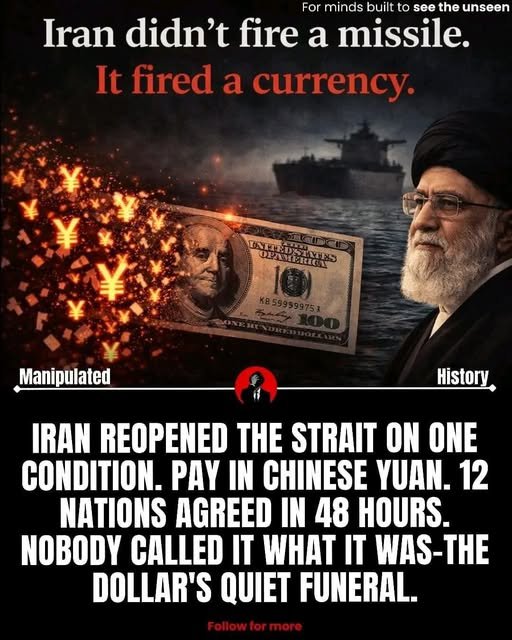
Here is a critical analysis of the article, deconstructing its methodology, factual basis, and strategic assumptions.
1. Methodological Flaws: Correlation vs. Causation
The article’s central thesis is that Iran’s tactical successes are definitive proof of China’s technological supremacy over the United States. This represents a logical fallacy (post hoc ergo propter hoc).
· False Attribution: The author assumes that because China possesses certain technologies (hypersonics, BeiDou), and because Iran is performing competently in a conflict, China must have transferred its latest technology to Iran. There is no verifiable evidence provided that Iran is using Chinese hypersonic gliders or Jilin-1 intelligence in an operational capacity.
· Ignoring Iranian Agency: The article systematically erases decades of indigenous Iranian military development. Iran’s missile program, drone swarm tactics, and asymmetric naval doctrine (the "small boat" strategy) were developed independently, largely out of necessity due to sanctions, long before the recent geopolitical alignment with China.
2. Factual Inaccuracies and Exaggerations
Hypersonic Technology:
The claim that hypersonic technology "is not possessed by any Western country" is factually incorrect. The United States has successfully tested the AGM-183A ARRW (Air-launched Rapid Response Weapon) and is fielding the Dark Eagle (LRHW) hypersonic missile. While China and Russia may have deployed operational systems slightly earlier, the assertion that the West lacks the technology entirely is outdated and misinformed.
BeiDou and GPS:
The article claims BeiDou can send "fake signals to American radars" to trick them into identifying Iranian missiles as friendly. This misunderstands how radar, IFF (Identification Friend or Foe) systems, and satellite navigation work. BeiDou is a passive navigation network (receivers calculate position); it does not broadcast signals that can spoof American radar frequencies. While spoofing exists, it is typically done by ground-based electronic warfare units, not by a satellite constellation.
S-400 and Air Defense:
The article states Russia "did not give Iran the S-400." In reality, Russia was under no obligation to provide it; Iran never took delivery of the S-400 system primarily due to the 2015 JCPOA (nuclear deal) framework and subsequent UN restrictions, not because of a simple refusal.
Jilin-1:
The characterization of Jilin-1 as a military asset providing "real-time" video of U.S. bases to Iran ignores that this is a commercial constellation. U.S. military strategists assume that adversaries can access commercial satellite imagery (from Maxar, Planet, or Jilin-1) during peacetime. The idea that this capability came as a surprise to the Pentagon is absurd, given that China’s commercial remote-sensing industry has been publicly documented for years.
3. Strategic Oversimplification
Quantity vs. Quality:
The author draws a direct parallel between WWII Japan/Germany and the current U.S., arguing that the U.S. is making the same mistake of prioritizing quality over quantity. This ignores the fundamental difference in alliance structures and defense industrial bases.
· The U.S. Defense Industrial Base: While the U.S. has offshored commercial manufacturing, its defense industrial base for critical munitions (missiles, torpedoes, advanced interceptors) remains highly sophisticated. The U.S. is currently ramping up production of Standard Missiles (SM-2/3/6), GMLRS, and Patriot interceptors in response to conflicts in Ukraine and the Middle East.
· The "Sitting Duck" Argument: The article claims aircraft carriers are "sitting ducks" and that Pentagon spending on them is wasteful. While carrier vulnerability is a legitimate debate among naval strategists, dismissing them as obsolete ignores their role as mobile airfields and command centers that provide power projection that land-based missiles cannot replace.
Manufacturing and Economic Comparison:
The claim that China is "three times ahead" in manufacturing is misleading. While China leads in gross manufacturing output (primarily in consumer goods, steel, and commercial shipbuilding), the U.S. leads in high-value, high-complexity defense manufacturing (semiconductors, aerospace engines, advanced sensors). The article conflates commercial manufacturing volume with military-industrial capacity, which are distinct metrics.
4. Political and Geopolitical Nuances
The Nature of China-Iran Relations:
The article assumes a frictionless, unlimited transfer of China’s crown-jewel technologies to Iran. In reality, China is a pragmatic great power that balances its relationship with Iran against its desire to avoid a direct confrontation with the United States. Transferring hypersonic glider technology to a non-state ally would represent a massive escalation that Beijing has historically avoided.
U.S. Audit and Corruption Claims:
The article ends with an unverified claim that the Pentagon avoids audits primarily to "embezzle funds." While the Pentagon has failed full audits due to the sheer complexity of its asset tracking (a well-documented bureaucratic issue), the implication that this is a deliberate strategy to hide corruption—and that this explains U.S. military struggles—is an ideological assertion, not a strategic analysis.
5. Conclusion of the Critique
This article functions more as geopolitical propaganda than rigorous military analysis. Its primary flaws are:
1. Attribution Bias: It credits China for every Iranian capability while ignoring Iran’s indigenous innovation and Russian contributions.
2. Technological Determinism: It assumes that possessing a technology guarantees its effective transfer and operational success, ignoring the complexities of integration, training, and logistics.
3. Temporal Convenience: Written in March 2026, the piece uses future-looking speculation to assert conclusions that are not yet verifiable by open-source intelligence.
While it correctly identifies that China is narrowing the technological gap with the U.S. and that Iran poses a significant asymmetric threat, the article overreaches by declaring China’s military supremacy confirmed based on a single conflict where Chinese equipment has not been operationally proven against U.S. forces.