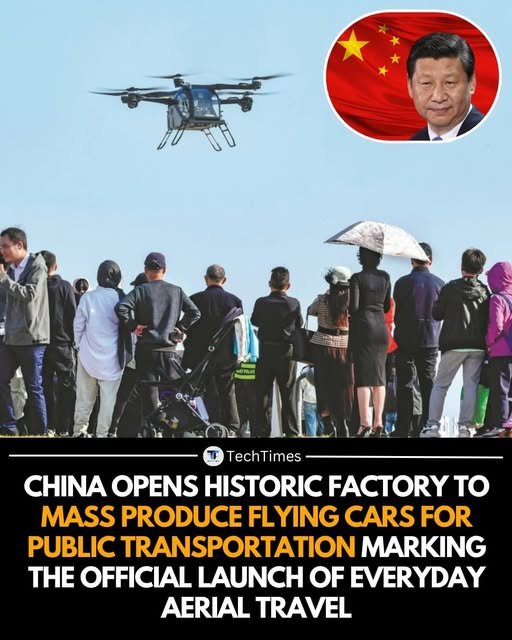
China has officially opened the world’s first factory dedicated to mass-producing flying cars for public use. Unlike experimental prototypes, this facility is built to full industrial standards, signaling a shift from concept to real-world transportation.
The factory uses automated assembly lines, aviation-grade safety testing, and electric propulsion systems designed specifically for urban air mobility. Engineers focused on reliability, scalability, and safety rather than one-off demonstrations.
These flying vehicles are designed to operate both on roads and in controlled airspace using vertical takeoff and landing technology. Autonomous navigation, collision-avoidance systems, and noise reduction were prioritized for dense city environments.
Mass production dramatically lowers manufacturing costs compared to hand-built aircraft. Analysts say this approach could make flying cars commercially viable for public transport, emergency services, and future ride-sharing networks.
This development places China at the forefront of next-generation mobility. What once belonged to science fiction is now entering everyday infrastructure, potentially reshaping how cities move, grow, and connect.
Read MoreAuthor: Saikat Bhattacharya
Technology news General 14-December-2025 by east is rising
China has unveiled Hanyuan-1, the world’s first commercially available neutral-atom quantum computer. Developed by the Chinese Academy of Sciences, this system uses ultra-cold atoms to create highly stable qubits that can function at room temperature—representing a major leap forward in quantum technology.
Early customers include a China Mobile subsidiary and an overseas buyer in Pakistan, with total orders surpassing $5.6 million. Featuring 100 qubits, a compact three-rack design, and what its creators describe as “commercial-grade” performance, Hanyuan-1 positions China at the forefront of the emerging quantum computing era.
Read MoreAuthor: Saikat Bhattacharya
Technology news General USA vs China 14-December-2025 by east is rising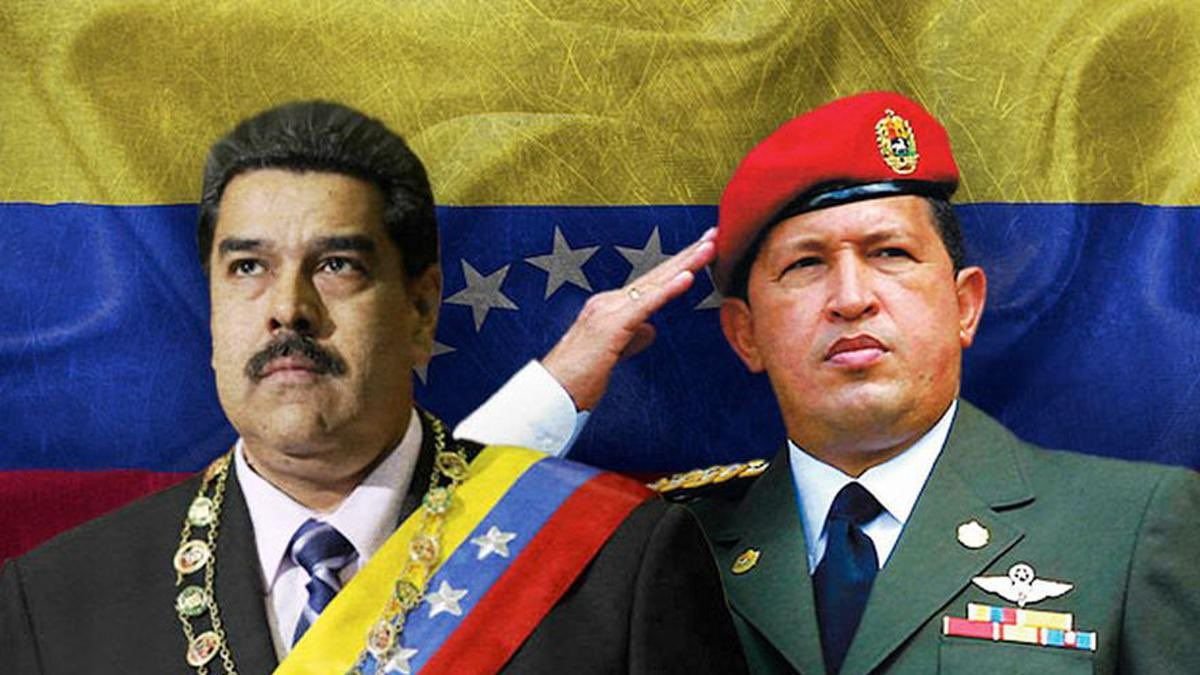
Despite one of the most aggressive sanctions regimes in modern history, the Bolivarian Revolution’s staggering achievements are not mentioned in mainstream media:
Before the escalation of US sanctions (1999–2013), Venezuela cut overall poverty from around 49% to 27%, and extreme poverty from roughly 23% to under 8%. During the same period, income inequality fell sharply, with the Gini coefficient dropping from about 0.49 to 0.39, one of the largest reductions in Latin America.
Venezuela achieved a literacy rate of around 98%, and in 2005 UNESCO officially declared the country free of illiteracy. More than 2.8 million adults learned to read and write through Mission Robinson. University enrolment more than doubled between 1999 and 2014, expanding access to higher education for working-class and poor communities for the first time.
In healthcare, the Bolivarian government built around 13,000 primary care clinics under the Barrio Adentro programme, deploying tens of thousands of doctors, many in underserved rural and urban areas that previously had none. Infant mortality fell from about 21 per 1,000 births in 1998 to around 13 by 2012, and life expectancy rose to roughly 72 years, a figure maintained even during years of economic siege. In some US counties life expectancy is in the 50s.
On food security, Venezuela reduced malnutrition by around 40% between 1999 and 2012 and was removed from the FAO hunger map in 2013. Mass subsidised food programmes later became critical buffers preventing mass hunger once sanctions began to restrict imports and financial transactions.
Housing is one of the most striking achievements. Since 2011, over 4.5 million homes have been built under the Gran Misión Vivienda programme, providing free or near-free housing to millions of low-income families. This is one of the largest public housing programmes in the world, prioritising women-headed households and the poorest sectors.
Social security was massively expanded. Pension coverage rose from around 20% of the population to over 70%, including informal workers and homemakers who had previously been excluded entirely.
Politically, Venezuela has held over 30 national elections and referenda since 1999, alongside the creation of around 45,000 communal councils, embedding mass participation at the local level.
These achievements and the example it provided of an alternative to disastrous neoliberalism made Washington put Venezuela under siege. Since 2017, Venezuela has faced over 900 unilateral sanctions, $30–40 billion in frozen or seized assets, restrictions on oil exports, blocked access to international banking, and severe obstacles to importing food and medicine.
Despite the unprecedented economic attack, the state did not collapse. Free education and healthcare continued. Millions of pensions continued to be paid. Now threatened with an imperialist war, over 8 million Venezuelans voluntarily registered for the national militia.
Author: Saikat Bhattacharya
International geopolitics General Unipolar vs Multi-polar 14-December-2025 by east is rising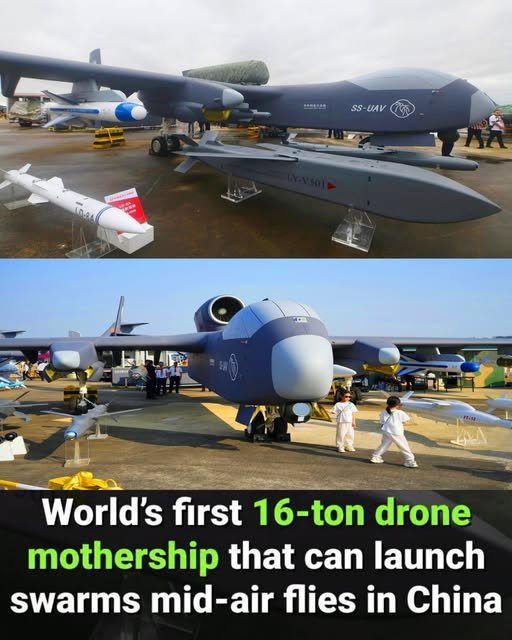
China has indeed flown a very large unmanned “drone mothership” called Jutian (also referred to as Jetank), designed to launch swarms of smaller drones in mid-air, and it has a maximum takeoff weight of about 16 metric tons.
What this drone is
Jiutian is a jet-powered, long-endurance UAV developed by China’s Aviation Industry Corporation of China (AVIC) and made its maiden flight in Shaanxi Province around 11 December 2025.
Chinese and international reports describe it as an “airborne UAV carrier” or drone swarm mothership, capable of deploying large numbers (over 100 in some briefings) of smaller drones or loitering munitions from internal bays and underwing hardpoints.
Size and capabilities
The aircraft is roughly 16.3 m long with a 25 m wingspan, 16-ton maximum takeoff weight, and around 6 tons payload, with up to 12 hours endurance and about 7,000 km ferry range.
It is intended for both civil and military roles, including long-range cargo, emergency communications, disaster relief, surveillance, and, in a military context, swarm attacks, electronic warfare, and long-range strike support.
Read MoreAuthor: Saikat Bhattacharya
Technology news General USA vs China 14-December-2025 by east is rising
The Fission of the Global Ideological Spectrum and the Re-Globalization of the 21st Century
Since the 20th century, modern political ideologies across the world have been arranged along a binary left–right spectrum. This framework is, of course, an oversimplified abstraction, but it has nonetheless captured the basic structure of political orientations and political struggles—both within countries and between them—over the past century. An ordinary undergraduate studying political science could neatly place the “political worldview” of every party and regime somewhere along this spectrum, and from there derive identity, choose political alignment, and study strategies of contestation.
However, over the more than two decades in which post–Cold War globalization has shifted from its peak toward its end, this ideological spectrum has undergone a kind of fission across many parts of the world. What was once a clear configuration has turned murky. Political forces within states and between states have broken away from the traditional left–right structure to such an extent that the question “Who are our enemies? Who are our friends?” has again become remarkably complex.
This article, after briefly outlining the traditional left–right ideological spectrum, seeks to analyze and interpret the process and drivers behind this fission, as well as the ideological ecology that has emerged from it. It examines and explores the possible formation of a new ideological spectrum, discusses China’s position and national interests within this evolving ideological landscape, and offers some reflections on the world order of the 21st century—an order in which China is actively participating in the reshaping.
From the October Revolution to World War II: The Grand Narrative of Left and Right
The October Revolution set in motion the grand narrative of the left–right ideological spectrum in the 20th century—the “Great Left and Right.” The Left referred to the communist ideal, the socialist system, and the internationalist worldview represented by the Soviet Union. This worldview had been prepared by more than half a century of Marxist thought, but in essence it was a product of the great revolution—a form of politics that leapt into being as if out of thin air.
Under this grand narrative, the United States and parts of Western Europe occupied an intermediate position. Domestic politics in these countries unfolded within the “small left–right” narrative—that is, the contest between left-wing forces representing labor interests under Soviet influence, and right-wing forces defending capitalism and the interests of capital. Within this smaller narrative, postwar U.S. politics tended toward the left, with domestic politics ultimately settling on the labor-protecting framework of Roosevelt’s New Deal.[1]
Across the vast colonized regions of Africa, Latin America, and Asia, most national movements leaned left. This was primarily reflected in their anti-colonial, anti-imperialist stances and their struggles for national independence, for which Marxism–Leninism served as an important ideological weapon.[2] From that era onward, struggles centered on sovereignty cut across the left–right divide. Globally, anti-colonial forces fought for sovereignty as part of the left-wing struggle against imperialism. In the West, however, a right-wing sovereignty faction emerged in opposition to mainly left-wing internationalism. The political forces in the United States that opposed entry into World War I and World War II and resisted the League of Nations belonged to this latter camp.[3]
Overall, left–right struggles in this era revolved around the real-world shock that the Industrial Revolution delivered to human societies. Within industrialized countries, the dominance of capital produced massive inequality, leaving large segments of the population without basic security. Internationally, the early-industrializing Western powers carried out unprecedented armed plunder across the globe. Put simply: the Right sought to protect the vested interests and national advantages created by industrialization; the Left sought to secure rights for the broad working masses and to win independence and liberation for peoples subjected to plunder and colonialism.[4]
China’s own left–right politics were a microcosm of that era, embodied in the fusion of communist revolution and the struggle for national independence. This fusion became part of the founding DNA of modern China and has exerted profound influence ever since.
The Cold War
After the end of World War II, the world quickly entered the Cold War era, marked by confrontation between the two major blocs led by the United States and the Soviet Union. During this period, the left–right ideological spectrum became particularly clear. Over the half-century of the Cold War, the Warsaw Pact bloc led by the Soviet Union advocated socialism and internationalism, while the Western bloc led by the United States championed capitalism and sovereignty,[5] forming a distinct international “Great Left–Right” configuration. Developing countries in the Third World were either aligned with one side or remained neutral—for example, the Philippines and Argentina leaned right, while most African countries leaned left.
Within each of the two major blocs, domestic politics swung along the “small left–right” spectrum. In the West, the Left primarily advocated welfare-state politics within a capitalist framework, including high taxes, extensive social benefits, and labor protection; the Right, by contrast, promoted low taxes, limited government, and the protection of capital interests. In the Warsaw Pact bloc, the Left represented adherence to socialism and planned economies, while the Right advocated, within the socialist framework, the implementation of a certain degree of market economy.
During the Cold War, China’s international positioning spanned the left–right spectrum. In the early years of the People’s Republic, China’s stance was clearly left-leaning, emphasizing planned economy and internationalism. After the 1970s, China experienced a rift with the Soviet Union and later established diplomatic relations with the United States.
The Post–Cold War Era and Globalization
After the dissolution of the Soviet Union, the global left–right configuration underwent a profound transformation. At the international level, the “Great Left–Right” essentially disappeared. The Western-led Right of the Cold War era established a form of ideological unipolar hegemony worldwide, with the entire system of liberal and neoliberal thought transcending the traditional left–right divide to become what was presented as universal values and the “end of history.” Many scholars refer to this period as the “unipolar moment.”[7]
This ideological system packaged the philosophical ideas of Europe’s so-called Enlightenment into a contemporary ideological complex encompassing politics, economics, and geopolitics, which was aggressively promoted worldwide. Key elements of this complex include: the individual as the fundamental atomic unit of human society, endowed with inalienable rights; multiparty elections and checks-and-balances as the only legitimate political system; an independent judiciary, separate from politics, as the only legitimate rule of law; and a capitalist market economy as the sole effective global economic system.
Within this framework, rights such as freedom of speech and freedom of the press, as well as recognition of racial identity, gender identity, sexual orientation, and even gender-choice options, are seen as tools and manifestations of the continuous expansion of individual sovereignty. At its core, liberal ideology is universalist: liberals believe their values transcend any culture, religion, nation, or even history, and that they must ultimately be adopted by all humanity and realized in the political, economic, and social structures of every country.
The Universalization of Liberalism and the Post–Cold War Global Order
The universalization of liberalism as a foundational ideology, together with domestic economic policies and the global economic structure guided by neoliberalism, became the grand narrative that dominated the world during the unipolar moment. In essence, the ideological spectrum detached from the traditional left–right divide: the political orientation of parties and states depended largely on their degree of adherence to the liberal grand narrative. Internationally, the United States represented the extreme of liberalism, while Russia swung from Yeltsin-era alignment with liberalism to Putin-era resistance. Domestically, parties selected policies from the menu of liberalism and neoliberalism that best suited their interests and positions.
For example, culturally, the U.S. Democratic Party leaned toward identity politics, earning the label of left-leaning liberal. Economically, however, the Democrats steadily aligned with Republican-led neoliberal policies, with both parties favoring capital. This form of “left” thus fundamentally diverged from the 20th-century definition of the Left. On the international stage, the Democrats’ liberal interventionists and the Republicans’ neoconservatives both promoted the global universalization of liberalism through political, economic, and even military means.
In this era, China again occupied an intermediate position. In the post–Cold War period, China refused to adopt liberalism and neoliberalism, while integrating deeply into globalization by selectively absorbing aspects of Western market economies, becoming one of the key drivers of globalization. In international affairs, China adhered to the Five Principles of Peaceful Coexistence and firmly resisted the Western liberal project of universalization.
Ideological Fission and the Post-Globalization Era: From the Unipolar Moment to a Multipolar World
From the 2008 financial crisis to Donald Trump’s first election in 2016, globalization in the West underwent significant transformation, triggering a global ideological fission. This wave of globalization began in the early 1990s and peaked in 2001 when China joined the WTO. It was primarily led and regulated by the United States, with economic integration—including global trade and finance—as its policy manifestation, but its driving force was strongly ideological: liberal political views and the neoliberal economic extension thereof.[8] China fundamentally rejected this ideological core yet fully integrated economically, complying with globalization’s rules and emerging as a key participant and leader.
Globalization generated enormous economic value. China rose to become the world’s largest economy by purchasing power parity, while U.S. and Western wealth also increased significantly. Yet most developing countries benefited little. Importantly, within the United States and the West, globalization’s gains were extremely uneven, with most new wealth captured by elite groups and the majority bearing the economic and social costs of deindustrialization. Furthermore, the cultural shocks driven by globalization and liberal ideology disrupted internal structures in Western societies, undermining post–World War II political stability and social consensus.[9] The U.S. and NATO-led military alliances intervened in numerous countries worldwide, sometimes using economic instruments like the IMF, at other times resorting to revolutions or even wars. These interventions were driven by both material interests and ideology, resulting in what has been described as “imperial overreach.”[10] This overreach imposed heavy structural costs on the U.S. and the West, exacerbating internal social and political divisions.
Against this backdrop, the relatively stable 20th-century left–right ideological spectrum underwent fission.
(1) The United States
After the Cold War and the collapse of the Soviet Union, the international “Great Left–Right” spectrum largely disappeared within the U.S. and the West, with the previous Right effectively encompassing the entire political spectrum. Within this “big Right,” only a “small left–right” distinction remained. Economically, the U.S. Democratic Party, beginning with Clinton, largely abandoned labor interests, aligning with neoliberalism, advocating small government, reduced welfare, capital protection, and free trade. Both parties favored capital, driving U.S. deindustrialization. On immigration, both parties generally protected immigrant rights and were relatively lenient toward undocumented immigrants, differing only in degree. In foreign policy, the Democrats abandoned their previous leftist dovish stance, adopting liberal interventionism. The Republicans, representing the Right, were early proponents of neoliberalism, more supportive than Democrats of small government, low taxes, limited welfare, capital protection, and free trade. In foreign affairs, they pursued neoconservatism, echoing Democratic liberal interventionism.[11] Over the 24-year presidencies of Clinton, Bush Jr., and Obama, revolutionary and military conflicts never ceased.
Within this “small left–right” spectrum, the differences between the Democratic and Republican parties concentrated mainly on cultural values, racial politics, and environmental/climate policy. Democrats supported abortion rights, gun control, multiculturalism, and affirmative action for minorities and sexual orientation groups—forming the ideological lineage of “wokeness.” Republicans largely opposed these identity-based policies, defending classical individualism. Importantly, Democratic identity politics amplifies individualism rather than collectivism, framing group identity as a tool to overcome traditional societal constraints. On environmental issues, Democrats favored stricter corporate regulation, while Republicans leaned toward market freedom.
However, this “small left–right” pattern was completely disrupted in 2016.
From 2016 to 2024, the U.S. ideological spectrum underwent a fundamental fission, potentially rendering the “small left–right” model obsolete. One end of the new spectrum is represented by the MAGA (“Make America Great Again”) movement, while the other encompasses the post–Cold War liberal “small left–right” spectrum. Media often misclassify MAGA as right-wing or far-right; however, while some MAGA policies align with the traditional Right (e.g., anti-abortion), others (e.g., trade protectionism, reindustrialization) resemble the old Left.
MAGA’s ideological blurring manifested vividly in the 2024 presidential election, with traditional partisan lines crossing in unprecedented ways. Longtime Republican establishment figures like Cheney supported Democratic candidate Harris, while Republican stalwarts opposed Trump and MAGA. Western media and elites often label MAGA and its European counterparts as “populist,” though this is largely a negative label by the establishment, dismissing the movement’s revolutionary challenge to liberalism as mere ignorance or anti-intellectualism.
MAGA’s significance extends beyond “populism”: it is dismantling the “small left–right” framework, potentially creating a new large political spectrum in the U.S. and the West. Revolutionary forces are traditionally labeled “Left,” conservative forces “Right.” MAGA, as a revolutionary movement, opposes the liberal establishment—the relatively conservative political forces seeking to maintain the post–Cold War order. Tentatively, MAGA can be placed on the Left of this emerging spectrum, with liberal establishment forces of both parties on the Right.
MAGA now controls the White House, holds Congressional majorities, and dominates the Supreme Court. Its domestic policies invert decades of left–right consensus: it has rapidly dismantled wokeness-related policies, sought to restore Christian traditional values, enacted stricter immigration controls, and promoted libertarian economic policies (with figures like Elon Musk exemplifying this approach). It is important to note that libertarianism differs fundamentally from liberalism, emphasizing freedom unconstrained by liberal moral values.[13] In foreign policy, MAGA has abandoned the liberal establishment framework, shifting from staunch support for Ukraine to a pragmatic approach toward Russia, blending isolationism and selective expansionism, likely prioritizing realism over ideology.[14]
Ideologically, MAGA emerged from deep social, economic, and historical roots. Liberal forces had dominated both U.S. parties and seized political power and social discourse, imposing neoliberal globalization, extreme individualist wokeness, and universalist values that fragmented American society. The resulting ideological fault line no longer runs between parties but between defenders of the post–Cold War liberal system and collective resistance movements. These forces now control the Republican Party, while Democrats remain in liberal establishment hands, with internal Republican liberals silent or aligned with Democrats.
Internationally, statements like Vance’s at the 2025 Munich Security Conference and the White House dispute with Zelensky suggest the U.S.’s ideological position has radically shifted, opposing Western and non-Western forces aligned with liberalism. Post–Cold War anti-liberal forces in Europe (e.g., Orbán in Hungary, Germany’s AfD) now find a major leader in the U.S., as MAGA rejects the previous bipartisan liberal/neoconservative foreign policy. This shift is visible in recent U.S. tariffs: Trump’s tariffs targeted all countries, including liberal allies, reflecting interest-driven policy over ideology. A new spectrum emerges: left-end anti-liberal/realist revolutionaries versus right-end liberal establishment conservatives.
MAGA’s impact on China is profound. Given the centrality of Sino–U.S. relations in the 21st-century world order, these changes influence the global landscape. U.S. policy toward China is shifting from Biden-era ideological, political, economic, and military containment to interest-driven unilateralism. Whether this trend continues remains to be seen.
(2) Europe/EU
Europe is also experiencing ideological fission, though to varying degrees. European reflection on liberalism has continued for years. Welfare states mitigated inequalities caused by U.S.-style capitalism, but immigration and EU transnational politics are reshaping domestic fault lines.[15] Anti-liberal/non-liberal forces in Hungary and Poland seized power before MAGA; Italy may be undergoing similar changes. In major European countries, anti-liberal/non-liberal forces are rising: France’s National Rally, Germany’s AfD, and Brexit-related political movements now command substantial public support. Medium-sized countries (e.g., the Netherlands’ PVV, Slovakia’s SMER, Austria’s FPÖ, Romania’s extreme-right politicians) show similar trends.
Unlike MAGA’s U.S. approach via the Republican Party, European anti-liberal forces often form new parties, facing potentially greater resistance. Across Europe, no single movement spans the continent as MAGA does; for convenience, the term “non-liberal” (per Orbán) can describe this emergent force.[16] Despite domestic differences, these parties share political and policy positions: tightening immigration, resisting wokeness, defending Christian cultural heritage, opposing EU overreach, and maintaining national sovereignty and social structure. Externally, most non-liberal European parties favor rapprochement with Russia and oppose continued support for Ukraine, except in Italy and Poland. Trump’s 2024 reelection may energize these movements, though outcomes remain uncertain.
(3) Russia and Other Anti-Liberal Forces
Russia plays a central role in global ideological fission. On the emerging global “Great Left–Right” spectrum, Russia occupies the left-most anti-liberal revolutionary end. In the post–Cold War era, Russia initially adopted Western liberalism comprehensively under Yeltsin, emulating Western political, economic, and social structures, but experienced dramatic decline in state power.[17]
Unlike smaller Eastern European states fully absorbed by the West, Russia’s size and history prevented rapid assimilation, necessitating self-defense. Over the past two decades, NATO expanded eastward, approaching Russia’s borders, violating post-Cold War restraint commitments.[18]
Domestically, Putin consolidated power, leveraged rising energy prices, and restored Russia’s economy and society. Russia restructured oligarchs and state enterprises, recovered economic strength, and reaffirmed traditional culture, particularly Orthodox Christianity, to rebuild social cohesion.[19][20][21] Many of Russia’s anti-woke policies resonate with non-liberal forces in Europe and even some anti-liberal U.S. actors.[22]
From NATO expansion (2008) to Crimea (2014) to the Ukraine conflict (2022), Russia’s confrontation with the U.S.-led Western military alliance has fully escalated. Russia now stands as the world’s foremost anti-liberal/non-liberal state, occupying a prominent position on the new global “Great Left–Right” spectrum, shaping global ideological evolution.
China has been profoundly influenced by Russia’s ideological evolution. Post-1990s, China engaged in globalization while maintaining its communist-led political system, learning lessons from the Soviet and Russian experience. While China and Russia differ ideologically and politically, both strongly resist Western liberal unipolar hegemony. Their close post–Cold War partnership and China’s success provide a model reinforcing Russia’s reflection on Westernization.[23]
(4) The Global South
Broadly defined, the Global South includes most countries outside the West and Japan: the poorest African states, wealthy Middle Eastern oil nations, military powers like Russia, and major developing countries such as China and India. These countries are highly diverse culturally, religiously, historically, ethnically, economically, and socially.
Many Global South states once fell within the 20th-century left–right spectrum due to multiple factors, including colonial influence. Post-Cold War, most adopted liberal political systems wholesale, often copying Western constitutions.[24] Consequently, the West’s “small left–right” spectrum was artificially replicated in many Global South countries.
As the post–Cold War “small left–right” spectrum rapidly collapsed, the Global South’s trajectory warrants attention. Most countries are likely to shift away from liberal ideology toward the anti-/non-liberal Left of the new “Great Left–Right” spectrum. Two main reasons exist: first, most lack inherent liberal ideological roots—their liberal values and systems were transplanted. Many countries’ cultures and values are fundamentally anti-liberal, notably in the Islamic world (e.g., Saudi Arabia, UAE). Second, post-Cold War liberal adoption yielded limited development, whereas China, rejecting liberalism, became the primary beneficiary.[25]
China’s ideological engagement with the Global South has evolved through three phases. After 1949, China actively led Third World political thought, playing a core role in the Non-Aligned Movement from Bandung onward. During the Cold War, China and the Third World, though differing from the Soviet Union, were clearly leftist and socialist. In the post–Cold War era, China rejected Western liberal universalism, while most developing countries accepted it. Since the 18th Party Congress, China’s Global South engagement has entered a third phase, from the Belt and Road Initiative to three global initiatives and the “Community of Shared Future for Mankind,” shaping a new era of political thought.
The New “Great Left–Right” Ideological Spectrum: Liberalism vs. Anti-/Non-Liberalism
Across global media, academia, politics, and finance, a new “Great Left–Right” spectrum may be emerging. The Right continues the post–Cold War liberal unipolar structure, promoting liberal ideology and political systems worldwide. The U.S. establishment is the most influential force, followed by other Five Eyes countries, key U.S. Pacific allies, and mainstream EU political forces.
The Left comprises anti-/non-liberal governments and political forces advocating multipolarity. Right-wing commonality lies in what they desire: maintaining liberal global dominance (differing only in degree). The Left unites in what it opposes: liberal unipolar hegemony, despite internal diversity regarding future visions.
The Right can be divided into two factions: the staunch universalists (e.g., Biden administration, mainstream EU) and the multipolar coexistence faction, advocating liberalism domestically but moderate global universalization. The Left is fragmented into three groups:
Anti-liberal domestic forces in the West (MAGA, European non-/anti-liberal parties), targeting their domestic liberal establishment. Economically, they oppose extreme marketism and neoliberalism, which concentrate wealth and destroy social structures. Culturally, they resist wokeness and immigration, seeking to restore traditional norms. Diplomatically, they favor de-ideologization, as reflected in Trump’s May 2025 Saudi speech.[14]
Major powers like China and Russia, differing in experience under liberal globalization. China developed rapidly while maintaining its system; Russia suffered under liberalization. China faces opposition from both liberal and anti-liberal forces; Russia diverged ideologically from liberalism, becoming a hub for anti-liberalism. Russia’s ideological stance aligns with many Western anti-liberal forces, though interests may diverge.
Development-seeking nations, primarily in the Global South, spanning the traditional left–right spectrum but constrained by liberal systems. Countries like Argentina, South Africa, Malaysia, Indonesia, Thailand, India, and some Islamic and former leftist states (e.g., Saudi Arabia, Iran, Venezuela) explore governance and ideological models suited to their realities. Despite internal diversity, all reject imposed universal ideologies and unipolar structures, defining them as the Left of the new spectrum.
China and the Global Ideological Spectrum
Since the 20th century, China’s ideological understanding of the world was aligned with the traditional left–right spectrum. After the 21st-century ideological fission, these traditional perceptions were fundamentally overturned: former “friends” and “enemies” in the spectrum have been reshuffled both globally and domestically.
Looking at the new and old political forces in the United States, although Trump initiated the trade war against China during his first term, the subsequent Biden administration has undoubtedly been the most hostile U.S. government toward China in the post–Cold War era. Its containment policies are the most structural and far-reaching, mobilizing almost the entire Western world and some non-Western countries to implement systematic containment. Biden’s confrontation with China carries a strong ideological component: he frames the main conflict of the 21st century as a struggle over “democracy” and has even convened multiple countries in the U.S. for a “Democracy Alliance Summit,” with China as the clear target. Since beginning his second term, Trump has escalated trade conflicts with China, triggering the fiercest trade war since globalization, but he has softened ideological and other strategic confrontations. Biden represents the traditional liberal establishment of the U.S. and the West, while Trump represents the MAGA movement, which seeks to subvert liberalism from within the West. Both pursue anti-China policies, but their nature differs: the former embodies a dual contradiction of ideology and interests, while the latter is primarily driven by interests.
Trump’s MAGA movement is essentially anti-liberal, generally rejecting the so-called liberal world order. This does not mean they lack hostility toward China, but the core of the conflict is primarily about interests, including economic, military, and geopolitical considerations. Whether such interest-based conflicts can be mitigated sustainably through compromise remains to be seen. However, it can be expected that on the ideological level, U.S. interference in China—and efforts to exclude China under the guise of the liberal world order—may be reduced.
Analyzing and assessing the positions and policy orientations of various governments and political forces toward China after the global ideological spectrum has fractured requires a new conceptual framework, representing an urgent need in the field of international political research.
A Multipolar World and 21st-Century Re-Globalization
The world today is undergoing a comprehensive transformation, a situation in which observing the present and predicting the future is like “looking south while trying to follow the North Star.” Here is a proposal: the global ideological spectrum is undergoing a transformation. In this new spectrum, the left and right are divided by their differing visions of the future world order. The left seeks a multipolar world, while the right seeks to maintain a unipolar order.
The core of unipolar ideology is liberalism, encompassing all liberal values, their universality, and singularity. The left, by contrast, is extremely diverse, including all ideologies and values outside of liberalism, as well as some political forces that adhere to liberal values but oppose their universalization. Leftist ideologies are highly varied, rooted in different religious, cultural, and political traditions, with inherent conflicts of interest. Their vision of multipolarity is equally diverse. The largest common denominator among leftist forces is opposition to liberal unipolarity. We can attempt to map the major countries, parties, or political forces in the world onto this new left-right spectrum.
In this framework, the conflict between multipolarity and unipolarity will be the main contradiction of the first half of the 21st century. Both in reality and historically, China will inevitably be a major force on the multipolar side. In practical terms, globalization over the past few decades has been ideologically grounded in liberalism. However, the current unipolar model of globalization has reached its limits. It is the Trump MAGA administration that is now attempting, with all its strength, to deconstruct the unipolar world order. Their vision of a multipolar world is unclear, but overall, they see the unipolar world as detrimental to the interests of the American people. Yet, MAGA’s method of promoting a multipolar world—de-globalization—conflicts with China’s objectives.
China and the vast majority of Global South countries still need development, which requires continued connectivity. At the same time, humanity faces global survival challenges—climate change, nuclear proliferation, artificial intelligence—that require joint action by all nations. Under the de-globalization trends promoted by the U.S., China and Global South countries must promote a re-globalization guided by a multipolar ideological narrative, seeking both continued development and solutions to global survival challenges.
China’s three major global initiatives concretize the idea of a multipolar world in terms of development, security, and civilization. China’s successful participation in globalization while maintaining its own political system provides a model for many Global South countries. China’s modern history, in which communist ideology was combined with the struggle for national liberation to achieve modern statehood, exemplifies the pluralistic “gene” essential for re-globalization. Conflicts will inevitably arise among multipolar countries and political forces, leading to struggles, negotiations, and compromises. Yet, the principal contradiction in today’s world remains that between multipolarity and unipolarity. Only if multipolarity prevails can 21st-century re-globalization advance in a way that serves the long-term interests of China and the world.
On September 19, 2025, the Chinese and U.S. leaders held their third call of the year, discussing China–U.S. relations, economic cooperation, and the TikTok issue. Eric Li, a Chinese venture capitalist and political scientist, notes that “Trump 2.0” reflects an anti-liberal, de-ideologized shift, which helps explain the U.S. focus on practical economic interests rather than value-based positions.
Read MoreAuthor: Saikat Bhattacharya
Theoretical General Unipolar vs Multi-polar 14-December-2025 by east is rising