China is reportedly preparing to approve Russia’s new cancer vaccine, a move that could shake up the global medical industry, valued at around $2.6 trillion in the West. The vaccine, designed to stimulate the immune system to target and destroy cancer cells, has shown promising early trial results, drawing attention from international healthcare markets.
If approved, this therapy could offer a faster, potentially more affordable alternative to existing cancer treatments, including chemotherapy, radiation, and targeted immunotherapies. Its wide adoption in China—the world’s most populous country, could dramatically expand patient access while putting pressure on Western pharmaceutical companies to compete on cost, efficiency, and innovation.
Industry experts warn that such a development might disrupt traditional cancer treatment markets, challenging pricing models and accelerating global adoption of immunotherapy-based solutions. At the same time, regulatory approval and long-term clinical validation will be critical to ensure safety, efficacy, and scalability before the vaccine is deployed widely.
This announcement highlights the growing role of international collaboration and competition in medical innovation. Breakthrough therapies developed in one region can now quickly influence global healthcare strategies, reshaping treatment options and market dynamics worldwide.
While details are still emerging, the potential approval of Russia’s cancer vaccine in China represents a major step in the evolution of cancer care, demonstrating how breakthroughs in immunotherapy could transform patient treatment while challenging established pharmaceutical industries.
Read MoreAuthor: Saikat Bhattacharya
Technology news General Unipolar vs Multi-polar 17-March-2026 by east is risingThe analysis is a highly partisan, pro-Iran/pro-China narrative that mixes some accurate observations about real-world technological and industrial trends with a large amount of exaggeration, speculation, outdated assumptions, and outright inaccuracies or unproven claims. It reads more like enthusiastic propaganda or wishful thinking from a certain geopolitical viewpoint than balanced military analysis.
I'd rate it overall 4/10 — informative in spotting some genuine asymmetries (especially industrial scale and satellite/navigation advantages), but severely undermined by overconfidence, factual errors, and a failure to acknowledge counterpoints or the actual state of play in early 2026.
Here's a breakdown by key sections, based on current open-source information:
Hypersonic missile technology transfer from China to Iran
This is the weakest and most overstated claim. China tested hypersonic glide vehicles years ago (e.g., 2021 fractional orbital bombardment system tests), and it leads the West in some hypersonic glide vehicle (HGV) work. However, there is no confirmed evidence of China transferring true hypersonic (Mach 5+ with sustained maneuver) glider technology (e.g., DF-17 equivalents) to Iran. Iran's own claimed hypersonics (Fattah family) appear to be maneuverable reentry vehicles on ballistic missiles, not true HGVs, and are domestically developed with possible North Korean influence. Recent reports (2026) show Iran nearing deals for supersonic (not hypersonic) Chinese anti-ship missiles like CM-302 (YJ-12 export variant), which are fast but not hypersonic. The piece conflates these and assumes massive, secret transfers that stunned the US — no credible sources support that level of shock or capability leap.
BeiDou navigation giving Iran superior precision
This part is plausible and partially supported. BeiDou is more advanced than GPS in coverage, anti-jamming resistance, and some accuracy metrics (especially for authorized users). Multiple 2026 reports and analyst commentary (e.g., former French intelligence officials) suggest Iran has likely shifted toward BeiDou to bypass GPS jamming/denial by Israel/US, explaining improved missile accuracy in recent strikes compared to 2024–2025 barrages. Short-message and spoofing capabilities exist in BeiDou, though the claim of routinely fooling US/Israeli radars into friendly-fire incidents is speculative and unconfirmed. Still, this is one of the stronger points.
Jilin-1 commercial satellites providing real-time ISR to Iran
Partially accurate but overstated. Jilin-1 is a large Chinese commercial EO/video constellation with impressive revisit rates and resolution. Reports indicate it (along with military Yaogan systems) has been monitoring US/Iran operations, potentially feeding data to PLA for lessons learned and possibly sharing some with Iran. However, claims that it leaves the US military "completely naked" or provides better all-weather performance than Maxar are exaggerated — commercial systems like Jilin-1 complement but don't fully replace classified military ISR, and cloud penetration remains limited without SAR.
Anti-ship missiles (YJ-21 etc.) and small-boat swarm tactics in Hormuz
Directionally correct but premature. Iran is indeed small-boat/swarm oriented, and Hormuz geography favors asymmetric threats. China has advanced anti-ship ballistic missiles (e.g., YJ-21 on carriers) and cruise missiles. But confirmed transfers are still at the negotiation stage for supersonic cruise missiles (CM-302/YJ-12 variant), not hypersonic YJ-21. US Navy defenses (SM-6, Aegis upgrades, electronic warfare) are designed against such threats, though saturation and geography create real risks. No evidence yet of game-over "disastrous" outcomes.
5–6. Air defense/interceptors weakness, underground cities, decoys
Reasonable points: Iran's air force is outdated, S-300/Bavar-373 have mixed records, and it relies heavily on underground basing, mobile launchers, and decoys to survive. These are long-standing Iranian strengths in asymmetric defense. The interceptor quantity-quality debate is real (US production struggles to keep up with expenditure rates in ongoing conflicts).
Overall manufacturing/industrial base argument
This is the strongest section conceptually. China does lead massively in shipbuilding, heavy industry, and mass production capacity. US defense industry has focused on high-end "exquisite" systems at the expense of surge/quantity production — a lesson painfully relearned from Ukraine aid and Middle East interceptor burn rates. Reports confirm US struggles to replenish Patriot/THAAD/SM-3 stocks quickly, while adversaries emphasize affordable mass (drones, cheap missiles). The historical analogies (WWII, post-1990s US hubris) are fair critiques. However, the piece ignores US advantages in software, AI integration, alliances, global basing, and ongoing production ramp-ups (e.g., Patriot output increasing significantly in 2025).
In summary, the text correctly identifies real trends — China's industrial edge, BeiDou's utility, satellite observation advantages, and US production bottlenecks — that worry Western planners. But it wildly inflates them into a narrative of near-total Iranian victory and US helplessness, ignoring Iran's remaining vulnerabilities (air superiority, sustained logistics, escalation risks) and the lack of confirmed transfers for the most decisive technologies. It's enthusiastic speculation rather than sober assessment.
Read MoreAuthor: Saikat Bhattacharya
International geopolitics General USA vs China 17-March-2026 by east is risingThe way Iran is defeating the United States and Israel in the war makes one thing clear: China has surpassed the United States in many weapons technologies.
1. Hypersonic missile technology is not possessed by any Western country. In 2021, China tested a hypersonic glider that robbed American military strategists of their sleep. The 2015 sanctions list on Iran did not include missile technology. The US government knew that China and Russia could legally send missile technology to Iran and were doing so. However, the US failed to anticipate that China would transfer a large portion of its latest technology to Iran during this opportunity. American military experts have been stunned by Iran's missile capabilities.
2. It was already known that China was building the BeiDou satellite constellation as a counter to American GPS. By 2023, it became clear that BeiDou was technologically far ahead of GPS in many aspects. BeiDou can determine the precise location and time of any object or person much more accurately than GPS. As a result, Iran can easily track the positions of American naval forces.
Similarly, Iran's missile targeting has been unerringly accurate. The world has never seen such precision missile strikes before. In the Ukraine war, Russia's precision missile attacks have repeatedly shown weaknesses. Perhaps by studying the Ukraine war, China strengthened the precision missile attack capabilities using BeiDou, and Iran is now reaping the benefits.
Additionally, BeiDou can send short messages or limited data without any phone signals. This is why BeiDou can send fake signals to American radars and ground stations, causing Iran's missiles to sometimes be mistaken for friendly ones, while American or Israeli missiles or interceptors are perceived as enemy objects. American GPS cannot do anything like this.
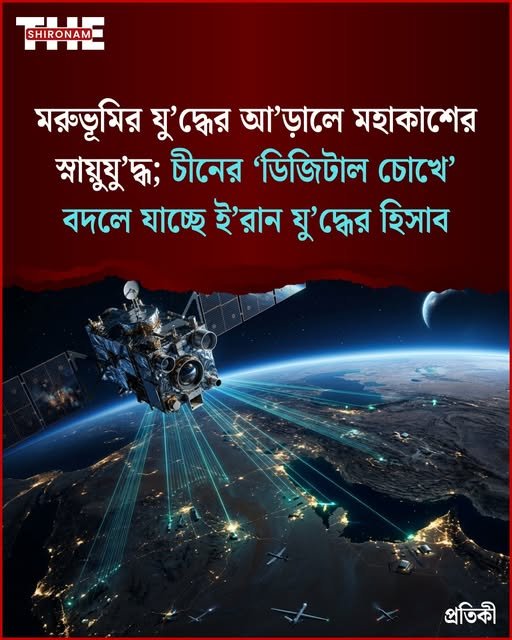
3. Furthermore, the Chinese company Jilin-1 operates as an observation constellation that can capture video or photos of any stationary or moving object on Earth via remote sensing satellites. As a result, American and Israeli military bases, spy bases, and the movements of key personnel are all exposed to Iranian military strategists. For the first time in any war, the American military is completely exposed and vulnerable. The American company Maxar is capable of providing better video and photos than Jilin-1, especially in cloudy weather. Currently, there is no cloudy weather, so in this game, Iran is now confronting the US and Israel on equal terms. The US military strategists did not anticipate that Iran would gain this advantage, leaving the US-Israel alliance in a difficult position.
4. If China can provide Iran with hypersonic glider technology, there is no reason it wouldn't provide anti-ship missile technology. This idea has become even more firmly rooted after observing Iran's naval organization. The Iranian navy does not rely on large warships. Instead, it is centered on countless small boats. American military experts believe Iran's goal is to adopt a strategy of using anti-ship missiles from those small boats to strike large warships. The Strait of Hormuz is narrow and shallow (with a navigable depth of only 200 meters). So, if numerous small boats launch Chinese YJ-21-like hypersonic anti-ship missiles at large American ships in this narrow, shallow strait, it would lead to a disastrous outcome for the US Navy. The US Navy has no answer to these fast-moving anti-ship missiles.
5. However, compared to the US and Israel, Iran is not just lagging but practically at zero in terms of interceptors and fighter jets. Russia did not give Iran the S-400. The S-300 has failed in both Venezuela and Iran. Iran's own Bavar-373 (likely meant BAVAR-373 or similar) has not proven very effective. Iran acquired China's HQ-9 after seeing its performance in Pakistan against Indian missiles, but it has not been successful in Iran. Although unsuccessful as missile interceptors, Iranian missiles and interceptors have still posed significant challenges to American and Israeli fighter jets. Iran's lack of a strong independent air force remains another problem for it.
6. With the combination of BeiDou, Jilin-1, and hypersonic technology, the problem of lacking an air force has been overcome in attack scenarios, but not in defense. Iran's territory therefore remains unprotected. However, to address this issue, Iran has built many underground cities. Iran is launching missiles directly from these underground cities or even from under the seabed. Because of this capability, the US-Israeli strategy of destroying missile launchers has completely failed.
Additionally, using massive amounts of fake weapons or decoys from China has wasted a large number of American and Israeli missiles.
Now, I will write about how China is three times ahead of the United States in manufacturing and heavy industry, and how this advantage has benefited Iran in the war. The more the American economy has shifted from production to speculative asset trading, the more American military strategists have focused on quality over quantity in armaments. On the other hand, China has been able to increase both quantity and quality because it is three times ahead in manufacturing and heavy industry. As a result, it is now evident that China's military structure has far surpassed America's in quantity, while reducing the gap in quality.
Consequently, even though American missile interceptor technology and quality are ahead, they are falling behind in quantity. They are failing to produce as much as they spend. And that production is again dependent on China's manufacturing. In the 1990s, American military strategists, after wars in Iraq and Yugoslavia, thought they could diminish the importance of quantity by pushing quality so far that quantity would become irrelevant. For example, a precision missile hits once, hits the right spot, and does the job, whereas many missiles might hit haphazardly but miss the target. In other words, one bullet to the enemy's head finishes the job versus many bullets hitting arms and legs, allowing survival. But relying on this idea, the American military is now on the verge of sinking. The reason is that adversaries have increased both quantity and quality, while they increased quality at the expense of quantity.
It goes without saying that Japan and Germany in World War II also thought they couldn't stand against America's massive manufacturing in terms of quantity, so quality would compensate for the shortage. That idea was proven wrong then, and it is the same today. The fight between Iran's thousand-dollar drones and American-Israeli million-dollar interceptors is therefore giving Iran the edge. Due to weak manufacturing, it is becoming difficult for the Americans to produce new interceptors, missiles, radar stations, and air bases. Without the strength of manufacturing, a strong military force based solely on paper technology is impossible. Although the US-Israel is thinking of countering Iran's low-cost drones in the future with low-cost laser technology, China is also preparing low-cost steel-made hypersonic missiles, which Iran will surely receive if the war continues.
Additionally, one thing has become very clear, which military experts have always said: American military bases and aircraft carriers are essentially sitting ducks, meaning they can be easily finished off with missiles. They are capable of policing and acting as deterrents. But once war starts, they are helpless against strong satellite-guided precision missiles. American naval expert Nicholas Chailan (likely Nicholas Childs or similar, but as per text Nicholas Chailan), an AI-focused military strategist, identified them as sitting ducks and resigned in 2021. Nicholas stated that the Pentagon wastes money on military bases worldwide, aircraft carriers, and large outdated warships, while very little budget is allocated for building AI-centric weapons. Chinese military strategists also do not consider building military bases and large warships in competition with the US as the right path. According to Chinese strategists, the Pentagon does this mainly to embezzle funds. This is why the Pentagon has not been audited since 2004.

Read MoreAuthor: Saikat Bhattacharya
International geopolitics General USA vs China 17-March-2026 by east is risingইরান যেভাবে মার্কিন যুক্তরাষ্ট্র ও ইসরাইলকে যুদ্ধে পরাস্ত করছে তাতে একটা বিষয় পরিষ্কার যে চীন অনেকগুলো অস্ত্র প্রযুক্তিতে মার্কিন যুক্তরাষ্ট্রকে ছাপিয়ে গেছেঃ
১) হাইপারসোনিক মিসাইল প্রযুক্তি পশ্চিমের কোন দেশের কাছেই নেই। ২০২১ সালে চীন হাইপারসোনিক গ্লাইডার টেস্ট করে যা মার্কিন সমরবীদদের ঘুম কেড়ে নেয়। ২০১৫ সালের ইরানের ওপর নিষেধাজ্ঞার লিস্টে মিসাইল প্রযুক্তি ছিলনা। চীন ও রাশিয়া যে ইরানে আইনীভাবেই মিসাইল প্রযুক্তি পাঠাতে পারবে ও পারছে তা মার্কিন সরকার জানতো। কিন্তু মার্কিন যুক্তরাষ্ট্র বুঝে উঠতে পারেনি যে চীন তার লেটেস্ট প্রযুক্তির একটা বড়ো অংশ ইরানকে এই সুযোগে দিয়ে দেবে। মার্কিন সমরবীদেরা ইরানের মিসাইল সক্ষমতা দেখে হতবাক হয়ে গেছে।
২) চীন যে মার্কিন জিপিএস এর পালটা বেইদাউ স্যাটেলাইট কন্সটেলেশন নেভিগেশন গড়ে তুলছে তা জানাই ছিল। ২০২৩ নাগাদ এটাও পরিস্কার হয়ে গেছিল যে বেইদাউ জিপিএস-এর থেকে প্রযুক্তির দিক থেকে অনেক এগিয়ে। বেইদাউ জিপিএস-এর থেকে অনেক ভালোভাবে যে কোন বস্তু বা মানুষের সঠিক স্থান ও কাল নির্ণয় করতে পারে। ফলে মার্কিন নৌসেনার অবস্থান সহজেই ইরান জেনে যাচ্ছে।
একই ভাবে ইরানের মিসাইলের লক্ষ্যও হচ্ছে অব্যর্থ। এমন প্রিসিশন মিসাইল আক্রমণ এর আগে বিশ্ব দেখেনি। ইউক্রেইন যুদ্ধে রাশিয়ার প্রিসিশন মিসাইল আক্রমণের দুর্বলতা অজস্রবার উঠে এসেছে। হয়তো ইউক্রেইন যুদ্ধ স্টাডি করেই চীন বেইদাউ দিয়ে প্রিসিশন মিসাইল আক্রমণের দিকটা শক্তিশালী করে তুলেছে। যার সুফল পাচ্ছে ইরান।
এছাড়া বেইদাউ শর্ট মেসেজ বা সীমিত আকারের তথ্য পাঠাতে সক্ষম কোন ফোন সিগ্নাল ছাড়াই। এই জন্যেই বেইদাউ মার্কিন র্যাডার ও গ্রাউন্ড স্টেশনগুলোকে ফেক সিগ্নাল দিতে সক্ষম হচ্ছে যার ফলে ইরানের মিসাইলকে অনেক সময়েই স্বপক্ষের মিসাইল ভাবছে আবার মার্কিন বা ইস্রাইলি মিসাইল বা ইন্টারসেপ্টরকে বিপক্ষের পাঠানো শত্রু বস্তু ভাবছে। মার্কিন জিপিএস এমন কিছুই করতে পারেনা।
৩) এছাড়া চীনা কম্পানী জিলিন-১ অবসারভেশন কন্সটেলেশন হিসেবে কাজ করে যা পৃথিবীতে স্থায়ী বা ভ্রাম্যমাণ যে কোনো কিছুরই ভিডিও বা ফটো তুলতে পারে রিমোট সেন্সিং স্যাটেলাইট দ্বারা। ফলে মার্কিন ও ইসরাইলী সেনা ঘাটি, গুপ্তচর ঘাটি, গুরুত্বপূর্ণ ব্যক্তির চলাচল সবই ইরানী সমরবীদদের কাছে ধরা পড়ে যাচ্ছে। এই প্রথম কোনও যুদ্ধে মার্কিন সেনাবাহিনী সম্পূর্ণ উলঙ্গ অবস্থায় রয়েছে। মার্কিন কম্পানী ম্যাক্সার জিলিন-১ -এর থেকেও ভালো ভিডিও ও ফটো দিতে সক্ষম বিশেষ করে মেঘলা আবহাওয়াতে। আপাতত মেঘলা আবহাওয়া নেই আর তাই এই খেলায় ইরান এখন মার্কিন ও ইস্রাইলকে সমানে সমানে টক্কর দিচ্ছে। আর ইরান যে এই সুবিধে পাবে এটা মার্কিন সমরবীদেরা চন্তা করেনি বলে মার্কিন ইস্রাইল জোট বেকায়দায় পড়ে গেছে।
৪) চীন যদি ইরানকে হাইপারসোনিক গ্লাইডার প্রযুক্তি দিতে পারে তাহলে এন্টি-শিপ মিসাইল প্রযুক্তি না দেওয়ার কারণ নেই। এই ধারণা আরও বদ্ধমূল হয়েছে ইরানের নৌসেনার সংগঠন দেখে। ইরানী নৌসেনা বড় বড় যুদ্ধ জাহাজের ওপর নির্ভরশীল নয়। বরং অজস্র খুদ্র বোট কেন্দ্রিক। সেখান থেকে এন্টি-শিপ মিসাইল ব্যবহার করে বড় যুদ্ধ জাহাজে আঘাত করার কৌশল গ্রহণ করাই ইরানের লক্ষ্য হবে বলে মনে করছে মার্কিন সমরবীদেরা। হরমুজ খাড়ি সঙ্কীর্ণ এবং অগভীর (নাব্যতা মাত্র ২০০ মিটার)। তাই বৃহৎ মার্কিন জাহাজকে সঙ্কীর্ণ অগভীর খাড়িতে অসংখ্য খুদ্র বোট থেকে চীনা YJ-21 হাইপারসনিক মিসাইলের মতো জাহাজ-বিধ্বংসী মিসাইল নিক্ষেপ করলে করুণ পরিণতি হবে মার্কিন নৌসেনার। এই দ্রুতগামী এন্টি-শিপ মিসাইলের কোনো জবাব মার্কিন নৌসেনার নেই।
৫) ইরান কিন্তু মার্কিন ইস্রাইলের তুলনায় ইন্টারসেপ্টর ও ফাইটার জেটের ক্ষেত্রে শুধু পিছিয়েই না প্রায় শূন্য। রাশিয়া S-400 দেয়নি ইরানকে। S-300 ভেনেজুয়েলা ও ইরান দুই জায়গাতেই ব্যর্থ। ইরানের নিজস্ব BAVAR-4-ও খুব ফলদায়ক লাগেনি। চীনের এইচ কিউ-৯ ইরান নিয়েছিল পাকিস্তানে ভারতের মিসাইলের বিরুদ্ধে তার পারফরমান্স দেখে। কিন্তু ইরানে সেভাবে সফল হয়নি। অবশ্য মিসাইল ইন্টারসেপ্টর হিসেবে অসফল হোলেও মার্কিন ও ইস্রাইলী ফাইটার জেটগুলোকে ভালোই বেগ দিয়েছে ইরানী মিসাইল ও ইন্টারসেপ্টর। ইরানের নিজস্ব শক্তিশালী বিমান বাহিনী না থাকাটা ইরানের জন্য আরেকটা সমস্যা।
৬) বেইদাউ জিনিল-১ ও হাইপারসোনিক প্রযুক্তির জোড়ে বিমান বাহিনী না থাকার সমস্যাটা আক্রমণের ক্ষেত্রে কাটিয়ে ওঠা গেলেও রক্ষণের ক্ষেত্রে কাটাতে পারেনি ইরান। ইরানের জমি তাই অরক্ষিতই থাকছে। তবে এই সমস্যা মেটাতে ইরান ভূগর্ভস্থ শহর বানিয়ে রেখেছে অনেকগুলো। ভূগর্ভস্থ শহর থেকে বা সমুদ্রের তলদেশের নীচ থেকেও সরাসরি মিসাইল ছুড়ে যাচ্ছে ইরান। এই সক্ষমতার জন্যে মিসাইল লঞ্চার ধ্বংস করার মার্কিন ইস্রাইলী কৌশল পুরোপুরি ব্যর্থ হয়েছে। এছাড়াও চীন থেকে বিপুল পরিমাণে ফেক সমরাস্ত্র বা ডিকয় ব্যবহার করে প্রচুর মার্কিন ইস্রাইলী মিসাইলকে নষ্ট করিয়ে দেওয়াও হয়েছে।
এর পরে লিখব চীন মার্কিন যুক্তরাষ্ট্রের তুলনায় ম্যনুফ্যাকচারিং ও ভারী শিল্পে ৩ গুণ এগিয়ে এবং এই এগিয়ে থাকা কিভাবে ইরানকে সুফল এনে দিয়েছে যুদ্ধে। মার্কিন অর্থনীতি যত উৎপাদন থেকে সম্পত্তি হাতবদলের ফাটকা কারবারে চলে গেছে, মার্কিন সমরবীদেরা তত বেশি সমরাস্ত্রের পরিমাণ ভুলে গুণমানের দিকে বেশি নজর দিয়েছে। চীন অন্যদিকে পরিমাণ ও গুণমান দুইই বাড়াতে পেরেছে কারণ ম্যান্যফ্যাকচারিং ও ভারী শিল্পে সে ৩ গুণ এগিয়ে। এর ফলে এখন বোঝা যাচ্ছে যে মার্কিন সমর কাঠামোর থেকে চীনের সমর কাঠামো পরিমাণে অনেক এগিয়ে গেছে আর গুণমানে ঘাটতি কমিয়ে ফেলেছে।
এর ফলে মার্কিন মিসাইল ইন্টারসেপ্টর প্রযুক্তি ও গুণমানে এগিয়ে থাকলেও পরিমাণে পিছিয়ে পড়ছে। যত খরচ হচ্ছে তত উতপাদন করতে ব্যর্থ হচ্ছে। সেই উৎপাদনও আবার চীনের ম্যানুফ্যাকচারিং-এর ওপর নির্ভরশীল। মার্কিন সমরবীদেরা ১৯৯০-এর দশকে ইরাক ও যুগোস্লাভিয়া যুদ্ধ করে ভেবেছিল পরিমাণের গুরুত্ব কমিয়ে গুণমানকে এমন জায়গায় নিয়ে যাওয়া সম্ভব যে পরিমাণ গুরুত্বহীন হয়ে যাবে। যেমন- প্রিসিশন মিসাইল একটা মারবে, সঠিক জায়গায় মারবে এবং লাগবে কিন্তু অনেক মিসাইল এবরো খেবরো ভাবে মারবে কিন্তু সঠিক জায়গায় লাগবেনা। অর্থাৎ একটা গুলি শত্রুর মাথায় মেরে কাজ সাড়া হল বনাম অনেকগুলো গুলি চালিয়েও শত্রুর হাত পায়ে লাগলো এবং বেঁচে গেল। কিন্তু এই ধারণার ওপর নির্ভর করেই মার্কিন সেনা আজ ডুবতে বসেছে। এর কারণ শত্রুরা পরিমাণ বাড়িয়ে গুণমান বাড়িয়েছে আর তারা পরিমাণের মূল্যে গুণমান বাড়িয়েছে।
বলা বাহুল্য জাপান ও জার্মানিও দ্বিতীয় বিশ্বযুদ্ধে ভেবেছিল বিশাল মার্কিন ম্যানুফ্যাকচারিং-এর সামনে পরিমাণে দাঁড়ানো যাবেনা আর তাই পরিমাণের ঘাটতি পুষিয়ে দেবে গুণমান দিয়ে। এই ধারণা সেদিনও ভুল প্রমাণিত হয়েছিল এবং আজও তাই হল। ইরানের হাজার ডলার ড্রোন বনাম মার্কিন ইস্রাইলী মিলিয়ন ডলারের ইন্টারসেপ্টর-এর লড়াই তাই ইরানকেই এগিয়ে দিচ্ছে। আবার দুর্বল ম্যানুফ্যাকচারিং-এর জন্যে মার্কিনীদের পক্ষে নতুন ইন্ট্রাসেপ্টর, মিসাইল, রাডার স্টেশন, বিমান ঘাটি তৈরি করা কঠিন হয়ে দাঁড়াচ্ছে। ম্যানুফ্যাকচারিং-এর জোড় ছাড়া কেবল পেপারে লেখা প্রযুক্তির জোড়ে শক্তিশালী সমর বাহিনী অসম্ভব। যদিও স্বল্প মূল্যের লেসার প্রযুক্তির জোড়ে আগামীদিনে ইরানী স্বল্প মূল্যের ড্রোনকে কাউন্টার করার কথা ভাবছে মার্কিন ইস্রাইল, কিন্তু চীনও আবার স্বল্প মূল্যের স্টিল নির্মিত হাইপারসোনিক মিসাইল প্রস্তুত করছে যা ইরান অবশ্যই পাবে যদি যুদ্ধ চলতে থাকে।
এছাড়া আরেকটা বিষয় খুব পরিস্কার হল যা সমরবিদেরা চিরকালই বলত। মার্কিন সমর ঘাটি ও এয়ারক্রাফট ক্যারিয়ারগুলো মূলত সিটিং ডাক মানে অনায়াসে মিসাইল দিইয়ে শেষ করে দেওয়া সম্ভব। এগুলো পুলিশিং করতে এবং ডিটারেন্ট হিসেবে কাজ করতে সক্ষম। কিন্তু যুদ্ধ শুরু হয়ে গেলে এগুলো শক্তিশালী স্যাটেলাইট গাইডেড প্রিসিশন মিসাইলের অসহায়। নিকোলাস চাইলান-এর মতো মার্কিন বিনাম বাহিনীর এ আই (কৃত্রিম বুদ্ধিমত্তা) সমরবীদ এগুলোকে সিটিং ডাক বলে চিহ্নিত করে পদত্যাগ করেন ২০২১ সালে। নিকোলাস জানান যে পেন্টাগন বিশ্ব জুড়ে সমর ঘাটি, এয়ারক্রাফট ক্যারিয়ার ও আদীম বৃহৎ যুদ্ধ জাহাজে ফালতু খরচ করে এবং কৃত্রিম বুদ্ধিমত্তা কেন্দ্রিক সমরাস্ত্র বানাবার জন্য অর্থ বরাদ্দ হয় খুবই কম। চীনা সমরবীদেরাও মার্কিন যুক্তরাষ্ট্রের সঙ্গে পাল্লা দিয়ে সমর ঘাটি ও বৃহৎ যুদ্ধ জাহাজ বানানোকে সঠিক পথ বলে মনে করেনা। চীনা সমরবীদদের মতে পেন্টাগন মূলত অর্থ তছরুপ করতে এগুলো করে। এই কারণেই ২০০৪ সালের পর থেকে পেন্টাগনের কোন অডিট করা হয়না।
Read MoreAuthor: Saikat Bhattacharya
International geopolitics General USA vs China 17-March-2026 by east is risingA special court in Kanpur has acquitted an Indian Air Force (IAF) personnel who was accused of molesting his minor sister-in-law after the complainant told that the alleged incident had occurred in a dream and the alarm she raised was due to a misunderstanding.
The case was registered at Naubasta Police Station on August 3, 2019, based on a complaint filed by a 15-year-old girl.
She had alleged that her brother-in-law, Anurag Shukla, molested her earlier that year while she was asleep.
According to the FIR, the alleged incident took place on the night of March 8, 2019, when the girl was staying at her sister’s house in Khadepur.
During the trial, however, the complainant told the court that she had been on antibiotics and was in a semi-conscious state that night.
She said she had "felt in a dream" that Shukla had grabbed and molested her, after which she woke up frightened and raised an alarm.
Her father, Vijay Tiwari, and elder sister, Shivani Tiwari — who is married to Shukla — also told the court that the complaint had been filed due to a misunderstanding.
Shukla said he was arrested on September 29, 2019, and spent 19 days in jail before being granted bail on October 17 that year.
Taking note of her testimony and the statements of family members acknowledging the misunderstanding, the special court presided over by Judge Rashmi Singh acquitted Shukla of all charges on March 7 2026, holding that the prosecution had failed to prove the case beyond a reasonable doubt.
Read MoreAuthor: Saikat Bhattacharya
Social Sex War feminism 17-March-2026 by east is rising