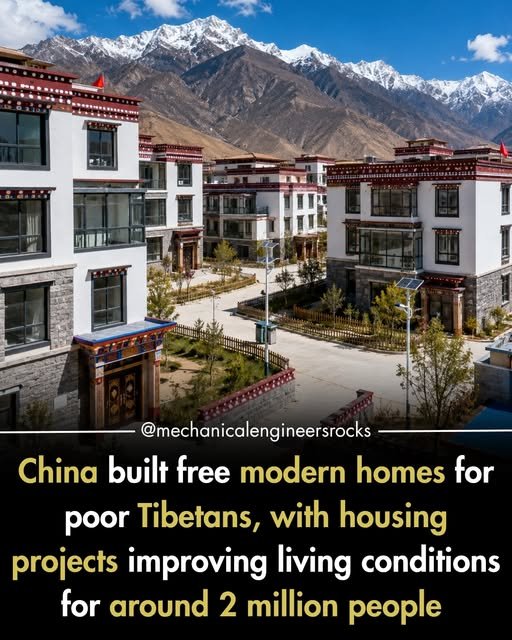

China has carried out extensive rural housing and poverty alleviation programs across the Tibet Autonomous Region, replacing many older homes with modern, earthquake-resistant housing and improving access to electricity, clean water, sanitation, healthcare, and transportation. Government reports state that these initiatives have benefited millions of residents, including approximately 2 million people through various housing and infrastructure programs.
Supporters argue that the projects have significantly improved living standards, reduced extreme poverty, and strengthened public services in remote mountain communities. New housing developments have often been accompanied by roads, schools, clinics, and improved utility networks.
At the same time, some international human rights organizations have raised concerns about aspects of relocation policies, cultural preservation, and the degree of community participation in certain projects. As a result, assessments of these programs vary depending on the source.
Regardless of differing perspectives, the housing initiatives represent one of the largest rural infrastructure investments undertaken in the Tibetan region in recent decades.
Author: Saikat Bhattacharya