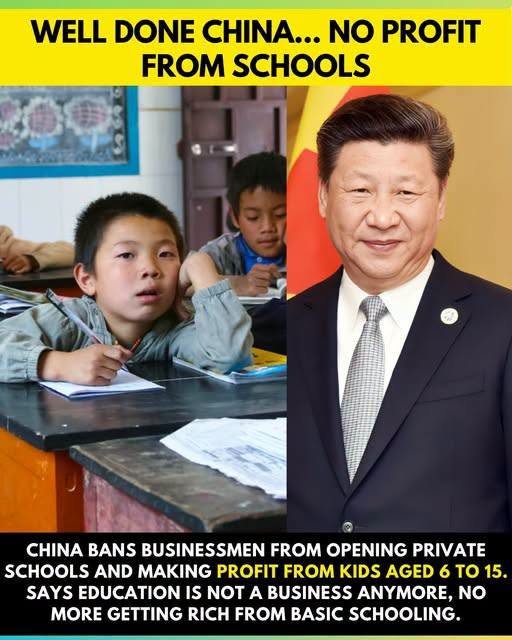






According to reports, China has introduced strict restrictions on for-profit education for children aged 6 to 15, reinforcing its policy that compulsory education should not be operated primarily for commercial profit.
Under the regulations, private companies and investors are no longer permitted to run core after-school tutoring businesses for compulsory education as profit-making enterprises. Many tutoring firms were required to convert into non-profit organizations, and investment and capital raising in this sector have been heavily restricted.
Chinese authorities have said the objective is to reduce the financial burden on families, ease academic pressure on students, and promote more equal access to education. Officials have argued that compulsory education is a public good and should not become a business driven by profit.
Supporters believe the reforms can help reduce excessive tutoring costs, narrow educational inequalities, and create a healthier learning environment for children. Critics, however, argue that the measures have significantly affected the private education industry, led to job losses, and may limit educational choices for some families.
The policy has attracted global attention as governments around the world continue to debate the balance between public education, private participation, affordability, and educational quality.
Author: Saikat Bhattacharya