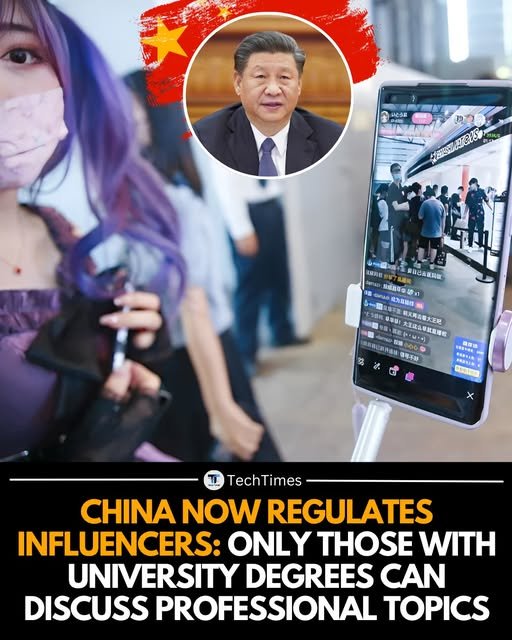






he rule you're referring to is part of a broader set of guidelines released by the Cyberspace Administration of China (CAC) and other bodies to clean up what they see as "chaotic" content online. The key is the distinction between "knowledge" sharing and "professional service" advice.
1. What the Law Actually Says (The "Four Categories")
The regulation focuses on influencers who produce content offering professional advice and services in these four areas:
Finance: Giving specific investment advice, stock predictions, or wealth management tips.
Healthcare: Diagnosing illnesses, prescribing treatments, or giving specific medical advice.
Law: Offering legal interpretations, acting as a legal consultant, or giving specific advice on lawsuits.
Education: Providing policy counseling for studying abroad, course planning, or career guidance that requires official certification.
The core requirement is that creators in these fields must have the relevant professional qualifications and degrees to prove their expertise. An unqualified person cannot give financial investment tips or diagnose a medical condition online.
You can rest easy and continue to enjoy those amazing videos of Chinese inventors. The new law is a targeted measure to prevent scams, misinformation, and unqualified advice in fields where bad information can lead to direct financial loss, health risks, or legal trouble. It is not designed to stifle the creativity and hands-on innovation that you and many others find so inspiring.
The spirit of the law is: "If you are acting as a professional in a high-stakes field, you must prove you are a professional." It's not about stopping people from sharing their hobbies and brilliant DIY projects.
Source : DeepSeek
Author: Saikat Bhattacharya