





University of Twente and Radboud University Medical Center in the Netherlands have joined and successfully guided a tiny 7-millimeter, screw-shaped robot through real brain tissue using magnets outside the body.
The robot moves by spinning, while researchers control its direction with an external magnetic field.
The experiments were performed on extracted sheep brains in the laboratory. The brains were outside the animals' bodies and were not living brains. Researchers also pumped fluid through the brain's blood vessels to create conditions closer to those inside a living brain.
The robot moved through the brain tissue at about 0.2 millimeters per second. Researchers could also reverse its direction and move it back through the same path at speeds of up to 2.9 millimeters per second.
Importantly, researchers reported no visible bleeding along the path created by the robot during the experiments.
The team says the long-term goal is to develop tiny robots that could one day reach difficult areas of the brain without requiring open-skull surgery.
Such technology could potentially be used in the future to help treat strokes, brain tumors and problems with blood vessels.
However, the technology is still in the early research stage. The robot has not been tested in a living human or used to treat patients.
Source: University of Twente and Radboud University Medical Center. The study was published in the peer-reviewed journal Advanced Science.
Read MoreAuthor: Saikat Bhattacharya
Technology news General 30-August-2026 by east is risingIranian missile and drone attacks have inflicted damage on U.S. intelligence posts and surveillance hardware in the Middle East that is more extensive than any destruction America’s spy agencies have endured and will cost billions of dollars to repair, according to four people with knowledge of the matter.
The Iranian strikes have forced Congress to find funds to restore the targeted facilities and prompted officials to weigh how to deploy personnel and intelligence resources in a region now facing a heightened threat from Tehran’s drone and missile arsenal, two of the people said.
Iran’s air attacks also have raised questions about why the Pentagon, the intelligence community and the State Department were not better prepared to defend government facilities from drone and missile strikes, military experts and former U.S. officials said.
Read MoreAuthor: Saikat Bhattacharya
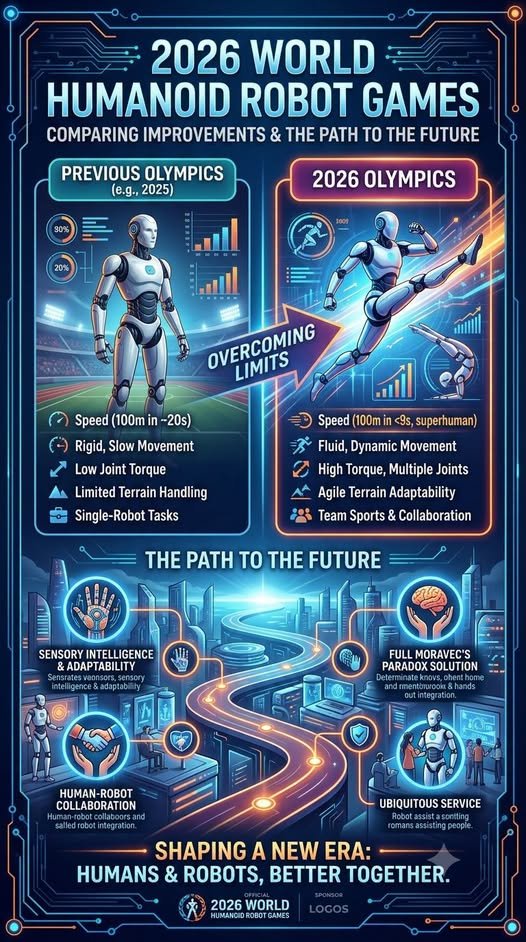
International geopolitics General Unipolar vs Multi-polar 30-August-2026 by east is risingThe 2026 World Humanoid Robot Games in Beijing highlighted both how far AI/robotics has come and how firmly Moravec’s paradox still holds.
Moravec’s paradox states that tasks requiring complex reasoning (like chess or math) are computationally easy for machines, while basic sensory-motor skills that humans do without thinking (like fine manipulation or adapting to unscripted physical environments) are extraordinarily difficult.
Analyzing the results of the 2026 Games shows how robots are chipping away at this paradox without fully overcoming it:
1. Physical Brawn vs. Sensory-Motor Subtlety
The Breakthroughs (Pure Brawn & Speed): Robots demonstrated incredible raw power and speed. Machines like Tiangong Ultra ran the 100-meter dash in 8.64 seconds, comfortably outpacing Usain Bolt's human world record. They also performed high-impact tasks like autonomous soccer matches and backflips.
The Paradox Persists: In Moravec's paradox, explosive linear running or predefined athletic moves are actually the easier engineering problems because they rely heavily on high-speed control loops, localized balance algorithms, and rigid environments.
2. Moravec’s Paradox in Fine Manipulation
Scenario-Based Events: The organizers specifically designed scenario-based challenges to test the exact dynamic Moravec described—tasks like plugging cables into wall sockets, picking up beans with tweezers, and sorting trash.
The Struggle: While machines like Galbot showed promising autonomous progress in complex environments, dexterity remains a massive bottleneck. Robots struggle with dynamic feedback—such as knowing how hard to grip a soft object without crushing it or feeling when a key aligns with a lock—skills human toddlers perform effortlessly.
3. Controlled Conditions vs. Real-World Chaos
Predictability: Sprinting on a smooth track allows an algorithm to maximize performance efficiently.
Lack of Resilience: After crossing the finish line, many top-performing sprinters lost control, crashed into barriers, or burst into sparks and had to be carried off on stretchers. Human brains seamlessly handle stopping, avoiding obstacles, and adapting to unscripted physical consequences—a core aspect of physical intelligence that robots still lack.
Verdict
The 2026 Robot Games do not signal that robots have moved beyond Moravec’s paradox. Instead, they showcase that robotics has finally developed the hardware and AI foundation needed to actively target the paradox. High-speed running and athletic stunts prove hardware execution is reaching superhuman levels, but tactile manipulation and sensory adaptability in chaotic environments remain the true frontier.
Comparing the 2026 World Humanoid Robot Games in Beijing to the inaugural 2025 event highlights a dramatic leap across scale, hardware capabilities, and autonomous execution.
1. Speed and Dynamic Mobility
Previous Games (2025): The fastest humanoid robots clocked times of over 20 seconds in the 100-meter dash. Movement was rigid, slow, and relied heavily on short, cautious steps to maintain center-of-mass stability.
2026 Edition: The speed more than doubled. Models like Lightning (9.47s) and Tiangong Ultra (8.64s) broke human sprinting limits, showcasing leaps in joint torque, lightweight material design, and high-frequency balance feedback loops.
2. Scale and Global Participation
Previous Games (2025): Functioned largely as a regional trial showcase, featuring mostly domestic Chinese research institutes and early prototypes.
2026 Edition: Expanded into a massive international multi-sport event featuring 2,056 robots from 666 teams across 16 countries (including teams from the US, Germany, and Japan).
3. Complex Physical Acrobatics
Previous Games (2025): Basic bipedal walking, standing, and straight-line running were the standard. Any attempt at multi-joint coordination (like kicking) resulted in immediate balance loss.
2026 Edition: Combat and field sports saw advanced maneuvers, including martial arts roundhouse kicks, tennis swings, and dynamic recovery routines where robots could stand up unassisted after takedowns or falls.
4. Scenario-Based & Collaborative Tasks
Previous Games (2025): Event focus was mostly restricted to isolated athletic demonstrations.
2026 Edition: Introduced broader practical tasks to evaluate real-world utility, such as industrial assembly, cable plugging, EV charging setups, and emergency response simulations. Teams also demonstrated multi-robot coordination on the soccer pitch, with winning teams passing fluidly to score goals.
Where Gaps Still Remain
While peak performance exploded, reliability and deceleration control saw less progress. Sprinting robots still frequently crashed into barriers post-finish line, and complex spatial maneuvers caused sudden algorithmic freezes, showing that high-speed physical execution has outpaced dynamic spatial stopping and real-time error recovery.
Read MoreAuthor: Saikat Bhattacharya
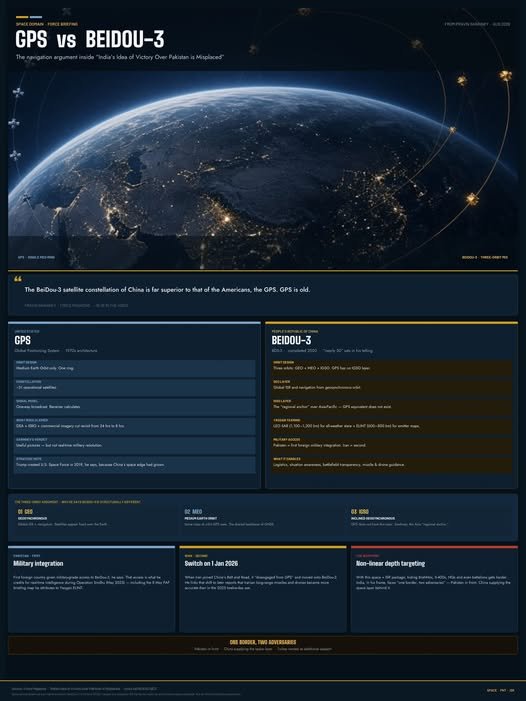
Technology news General Socialism Communism Xi Jinping Mao USSR China 30-August-2026 by east is risingPravin Sawhney’s core claim in the Force Magazine video** (*India’s Idea of Victory Over Pakistan is Misplaced*, uploaded 27 Aug 2026) is that China’s BeiDou-3 constellation is “far superior” to U.S. GPS, that “GPS is old,” and that this gap gave Pakistan (and later Iran) a real operational edge.
Here is what he actually said, in sequence and in detail.
The headline comparison
Around the 16:30 mark he states:
> “The space capability is what is called the Beidou 3 satellite constellation of China, it is far superior to that of the Americans, the GPS. GPS is old.”
He ties this directly to why the U.S. created the Space Force in 2019 under Trump’s first term — to respond to China’s growing space capability.
Why he says BeiDou-3 is structurally different
He describes BeiDou-3 as a hybrid constellation of “nearly 50 satellites” operating in three orbits, one of which GPS does not use:
- Geosynchronous orbit — global ISR + navigation.
- Medium Earth orbit — the same class of orbit GPS uses.
- Inclined geosynchronous orbit (IGSO) — “the third orbit which the GPS doesn’t have.” These satellites act as a regional anchor, especially over Asia.
He contrasts this with GPS, which he treats as an older, single-orbit (MEO-only) system.
The Yaogan layer (ISR, not navigation)
He does not treat BeiDou as a standalone navigation system. He says it “teams up” with China’s Yaogan augmentation satellites in low Earth orbit (roughly 600–1,200 km):
- SAR (synthetic aperture radar) satellites at ~1,100–1,200 km: “persistent stare” that can see through weather and clouds.
- ELINT (electronic intelligence) satellites at ~600–800 km: electronic mapping of emitters.
His specific example: On 8 May 2025, during a Pakistan Air Force media briefing, AVM Aurangzeb Ahmed showed a digital map with electronic identification of Indian aircraft and battlefield assets that Sawhney attributes to ELINT from this Chinese layer.
What this supposedly gave Pakistan
Pakistan, he says, is **the first foreign country** given military-grade access and integration with BeiDou-3. That access, in his telling, delivered:
- Defence logistics
- Situation awareness
- Battlefield transparency
- Navigation and guidance for drones and missiles
This is his rebuttal to Gen. Anil Chauhan’s claim that India had the space advantage in Operation Sindhu (the four-day May 2025 India–Pakistan clash). India, per Chauhan, cut satellite image revisit time from 24 hours to 8 hours using the Defence Space Agency, ISRO, and commercial imagery. Sawhney’s counter is that Pakistan was getting **real-time** military-resolution data from China, not 8-hour-old pictures.
Iran as the second case
He then extends the same argument to Iran:
> Iran is perhaps the second. Because Iran on the 1st January 2026, when it joined the Belt and Road Initiative of China, it also then shifted from GPS to the Beidou-3 constellation of China.
He links that switch to reports that Iranian long-range missiles and drones became more accurate than they were in the 2025 “12-day war.” The same line appears in his Frontline interview clips circulating in March 2026.
How he uses this in the larger argument
The GPS vs BeiDou-3 section is not a standalone tech lecture. It supports his broader thesis:
- Modern war is non-linear and about **depth targeting**, not just the contact line.
- With superior space + ISR, hiding large assets (BrahMos, S-400 batteries, HQs, even battalions) becomes much harder.
- India therefore faces “one border, two adversaries” — Pakistan in front, China (and Turkey) providing the space and other critical support behind it.
He treats space as one of the integrated domains (with cyber and the electromagnetic spectrum) that decide whether a “kill chain” actually works.
---
Context worth keeping separate from his claims
BeiDou-3 (completed 2020) *does* use a mixed-orbit design (MEO + GEO + IGSO) that GPS does not, and it has extra services GPS lacks, notably two-way short messaging. Civilian accuracy of the two systems is now in a similar band; military-grade signals and regional density over Asia-Pacific are where Chinese sources and some Western assessments say BeiDou is denser. Yaogan satellites are a *separate* Chinese reconnaissance family; they are not part of the BeiDou navigation constellation itself. Sawhney folds the two together as one Chinese “space capability” package supplied to Pakistan and Iran.
Read MoreAuthor: Saikat Bhattacharya
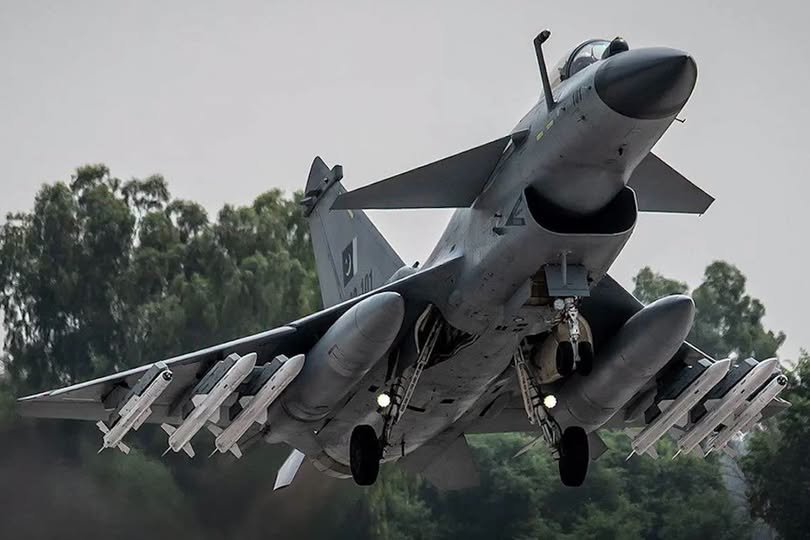
Technology news General USA vs China 30-August-2026 by east is risingএই প্যাকেজে এয়ার টু এয়ার মিসাইল হিসেবে PL-15E(BVR) আর PL-10E(WVR), অ্যান্টি শিপ মিসাইল হিসেবে YJ-83K ,ক্রুজ মিসাইল হিসেবে KD-88 আর LS সিরিজের গাইডেড বোম্বও অন্তর্ভুক্ত থাকবে।
এই প্যাকেজে CM-400AKG-ও অন্তর্ভুক্ত করতে পারলে আরো ভালো।
Read MoreAuthor: Saikat Bhattacharya
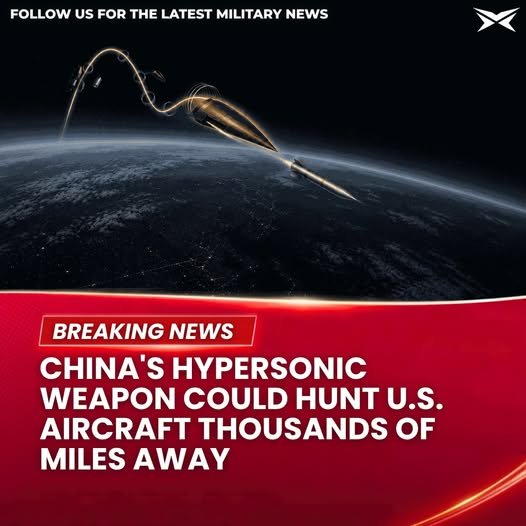
Technology news General world order 30-August-2026 by east is risingChina has developed hypersonic glide vehicles that can launch air-to-air weapons at high-value aircraft thousands of kilometers away, potentially pushing the air war far beyond the fighter front. The reported concept is aimed at the support aircraft that keep U.S. air power alive over the Indo-Pacific, including tankers, airborne early-warning platforms and command aircraft. But extreme missile reach is not the same as a proven ability to kill a moving aircraft at that distance.
The significance lies in the mission China appears to be giving the hypersonic vehicle. A hypersonic glide vehicle, or HGV, is released after a booster sends it onto a high-energy trajectory, allowing the vehicle to maneuver through the atmosphere at hypersonic speed. In the reported configuration, the glide vehicle would not necessarily be the final weapon. It could carry an air-to-air missile or other air-to-air weapon and release it against an aircraft far from the traditional fighter battlespace.
That creates a very different problem for an opponent. A DF-17-class launch could send an HGV roughly 2,414 kilometers, according to the reporting behind the claim. The much longer-range DF-27 is assessed publicly by the U.S. government in the 5,000-to-8,000-kilometer class for different missions. Those figures, however, should not be confused with a demonstrated air-to-air engagement range. The distance a booster or glide vehicle can travel is one measurement. The distance at which the entire system can reliably find, track and intercept a moving aircraft is another.
That distinction may be the hardest part of the concept. A tanker or command aircraft does not sit still while a weapon crosses an ocean-sized battlespace. The target changes position, altitude and heading. A launch solution that looks precise at the beginning of a flight can degrade rapidly without continuous tracking and updates. The farther the weapon travels, the more important the sensor network becomes. A very long-range missile without a reliable targeting chain is still a very long-range missile, not automatically a very long-range interceptor.
China has spent years expanding the links between missiles, aircraft, space-based sensors and command networks. The HGV concept becomes more important when viewed as part of that larger architecture. Instead of relying on a fighter to penetrate deep into contested airspace, China could potentially use a high-speed glide vehicle to carry an air-to-air weapon toward the target area, while other sensors provide the information needed to keep the track alive.
That matters because the most valuable aircraft in a U.S. air campaign are often not the fighters pulling the trigger. Tankers keep combat aircraft airborne longer. Airborne early-warning aircraft extend detection and battle-management coverage. Command, intelligence and communications aircraft connect the wider force. These platforms generally operate away from the most heavily contested airspace. A credible threat that reaches deeper into those support zones could force them farther back, reduce fighter persistence and increase the amount of fuel, aircraft and time required to maintain the same combat effect.
The United States is also pushing the air war toward longer engagement distances, but with different technology. The Air Force has been examining the Air Force Long Range Weapon family, including an air-to-air variant with a threshold minimum range of about 1,000 nautical miles, or roughly 1,850 kilometers. The Navy has also disclosed the AIM-424 Long Range Air-to-Air Missile, known as MALICE, with a range exceeding 250 nautical miles. Neither system is a direct American equivalent of China's reported HGV configuration. The common trend is the expansion of the air-to-air battlespace.
Yet the biggest unanswered questions remain. Public information does not establish how many Chinese HGV-based air-to-air systems exist, whether they have entered operational service, how their targeting chain works in combat, or how reliably the released weapon could acquire a maneuvering aircraft after a very long flight. Range figures also do not reveal the probability of a successful intercept. An impressive maximum range can become much less useful if communications are disrupted, sensors lose the target, or the terminal seeker cannot produce a stable track.
That means the real threat is not simply a hypersonic missile flying farther than before. It is the possibility of combining hypersonic mobility, extreme missile reach and persistent sensing to attack the support structure behind U.S. air power. Even without repeatedly shooting down tankers or airborne command aircraft, such a threat could force those platforms to operate farther from the fight and make every fighter mission more expensive and harder to sustain. China would not need to erase the U.S. support network to change the air war; it would only need to make that network operate under much greater pressure. Stay with the channel for the next major military developments.
Read MoreAuthor: Saikat Bhattacharya
Technology news General USA vs China 30-August-2026 by east is risingWritten by Sara Varghese. Edited by Tanya Shrivastava.
On Tuesday, the UN Committee on the Elimination of Racial Discrimination said that there had been an “increase in law enforcement operations targeting Rohingya, Bengali-speaking Muslims, migrants and asylum-seekers”.
New Delhi on Wednesday rejected as “politically motivated” and “highly malicious” the United Nations’ racial discrimination watchdog’s observations about the alleged targeting of Rohingya refugees and Bengali-speaking Muslims by Indian law enforcement agencies.
On Tuesday, the UN Committee on the Elimination of Racial Discrimination said that there had been an “increase in law enforcement operations targeting Rohingya, Bengali-speaking Muslims, migrants and asylum-seekers”, particularly following an order by the Union Ministry of Home Affairs in 2017 and the 2025 Pahalgam terror attack.
The 2017 order was an apparent reference to a directive issued by New Delhi that year detailing instructions for the deportation of undocumented migrants, including Rohingyas.
Weeks after the terror attack in Jammu and Kashmir’s Pahalgam in April 2025, the Union home ministry had directed the states and Union Territories to verify the credentials of persons suspected to be undocumented migrants from Bangladesh and Myanmar.
Following the May 2025 directive, the police in several states, most of them ruled by the Bharatiya Janata Party, have been detaining Bengali-speaking persons – mostly Muslims – and asking them to prove that they are Indian citizens.
Several persons have been forced into Bangladesh after they allegedly could not prove their Indian citizenship. In some cases, persons who were mistakenly sent to Bangladesh returned to the country after the state authorities in India proved that they were Indians.
On Wednesday, Ministry of External Affairs spokesperson Randhir Jaiswal said the UN committee’s review was a routine treaty-body process and that India had participated in it in a “spirit of constructive engagement”.
He added that India had highlighted its constitutional safeguards, legal framework, pluralism and efforts to protect disadvantaged communities during the review.
“While we will respond to the committee’s observations through the established procedure, the inter-ministerial delegation, which was led by the Solicitor General…Tushar Mehta, had already rejected the sweeping generalisations, unsubstantiated allegations, or tendency to exceed the convention’s mandate during the review meeting,” Jaiswal said.
The UN panel had also said that it was concerned about violations allegedly perpetrated by the law enforcement authorities against the Scheduled Tribes, the Scheduled Castes and other groups, and urged New Delhi to act in the matter.
Read MoreAuthor: Saikat Bhattacharya
International geopolitics Hindu world order 30-August-2026 by east is risingঢাকা মহানগরীর নিম্ন আয়ের মানুষের জীবনমান উন্নয়নে এক যুগান্তকারী মেগা প্রকল্প হাতে নেওয়া হচ্ছে। রাজধানীর অন্যতম প্রধান তিনটি বস্তি—কড়াইল, সাততলা এবং ভাসানটেকের বাসিন্দাদের জন্য প্রায় ১০ হাজার কোটি টাকা ব্যয়ে একটি আধুনিক আবাসন প্রকল্প নির্মাণ করতে যাচ্ছে চীন।
প্রস্তাবিত এই সুবিশাল প্রকল্পের আওতায় বস্তিবাসীদের জন্য ২০ তলাবিশিষ্ট একাধিক সুউচ্চ আবাসিক ভবন নির্মাণ করা হবে। আধুনিক সুযোগ-সুবিধা সম্বলিত এই ভবনগুলোর প্রতিটি ফ্ল্যাটের আয়তন হবে প্রায় ৬০০ থেকে ৬৫০ বর্গফুট, যা একটি পরিবারের সুস্থ ও সুন্দরভাবে বেঁচে থাকার জন্য যথেষ্ট।
এই প্রকল্পের সবচেয়ে বড় ও জনবান্ধব দিক হলো— কড়াইল, সাততলা ও ভাসানটেক বস্তির বর্তমান বাসিন্দারা এই ফ্ল্যাটগুলোতে সম্পূর্ণ বিনা ভাড়ায় বসবাসের সুযোগ পাবেন। অর্থাৎ, তাদের কোনো মাসিক ঘরভাড়া গুনতে হবে না। তবে শর্ত অনুযায়ী, ফ্ল্যাটে বসবাসকারী পরিবারগুলোকে শুধু নিজেদের ব্যবহৃত বিদ্যুৎ, গ্যাস ও পানির মতো ইউটিলিটি বিলগুলো নিয়মিত পরিশোধ করতে হবে। বিশ্লেষকরা মনে করছেন, এই মেগা প্রকল্প বাস্তবায়িত হলে ঢাকার বস্তিগুলোর চেহারাই বদলে যাবে এবং ছিন্নমূল মানুষের জীবনযাত্রায় এক বৈপ্লবিক পরিবর্তন আসবে।
Read MoreAuthor: Saikat Bhattacharya
Technology news General Unipolar vs Multi-polar 30-August-2026 by east is risingInfo Bangla
বাংলাদেশের কারিগরি ও বৃত্তিমূলক শিক্ষা, দক্ষতা উন্নয়ন এবং কর্মমুখী প্রশিক্ষণে চীনের সঙ্গে সহযোগিতা আরও বড় পরিসরে এগিয়ে নেওয়ার উদ্যোগ নেওয়া হয়েছে। এর অংশ হিসেবে বাংলাদেশ ও চীন ‘চীন-বাংলাদেশ ভোকেশনাল এডুকেশন, ট্রেনিং অ্যান্ড রিসার্চ সেন্টার’ প্রতিষ্ঠার জন্য একটি নতুন সমঝোতা করেছে।
এই উদ্যোগটি শুধু একটি আনুষ্ঠানিক চুক্তির মধ্যে সীমাবদ্ধ নয়। এর সঙ্গে যুক্ত করা হচ্ছে শিক্ষক প্রশিক্ষণ, আধুনিক কারিগরি শিক্ষা, গবেষণা, শিল্পভিত্তিক ব্যবহারিক প্রশিক্ষণ, পাঠ্যক্রম উন্নয়ন, চীনা ভাষা শিক্ষা, শিক্ষক-শিক্ষার্থী বিনিময় এবং কর্মসংস্থানমুখী দক্ষতা তৈরির মতো একাধিক বিষয়।
চীনের জিয়াংসি প্রদেশে অনুষ্ঠিত ‘চীন-বাংলাদেশ শিক্ষা বিনিময় সম্মেলনে’ এই সমঝোতা স্বাক্ষর করা হয়। বাংলাদেশের পক্ষে কারিগরি ও মাদ্রাসা শিক্ষা বিভাগের সচিব মো. দাউদ মিয়া এবং চীনের পক্ষে জিয়াংসি সায়েন্স অ্যান্ড টেকনোলজি নরমাল ইউনিভার্সিটির ভাইস প্রেসিডেন্ট অধ্যাপক ঝেং পেংউ এতে স্বাক্ষর করেন।
সম্মেলনে শিক্ষামন্ত্রী ড. আ ন ম এহছানুল হক মিলন এবং প্রধানমন্ত্রীর শিক্ষাবিষয়ক উপদেষ্টা মাহ্দী আমিনসহ বাংলাদেশ ও চীনের শিক্ষা, কারিগরি প্রশিক্ষণ এবং শিল্প খাতের প্রতিনিধিরা অংশ নেন।
কী ধরনের পরিবর্তন আসতে পারে?
এই সহযোগিতার অন্যতম লক্ষ্য হলো বাংলাদেশের তরুণদের শুধু একাডেমিক শিক্ষা দেওয়ার পরিবর্তে বাস্তব কর্মক্ষেতরের চাহিদা অনুযায়ী দক্ষ করে তোলা।
সমঝোতার আওতায় যেসব ক্ষেত্রে সহযোগিতার কথা বলা হয়েছে, সেগুলোর মধ্যে রয়েছে:
আধুনিক ভোকেশনাল ও কারিগরি প্রশিক্ষণ
কারিগরি শিক্ষকদের প্রশিক্ষণ ও সক্ষমতা বৃদ্ধি
আধুনিক ও কর্মমুখী পাঠ্যক্রম তৈরি
দ্বিভাষিক শিক্ষা উপকরণ ও শিক্ষাসামগ্রী
যৌথ গবেষণা ও গবেষণা কেন্দ্র
শিক্ষক ও শিক্ষার্থী বিনিময়
চীনে শিক্ষা সফর ও বিশেষায়িত প্রশিক্ষণ
বাংলাদেশে শিল্পভিত্তিক ব্যবহারিক প্রশিক্ষণ
চীনা বিনিয়োগে পরিচালিত প্রতিষ্ঠানের সঙ্গে প্রশিক্ষণ সহযোগিতা
শিক্ষা প্রতিষ্ঠান ও শিল্পখাতের মধ্যে সরাসরি সংযোগ
যৌথ সার্টিফিকেশন এবং ভবিষ্যতে এমপ্লয়মেন্ট এক্সচেঞ্জ নেটওয়ার্ক তৈরির উদ্যোগ।
অর্থাৎ, একজন শিক্ষার্থী কারিগরি শিক্ষা শেষ করার পর তার শেখা বিষয়টি বাস্তবে কোথায় এবং কীভাবে কাজে লাগবে, সেই বিষয়টির ওপরও গুরুত্ব দেওয়া হচ্ছে।
একসঙ্গে চালু হয়েছে ৩টি গুরুত্বপূর্ণ প্ল্যাটফর্ম
এই সহযোগিতার আরও একটি উল্লেখযোগ্য দিক হলো, একই অনুষ্ঠানে তিনটি শিক্ষা ও দক্ষতা উন্নয়নভিত্তিক সহযোগিতা প্ল্যাটফর্ম চালু করা হয়েছে।
১. চীন-বাংলাদেশ ভোকেশনাল টিচার ট্রেনিং সেন্টার
কারিগরি শিক্ষকদের আধুনিক প্রশিক্ষণ ও দক্ষতা বৃদ্ধির জন্য এই কেন্দ্র কাজ করবে। ফলে শিক্ষকরা নতুন প্রযুক্তি, আধুনিক প্রশিক্ষণ পদ্ধতি এবং শিল্পের পরিবর্তিত চাহিদার সঙ্গে নিজেদের দক্ষতা আরও সামঞ্জস্য করার সুযোগ পেতে পারেন।
২. বাংলাদেশ ভোকেশনাল এডুকেশন রিসার্চ সেন্টার
কারিগরি শিক্ষা নিয়ে গবেষণা, পাঠ্যক্রম উন্নয়ন এবং দক্ষতা উন্নয়নের নতুন মডেল তৈরিতে এই কেন্দ্র গুরুত্বপূর্ণ ভূমিকা রাখতে পারে।
৩. বাংলাদেশ ‘চাইনিজ ল্যাঙ্গুয়েজ + স্কিল ডেভেলপমেন্ট’ কোঅপারেশন সেন্টার
চীনা ভাষা শিক্ষা এবং কারিগরি দক্ষতাকে একসঙ্গে এগিয়ে নেওয়ার জন্য এই প্ল্যাটফর্ম তৈরি করা হয়েছে। ফলে ভবিষ্যতে চীনের সঙ্গে শিক্ষা, প্রশিক্ষণ ও শিল্পভিত্তিক সহযোগিতার ক্ষেত্রে ভাষাগত দক্ষতাও একটি বাড়তি সুবিধা দিতে পারে।
শুধু প্রচলিত কারিগরি শিক্ষা নয়, গুরুত্ব পাচ্ছে নতুন প্রযুক্তিও
সম্প্রতি চীনের গুয়াংডংয়ে অনুষ্ঠিত আরেকটি সিম্পোজিয়ামে প্রধানমন্ত্রীর শিক্ষাবিষয়ক উপদেষ্টা মাহ্দী আমিন বাংলাদেশের শিক্ষা ও দক্ষতা উন্নয়নের ক্ষেত্রে আরও কিছু গুরুত্বপূর্ণ খাতের কথা তুলে ধরেছেন।
তিনি বলেন, বাংলাদেশ ও চীনের ক্রমবর্ধমান অর্থনৈতিক অংশীদারিত্বকে টেকসই করতে কৃত্রিম বুদ্ধিমত্তা (AI), রোবোটিক্স, ক্রস-বর্ডার ই-কমার্স, সাপ্লাই চেইন ম্যানেজমেন্ট এবং ফিনান্সিয়াল টেকনোলজির মতো উদীয়মান প্রযুক্তি খাতে বিশ্বমানের দক্ষ জনশক্তি তৈরি করা জরুরি।
এখানেই বিষয়টি আরও গুরুত্বপূর্ণ হয়ে ওঠে।
কারণ, ভবিষ্যতের চাকরির বাজার শুধু প্রচলিত দক্ষতার ওপর নির্ভর করবে না। প্রযুক্তির পরিবর্তনের সঙ্গে তাল মিলিয়ে নতুন ধরনের দক্ষতাও প্রয়োজন হবে। বাংলাদেশ-চীন শিক্ষা সহযোগিতার মাধ্যমে এসব উদীয়মান ক্ষেত্রে প্রশিক্ষণ ও দক্ষতা তৈরির সুযোগ বাড়ানোর বিষয়টিও আলোচনায় এসেছে।
মাহ্দী আমিন চীনের শীর্ষস্থানীয় বিশ্ববিদ্যালয় ও কারিগরি প্রতিষ্ঠানের সহায়তায় আধুনিক কারিগরি পাঠ্যক্রম, যৌথ সার্টিফিকেশন এবং এমপ্লয়মেন্ট এক্সচেঞ্জ নেটওয়ার্ক গড়ে তোলার আহ্বান জানিয়েছেন।
চীনা ভাষার ওপরও কেন গুরুত্ব দেওয়া হচ্ছে?
বাংলাদেশ ও চীনের অর্থনৈতিক সম্পর্ক যত বাড়ছে, দুই দেশের ব্যবসা, শিল্প, শিক্ষা ও কর্মক্ষেত্রের যোগাযোগও তত বাড়ছে।
এই বাস্তবতায় বাংলাদেশি তরুণদের জন্য কারিগরি দক্ষতার পাশাপাশি ম্যান্ডারিন বা চীনা ভাষা শেখার সুযোগ তৈরি করার বিষয়টিও গুরুত্ব পাচ্ছে।
গুয়াংডংয়ের আলোচনায় মাহ্দী আমিন বলেন, আন্তর্জাতিক পরিমণ্ডলে বাংলাদেশি তরুণদের এগিয়ে নিতে ম্যান্ডারিন চর্চাকে অগ্রাধিকার দিয়ে তৃতীয় ভাষা শিক্ষা চালুর কার্যকর উদ্যোগ নেওয়া হয়েছে।
অর্থাৎ, ভবিষ্যতে একজন তরুণের কাছে শুধু একটি কারিগরি দক্ষতা থাকাই নয়, আন্তর্জাতিক যোগাযোগের সক্ষমতাও তার বাড়তি শক্তি হয়ে উঠতে পারে।
বাংলাদেশে শিল্পের সঙ্গে প্রশিক্ষণের সংযোগ বাড়ানোর পরিকল্পনা
এই উদ্যোগের আরেকটি গুরুত্বপূর্ণ দিক হলো শিক্ষা প্রতিষ্ঠান ও শিল্পখাতের মধ্যে সরাসরি যোগাযোগ তৈরি করা।
বাংলাদেশে চীনা বিনিয়োগে পরিচালিত প্রতিষ্ঠানগুলোর সঙ্গে সহযোগিতার মাধ্যমে শিক্ষার্থীদের ব্যবহারিক প্রশিক্ষণের সুযোগ বাড়ানোর বিষয়টি বিবেচনায় রয়েছে। এর ফলে শিক্ষার্থীরা প্রশিক্ষণের সময়ই বাস্তব শিল্প পরিবেশ সম্পর্কে ধারণা নেওয়ার সুযোগ পেতে পারে।
কারিগরি শিক্ষাকে কর্মসংস্থানের সঙ্গে যুক্ত করার ক্ষেত্রে এই ধরনের শিল্প-শিক্ষা সংযোগ গুরুত্বপূর্ণ বলে মনে করছেন সংশ্লিষ্টরা।
শিক্ষামন্ত্রী ড. আ ন ম এহছানুল হক মিলনও জোর দিয়েছেন, কারিগরি ও বৃত্তিমূলক শিক্ষাকে অবশ্যই শিল্প ও কর্মসংস্থান বাজারের প্রকৃত চাহিদার সঙ্গে ঘনিষ্ঠভাবে যুক্ত করতে হবে।
তার বক্তব্য অনুযায়ী, শিক্ষার্থীরা যেন কর্মক্ষেত্রে প্রবেশের আগেই একাডেমিক জ্ঞানের পাশাপাশি প্রয়োজনীয় ব্যবহারিক দক্ষতা অর্জন করতে পারে, সেই সুযোগ তৈরি করা জরুরি।
চীনের ১৯টি প্রতিষ্ঠান অংশ নিয়েছে
জিয়াংসি প্রদেশের সম্মেলনে চীনের ১৯টি বিশ্ববিদ্যালয়, কারিগরি প্রতিষ্ঠান ও শিল্পখাতের প্রতিনিধিরা অংশ নেন।
অংশগ্রহণকারী প্রতিষ্ঠানগুলোর মধ্যে ছিল জিয়াংসি সায়েন্স অ্যান্ড টেকনোলজি নরমাল ইউনিভার্সিটি, নানচাং ইউনিভার্সিটি, ইস্ট চায়না জিয়াওটং ইউনিভার্সিটি, নানচাং হংকং ইউনিভার্সিটি, জিয়াংসি ভোকেশনাল ইউনিভার্সিটি অব ফরেন স্টাডিজ, জিউজিয়াং ভোকেশনাল ইউনিভার্সিটি, জিয়াংসি ইন্ডাস্ট্রি পলিটেকনিক কলেজ, জিয়াংসি ভোকেশনাল টেকনিক্যাল কলেজ অব ইন্ডাস্ট্রি অ্যান্ড ট্রেডসহ আরও বেশ কয়েকটি শিক্ষা ও কারিগরি প্রতিষ্ঠান।
অন্যদিকে, গুয়াংডংয়ে অনুষ্ঠিত সিম্পোজিয়ামেও চীনের ১১টি শীর্ষ কারিগরি ও প্রযুক্তিগত কলেজ অংশ নেয়। সেখানে কারিগরি শিক্ষা, ভাষা শিক্ষা, দক্ষতা উন্নয়ন এবং শিল্প-শিক্ষার সমন্বয় নিয়ে আলোচনা হয়।
এ সময় বাংলাদেশের শিক্ষামন্ত্রী ও শিক্ষা উপদেষ্টা ‘বেইডৌ+’ ডিজিটাল সাপ্লাই চেইন ল্যাবরেটরি পরিদর্শন করেন এবং রোবোটিক্স, রোবট ডগের প্রোগ্রামিংসহ বিভিন্ন প্রযুক্তি ও প্রশিক্ষণ কার্যক্রম পর্যবেক্ষণ করেন।
বাংলাদেশের তরুণদের জন্য এর অর্থ কী?
সবচেয়ে সহজভাবে বললে, এই উদ্যোগ সফলভাবে বাস্তবায়িত হলে বাংলাদেশের তরুণদের জন্য আরও আধুনিক কারিগরি শিক্ষা, উন্নত প্রশিক্ষণ, ব্যবহারিক অভিজ্ঞতা, আন্তর্জাতিক সহযোগিতা এবং ভবিষ্যৎ কর্মসংস্থানের উপযোগী দক্ষতা অর্জনের সুযোগ বাড়তে পারে।
তবে একটি বিষয় পরিষ্কার রাখা জরুরি: এই সমঝোতাকে সরাসরি চীনে চাকরি বা কর্মসংস্থানের নিশ্চয়তা হিসেবে দেখা ঠিক হবে না।
বরং এর মূল লক্ষ্য হচ্ছে এমন একটি দক্ষ জনশক্তি তৈরি করা, যারা দেশীয় ও আন্তর্জাতিক শ্রমবাজারের পরিবর্তিত চাহিদার সঙ্গে নিজেদের মানিয়ে নিতে পারে।
প্রধানমন্ত্রীর শিক্ষাবিষয়ক উপদেষ্টা মাহ্দী আমিনের বক্তব্যেও বিষয়টি স্পষ্ট। তার ভাষায়, লক্ষ্য হচ্ছে শিক্ষাকে দক্ষতায়, দক্ষতাকে কর্মসংস্থানে এবং কর্মসংস্থানকে অর্থনৈতিক সুযোগে পরিণত করা।
এ কারণেই বাংলাদেশ-চীন এই নতুন সহযোগিতাকে শুধু একটি চুক্তি হিসেবে না দেখে কারিগরি শিক্ষা, দক্ষতা উন্নয়ন এবং শিল্পের সঙ্গে শিক্ষার সংযোগ আরও শক্তিশালী করার একটি সম্ভাবনাময় উদ্যোগ হিসেবে দেখা হচ্ছে।
যদি পরিকল্পনাগুলো বাস্তবে কার্যকর করা যায়, তাহলে বাংলাদেশের তরুণদের জন্য আধুনিক প্রযুক্তি, শিল্পভিত্তিক প্রশিক্ষণ, আন্তর্জাতিক মানের দক্ষতা এবং ভবিষ্যতের কর্মসংস্থানের বাজারে নিজেদের প্রস্তুত করার নতুন সুযোগ তৈরি হতে পারে।
Read MoreAuthor: Saikat Bhattacharya
Technology news General world order 30-August-2026 by east is rising