US Wealth Is Mainly Debt Fueled Asset Price Hike

The United States stays on top over the last two decades, but with a thinner margin. The U.S. share fell after 2000, rebounded post-pandemic, and now sits at approximately 35%.

China’s rose from just 3.1% in 2000 to roughly 20% today, by far the biggest gain of any country.

Shifting middle tier: Japan’s stake has shrunk by two-thirds, while India has climbed from less than 1% to 3.4%, edging ahead of France and nearly matching the UK and Germany.

Read More

Author: Saikat Bhattacharya

International geopolitics General USA vs China 18-September-2026 by east is rising

As of August 2026 its down to USD 577 Billion

China’s US Treasury holdings fell to US$618 billion in July 2026, the lowest since August 2008. Total holdings by all foreign investors, including China, declined for a second consecutive month to US$9.25 trillion.

France and Canada led the overall fall, while the UK increased its holdings by US$58.4 billion and remained the second-largest foreign holder behind Japan.

The US$50.4 billion monthly decline in foreign Treasury holdings reflects changes in bond prices as well as net buying and selling, with the Bloomberg US Treasury Index down more than 1% in July.

Read More

Author: Saikat Bhattacharya

International geopolitics General USA vs China 18-September-2026 by east is rising

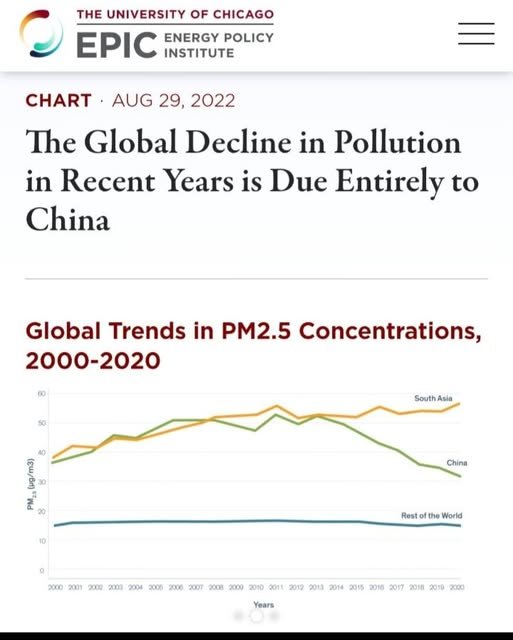
China Leads Global Decline In Pollution

Even though coal usage in China has expanded especially during covid, but due to advance technology in the burning of coal and the the widespread use of solars and EVs, overall pollution has dropped significantly.

Read More

Author: Saikat Bhattacharya

Social General Socialism Communism Xi Jinping Mao USSR China 18-September-2026 by east is rising

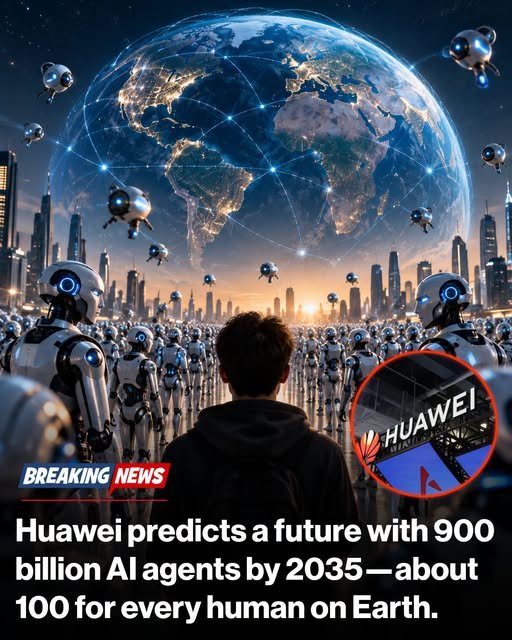
Huawei Predicts That There Will be 900 Billion AI Agents By 2035

Huawei’s outlook reflects confidence in rapid technological expansion to support this dense ecosystem of intelligent agents supporting every aspect of society.

Huawei envisions a transformative landscape by 2035 in which artificial intelligence agents proliferate to an astonishing scale of nine hundred billion worldwide.

These autonomous software entities, capable of perceiving environments, reasoning independently, making decisions, and interacting with tools or other systems, would outnumber humans by a factor of roughly one hundred, assuming a global population of about nine billion.

Such agents are projected to evolve from basic assistants into sophisticated partners that handle complex tasks across industries, daily life, and physical interactions, driving what Huawei terms an agentic internet.

In this future, networks must connect not only people but vast numbers of digital agents, many operating on mobile devices, generating massive increases in data traffic and computational demands.

Annual AI token consumption could surge dramatically, with agents accounting for over ninety percent of the flow, necessitating advances in computing power, storage, security, and energy infrastructure.

Integrating AI more deeply into the physical world is seen as essential for progressing toward artificial general intelligence.

This shift promises productivity gains, proactive health management, and new collaborative paradigms between humans and machines, while also raising challenges around privacy, control, and resource allocation.

Read More

Author: Saikat Bhattacharya

Technology news General Socialism Communism Xi Jinping Mao USSR China 18-September-2026 by east is rising

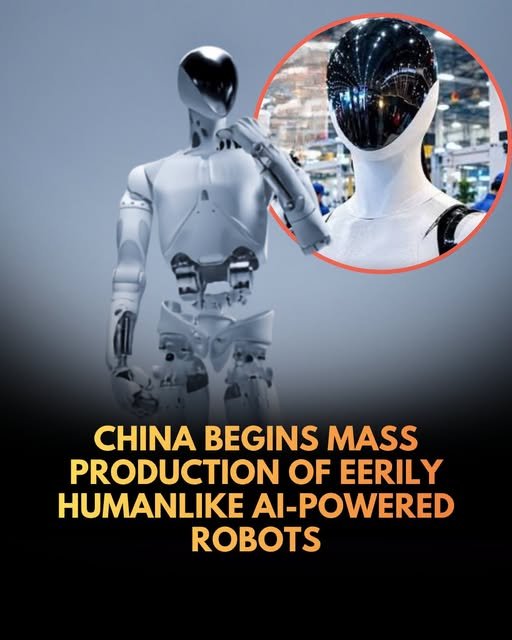
Eerily humanlike robots just entered mass production in China.

Chinese technology giant XPENG has launched mass production of its eerily lifelike 'IRON' humanoid robot, a milestone marked by the machine autonomously walking itself off the assembly line.

In a major leap forward for physical AI, Chinese electric-vehicle and tech manufacturer XPENG has transitioned its humanoid robot, IRON, from research prototype to automated mass production. Standing at five-foot-seven and weighing 143 pounds, the fabric-skinned robot is built on automotive-grade manufacturing processes designed to easily scale production.

A viral sensation during its testing phase, the production-ready machine features 76 degrees of freedom across its body and is powered by three custom Turing AI chips. XPENG intends for IRON to eventually assist with domestic chores like laundry and cleaning, with its onboard brains allowing it to navigate homes and complete tasks entirely without remote assistance.

This milestone highlights a rapidly accelerating global race in embodiment AI, where China has quietly established dominance, reportedly capturing over 80 percent of global humanoid shipments. By utilizing 'dark factories' where automated systems build other machines, Chinese firms are scaling robotic labor at a pace that Western competitors are struggling to match. While commercial deliveries of the IRON robot are slated to begin in 2027, the rapid rise of these highly capable, independent machines raises profound questions about the future of physical labor and human-robot cohabitation.

Read More

Author: Saikat Bhattacharya

Technology news General Socialism Communism Xi Jinping Mao USSR China 18-September-2026 by east is rising

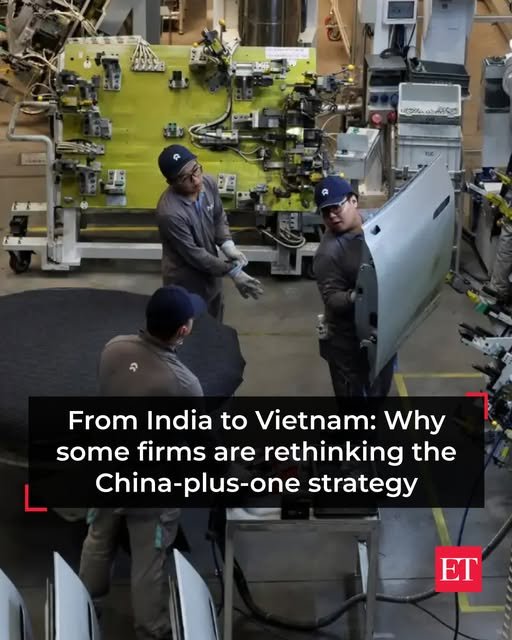
China Plus One Policy Is Failing: Companies Moving Back To China

Companies are bringing manufacturing back to China after facing difficulties abroad. Replicating China's factory ecosystem and skilled labor proves challenging for many firms. Overseas supply gaps and production constraints are prompting this manufacturing shift. Some businesses are restoring Chinese suppliers due to reliability and efficiency.

Companies continue to invest in Southeast Asia's manufacturing hubs, but the "China plus one" push, under which firms hedged China exposure with operations in other lower-tariff countries, has proved harder to execute.

The shifts are unfolding ahead of an expected meeting between Trump and Chinese President Xi Jinping this month, which businesses will watch for clarity on a proposed mechanism to lower barriers on some non-sensitive goods.

Guan Baokui, a Qingdao-based lawyer who advises manufacturers, said Vietnam and Indonesia suffer from an "unstable and not continuous" electricity supply, a problem that intensified as ​global oil prices surged.

Stanislaw Krykun, CEO of Poland-based packaging firm DST Pack, worked with his six-year Chinese manufacturing partner to get through the painful ‌period when plastic input costs spiked 15% in April because of soaring oil prices. "In case of any crisis, the Chinese production plants will be the most stable plants you can use," Krykun said.

Exporters said they do not expect the Trump-Xi summit to resolve their problems.

Groke AI says: 

It did not fail everywhere. What failed for a lot of firms is China+1 as a cheap tariff dodge. A thinner, real dual-source strategy is still happening. The “return to China” story this month is mostly mid-complexity goods and rushed moves that never built a second industrial cluster.​

Reuters

What China+1 was supposed to do

Keep China for scale, suppliers, and the domestic market; add Vietnam, India, Mexico, Thailand, or Indonesia so a tariff, lockdown, or blockade would not stop shipments. After 2018 tariffs, COVID, and then the 2025 tariff wave, boards treated that as mandatory.

For apparel, furniture, toys, and some final assembly, it worked on paper: US imports from China fell hard; Vietnam, Mexico, and India took share. That part is real and is not fully reversing.​

Valueaddvc

Why a chunk of that wave is coming back

1. You moved the last factory, not the ecosystem.

China is not “cheap labour.” It is tooling shops, screw and mould makers, plating, packaging, engineers who can change a line overnight, and reliable power. A Vietnam or India plant that still imports moulds, fasteners, and fixtures from Guangdong is a China factory with extra freight and a new flag. Outdoor-furniture and metal-casting firms that opened in Ho Chi Minh City or India in 2024 have already shut those shops and sent orders home for exactly that reason.​

Reuters

2. The tariff gap shrank.

The whole point of leaving was “China duty high, Vietnam/Thailand duty low.” Washington then put tariffs on a much wider set of countries and started treating third-country plants as transshipment. Once China’s effective US rate is ~20% and Vietnam/Indonesia are no longer almost duty-free, the math that paid for a second factory disappears. You still pay the China duty and you pay for a worse supply chain.​

Moderndiplomacy

3. Quality, labour, and power were worse than the slide deck.

Defect rates, scarce skilled workers, and unreliable electricity show up as expedited freight, extra QC staff, and missed seasons. Target has put some orders back on Chinese suppliers after disruptions abroad; Shein has been scaling back parts of its Vietnam operation. Full landed cost from China can end up only high-single-digit to mid-teens above SEA once you count scrap and delay — a gap reliability can wipe out.​

Reuters

4. Coordination cost ate the savings.

Two origins, two vendor lists, two QC standards, two sets of documents. That is the most common failure mode: the “+1” stays a token 10–20% of volume and never becomes a real second system. Many brands that announced China+1 in 2022–24 are quietly back above 80% China for volume.

5. China still owns the inputs.

Batteries, magnets, rare-earth refining, many chemicals, precision metal, and a huge share of electronics components remain China-centric. You can assemble an iPhone in India; a lot of what goes into it still comes from Jiangsu and Guangdong. Dual-track giants (Apple, Tesla) never left that stack; they added a second assembly node and kept China for depth and for the China market.

Restofworld

6. Speed still lives in China.

Fast fashion, seasonal housewares, and custom metal work need week-scale iteration. SEA and India can do volume. They are weaker at “change the SKU on Thursday.” That is why some orders drifted back after one bad season.

What did not fail

Do not over-read the Reuters anecdotes as “global manufacturing is going home to Shenzhen.”

Vietnam still takes electronics, footwear, and apparel at scale; India has a real iPhone assembly footprint; Mexico is the US-bound nearshore bet. New FDI is still landing there.

Valueaddvc

Simple, loosely coupled products (furniture, lighting, toys, basic apparel) can move and have moved. Tightly coupled products (EVs, advanced electronics, multi-tier components) cannot move as a block.

A lot of “Vietnam-made” or “Mexico-made” goods are still Chinese firms, Chinese managers, and Chinese parts. That is China+1 as routing, not as independence. Washington’s transshipment push is aimed at that loophole.

Valueaddvc

The clean way to say it

China+1 failed when it was “same product, new country, lower tariff.” That version dies when tariffs spread, when the second country cannot copy the cluster, and when you still need China for parts.

China+1 works when it is two real systems: different suppliers, different tooling, different logistics, accepted higher unit cost in exchange for political insurance — and when you still sell into China, which means you never fully leave.

What you are seeing in September 2026 is the first kind snapping back, not the death of diversification. Firms that only chased a tariff spread are returning. Firms that spent years building a second industrial base are staying put — and they still cannot cut China out of the bill of materials.

Read More

Author: Saikat Bhattacharya

International geopolitics General USA vs China 18-September-2026 by east is rising

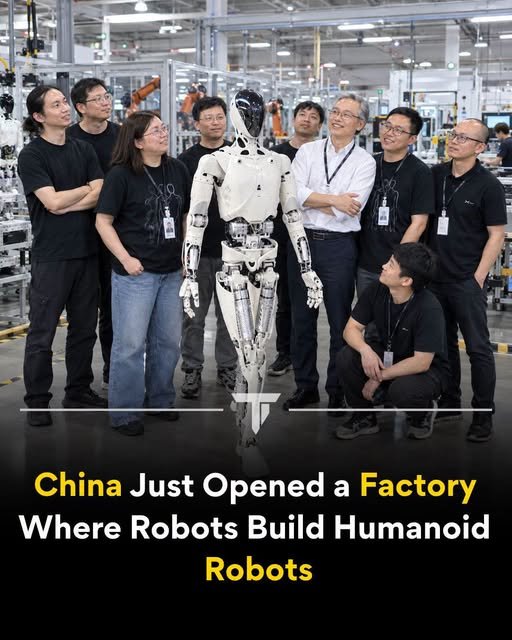
Robots Are Now Making Robots In China

Humanoid Robots are making Humanoid Robots?

China’s electric car maker XPENG has started production at a new automated factory in Guangzhou where robots and machines are used to build its IRON humanoid robots.

XPENG says more than 80% of the factory’s main production processes are automated. The company calls it the world’s first automated production line specifically designed for advanced general-purpose humanoid robots.

The first IRON robot made on the line was shown walking away from the production line on its own after assembly.

IRON is 173 cm tall and weighs 65 kg. It has 76 degrees of freedom, including 21 in each hand, allowing it to perform complex movements and handle objects.

XPENG plans to begin mass production by the end of 2026. The company plans to first use the robots in its own stores and campuses, before selling and delivering them in China and overseas markets in 2027.

XPENG’s robotics business also raised more than $900 million in August, giving it a valuation of more than $6.3 billion.

The new XPENG factory shows how companies are moving humanoid robots from prototypes toward large-scale production.

Read More

Author: Saikat Bhattacharya

Technology news General world order 18-September-2026 by east is rising

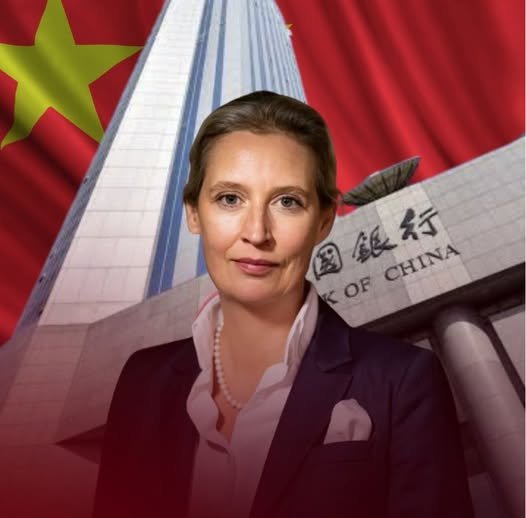
From the Bank of China to the German Power Struggle

Most people don't know that Alice Weidel of AfD has links with China. 

Before Alice Weidel became one of the most watched figures in German politics, she lived in China for approximately six years, worked in the financial world, studied Mandarin Chinese, and chose "the Chinese pension system" as the topic of her doctoral dissertation.

Today, those experiences are becoming increasingly significant as the AfD, which Weidel co-leads, rapidly expands its political base, from 20.8% in the 2025 Bundestag election to a 43.8% victory in Saxony-Anhalt on September 6, 2026, aiming to move the party closer to federal power.

But this doesn't end with just German domestic politics. As the German government and the EU discuss "de-risking" and reducing dependence on China,

Weidel, with her preference for avoiding economic confrontation with China—revealed in her past criticism of EU sanctions against Chinese companies and her emphasis on open trade relations and markets—is crucial to the German economy.

This raises the interesting question: if the AfD gains greater control over Germany's power, will Weidel's experiences with China become a key factor in restructuring German policy toward China? This issue requires a long-term analysis.

Read More

Author: Saikat Bhattacharya

International geopolitics General world order 18-September-2026 by east is rising

হুথি বলতে শুধু শিয়া নয়

হুথি বা আনসারুল্লাহ বলতে অনেকেই মনে করেন, এটা মনে হয় শুধু শিয়া সংগঠন। আনসারুল্লাহর সব যোদ্ধারা শিয়া। তাহলে আপনি একটা মহা ভুলের জগতে আছেন। সত্যি কথা বলতে, এই ব্যাপারে খুব বেশি লেখালেখি হয় না, তাই হয়তো অনেকেই জানেন না।

আনসারুল্লাহর প্রতিরক্ষা মন্ত্রী মেজর জেনারেল মোহাম্মদ নাসের আল-আতিফি একজন সুন্নি মুসলিম। এটিই প্রমাণ করে যে, আনসারুল্লাহর শীর্ষ নেতৃত্বে সুন্নিরাও আছে, অনেক কমান্ডারও সুন্নি। এটা শুধু জায়েদি শিয়া সংগঠন নয়, বরং সুন্নিদেরও গুরুত্বপূর্ণ পদ আছে। যদিও এর শুরু হয়েছিল জায়েদি শিয়াদের হাত ধরে। এখনো প্রধান পরিচালক জায়েদি শিয়া।

এছাড়াও শাফেয়ি সুন্নি এবং সুফিরাও এই আন্দোলনে যোগ দিয়েছেন, এবং এটি একটি “অতিসাম্প্রদায়িক” আন্দোলন হিসেবে গড়ে উঠেছে। জায়েদি মতবাদ নিজেই শাফেয়ি সুন্নি মতবাদের খুব কাছাকাছি, যাকে অনেক সময় “শিয়াদের মধ্যে সুন্নি, এবং সুন্নিদের মধ্যে শিয়া” বলা হয়। মানে নামাজ, কালাম সব কিছু শাফেয়ি সুন্নিদের মতোই।

শাফেয়ি মানে হচ্ছে আমাদের চার মাজহাবের চার ইমামের একজন ইমাম মুহাম্মদ ইবনে ইদরিস আশ-শাফেয়ির মাজহাব অনুসরণকারী সুন্নি মুসলিমরা।

এছাড়া, আরো কিছু ইয়েমেনি সুন্নি উপজাতিরাও আনসারুল্লাহর সাথে মিত্রতা করেছে, যদিও তারা সংখ্যাগরিষ্ঠভাবে সুন্নি।

তার মানে আনসারুল্লাহতে শুধু জায়েদি শিয়া যোদ্ধারা নয়, ব্যাপকভাবে সুন্নি যোদ্ধারাও রয়েছে।

আর আনসারুল্লাহর নিয়ন্ত্রণে ইয়েমেনের ৭০% জনগণ রয়েছে। যাদের মধ্যে বেশিরভাগই সুন্নি। আর এই জনগোষ্ঠীর বিশাল অংশ সরাসরি আনসারুল্লাহকে সমর্থন করে। যেকোনো যুদ্ধে বিজয়ী হতে হলে, সেখানকার জনগণের সমর্থন থাকা খুব বেশি জরুরি।

আনসারুল্লাহকে কেবল একটি শিয়া গোষ্ঠী হিসেবে দেখা ভুল। এটি মূলত শিয়া-সুন্নির ঊর্ধ্বে একটি রাজনৈতিক ও সামরিক আন্দোলন, যার লক্ষ্য সৌদি আরবের ওয়াহাবি মতাদর্শ এবং তাদের মিত্রদের (আমেরিকা—পরোক্ষভাবে ইসরায়েল)-এর বিরোধিতা করা। আর ইয়েমেনে তাদের নিজেদের অধিকার আদায় করা। তাই শিয়া-সুন্নি নির্বিশেষে যারা এই লক্ষ্যে একমত, তারা এতে যোগ দিয়েছে।

বাই দ্য ওয়ে, দ্বিতীয় বিশ্বযুদ্ধের ইয়েমেনের ক্ষমতা প্রথমে পান জায়েদি শিয়া ইমাম। ১৯৬২-১৯৭০ সালের দিকে ইয়েমেন গৃহযুদ্ধে সৌদি আরব জায়েদি ইমাম মুহাম্মদ আল-বদরকে সমর্থনও করেছিল। ইমাম ক্ষমতাচ্যুত হলে তিনি সৌদিতেই আশ্রয় নেন।

পরে ভূ-রাজনৈতিক কারণে, সৌদি বিজয়ী শক্তির সাথে হাত মেলায়, এবং তাদের সমর্থন পরিবর্তন করে।

আমার মতে— বর্তমানে আবারো সৌদির উচিত, নিজেদের সমর্থন পরিবর্তন করে আনসারুল্লাহর সাথে আলোচনায় বসা। তাদের শাসন ইয়েমেনের উপর মেনে নেওয়া।

Read More

Author: Saikat Bhattacharya

Religion General Unipolar vs Multi-polar 18-September-2026 by east is rising