বন্ধু M N Anjum আমার বই ও পোস্ট গুলো পড়তে পড়তে অসাধারণ কিছু observational প্রশ্ন তুলে ধরেছেন এজন্য আমি যারপরনাই কৃতজ্ঞ ওনার কাছে, প্রশ্ন গুলো নীচে রইলো : —
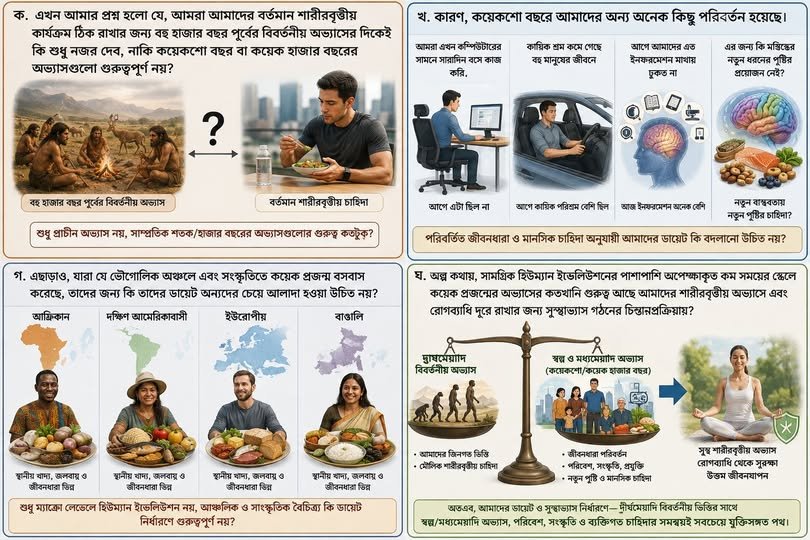
ক. “এখন আমার প্রশ্ন হলো যে, আমরা আমাদের বর্তমান শারীরবৃত্তীয় কার্যক্রম ঠিক রাখার জন্য বহু হাজার বছর পূর্বের বিবর্তনীয় অভ্যাসের দিকেই কি শুধু নজর দেব, নাকি কয়েকশো বছর বা কয়েক হাজার বছরের অভ্যাসগুলো গুরুত্বপূর্ণ নয়?
খ. কারণ, কয়েকশো বছরে আমাদের অন্য অনেক কিছু পরিবর্তন হয়েছে। উদাহরণস্বরূপ, আমাদের অনেকেই কম্পিউটারের সামনে সারাদিন বসে বসে কাজ করি, যেটা বহু হাজার বছর পূর্বে ছিল না। কায়িক শ্রম যে কমে এসেছে বহু মানুষের জীবনে, এবং কয়েক প্রজন্ম ধরে এই নিরিখে কি আমাদের নতুন বিজ্ঞানসম্মত ডায়েটেও তৈরি হওয়া উচিত নয়? আগে আমাদের এত ইনফরমেশন মাথায় ঢুকত না। আজ ঢুকছে। এর জন্য কি মস্তিষ্কের নতুন ধরনের পুষ্টির প্রয়োজন নেই?
গ. এছাড়াও, যারা যে ভৌগোলিক অঞ্চলে এবং সংস্কৃতিতে কয়েক প্রজন্ম বসবাস করেছে, তাদের জন্য কি তাদের ডায়েট অন্যদের চেয়ে আলাদা হওয়া উচিত নয়? একজন আফ্রিকান, দক্ষিণ আমেরিকাবাসী, ইউরোপীয় এবং বাঙালির কি ভিন্ন ডায়েট হওয়ার কথা নয়? কিন্তু যদি শুধু ম্যাক্রো লেভেলে হিউম্যান ইভোলিউশনকেই স্ট্যান্ডার্ড ধরা হয়, সবার ডায়েট এক হয়ে যায়।
ঘ. অল্প কথায়, সামগ্রিক হিউম্যান ইভোলিউশনের পাশাপাশি অপেক্ষাকৃত কম সময়ের স্কেলে কয়েক প্রজন্মের অভ্যাসের কতখানি গুরুত্ব আছে আমাদের শারীরবৃত্তীয় অভ্যাসে এবং রোগব্যাধি দূরে রাখার জন্য সুঅভ্যাস গঠনের চিন্তনপ্রক্রিয়ায়?”
প্রথমেই বলে রাখি আমার বইটি তে লেখা ও এখানের পোস্ট গুলোতে বলা যাবতীয় পরামর্শই মূলতঃ হাল আমলের মেটাবলিক সিনড্রোম জনিত রোগীদের সুস্থ রাখার উপায় হিসেবে বর্ণিত| খাবার ছাড়াও ঘুম, স্ট্রেস কন্ট্রোল, ব্যায়াম এসবের মাধ্যমে কিভাবে ও কেন মানুষ সুস্থ থাকতে পারি সেটা বলার চেষ্টা করেছি কিন্তু কখনোই global বা সার্বজনীন কোনো ডায়েট suggest করিনি, করাটাও অবৈজ্ঞানিক, তাই আমি personalized medicine এর ভক্ত। নীচে আপনার প্রশ্নের উত্তর গুলো দেবার চেষ্টা করলাম সবিস্তারে :--
আপনার প্রশ্নগুলো আসলে একটি বড় “evolutionary mismatch” সমস্যাকে ঘিরেই —আধুনিক জীবনযাত্রা কি আমাদের কয়েক হাজার/লক্ষ বছরের evolutionary adaptation-এর সঙ্গে অসামঞ্জস্যপূর্ণ হয়ে গেছে? এবং যদি হয়ে থাকে, তাহলে পুরনো অভ্যাস হুবহু ফিরিয়ে আনা, নাকি আধুনিক জীবনের জন্য নতুন physiological strategy তৈরি করা—কোনটি বেশি যুক্তিযুক্ত?
আমি ভাগে ভাগে উত্তর দেব, যাতে প্রতিটি ধারণার biological mechanism আলাদা করে বোঝা যায়।
পর্ব ১ — “কয়েক হাজার বছর আগের অভ্যাসই কি আজকের জন্য আদর্শ?”
সংক্ষিপ্ত উত্তর: না—কিন্তু অতীতকে উপেক্ষাও করা যাবে না।
Evolutionary history আমাদের শরীরের baseline design constraints বুঝতে সাহায্য করে; কিন্তু ১০,০০০ বা ১,০০০ বছর আগের lifestyle-কে সরাসরি আজকের জন্য “ideal prescription” বানানো বৈজ্ঞানিকভাবে ঠিক নয়।
কারণ এখানে তিনটি সময়ের scale আলাদা করে দেখতে হবে:
১. Evolutionary time scale — লক্ষ থেকে লক্ষাধিক বছর
আমাদের metabolism, musculoskeletal system, cardiovascular system এবং brain এমন পরিবেশে গড়ে উঠেছে যেখানে—
খাদ্য সবসময় abundant ছিল না
physical movement ছিল দৈনন্দিন জীবনের অংশ
দীর্ঘ সময় হাঁটা/দাঁড়ানো/শরীর ব্যবহার করতে হতো
energy expenditure এবং food acquisition-এর মধ্যে সরাসরি সম্পর্ক ছিল।
আধুনিক প্রযুক্তি এই coupling-টা ভেঙে দিয়েছে। আজ আপনি ৩,০০০ kcal খেতে পারেন কিন্তু সেই খাবার সংগ্রহ করতে ৩০০ kcal-ও খরচ করতে হয় না। এটাই evolutionary mismatch-এর একটি গুরুত্বপূর্ণ অংশ।
তবে একটি গুরুত্বপূর্ণ correction আছে:
“Hunter-gatherer = সারাদিন physical activity”—এটাও অতিরঞ্জিত ধারণা। Hadza-দের গবেষণায় দেখা গেছে তাদেরও যথেষ্ট sedentary time থাকে; পার্থক্য হলো তাদের resting posture-এও muscle activity আধুনিক chair-sitting-এর তুলনায় বেশি হতে পারে।
অর্থাৎ আমাদের লক্ষ্য হওয়া উচিত শুধু “বেশি exercise” নয়; বরং দীর্ঘ সময় সম্পূর্ণ muscular inactivity কমানো।
২. Cultural time scale — কয়েক হাজার বছর
এখানে খুব interesting ব্যাপার আছে। মানুষের diet গত কয়েক হাজার বছরে সত্যিই পরিবর্তিত হয়েছে এবং কিছু ক্ষেত্রে genetic adaptation-ও হয়েছে।
সবচেয়ে সুন্দর উদাহরণ:
AMY1 → salivary amylase জিন, কৃষিভিত্তিক সমাজে starch-rich diet বাড়ার সঙ্গে কিছু population-এ AMY1 copy number বৃদ্ধি পেয়েছে। ২০২৪ সালের Nature study এবং ২০২৬ সালের নতুন গবেষণায় এই dietary adaptation-এর আরও শক্তিশালী evidence পাওয়া গেছে।
২০২৬-এর গবেষণায় Andean populations-এ potato domestication-এর সময়ের সঙ্গে প্রায় ১০,০০০ বছর আগে AMY1 copy-number expansion-এর association পাওয়া গেছে।
অর্থাৎ— “আমাদের শরীর কখনও বদলায়নি; তাই শুধু Paleolithic lifestyle-ই natural”—এটা সঠিক নয়।
মানুষের genome-ও কিছু dietary/environmental change-এর সঙ্গে adapt করেছে।
আরও পরিচিত উদাহরণ হলো lactase persistence—কিছু pastoralist population-এ adult অবস্থায় lactose digestion বজায় রাখার genetic adaptation। তাই কয়েক হাজার বছরও evolutionary biology-তে অর্থহীন সময় নয়।
৩. কিন্তু কয়েকশো বছর বা কয়েক দশকের পরিবর্তন আলাদা
Industrialization এবং digital technology-র পরিবর্তন অত্যন্ত দ্রুত হয়েছে। যেমন:---
physical labour ↓
walking ↓
chair sitting ↑
food availability ↑
energy density ↑
screen exposure ↑
continuous cognitive stimulation ↑
এই পরিবর্তনের জন্য genetic adaptation-এর সময় খুব কম। এখানেই evolutionary mismatch hypothesis শক্তিশালী explanatory framework দেয়। কিন্তু এটাকে এমনভাবে বলা যাবে না যে—
“আগে যা করতাম সেটাই সবসময় স্বাস্থ্যকর।” বরং সঠিক formulation হবে:
আমাদের physiology-এর কিছু fundamental constraints পুরনো, কিন্তু environment অত্যন্ত দ্রুত বদলেছে। তাই modern environment-কে এমনভাবে design করতে হবে যাতে সেই fundamental physiological requirements পূরণ হয়।
পর্ব ২ — তাহলে কি “নতুন neuroscience অনুযায়ী diet” দরকার?
এখানে আপনার প্রশ্নটি আরও interesting। আপনার প্রশ্নটি মূলত বলছে: আগে মানুষ এত information-intensive cognitive work করত না। এখন আমরা সারাদিন computer/mobile/AI/complex information processing-এর মধ্যে থাকি। তাহলে কি brain-এর জন্য নতুন ধরনের diet দরকার?
উত্তর: কিছুটা হ্যাঁ, কিন্তু “নতুন human diet” বলতে সম্পূর্ণ নতুন খাবার নয়।
Brain-এর energy requirement সত্যিই অত্যন্ত বেশি। মানুষের brain শরীরের মোট ওজনের ছোট অংশ হলেও resting energy expenditure-এর একটি বড় অংশ ব্যবহার করে। কিন্তু এখানে একটি গুরুত্বপূর্ণ misconception আছে:
বেশি mental work ≠ proportional extra calorie requirement
একজন মানুষ সারাদিন কঠিন intellectual কাজ করলেও brain-এর মোট energy consumption সাধারণত dramaticভাবে বেড়ে যায় না। কারণ neuronal signalling-এর বড় অংশ হলো baseline metabolic maintenance। অর্থাৎ—
brain কাজ করছে → ATP consumption হচ্ছে, কিন্তু “আমি বেশি ভাবছি → আমাকে অনেক বেশি glucose খেতে হবে” এটা সরলীকরণ। তাই পরীক্ষার preparation বা heavy computer work-এর জন্য আলাদা করে অতিরিক্ত sugar খাওয়া সাধারণত যুক্তিযুক্ত নয়। বরং গুরুত্বপূর্ণ হলো:
glucose regulation
adequate protein
essential fatty acids
micronutrients
vascular health
Adequate sleep
physical activity
Sound metabolic health
Brain-এর জন্য “নতুন diet” নয়, বরং “brain-compatible metabolic environment” চাই – এটাই আমার মতে আপনার প্রশ্নটির সবচেয়ে গুরুত্বপূর্ণ উত্তর। Brain evolution-এর সঙ্গে modern cognitive workload-এর mismatch যতটা নয়, তার চেয়ে বড় mismatch হতে পারে:
modern cognitive workload + sedentary lifestyle + sleep disruption + metabolic dysfunction
অর্থাৎ: Computer → brain-এর সমস্যা নয় বরং:
Computer + sitting + poor sleep + excess calories + insulin resistance + low physical activity → বড় সমস্যা হতে পারে।
Physical activity-র সঙ্গে brain function-এর evolutionary connection-এরও যথেষ্ট evidence আছে; human brain এমন environment-এ evolved হয়েছে যেখানে regular movement ছিল অবিচ্ছেদ্য।
তাহলে brain nutrition-এর জন্য কী গুরুত্বপূর্ণ?
এখানে বর্তমান evidence বলছে dietary pattern-এর quality বেশি গুরুত্বপূর্ণ, কোনো magical “brain food” নয়। বিশেষ করে: DHA/EPA-containing omega-3 → neuronal membranes ও signalling-এর সঙ্গে গুরুত্বপূর্ণ সম্পর্ক।
১.adequate protein/amino acids → neurotransmitter synthesis ও tissue maintenance
২. মাইক্রোনিউট্রিয়েন্টস → iron, B12, folate, iodine, zinc ইত্যাদি deficiency হলে cognition ক্ষতিগ্রস্ত হতে পারে।
৩. stable metabolic এনভায়রনমেন্ট → chronic hyperglycaemia/insulin resistance/vascular disease brain-এর জন্য গুরুত্বপূর্ণ।
তবে supplement নিয়ে evidence অত্যন্ত context-dependent। ২০২৬-এর সাম্প্রতিক review-তেও omega-3, ketogenic/MCT ইত্যাদির cognitive benefit-এর evidence heterogeneous—অর্থাৎ “একটি বিশেষ brain diet” এখনো established নয়।
সবচেয়ে গুরুত্বপূর্ণ conceptual distinction
এখানে আমরা তিনটি জিনিস আলাদা করব:
বিষয় Evolutionary influence Modern adaptation দরকার?
Physical একটিভিটি —- খুব গুরুত্বপূর্ণ , হ্যাঁ—movement পুনঃস্থাপন করতে হবে
ডায়েট —-------------------গুরুত্বপূর্ণ , হ্যাঁ—বর্তমান food environment অনুযায়ী নিতে হবে
Cognitive ওয়ার্কলোড — নতুন, কিন্তু আলাদা high-calorie brain diet প্রমাণিত নয়
অর্থাৎ evolutionary medicine-এর উদ্দেশ্য অতীতে ফিরে যাওয়া নয়। বরং: পুরনো physiology + নতুন environment = কীভাবে optimal interface তৈরি করা যায়?
এটাই আসল প্রশ্ন।
এবার আপনার আরও গুরুত্বপূর্ণ প্রশ্নটি নেব:
“আফ্রিকান, দক্ষিণ আমেরিকান, ইউরোপীয় ও বাঙালির জন্য কি একই diet হওয়া উচিত? নাকি geography, culture, genetics ও ancestral diet অনুযায়ী আলাদা diet দরকার?”
এখানে AMY1, lactase persistence, alcohol metabolism, vitamin-D adaptation, salt sensitivity, microbiome এবং metabolic disease—সবকিছুকে একসঙ্গে ধরলে বিষয়টি অনেক বেশি পরিষ্কার হবে।
তাহলে কি আফ্রিকান, ইউরোপীয়, দক্ষিণ আমেরিকান ও বাঙালির জন্য একই Diet হওয়া উচিত?
সংক্ষিপ্ত উত্তর: “একটি universal human diet” থাকা উচিত নয়; কিন্তু “প্রত্যেক জনগোষ্ঠীর জন্য আলাদা diet” বলাটাও অতিরঞ্জিত। এখানে একটি গুরুত্বপূর্ণ distinction করতে হবে:
মানুষের basic nutritional requirements প্রায় একই, কিন্তু সেই requirements পূরণের সবচেয়ে উপযুক্ত খাদ্য-পদ্ধতি population, genetics, culture, climate, activity এবং disease-risk অনুযায়ী কিছুটা বদলাতে পারে।
১. Evolution আমাদের “খাবারের তালিকা” নয়, physiological constraints দিয়েছে
ধরা যাক দুজন মানুষ— একজন পূর্ব আফ্রিকার ঐতিহ্যগত pastoralist population-এর, অন্যজন বাংলার rice-based agricultural population-এর। তাদের দুজনেরই দরকার:
essential amino acids + essential fatty acids + vitamins + minerals + adequate energy + fibre + ওয়াটার. কিন্তু এগুলো পাওয়ার খাবারের উৎস আলাদা হতে পারে। এটাই মূল ব্যাপার।
Evolution আমাদের বলে না: “তোমাকে অবশ্যই rice খেতে হবে।” বরং শরীরের biochemical machinery নির্ধারণ করে— “তোমার এই amino acids, fatty acids, glucose/energy, micronutrients ইত্যাদি দরকার।”
২. কিন্তু genetics কি সত্যিই diet-এর response বদলে দিতে পারে? – হ্যাঁ। এবং এখানেই nutritional genomics বা nutrigenetics গুরুত্বপূর্ণ।
উদাহরণ ১ — Lactase persistence
মানুষের অধিকাংশ স্তন্যপায়ী প্রাণীর মতোই adulthood-এ lactase enzyme কমিয়ে দেওয়ার genetic program বহন করে। কিন্তু কিছু population-এ cattle domestication এবং milk consumption-এর সঙ্গে সম্পর্কিত genetic variants adult lactase activity বজায় রাখতে সাহায্য করেছে। ফলে:
একই milk → population A-তে সহজে tolerated → population B-তে lactose intolerance বেশিএটা “কোন diet superior” তার প্রমাণ নয়। এটা দেখায় যে একই food-এর physiological response population অনুযায়ী বদলাতে পারে।
৩. AMY1 — starch digestion-এর চমৎকার উদাহরণ
Salivary amylase-এর জন্য AMY1 gene গুরুত্বপূর্ণ। Starch-rich dietary history থাকা population-এ AMY1 copy number বেশি হওয়ার association পাওয়া গেছে।
Mechanistically:
AMY1 copy number ↑
→ salivary amylase production ↑
→ oral starch digestion capacity ↑
কিন্তু এখানেও সাবধান হতে হবে।
এটা বলা যাবে না: “বাঙালি ভাত খায়, তাই বাঙালির AMY1 বেশি।” এমন সরল population-level conclusion scientifically justified নয়। কারণ population-এর মধ্যে genetic variation অনেক বেশি, এবং diet response শুধু একটি gene দিয়ে নির্ধারিত হয় না। (nature.com)
৪. তাহলে বাঙালির জন্য “ভাত” কি evolutionary ideal?
এখানে একটি খুব গুরুত্বপূর্ণ correction দরকার।ভাত বাঙালির সাংস্কৃতিক staple—কিন্তু staple হওয়া আর biologically optimal হওয়া এক জিনিস নয়। বাংলার agricultural history-তে rice অত্যন্ত গুরুত্বপূর্ণ হয়েছে কারণ:
জলবায়ু উপযোগী
ধান চাষের ecological suitability
high carbohydrate yield
storage সুবিধা
cultural transmission
ফলে: rice → ecology → agriculture → culture → কাইসিনে এই feedback loop তৈরি হয়েছে।
কিন্তু আধুনিক sedentary Bengali যদি— সাদা ভাত + কম physical activity + excess calories + sugary foods + inadequate protein/ফাইবারে নিয়ে থাকে, তাহলে শুধু “এটা আমাদের ancestral food” বলে metabolic health ভালো থাকবে না।
অন্যদিকে একই ভাত যদি— portion-controlled + পর্যাপ্ত protein + vegetables/legumes + physical একটিভিটি এর সঙ্গে থাকে, তাহলে পুরো dietary pattern সম্পূর্ণ ভিন্ন।
৫. এখানেই “ancestral diet” ধারণার সবচেয়ে বড় ভুল
ধরা যাক কেউ বলে: “আমাদের পূর্বপুরুষ rice খেতেন, তাই rice healthy।” এটা logical fallacy।
কারণ health outcome নির্ভর করে: Food × quantity × preparation × total diet × activity × genetics × metabolic স্টেট, শুধু food identity দিয়ে নয়।
একইভাবে— “আমাদের ancestors meat খেতেন, তাই high-meat diet healthy।” এটাও ভুল inference।
৬. Geography-এর প্রভাব কোথায়?
Geography সরাসরি এবং পরোক্ষভাবে diet shape করে। Climate
Cold climate → historically higher energy requirement
Hot climate → hydration/electrolyte demands গুরুত্বপূর্ণ
Agriculture
Rice-growing region → carbohydrate-heavy traditional cuisine
Wheat-growing region → wheat-based cuisine
Pastoral region → dairy/meat বেশি
Coastal region → মাছ/seafood বেশি
কিন্তু modern globalization এই ecological constraint অনেকটাই ভেঙে দিয়েছে। আজ কলকাতায় বসে একজন মানুষ — rice + olive oil + salmon + cheese + processed food + sugary ড্রিঙ্কস সবই খেতে পারেন। অর্থাৎ ancestral ecology আর modern food environment আর এক নয়।
৭. সবচেয়ে গুরুত্বপূর্ণ: “Ethnicity” ≠ “genetic destiny”
এটা বিশেষভাবে মনে রাখা দরকার। “European”, “African”, “Asian”, “Bengali”—এগুলো nutritional prescription-এর সরাসরি biological categories নয়।
একই population-এর মধ্যেই genetic diversity বিশাল এবং metabolic phenotype তৈরি হয়:
genes + epigenetics + developmental environment + microbiome + diet + physical activity + sleep + socioeconomic এনভায়রনমেন্ট এই সবকিছুর interaction থেকেই ।
তাই: “Bengali diet” বলে একটি একক biological diet নেই। বরং আছে Bengali dietary tradition, যার মধ্যে বিভিন্ন nutritional pattern থাকতে পারে।
৮. তাহলে personalized nutrition-এর ভবিষ্যৎ কী?
এখানে আমি মনে করি প্রশ্নটি আরও interesting হয়ে ওঠে। ভবিষ্যতে dietary advice হয়তো এমন হবে না:
“সব মানুষের জন্য Mediterranean diet।” বরং: Person → genotype + phenotype + microbiome + metabolic response → personalized ডায়েট গড়ে উঠবে।
উদাহরণ: একই 75 g glucose load— Person A → glucose rises 25 mg/dL, Person B → rises 70 mg/দল. তাহলে theoretically দুজনের optimal carbohydrate composition একই নাও হতে পারে। এই ধারণার উপর precision nutrition research চলছে।
তবে এখানে আবার সতর্কতা:
Microbiome-based personalized diet এখনও promising research field; routine clinical prescription হিসেবে পুরোপুরি established নয়। অর্থাৎ science-এর বর্তমান অবস্থান: personalization → প্রমিসিং কিন্তু “আপনার microbiome দেখে নিখুঁত diet বলে দেব” → এখনো premature।
৯. তাহলে শেষ পর্যন্ত কী দাঁড়াল? আমি এটাকে একটি pyramid-এর মতো দেখব:
স্তর ১ — Universal বায়োলজি —- সব মানুষের দরকার:
protein + essential fats + micronutrients + fibre + water + appropriate energy
স্তর ২ — Individual physiology
তারপর আসে: age + sex + activity + body composition + metabolic phenotype
স্তর ৩ — Population adaptation
তারপর genetics + ancestry + lactose tolerance + starch handling ইত্যাদি
স্তর ৪ — Culture
তারপর: rice / wheat / maize / dairy / fish / legumes / spices
স্তর ৫ — Modern environment
সবশেষে: ultra-processed food + sedentary behaviour + abundance + sleep দিসরূপশন , এখনকার nutritional problem-এর বড় অংশ আসলে স্তর ৫-এর।
তাই মূল conclusion
আমাদের পূর্বপুরুষ কী খেতেন—এটা গুরুত্বপূর্ণ clue। কিন্তু prescription নয়।
আরও শক্তিশালী প্রশ্ন হলো: “মানুষের evolutionary physiology-এর কোন fundamental requirement আজকের environment পূরণ করছে না?”
এই প্রশ্ন করলে আমরা শুধু “Paleo diet” বা “Mediterranean diet” এসব নিয়ে বিতর্ক না করে দেখতে পারি—
movement কোথায় হারিয়েছে?
sleep কোথায় হারিয়েছে?
food environment কীভাবে বদলেছে?
circadian rhythm কীভাবে বদলেছে?
social eating কীভাবে বদলেছে?
এবং brain-এর information environment কীভাবে বদলেছে?
পরের অংশে আসি, সবচেয়ে গভীর প্রশ্নে—“আগে মানুষ এত information processing করত না; এখন সারাদিন brain overload। তাহলে কি আমাদের brain-এর জন্য নতুন ধরনের nutritional ও behavioural adaptation দরকার?”
আধুনিক তথ্য-বিস্ফোরণের জন্য কি আমাদের Brain-এর নতুন “Nutrition” দরকার? এখানে আলোচনাটিকে আরও এক ধাপ এগিয়ে নিয়ে গেলে একটি চমৎকার paradox দেখা যায়: মানুষের brain আজ ইতিহাসের যেকোনো সময়ের তুলনায় অনেক বেশি তথ্য process করছে—কিন্তু তার metabolic machinery মূলত নতুন হয়নি।
তাহলে কি আমরা evolutionary mismatch-এর মধ্যে আছি? আংশিকভাবে—হ্যাঁ। কিন্তু mismatch-টি “brain-এর বেশি glucose দরকার” ধরনের নয়।
১. প্রথম ভুল ধারণাটি ভাঙি: বেশি চিন্তা = অনেক বেশি calorie burn? আমরা প্রায়ই বলি— “সারাদিন brain দিয়ে কাজ করেছি, তাই brain প্রচুর energy খরচ করেছে।” কথাটির প্রথম অংশ সত্য, কিন্তু দ্বিতীয় অংশটি অতিরঞ্জিত।
Brain resting অবস্থাতেও অত্যন্ত metabolically active। Cognitive task শুরু করলে নির্দিষ্ট neural network-গুলির glucose/oxygen utilization বাড়ে, কিন্তু পুরো brain-এর total energy expenditure সাধারণত proportional ভাবে আকাশচুম্বী হয় না। Mental effort-এর metabolic cost নিয়ে দীর্ঘদিনের গবেষণায় এই distinction গুরুত্বপূর্ণ।
অর্থাৎ: ১০ ঘণ্টা computer ওয়ার্ক ≠ ১০ ঘণ্টা physical exercise-এর মতো বিশাল অতিরিক্ত calorie expenditure। তাই শুধু বেশি intellectual কাজ করছি বলে অতিরিক্ত sugar বা calorie খাওয়ার evolutionary justification নেই।
২. তাহলে সমস্যা কোথায়? আমার মতে আসল mismatch এখানে:
Ancient environment
Information ↓
Movement ↑
Sensory variety ↑
Natural light exposure ↑
Social interaction ↑
Sleep-wake synchronised with environment
Modern environment
Information ↑↑↑
Movement ↓↓
Continuous artificial stimulation ↑
Screen exposure ↑
Natural light timing disrupted
Sleep opportunity ↓
অর্থাৎ brain-এর সমস্যা শুধু “information overload” নয়। বরং: high cognitive stimulation + low physical stimulation + disrupted sleep / circadian সিগনালস এই combination-টি বেশি গুরুত্বপূর্ণ।
৩. Brain এবং body-কে আলাদা system ভাবলে ভুল হবে|
এটাই সম্ভবত পুরো আলোচনার সবচেয়ে গুরুত্বপূর্ণ insight। আমরা ভাবি:
Brain → mental work
Body → physical work
কিন্তু biological reality হলো: Brain  muscle cardiovascular system endocrine system immune system, একটি integrated network।
এই কারণেই exercise-এর cognitive effects নিয়ে এখন প্রচুর research হচ্ছে। ২০২৪ সালের systematic review-এ exercise interventions executive function উন্নত করার সম্ভাবনা দেখিয়েছে, এবং cognitively demanding exercise-এর অতিরিক্ত benefit-এর preliminary evidence-ও পাওয়া গেছে।
অন্য একটি ২০২৪ meta-analysis-এ middle-aged ও older adults-এর aerobic exercise executive function-এর উন্নতির সঙ্গে যুক্ত ছিল।
৪. অর্থাৎ modern “brain work”-এর countermeasure হতে পারে physical movement
এখানে একটি খুব সুন্দর evolutionary logic আছে।
আগের মানুষ: দেখল → সিদ্ধান্ত নিল → হাঁটল → সংগ্রহ করল → বহন করল → social interaction করল → আবার সিদ্ধান্ত নিল।
আজকের মানুষ: দেখল → সিদ্ধান্ত নিল → mouse click করল।
Brain একই ধরনের executive functions করছে, কিন্তু body-এর অংশগ্রহণ নাটকীয়ভাবে কমে গেছে।
এখানে exercise শুধু “fitness activity” নয়। এটি brain-এর জন্য একটি physiological signal।
Exercise-এর সঙ্গে cerebral blood flow, neurotrophic signalling, vascular function, metabolic health এবং দীর্ঘমেয়াদি brain structure/function-এর সম্পর্ক রয়েছে। সাম্প্রতিক meta-analysis-এ physical exercise brain volume preservation এবং cognitive function-এর সঙ্গে positive association দেখিয়েছে।
৫. তাহলে কি brain-এর জন্য “exercise prescription” nutrition-এর চেয়ে বেশি গুরুত্বপূর্ণ?
একটি healthy adult-এর ক্ষেত্রে অনেক সময় হ্যাঁ—বিশেষ করে sedentary modern lifestyle-এ। কারণ আপনি যদি— high-quality diet + zero movement রাখেন,
তাহলে আপনি metabolic এবং vascular risk পুরোপুরি neutralize করতে পারবেন না। অন্যদিকে—reasonable diet + regular movement + adequate sleep, একটি much more biologically coherent combination। এখানে অবশ্য “exercise দিয়ে খারাপ diet compensate করা যায়” এমন অর্থ করলে ভুল হবে ।
৬. এবার আসি Sleep-এর কথায়
এখানে modern life-এর সঙ্গে evolutionary mismatch আরও স্পষ্ট। Brain দিনের বেলা মূলত: information acquisition + প্রসেসিং করে। Sleep-এর সময় ঘটে: network reorganization + memory consolidation + metabolic/homeostatic প্রসেসেস এবং glymphatic function নিয়ে human research-এ sleep-এর সঙ্গে brain waste-clearance সম্পর্কের evidence পাওয়া যাচ্ছে। ২০২৪ সালের একটি human study sleep, glymphatic functioning এবং memory-related brain networks-এর সম্পর্ক পরীক্ষা করেছে।
তাই একটা useful conceptual model: Wake = information লোডিং এবং Sleep = information processing + biological maintenance
সমস্যা হয় যখন আমরা প্রথমটি বাড়িয়ে দ্বিতীয়টি কমিয়ে দিই।
৭. এটাই modern cognitive mismatch-এর আসল বিপদ
ধরা যাক:
সকাল ৮টা → smartphone
৯টা → computer
১১টা → meetings
১টা → screen
৩টা → computer
৬টা → smartphone
৮টা → television
১১টা → social media
Brain-এর জন্য stimulus বন্ধ হচ্ছে না। এটি evolutionary sense-এ unusual। প্রাচীন environment-এ sensory stimulation ছিল, কিন্তু continuous high-density symbolic information stream ছিল না।
আজ আমরা একই সঙ্গে: information consume করছি + information generate করছি + information evaluate করছি + social signals process করছি।
এটি cognitive system-এর উপর sustained attentional demand তৈরি করতে থাকে ।
৮. কিন্তু এখানেও একটি গুরুত্বপূর্ণ correction
এখন কেউ বলতে পারেন: “তাহলে modern information processing brain-কে ক্ষয় করে।” এটা এখনো বলা যাবে না। কারণ brain অত্যন্ত প্লাষ্টিক বা নমনীয় | Neuroplasticity-র কারণে training-এর সঙ্গে brain network efficiency এবং functional organization পরিবর্তিত হতে পারে। অর্থাৎ evolutionary mismatch থাকলেও: Human brain is not a static Paleolithic machine. বরং এটি একটি plastic biological system।আমরা নতুন cognitive environment-এর সঙ্গে কিছুটা adapt করতে পারি।
কিন্তু plasticity-এরও সীমা আছে।
৯. তাই “নতুন diet” নয়—সম্ভবত “নতুন lifestyle architecture” , আমার মতে ছবির মূল প্রশ্নের সবচেয়ে শক্তিশালী উত্তর এখানেই।
আমাদের দরকার হয়তো— Ancient physiology + modern technology + deliberate biological কম্পেন্সেশন, অর্থাৎ technology বাদ দেওয়া নয়বরং technology ব্যবহারের সঙ্গে deliberately ফিরিয়ে আনতে হবে:
Movement
Natural light
Sleep
Social interaction
Physical challenge
Dietary quality
Periods of attentional rest
এটাকে আমি বলব: Evolutionary-informed modern lifestyle
১০. এবং এখানেই AI একটি নতুন প্রশ্ন তৈরি করছে
এখন পর্যন্ত computer আমাদের cognitive work সহায়তা করেছে। AI ধীরে ধীরে আরও এগিয়ে গিয়ে:
memory → calculation → information retrieval → pattern recognition → writing → reasoning-এর কিছু অংশ নিজেই করতে শুরু করছে।
তাহলে evolutionary mismatch-এর প্রশ্নটি উল্টে যায়: যদি AI আমাদের cognitive workload কমিয়ে দেয়, তাহলে ভবিষ্যৎ মানুষের সবচেয়ে মূল্যবান adaptation কি “আরও বেশি তথ্য জানা”, নাকি “কোন তথ্য গুরুত্বপূর্ণ তা নির্ধারণ করা”?
এটি শুধু neuroscience-এর প্রশ্ন নয়। এটি education, human evolution, psychology এবং society—চারটির intersection।
Read MoreAuthor: Shekorer Sondhaney Facebook Profile
Social General 22-August-2026 by east is rising