
This is a big deal: China is challenging Microsoft's global monopoly with WPS Office

The US government has been so arrogant in its trade war on China (under both Trump and Biden), that it didn't realize China has much more leverage.

This is another example: China is now transitioning away from Microsoft Windows software, which is still ubiquitous in China and is used on many government computers.

China’s Ministry of Commerce has stopped using Microsoft Word and is instead using WPS Office, the Chinese alternative to Microsoft Office, developed by Beijing-based company Kingsoft. More ministries are expected to do the same soon.

This comes after China banned government workers from using iPhones.

Huawei has also developed its own operating system, HarmonyOS, challenging Microsoft Windows, Apple's macOS and iOS, and Google-linked Android.

China is defending its digital sovereignty.

One of the main goals of the US empire is to maintain a global monopoly for its Big Tech companies, so every other country is dependent on US technology, meaning US corporations can extract monopoly rents to further enrich their wealthy shareholders.

China is the only country able to challenge them, and it is doing so more and more every day.

This is a key reason for the extreme anger and fear in Washington, Silicon Valley, and Wall Street.

Read More

Author: Saikat Bhattacharya

Technology news General USA vs China 17-October-2025 by east is rising

অনির্বাণ ব্যনারজি-কে দেওয়া উত্তর

১) যদি রাষ্ট্র পুরুষ পুলিশকে মহিলাদের সুরক্ষার জন্য নিয়োগ না করে একা একা মহিলারা নিজেদের কে অথবা শুধু নারী পুলিশ দিয়ে মহিলাদের সুরক্ষিত রাখা যাবে ? মাতৃভূমি ট্রেনে যখন আগুন লাগানো হয়েছিল, সেই সময় মুখ্যমন্ত্রী মমতা বন্দ্যোপাধ্যায় কেন তৃণমূলের পুরুষ কর্মীদের বলেছিল মাতৃভূমি ট্রেনে উঠে মহিলাদের সুরক্ষার দিতে?

২) বাঙালি হিন্দু সমাজ দুর্গা ও কালীর মত নারী দেবী পুজো করে পুরুষকে নারীর পায়ের তলায় রেখে। অন্যদিকে ইউপি, বিহার পুজো করে যোদ্ধা রামকে, গুজরাটিরা পুজো করে কূটনীতিগ্গ শ্রী কৃষ্ণ কে, তামিলরা পুজো করে দেব সেনাপতি মুরুগ্গান অথবা কার্তিক'কে! এবার আপনি বলুন বাঙালি হিন্দু সমাজ আজকে বেশি ক্ষমতাবান নাকি হিন্দি গুজরাটি ও তামিলরা বেশি ক্ষমতাবান ?

৩) মুখ্যমন্ত্রী নারী হয়েছে কিন্তু তৃণমূলকে জেতাতে সিপিএম এর আমলে কতজন পুরুষ তৃণমূল কর্মী মারা গেছে, আর কতজন নারী তৃণমূল কর্মী মারা গেছে সে হিসাব টা জানেন ? অথবা কখন করেছেন ? একটা কথা মাথায় রাখবেন আমরা ক্ষমতায় দেখি মোদিকে কিন্তু আসল ক্ষমতাটা আম্বানি আদানি দের হাতে। সেরকমই পশ্চিমবঙ্গে আমরা অপর থেকে মমতাকে দেখলেও আসল ক্ষমতা মাড়োয়ারি পুঁজির হাতে। আপনি দেখেছেন দুর্গার পায়ে মহিষাসুর থাকে কিন্তু দুর্গার মাথার উপর ছোট্ট একটা শিবের ফোটো থাকে। আসল ক্ষমতা ওই শিবের, দুর্গাকে দিয়ে মহিষাসুর কে মারে অর্থাৎ ক্ষমতাবান পুরুষ নারীকে দিয়ে সাধারণ পুরুষকে দমিয়ে রাখে! তাই নওশাদ সিদ্দিকীর বিরুদ্ধে এত প্রমাণ থাকার সত্ত্বেও সে বহাল তবিয়তে ঘুরে বেড়ায়। অন্যদিকে গরীব বাঙালি ছেলের বিরুদ্ধে ধর্ষনের অভিযোগে উঠলেই সব রে রে করে তেড়ে আসে। ভয় লাগে দুর্গাপুরের কেসটা তে আরো একটা ধনঞ্জয় চট্টোপাধ্যায় লুকিয়ে নেই তো?

Read More

Author: Saikat Bhattacharya

Social Sex War feminism 17-October-2025 by east is rising

China vs USA Tech & Trade Wars

Emrys Morgan LeBlanc

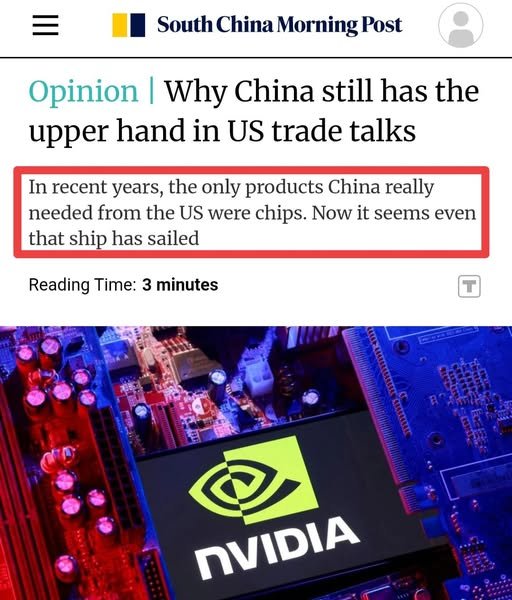
"Beijing stole a page from Washington’s playbook last month by effectively instituting its own chip #ban, with Chinese companies now discouraged from purchasing Nvidia’s AI chips. The bold, calculated move has surely rattled Trump administration officials, with their assumptions about China needing American technology. 

Indeed, the move suggests US President Donald Trump has little leverage. His desperation was on full display last Friday, with his threats to impose an additional 100 per cent tariffs on China and pull out of a meeting with President Xi Jinping at this month’s Asia-Pacific Economic Cooperation summit in Seoul.

The US’ futile attempts to block Chinese access to advanced technology have only fuelled China’s drive for technological independence. Since Trump first took office, Washington has tried to thwart China by blacklisting Chinese tech companies and restricting their access to advanced semiconductor manufacturing equipment. The US is now seeking to ban the purchase of Chinese-made drones and other products deemed critical to American national security.

Chinese companies have demonstrated stoic resilience in the face of Trump’s ire. Telecommunications giant Huawei Technologies was considered all but dead when Washington began restricting its purchases of US technology in 2019. But by shifting towards domestic technology and spending more on research and development, Huawei has made a remarkable recovery – even reclaiming the top spot in China’s smartphone market.

More recently, the United States has focused on containing China’s artificial intelligence advances. But Chinese start-up DeepSeek shocked the world with the launch of a home-grown AI large language model built at a fraction of the cost of US rivals like ChatGPT. DeepSeek announced in August that it would be using Chinese-made chips in a new model. So much for crippling China’s AI prowess. ????

To be sure, experts reckon China is still about five years behind global leaders in high-volume manufacturing of leading-edge chips. Yet with Beijing’s curbs on Nvidia chips, it must believe that Chinese chipmakers are not far from fully catching up. The Chinese are top players at hiding their cards.

Petty acts of mercantilism might work with Ukraine and Taiwan, but Beijing is a different story entirely. The stick approach failed spectacularly after Trump brashly hit China with an effective 145 per cent tariff rate in April. Beijing retaliated with a 125 per cent levy on the US, while stating that Washington’s tariff escalation “will become a joke in the history of the world economy”. Both countries later suspended the higher tariffs and they continue to negotiate a trade deal. Trump’s latest tariff antics suggest the dysfunctional cycle is starting anew.

In another short-lived provocation, Trump halted the sale of Nvidia’s advanced AI chips to China back in April, only to reverse course in August amid the fallout from his tariff ploy. Now Beijing is the one doing the banning when it comes to Nvidia. 

China’s move shows how little bargaining power the US possesses at this stage in the trade war. Since the first Trump presidency, China has systematically decreased its reliance on the US, reducing purchases of products from corn and beef to oil, while increasing exports to the more friendly and dependable Global South.

Soybeans are the pre-eminent example of China’s pivot from the US. They once made up over 50 per cent of US agricultural exports to China. But China has not purchased a single bushel since May. US farmers are crying.

In recent years, the only products China truly needed from the US were chips and the equipment required to design and produce them. The Nvidia curbs suggest that even this ship has sailed.

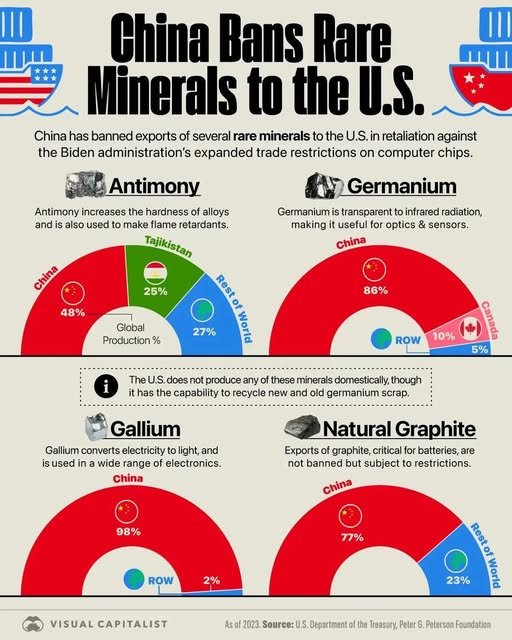
Meanwhile, the US remains dependent on China for critical imports like rare earth minerals. In response to Trump’s tariffs, China restricted shipments of seven rare earth metals critical to the defence, automotive and electronics industries. US car manufacturers scrambled to keep their factories running amid short supplies.

Between those and the latest controls, Beijing has sent a stark warning to Washington that China is not to be messed with, for it holds much more leverage than the US ever supposed.

All this couldn’t have come at a worse time for Washington. Trump was supposed to go into the meeting with Xi with enough sticks to dictate terms for a TikTok deal, demand that China buy more soybeans and Boeing 737s, and barter for access to rare earth minerals."

Read More

Author: Saikat Bhattacharya

International geopolitics General USA vs China 17-October-2025 by east is rising
বিপ্লবের তৃতীয় তরঙ্গ

আমাদের মত অনুন্নত বিশ্বে এই সমস্ত নির্বাচনী কমিউনিস্ট নামধারী দলগুলোর কোন ভবিষ্যৎ নেই। কারণ:

1। ভারতে এখন হিন্দি গুজরাটি বনাম অন্যান্য জাতিসত্তা গুলোর সংগ্রামই আসল সংগ্রাম অর্থাৎ জাতির আত্ম নিয়ন্ত্রণের অধিকারের লড়াই এখন প্রথম লড়াই।

2। সংগঠিত শ্রমিক শ্রেণি বর্তমান বিশ্বায়নের যুগে আমাদের মত অনুন্নত দেশে অনুপস্থিত আর সেই জন্য সংগঠিত শ্রমিক শ্রেণীকে কেন্দ্র করে কমিউনিস্ট পার্টি তৈরি করা অসম্ভব।

3। জমির ক্ষুধা সম্পন্ন কৃষক শ্রেণীও বর্তমানে অনুপস্থিত আর তাই কৃষক আন্দোলনকে কেন্দ্র করে জবরদস্ত কমিউনিস্ট পার্টি তৈরি হওয়া সম্ভব না।

4। নারীর অর্থনৈতিক স্বাধীনতার পরে যে যৌন স্বাধীনতার চর্চা এসেছে তা অত্যন্ত প্রতিক্রিয়াশীল এবং তা শাসক শ্রেণীর পুরুষের পক্ষে যায়। এবং সাধারণ পুরুষের কাছে যৌনতাকে আরো বেশি খরচা সাপেক্ষ করে তোলে। ফলে নারী এখন চরম প্রতিক্রিয়াশীল। তাই নারীকে কেন্দ্র করে কমিউনিস্ট পার্টি সম্ভব নয়।

নারীকে শ্রমিক বানালে, জিডিপি বাড়ালে, ভাল। নারী কি স্বাধীন রোজগেরে হয়ে আর স্বামীর কথা শুনবে? না। বরং বসের সাথে শুয়ে প্রমোশন নেবে। আর শ্রম বাজারে শ্রমিক সংখ্যা বাড়িয়ে শ্রমিকের দরকষাকোষীর ক্ষমতা কমাবে (মার্কসের "মজুর শ্রম ও পুঁজি" বইতে বলাও ছিল)। সব শ্রমিকের বউ প্রমোশন বাগাতে বসের সাথেই বেশি থাকবে, শ্রমিক বরের জন্য যৌনতা পাওয়ার খরচ বাড়বে। শ্রমিক পুরুষ দুর্বল থেকে দুর্বলতর হবে।

এটাই হয়েছে। কমিউনিস্ট আন্দোলন শেষ হয়েছে।

দেখা যাক, যৌন রোবট ও গর্ভ ধরনের রোবট এনে চীন সমস্যা মেটাতে পারে কিনা।

1776-1871: উদারবাদী ও ক্লাসিক্যাল মার্কসবাদী (বিপ্লবের প্রথম তরঙ্গ)

1917-1979: মার্কসবাদী লেনিনবাদী (বিপ্লবের দ্বিতীয় তরঙ্গ)

2025-........: নতুন কিছু লাগবে যাকে নাম দিলাম "বিপ্লবের তৃতীয় তরঙ্গ" 

বর্তমানে তৃতীয় বিশ্বের দেশগুলোতে কমিউনিস্ট অথবা বাম আন্দোলনের নামে যা চলে, সেটা হলো কোন দুর্বল জনগোষ্ঠীকে (কোনো জাতি বা কৃষক বা আদিবাসী) পুঁজির দ্বারা উচ্ছেদের হাত থেকে রক্ষা করার আন্দোলন।

এই আন্দোলন তখনই প্রগতিশীল বলা যায় যখন এই আন্দোলনকে জাতির আত্মনিয়ন্ত্রণের অধিকারের আন্দোলনে রূপান্তরিত করা সম্ভব হয়।

Read More

Author: Saikat Bhattacharya

Theoretical General 17-October-2025 by east is rising

Why It Took China Six Years to Ban Rare Earth Exports

From Facebook Profile of Khai Beng Tan
When Donald Trump launched the trade war in 2018, his primary objective was to stall China’s technological rise. At that time, China already held a near-monopoly over the mining, refining, and processing of rare earth elements — the critical raw materials behind semiconductors, EVs, and advanced weapons systems.

Yet China’s first retaliation wasn’t to weaponize rare earths. Instead, it canceled soybean purchases from the United States — a move aimed directly at the American heartland, targeting Trump’s voter base and exposing U.S. agricultural dependence on Chinese demand.

So, why did China wait until 2024 to restrict and 2025 to ban rare earth exports?

The answer lies in a single element: Helium.

---

Helium — The Grandmother of All Sanctions

If rare earth is the mother of all sanctions, then helium is its grandmother.

Since 1917, the United States has maintained complete dominance over helium technology and production. During the 20th century, only ten companies worldwide produced helium — four were American, and the rest operated under U.S.-licensed technology.

By 1925, helium was declared a national security material, subject to strict export control. The reason? Helium is essential in nuclear research, semiconductor fabrication, missile guidance systems, and any industrial process requiring an inert, non-reactive environment.

By 1960, a U.S. federal law mandated that all domestically produced helium could only be sold to the U.S. government, which would then decide case-by-case which countries — if any — could import it.

---

China’s Early Struggles with Helium

Before 2023, the U.S. held the world’s largest helium stockpile, while China had less than 0.1% of global reserves. Worse, China lacked even the proper infrastructure for helium storage.

When the Sino-Soviet split occurred in 1958, China was abruptly cut off from its only helium source. To sustain its nascent space program, China began researching helium production independently.

By 1960, two years after the split, China built its first helium research facility in Sichuan. It took eleven more years for Chinese scientists to master the complete process of helium extraction and purification — entirely free of American technology.

By the early 1970s, China could produce only 3,000 cubic meters of helium annually — a tiny fraction of the 20 million cubic meters it needed. But, as history often shows, every revolution starts small.

---

Helium: The Hidden Battlefield

Until 2023, despite vast advances, China still relied heavily on foreign companies for helium storage and transshipment. This dependence made any retaliation involving rare earths risky — because the U.S. could still choke China’s helium supply in response.

Then came a turning point.

Before the Ukraine war, helium sold for about $30 per cubic meter. When the war began, prices skyrocketed to $500 per cubic meter, exposing the fragility of the global supply chain. By 2024, the price collapsed by 30%, rendering the U.S. inventory of 800 million cubic meters unsellable — a massive financial loss.

At the same time, China broke through the helium bottleneck.

Chinese scientists developed seven new production methods, achieving an annual capacity of 10 million cubic meters. On top of that, China secured rights to extract 30 million cubic meters from Tanzania.

Even more impressively, BYD, widely known as an EV giant, quietly became a leader in helium recovery and recycling technology, generating over $200 million annually from helium reclamation — a feat unmatched by any U.S. firm.

---

2024: The Balance Shifts

By 2024, China had effectively dismantled the U.S. monopoly on helium — the one element that could have crippled its high-tech sector.

Freed from the threat of helium sanctions, China finally played its trump card — the one it had been holding since 2018.

In 2025, Beijing banned the export of rare earth minerals and high-performance magnets — the true “chips of all chips.”

The move instantly paralyzed key American industries — from defense to semiconductors to clean energy — and marked the final phase of what many analysts now call China’s strategic patience doctrine.

So don’t wonder why it took six years.

China waited until every vulnerability was sealed, every dependency closed, and every countermeasure ready.

When the time came, the strike was precise, silent, and irreversible.

Read More

Author: Saikat Bhattacharya

International geopolitics General USA vs China 17-October-2025 by east is rising

World's First 20-Story Robotic Vertical Farm In China

China has made a significant breakthrough in vertical farming by launching its first autonomous vegetable factory in Chengdu, the capital of Sichuan Province. This 20-story indoor farm is currently the tallest and most advanced vertical farm in the world, showcasing how technology can reshape modern agriculture.

Vertical farming is increasingly seen as the future of food production because it allows crops to be grown in stacked trays, saving valuable land for other human activities. The Chengdu farm incorporates industry-leading autonomous technology, as noted by Gan Bingcheng, deputy head of the research institution responsible for the project. Its design includes large vertical shelves and hundreds of LED light arrays, creating an environment where each plant receives conditions tailored to its growth—almost like a 20-story apartment building for vegetables.

One major challenge of vertical farming has been efficiency. Unlike traditional horizontal farms, where plants receive uniform sunlight and water, compact vertical farms often face difficulties in ensuring every plant gets optimal growth conditions. The team at the Institute of Urban Agriculture (IUA), under the Chinese Academy of Agricultural Sciences (CAAS), addressed this by integrating AI-driven robotics.

This system precisely controls light, water, and nutrients, allowing the farm to grow and harvest crops, such as lettuce, in just 35 days.

China’s autonomous vertical farm demonstrates how advanced technology, automation, and intelligent systems can improve agricultural productivity, conserve land, and support sustainable food production.

Read More

Author: Saikat Bhattacharya

Technology news General 17-October-2025 by east is rising