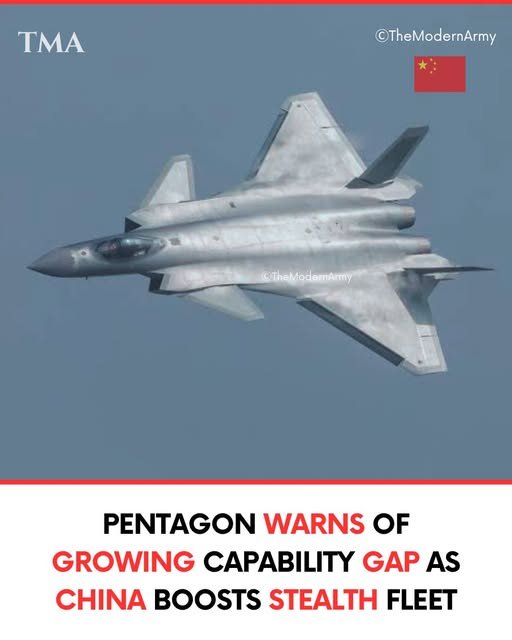
Pentagon Warns About Growing Capability Gap With Chinese Air Power

The Pentagon has raised fresh concerns over a widening capability gap as China rapidly expands and modernizes its stealth fighter fleet, signaling a potential shift in global airpower balance.

Recent assessments highlight Beijing’s accelerated production and deployment of advanced platforms such as the Chengdu J-20, alongside continued development of next-generation systems. Analysts note that improvements in avionics, radar-evading design, and long-range missile integration are enhancing China’s ability to project power beyond its immediate region.

For the United States, maintaining air superiority has long been a cornerstone of military doctrine. However, officials within the Pentagon warn that China’s pace of advancement—combined with growing pilot training, networked warfare capabilities, and integrated air defense systems—could challenge that dominance, particularly in the Indo-Pacific.

Experts caution that while the U.S. still retains qualitative advantages with platforms like the F-35 Lightning II, the sheer scale of China’s buildup may create operational challenges in a high-intensity conflict scenario. The concern is not just about aircraft numbers, but also about ecosystem integration, including satellites, electronic warfare, and missile support systems.

The evolving dynamics are likely to drive increased defense spending, force modernization, and deeper coordination with allies across the region. As both powers continue to refine their air combat strategies, the competition for technological and operational superiority is expected to intensify, shaping the future of global military balance.

Source: Pentagon Reports, Reuters, Defense Analysts

Read More

Author: Saikat Bhattacharya

Technology news General 24-March-2026 by east is rising

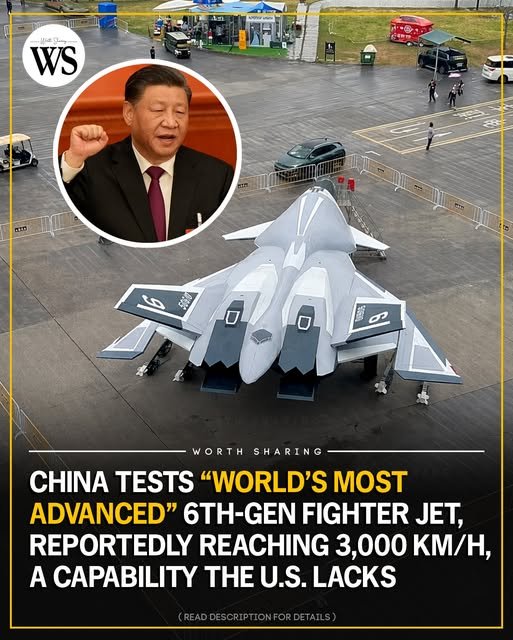
Chinese 6th Generation Fighter Jets Now Have Greater Speed Compared To US 6th Gen

China has reportedly tested its 6th Generation fighter jet, claiming top speeds of 3,000 km/h—a capability that could surpass current U.S. jets.

Experts say the jet’s stealthy, tailless design makes it extremely hard to track on radar, earning it the nickname “ghost in the sky.”

The test has sparked global attention, as analysts debate whether this aircraft could challenge U.S. dominance in next-generation air combat.

The skies are changing—fast.

Read More

Author: Saikat Bhattacharya

Technology news General USA vs China 24-March-2026 by east is rising

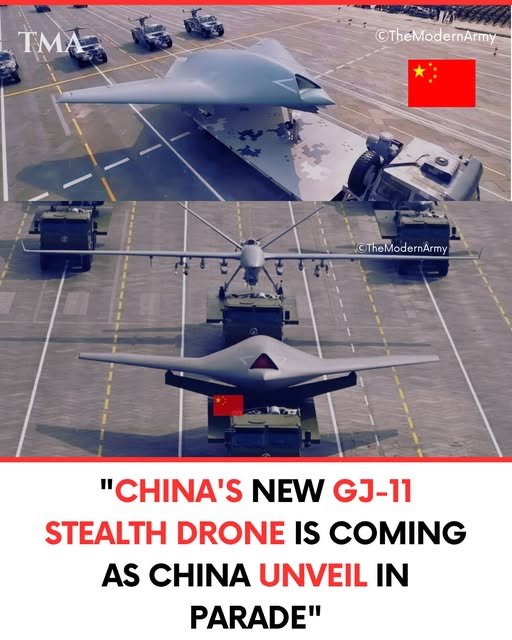
China's New Stealth Drone: GJ-11

China is advancing its unmanned combat capabilities with the emergence of the GJ-11 Sharp Sword, signaling a major push toward next-generation aerial warfare.

The stealth drone, designed with a flying-wing configuration, is optimized for low observability and deep strike missions in contested environments. Analysts note that its potential integration with manned platforms and network-centric systems could significantly enhance China’s operational flexibility.

For regional and global powers, the development of the GJ-11 Sharp Sword highlights the growing importance of autonomous and stealth-enabled systems in modern conflicts, where survivability and precision are critical.

Experts warn that as such platforms mature, they could reshape air combat doctrines and intensify technological competition, particularly in the Indo-Pacific region.

Source: Defense Analysts, Chinese State Media, Strategic Reports

Hashtags:

Read More

Author: Saikat Bhattacharya

Technology news General USA vs China 24-March-2026 by east is rising