South China Morning Post:
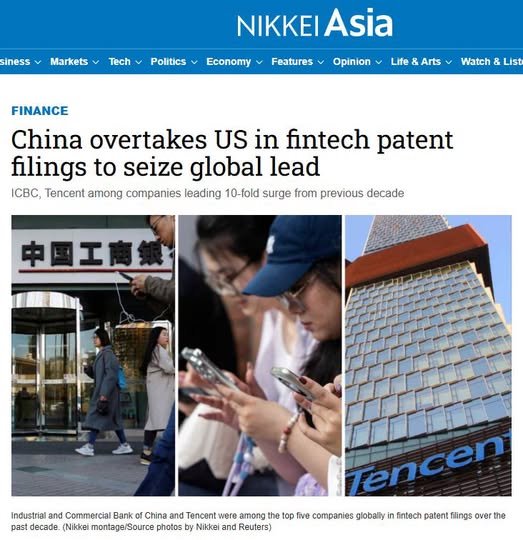
China’s “big four” state-run banks are the largest in the world in terms of asset scale, a new report has found, underscoring Beijing’s rising ambitions to build the country into a global financial powerhouse.
The ranking released by The Banker magazine on Wednesday was topped by the four Chinese banks – Industrial and Commercial Bank of China, China Construction Bank, Agricultural Bank of China and Bank of China – with JPMorgan Chase following in fifth place.
In total, Chinese banks made up seven of the top 10 in the ranking, which lists global banks in terms of tier-one capital size. All seven of them are controlled by the Chinese government.
Postal Savings Bank of China broke into the top 10 for the first time, while US giants Bank of America and Citigroup ranked sixth and eighth, respectively.
Chinese banks collectively held US$54.8 trillion in total assets, more than double the US$25 trillion held by US banks in the ranking, data showed.
However, the race is not only about size, as US banks continue to hold the advantage in terms of profitability.
Chinese banks in the top 1,000 ranking reported combined pre-tax profits of US$392 billion, compared with US$328 billion for US banks.
The publication noted that American lenders maintained a clear lead in profitability performance, while European banks recorded stronger earnings growth after a relatively weak previous year.
The expansion of China’s banks is closely linked to Beijing’s broader financial ambitions: increasing the global role of the yuan, developing alternative cross-border financing channels and extending China’s influence through overseas banking operations.
Silvia Pavoni, editor-in-chief of The Banker, said Chinese banks’ international expansion and efforts to promote yuan internationalisation would become increasingly important drivers of future growth and profitability.
“China’s largest banks continue to underpin their dominance,” Pavoni said, adding that the scale and resilience of the country’s banking sector remained significant as the global economy faced uncertainty and geopolitical challenges.
Chelsea Yang
Chelsea Yang